Dinosaurs A:Z | H
You may also be intrested in: Free Dinosaur games
Dinosaurs and other prehistoric animals:
Dunkleosteus (The armoured giant of the prehistoric seas)
You may also be intrested in: Free Dinosaur games
Dunkleosteus was a massive, prehistoric fish that dominated the ancient oceans long before sharks like Megalodon appeared. As one of the largest placoderm fishes, Dunkleosteus was a top predator of its time and is renowned for its armoured head and powerful jaws. Dunkleosteus could grow up to 8–10 metres (26–33 feet) in length—making it one of the largest placoderms ever to exist. It is estimated to have weighed up to 4 tonnes, making it a true giant of the Devonian seas. Dunkleosteus had a heavily armoured head and front body, covered in thick bony plates, while the rest of its body was more flexible and less protected. Its mouth could open with remarkable speed, helping it to snatch prey with tremendous force. Dunkleosteus was a carnivore, preying on fish, other armoured placoderms, and possibly early sharks. Instead of teeth, it had blade-like jaw plates that formed a beak capable of slicing through bone and armour. Fossils of Dunkleosteus have been found in North America, Europe, and North Africa, indicating it lived in ancient seas that covered these regions during the Devonian Period.
What is an Dunkleosteus?
How big was Dunkleosteus?
Appearance
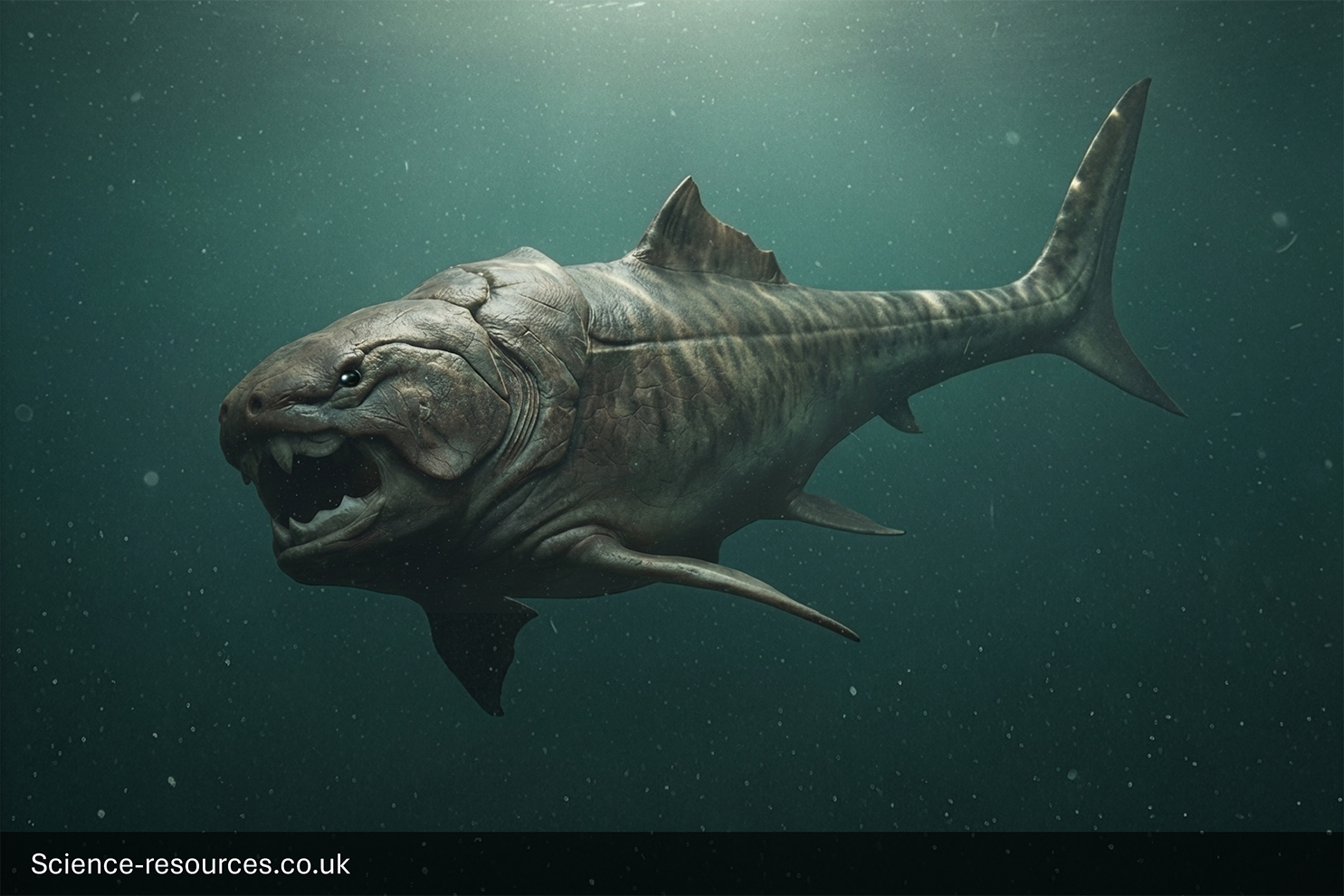 Dunkleosteus
What did Dunkleosteus eat?
Where did Dunkleosteus live?
Interesting facts
Pronounced: DUNK-lee-OST-ee-us Name means: "Dunkle's Bone"
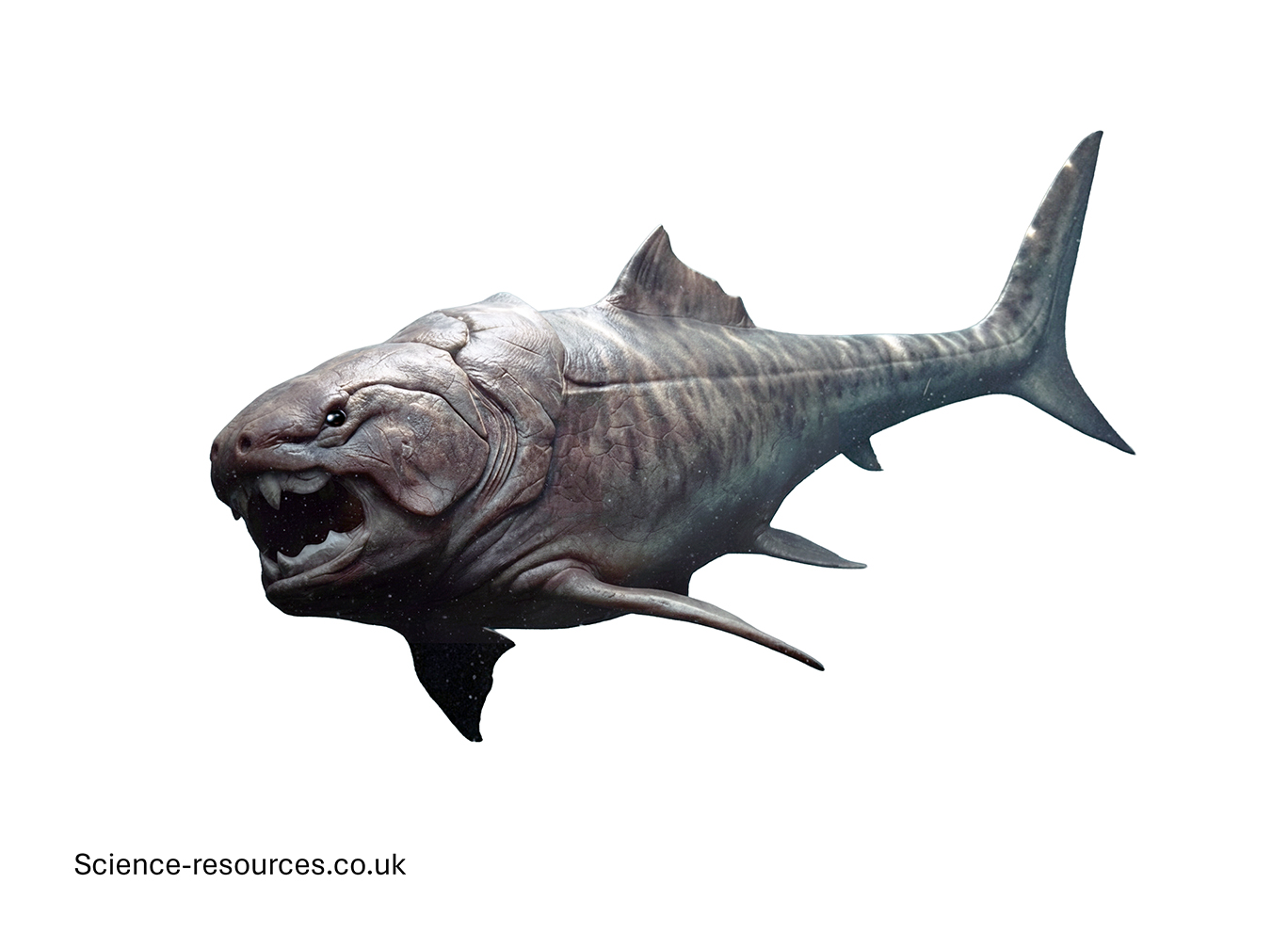
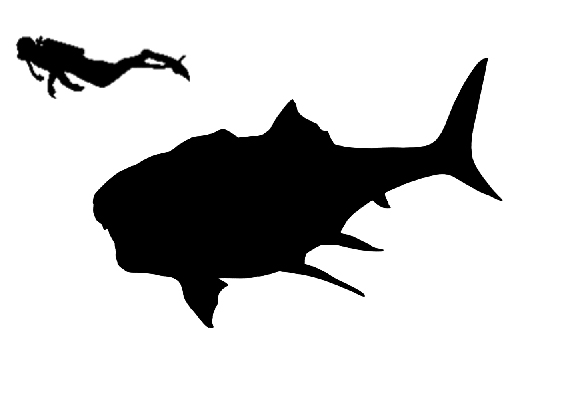
Dunkleosteus Facts
Length: Up to 10 metres (33 feet)
Diet: Carnivore (Fish, Squid)
Time: Late Devonian Period (358–382 million years ago)
Habitat: Open seas
Fossils Found: North America, Europe, North Africa
Dunkleosteus belonged to the Placodermi, an extinct class of armoured prehistoric fishes. Within this group, it was part of the Arthrodira order, known for their jointed, armoured heads.
Q1: What is Dunkleosteus?
Dunkleosteus is an extinct genus of giant, armoured fish that lived in the Devonian Period. It was a top predator in its ancient ecosystem.
Q2: What did Dunkleosteus look like?
A2: Dunkleosteus had a massive, armoured head and front body, with powerful jaw plates instead of teeth and a streamlined, flexible rear body.
Q3: How big was Dunkleosteus?
A3: Dunkleosteus could reach up to 10 metres (33 feet) in length and weighed up to 4 tonnes.
Q4: What did Dunkleosteus eat?
A4: Dunkleosteus preyed on fish, other placoderms, and possibly early sharks.
Q5: Where did Dunkleosteus live?
A5: It lived in ancient seas that covered parts of what are now North America, Europe, and North Africa.
Q6: When did Dunkleosteus go extinct?
A6: Dunkleosteus went extinct around 358 million years ago, at the end of the Devonian Period.
Q7: How strong was Dunkleosteus’s bite?
A7: Its jaws could exert tremendous force, powerful enough to crush bone and armour.
Q8: How is Dunkleosteus related to modern animals?
A8: Dunkleosteus is not directly related to modern fish or sharks, but it represents an early branch of jawed vertebrates.
Q9: Who discovered Dunkleosteus?
A9: The genus was named in honour of David Dunkle, an American palaeontologist, after fossil discoveries in the 19th and 20th centuries.
Q10: Are there any complete skeletons of Dunkleosteus?
A10: No, most fossils consist of armoured head and thoracic plates, as the rest of the body was made of cartilage and rarely fossilised.
Generative AI Notification: Some elements of this image have been created or enhanced using AI technology. To find out how we create all our dinosaurs and other prehistoric animals, click here.
Which family did Dunkleosteus belong to?
Dunkleosteus FAQ
You may also be intrested in:
Tags: How big was Dunkleosteus, Dunkleosteus size, where does Dunkleosteus live, how long was Dunkleosteus, what does Dunkleosteus mean, Dunkleosteus, Dunkleosteus facts