Volcanoes
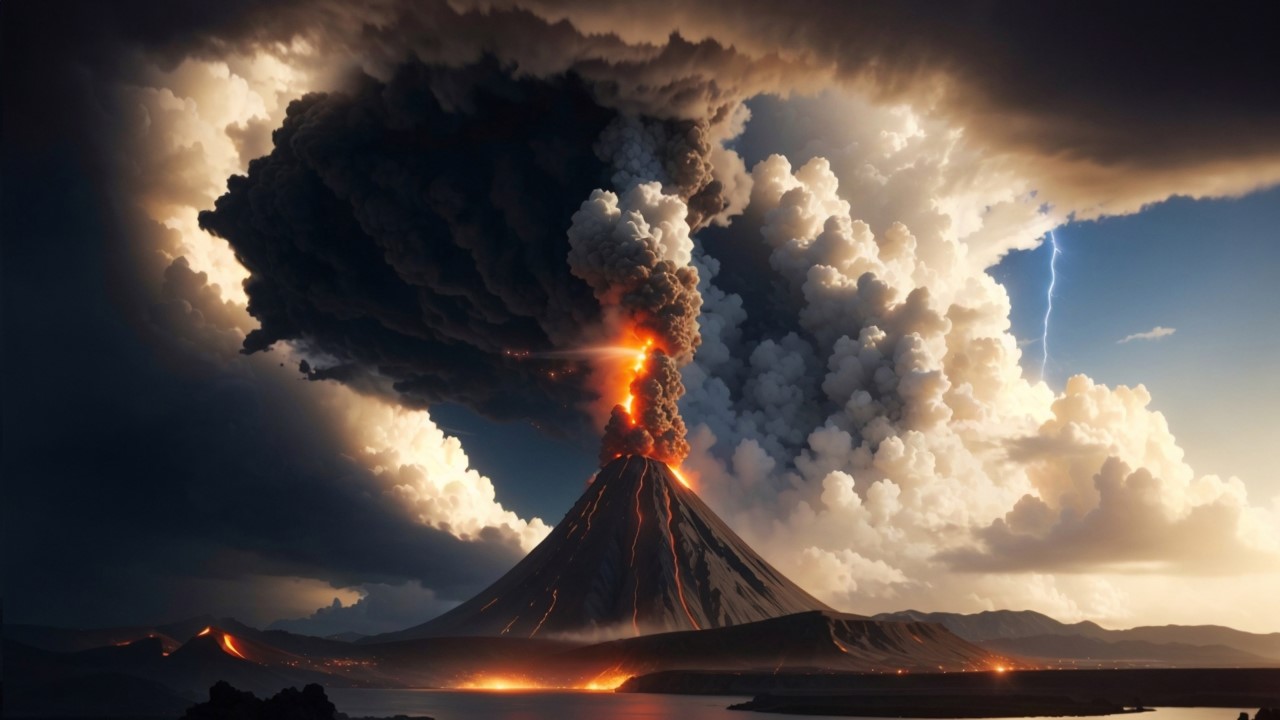
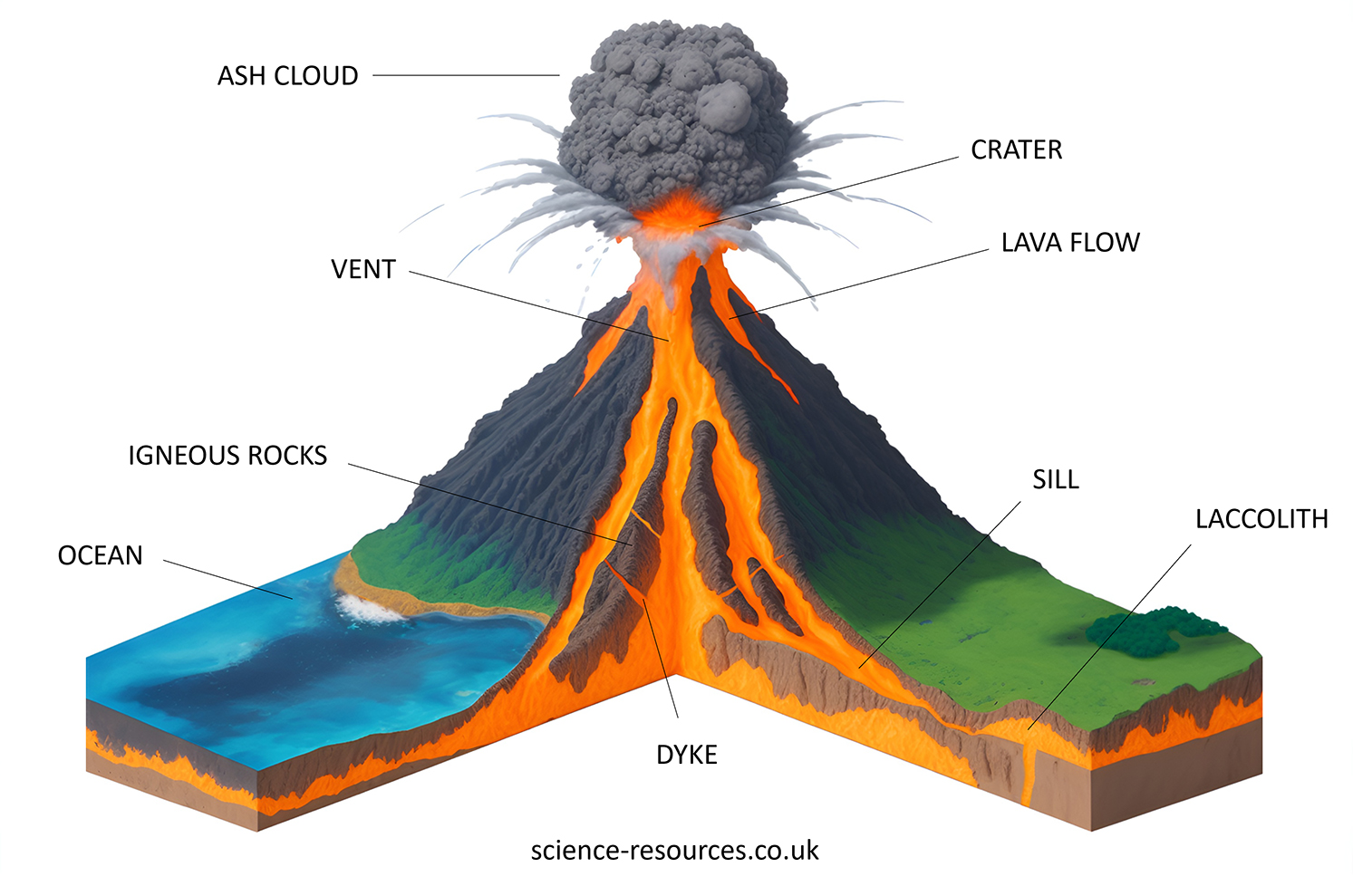
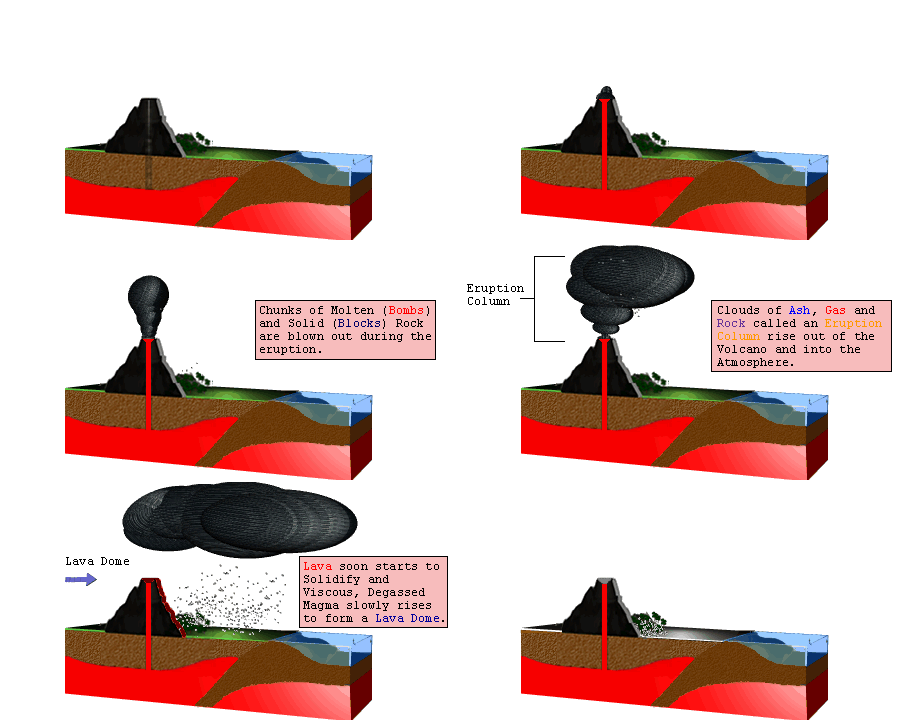
Cross-section of a Volcano Volcanoes can be either Active, Dormant, or Extinct. Active volcanoes are volcanoes that have erupted in recent historical times. Worldwide there are over 1500 volcanoes; more than 500 volcanoes are classified as active. An Active Volcano Dormant volcanoes are those that have not erupted for many years, but have the potential to erupt again. Extinct volcanoes are those volcanoes that scientists believe will not erupt again. Examples of extint volcanoes include Mount Kenya, the second highest mountain in Africa, and many of the volcanoes in Hawaiian Islands. Volcano Zones Some volcanoes erupt where the plates are pulling apart, such as beneath the ocean. Some volcanoes lie near subduction zones, forming either an arc of volcanic islands or a line of volcanoes on land, called a volcanic arc. The most active area on Earth is known as the Ring of Fire, a region of subduction zone volcanoes surrounding the Pacific Ocean. Constructive plate margins - These occur where tectonic plates move apart, magma rises up to bridge the gap and produces new crust made of igneous rock, basalt. sometimes magma comes out with great force producing undersea volcanoes. This is quite evident in the middle of Atlantic Ocean. The so called Mid-Atlantic ridge runs the whole length of the Atlantic and actually cuts through the middle of Iceland, which is why they have hot underground water.
As the magma rises up through the gap it forms ridges, underwater mountains and sometimes produces undersea volcanoes. Destructive plate margins - These occur where plates move towards each other. Different types of collision may take place at these boundaries. Oceanic and Continental plates or two continental plates can collide with each other. Oceanic and Continental plates colliding: Since the oceanic plate is more dense, it is always forced underneath the continental plate. This is called subduction (see animation below). As the oceanic plate is pushed down a deep trench is formed. The plate melts and creates pressure in the surrounding area due to all the melting rock. The resulting molten rock finds its way to the surface and volcanoes form. Earthquakes also happen as the two plates slowly grind past each other. The continental crust is not destroyed. It is simply compressed, folded into anticlines and synclines and thickened to form a fold mountain range similar to the Andes in South America.

Active Volcanoes
Dormant Volcanoes
Extint Volcanoes
Volcano Zones
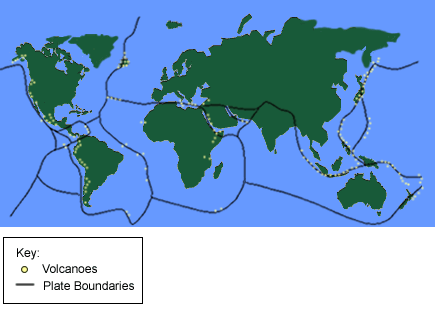
Plate Tectonics
Volcanoes on other Planets
Mars has the largest known volcano in our Solar System (Olympus Mons) standing at 16 miles (26 kilometers) tall and measuring 388 miles (624 kilometers) in diameter. Olympus Mons, along with all the other volcanoes on Mars, is believed to be extinct.
Useful Volcono Websites |
|
|---|---|
Title |
URL |
BBC Volcanoes Page |
|
MTU's Volcanoes Page |
|
USGS Cascades Volcanoes Observatory |
|
Global Volcanism Network |
|
USGS Volcanoes Site |
|
Test your understanding of volcanic structures and activity based on the information provided. 1. What is molten rock called once it breaks through the Earth's surface? 2. Which part of the volcano acts as the main pipe that allows magma to reach the surface? 3. How are volcanoes primarily formed? 4. A volcano that is currently erupting or showing signs of erupting is described as: 5. What is the name of the bowl-shaped hollow at the top of a volcano?🌋 Knowledge Check: Volcanoes
Click to Reveal Answers
2. The vent (The central opening or pipe that connects the chamber to the surface).
3. By the movement of tectonic plates (Movement allows magma to rise through the crust).
4. Active (Active volcanoes are currently erupting or expected to soon).
5. The crater (The depression found at the summit of the volcano).
Tags: Continental Drift, Plate Tectonics, Earthquakes, Volcanoes, Volano Zones, Active, Dormant, Extinct, volcanoes of the earth