Water Cycle and Weathering
Water
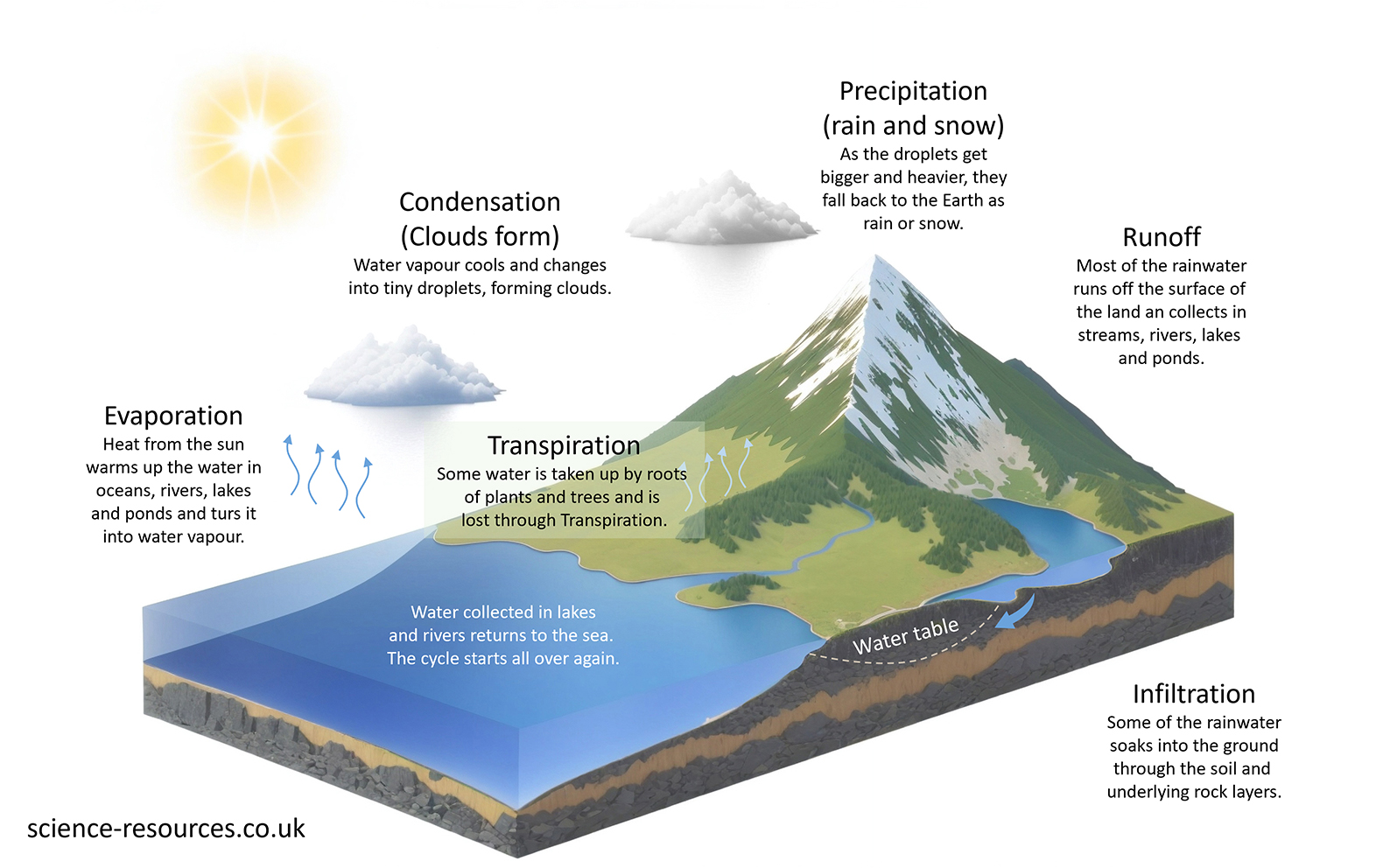
cycle is driven by the ENERGY from the SUN The Heat
energy from the SUN warms up the water
in oceans, rivers, lakes and ponds. The water particles gain
energy and become more active. Those
particles which gain lots of energy now can escape and rise up the atmosphere. They do this because they are less
dense then the air. This is known as EVAPORATION.
Water Cycle
As they rise up, they lose their energy to the surrounding, as it is cold up there. The water particles begin to huddle together into tiny water droplets to make clouds. This is known as CONDENSATION. Eventually the water droplets become so big that the gravity pulls them down and it rains. This is called PRECIPITATION.
Weathering is the break down of rocks by natural forces. There are three different types of weathering. Weathering
Physical
Chemical
Biological
How well do you understand the processes that shape our planet? Answer the questions based on the webpage information. 1. Which process involves water vapour cooling down to form liquid water droplets in clouds? 2. Tree roots growing into cracks in a rock and forcing them apart is an example of which type of weathering? 3. What happens to water when it freezes inside a crack in a rock? 4. Acid rain reacting with minerals like calcium carbonate in limestone is known as: 5. What is the key difference between weathering and erosion?🌧️ Knowledge Check: Water Cycle & Weathering
Check Answers
2. Biological weathering (Caused by living things like plants and animals).
3. It expands (This expansion forces the crack to widen).
4. Chemical weathering (Rain water is naturally slightly acidic and reacts with certain minerals).
5. Weathering breaks rocks where they are; erosion moves them (Movement is the key identifier for erosion).
Tags: Water cycle, Weathering, Biological weathering, Chemical weathering, Physical weathering, Precipitation, Condensation, Evaporation, Animated water cycle, Water cycle animation, How do weathering and erosion work together, what does weathering mean, chemical weathering acid rain