Bioaccumulation
Pollution Pollution in the air Pollution on land Pollution in water Bioconcentration The pesticides stay in the bodies of organisms and build up over time. This is because these substances are hard to get rid of by organisms. Toxic materials in a food chain
Pollution is the introduction of harmful or poisonous substances called toxins into the environment.
Factory smokestacks and vehicle exhausts emit carbon dioxide and other pollutants into the air, causing climate change and damage to many forms of life, including humans.
Recycling as much as possible is very important, especially items such as batteries. Batteries can end up in landfill sites if they are thrown away in the rubbish bin. There, their toxic chemicals can leak out and contaminate the soil.
Some factories have been found to dump their waste illegally into rivers and seas. Oil tankers have also caused accidents and spilled oil into the oceans.
Food webs can be affected by harmful substances like pesticides that build up in food chains. This happens when lower-level organisms in the food web come into contact with these substances.
These substances can then move up the food chain as higher-level organisms eat them. This process, called bioaccumulation, can damage whole ecosystems. It can cause population declines and even extinction of some species.
An example of this is when pesticides are used in farming and get into the food chain. In this case, the pesticides do not only affect the pests they are meant for. They also hurt other organisms.
Let’s see an example: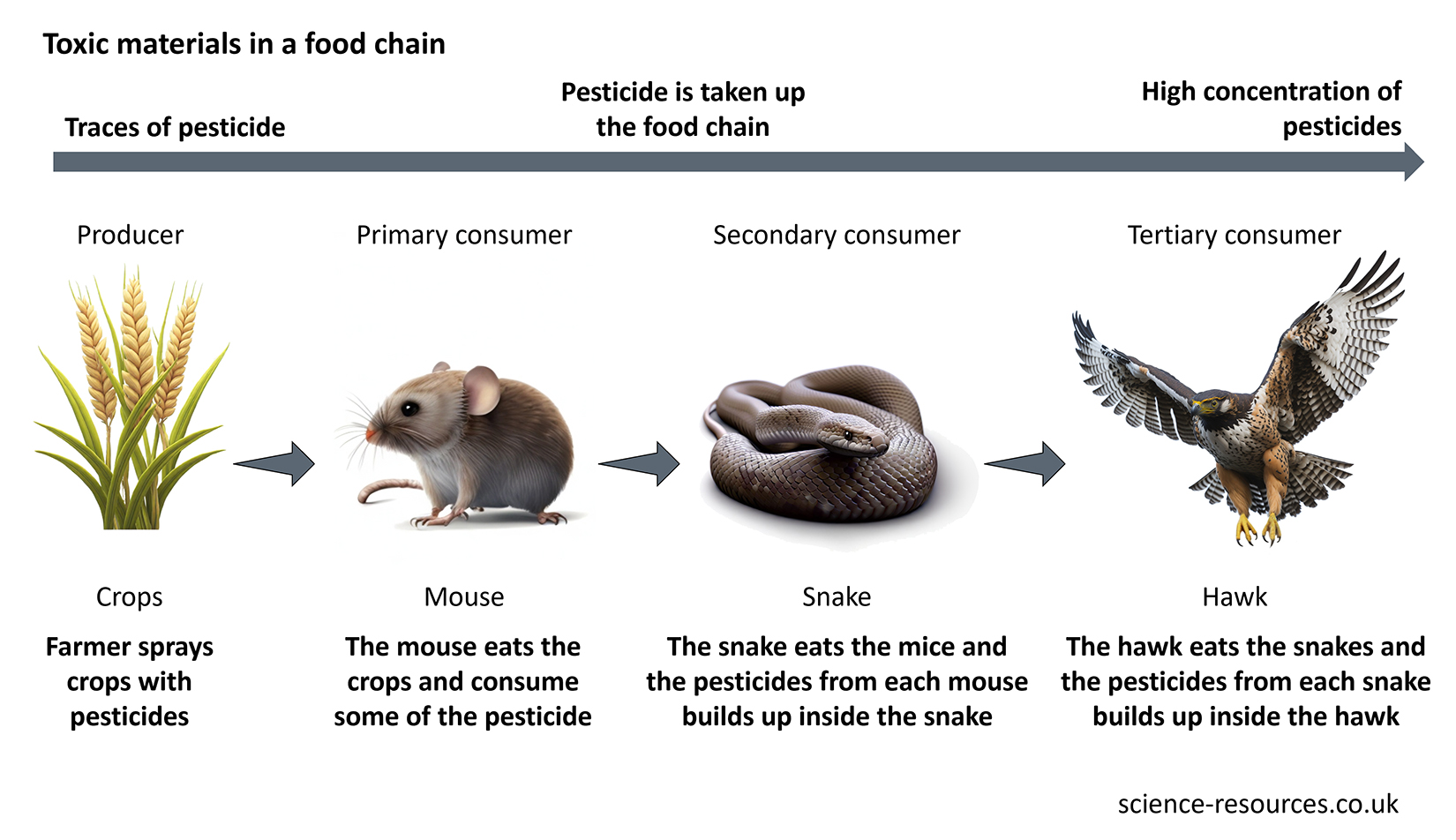 Toxic materials in a food chain
The hawk, which is the top animal in the food chain, will get the most pesticides. This is because it eats lower-level organisms that already have pesticides in them.
The gradual build-up of pesticides can make the hawk sick, which can even lead to death. Also, these pesticides can affect other organisms in the food chain, which can lead to the extinction of certain species.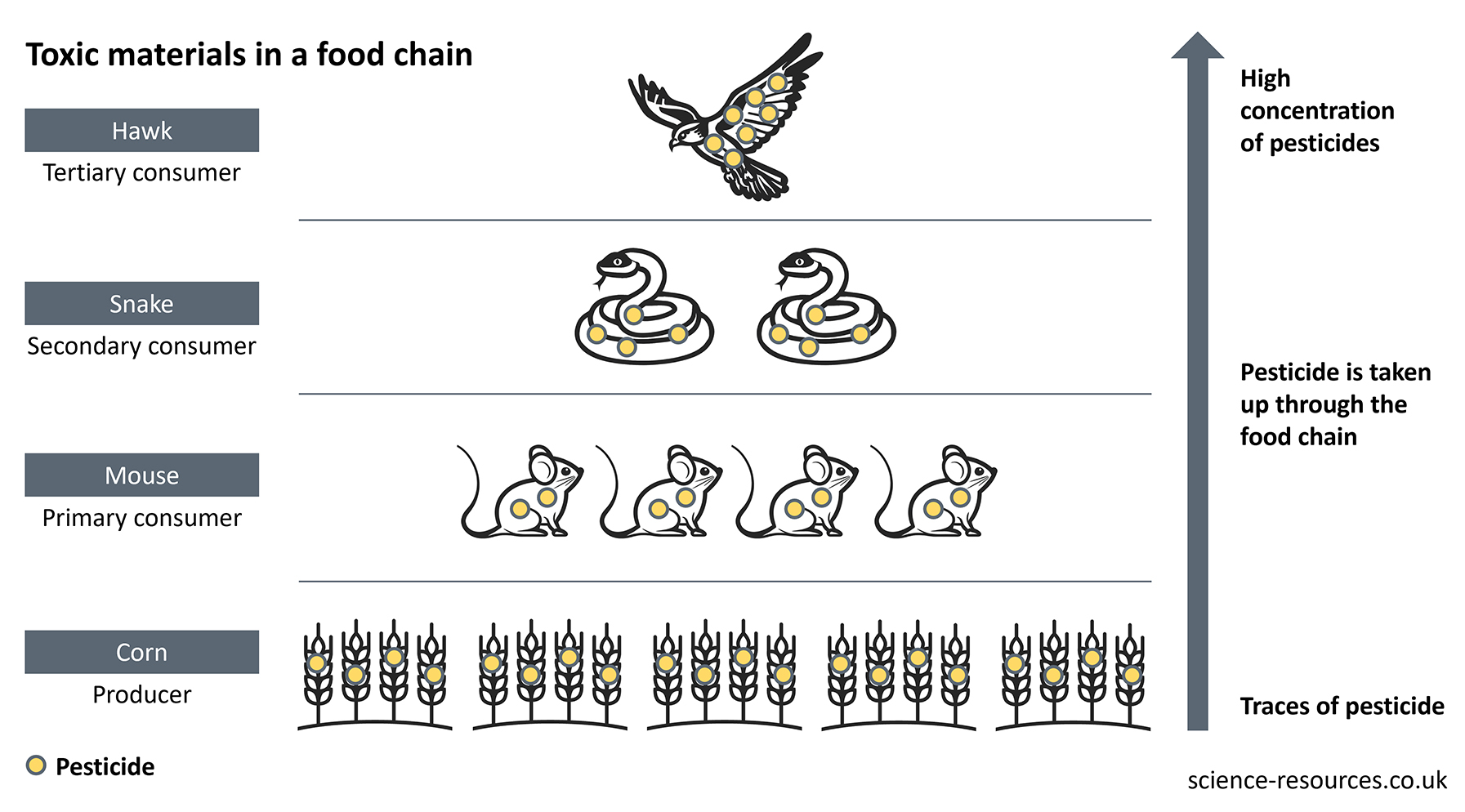
Insecticides (DDT) Microplastics
DDT is a chemical that kills and keeps away mosquitoes. It was used a lot to stop malaria, which is a disease spread by mosquitoes, and also to protect crops. But DDT is a harmful substance that can move up the food chain from insects to small birds. This can lead to the death of many predatory birds.
The organisms in a food web need each other for food, so the build-up of DDT can damage the ecosystem. If one of the organisms in a food web dies out, the whole web can suffer. This is one of the reasons why DDT is not allowed in many countries.
Microplastics are small pieces of plastic that are less than 0.5 cm in size. They often come from larger plastic items, such as bottles and bags, that break down slowly. Plastic does not biodegrade and so it stays in the environment as smaller and smaller bits. Some rivers in England have over half a million of these in every square metre of the riverbed.
These can end up being swallowed by living things by mistake. They build up in food chains because they cannot be removed from the body. The effects of this accumulation are not fully known yet but they seem to make other chemicals build up as well.
It is very important to recycle all the plastics we use to prevent this and live more sustainably.
Test your understanding of how toxins move through the environment and affect food chains. 1. What does the term 'bioaccumulation' specifically refer to? 2. Which process describes the increase in toxin concentration as you move UP a food chain? 3. Why do apex predators (at the top of the food chain) suffer the most from these toxins? 4. Which of these is a persistent pesticide mentioned as a cause of bioaccumulation? 5. Toxins that bioaccumulate are usually 'persistent'. What does this mean? Summary: 🧪 Knowledge Check: Bioaccumulation
Click to Reveal Answers
2. Biomagnification (The concentration magnifies as it moves through trophic levels).
3. They consume many prey animals (Toxins from every level below accumulate in the predator).
4. DDT (A well-known persistent organic pollutant).
5. They do not break down easily (Persistence allows them to remain in tissues and the environment).