Genetics and variation
Variation Variation between different species tends to be greater than the variation between individuals of the same species. Variation helps a species to survive, by causing individuals of a species to be genetically and physically different.
Variation refers to the unique characteristics that differentiate individuals of the same species. For example, humans have different coloured eyes.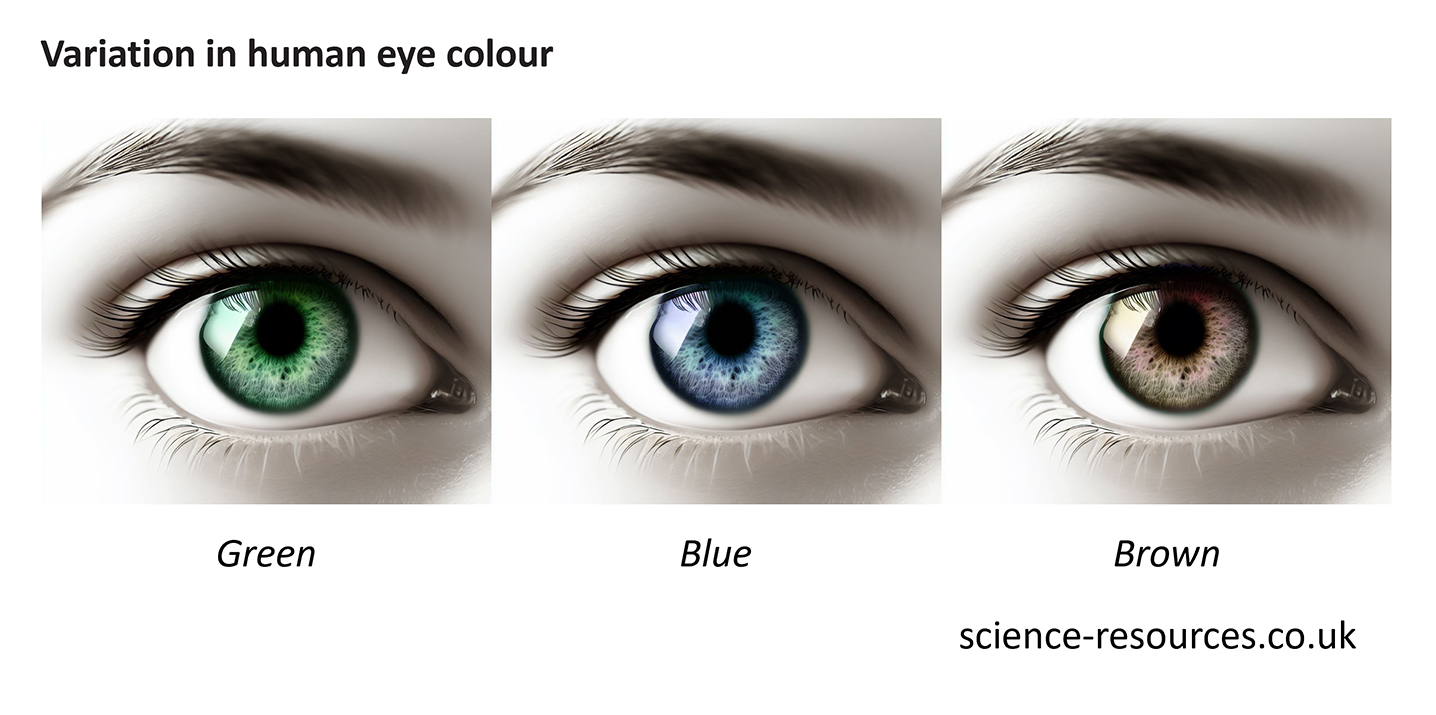
Variation can be divided into two main types:
Genetic variation Environmental variation Genetic and environmental variation Genetic variation Environmental variation Genetic and environmental variation Eye colour Scars Height Blood group Language spoken Weight Skin colour Tattoos (These are not inherited; they are a result of a lifestyle choice) Hair colour (Can be lightened by the Sun or can be dyed) What are the benefits of variation?
The genetic information that an organism inherits from its parents causes differences in characteristics. These can include features like eye colour, blood group, skin colour and hair colour.
When an organism reproduces, it gives some of its genetic information to its offspring, which is why children often look like their parents but are not exactly the same.
Some characteristics are affected by external factors in the environment of an organism. These factors can include what the organism eats, how it lives, and what the weather is like.
Both genetic and environmental causes of variation affect some characteristics, such as height and weight. For example, a person’s potential height or weight depends on the genetic information they get from their parents. But the environment they live in, such as the food they eat and the activities they do, can also influence these characteristics.
A person may not grow as tall as their genes allow if they do not have enough food. A person may gain more weight than their genes suggest if they eat too much or exercise too little. So, these characteristics are determined by both genetic and environmental causes of variation.
Variation is important for the survival of a species. If all the individuals of a species had the same genes, they would be susceptible to the same diseases. This could lead to the extinction of the whole species by one disease.
Some individuals of a species have genes that give them an advantage, such as better camouflage or faster speed. These individuals are more likely to survive and reproduce. This is called natural selection.
The offspring of the survivors are likely to inherit the beneficial traits of their parents. This is how species evolve over time.
Test your understanding of DNA, inheritance, and the different types of variation. 1. Where is the genetic information (DNA) stored in a cell? 2. Which of these is an example of discontinuous variation? 3. What are the short sections of DNA that contain coded instructions for specific characteristics called? 4. Environmental variation can be caused by which of the following? 5. Variation that shows a wide range of intermediate values, often plotted on a line graph or histogram, is known as: Summary: 🔬 Knowledge Check: Genetics and Variation
Click to Reveal Answers
2. Blood group (Features that fall into distinct categories with no intermediates).
3. Genes (Small sections of DNA that code for specific traits).
4. Lifestyle factors like diet and climate (Differences caused by the surroundings).
5. Continuous variation (Characteristics like height or weight that vary over a range).