Digestive enzymes and absorption
What are enzymes?
Enzymes are proteins that act as catalysts, which means they make reactions happen faster without being consumed. Enzymes can be classified into two kinds:
Those that split bigger molecules into smaller ones (like enzymes that help digest food). Those that link smaller molecules into bigger ones (like enzymes that help plants make sugar from sunlight). Enzymes have a specific shape that matches the molecule they work on. The part of the enzyme where the molecule attaches is called the active site.
The molecules that enzymes work on are called substrates. An enzyme only works on one kind of substrate, like a key only fits one lock. This is called the ‘lock and key model’.
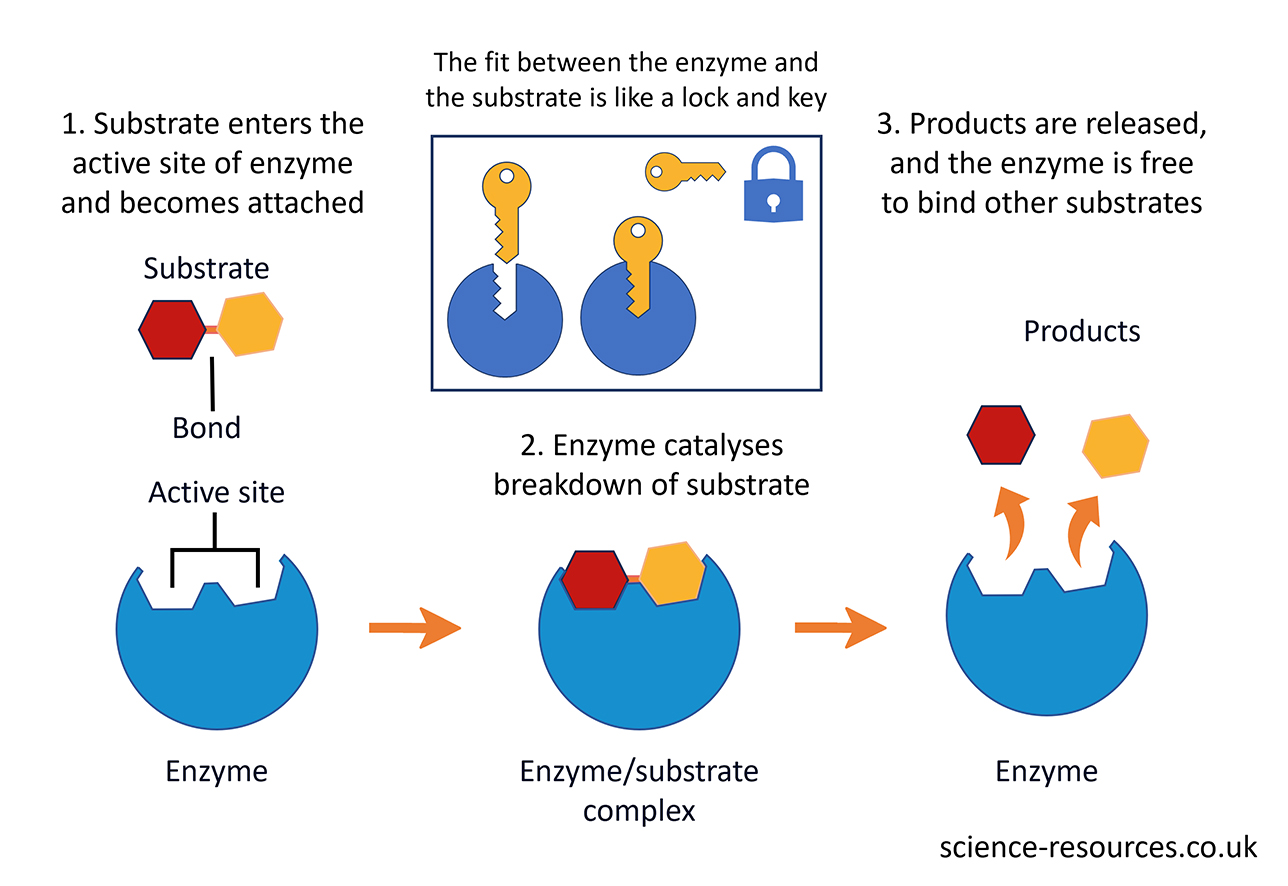
Enzymes can lose their shape if they get too hot or put into a higher or lower pH. The enzyme goes through a process of denaturation, which means it will not match its substrate or substrates. The enzyme cannot make the reaction faster anymore.
Where can enzymes be found in the digestive system? Diagram showing the parts of the digestive system Digestion Absorption
Location of enzymes in the digestive system:
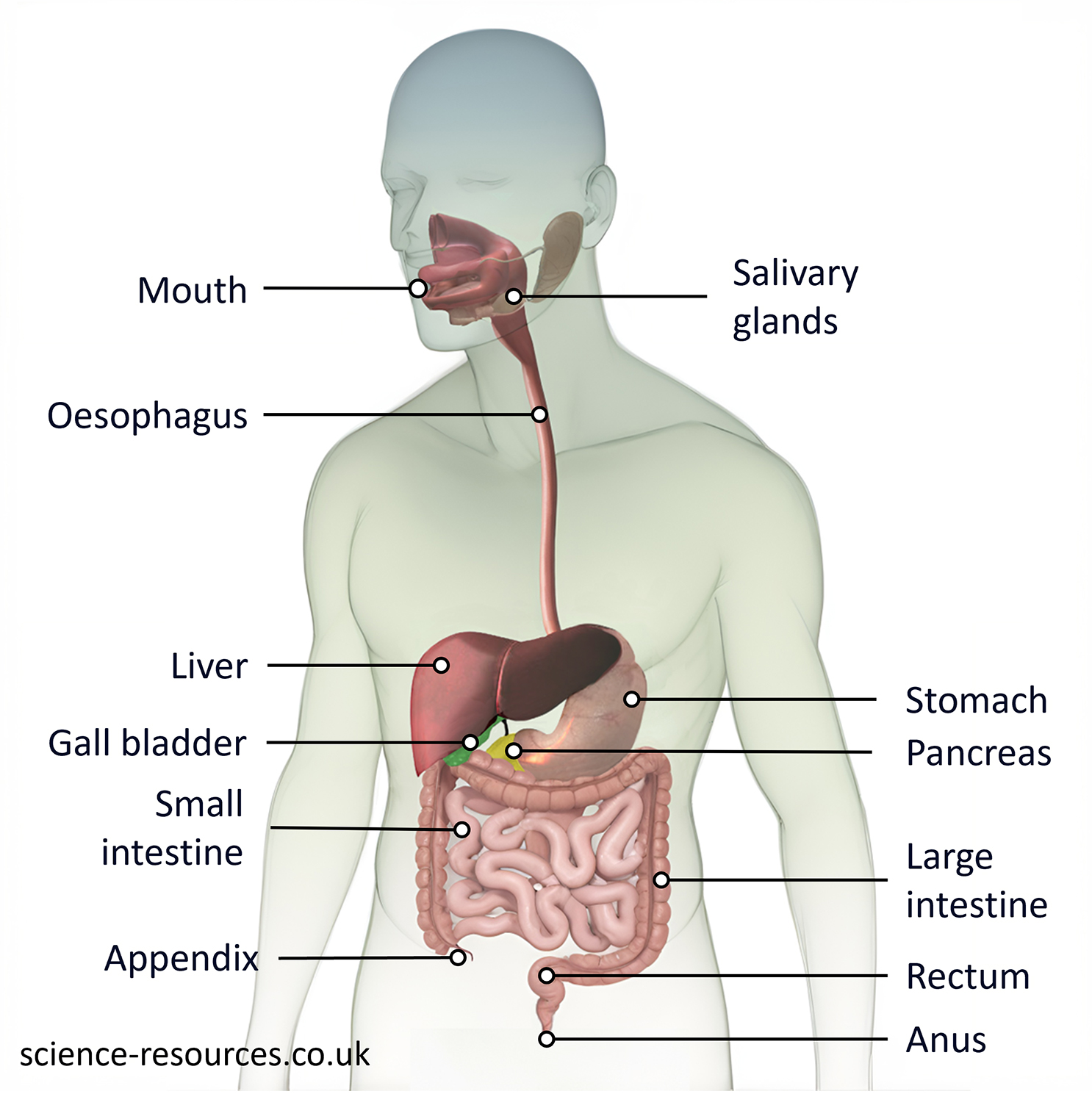
Chemical digestion happens when enzymes digest food into nutrients.
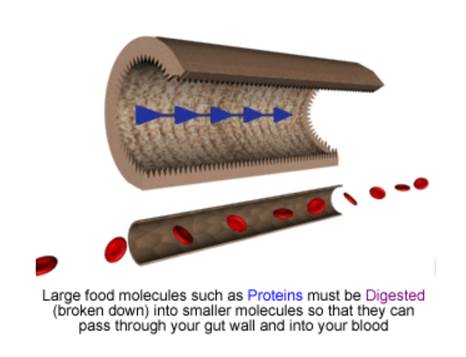
The small intestine absorbs the food molecules that are digested. This means that they go through the wall of the small intestine and into the blood. Then, the blood carries the food molecules that are digested to where they are needed in the body. Only small, dissolved substances can go across the wall of the small intestine. Big undissolved substances cannot go through.
Think you know your Amylase from your Lipase? Test your enzyme expertise below! 1. What is the specific name for the area on an enzyme where the substrate binds? 2. Which enzyme is responsible for breaking down proteins into amino acids? 3. Amylase is produced in the salivary glands and the pancreas. What does it break down? 4. What happens to the rate of reaction if the temperature increases slightly toward the 'optimum'? 5. If an enzyme's active site changes shape permanently due to extreme pH, we say the enzyme has: Summary: 🧪 Knowledge Check: Digestive Enzymes
Check Your Answers
2. Protease (Found in the stomach and small intestine).
3. Starch into simple sugars (This is why bread starts to taste sweet if you chew it for a long time!).
4. The reaction speed increases (Molecules move faster and collide more often).
5. Denatured (Once denatured, an enzyme can never return to its original shape).