i


Healthy diet


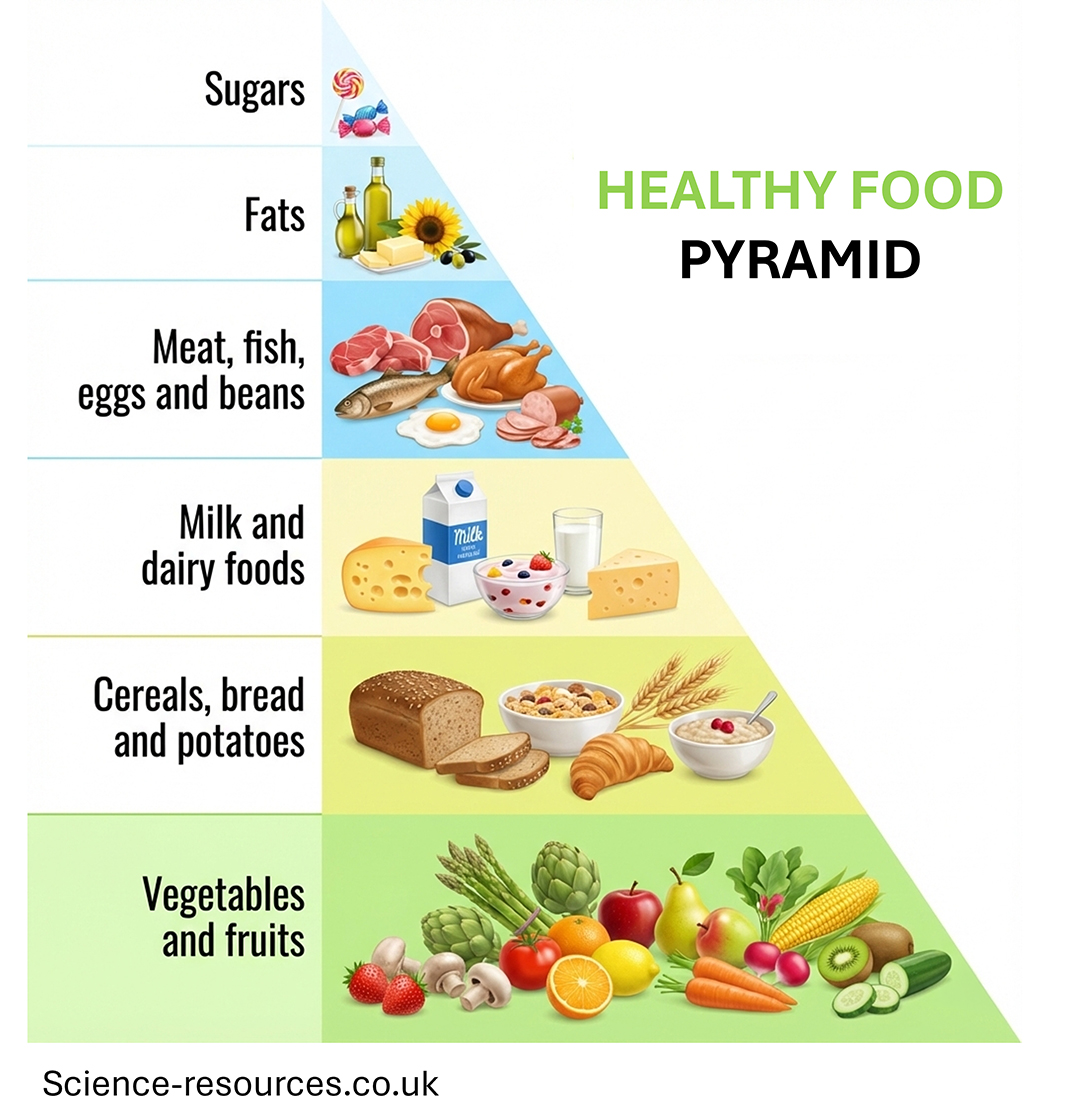
This image is a vertical infographic titled "Healthy food PYRAMID" which uses a 6-layer triangular structure to illustrate recommended food proportions. The design features realistic food icons on the right side of the pyramid and text labels on the left.

Pyramid Structure and Labels
Level 1 (Base): Labeled "Vegetables and fruits" against a light green background. It features a dense arrangement of strawberries, mushrooms, artichokes, asparagus, tomatoes, citrus fruits, apples, pears, radishes, corn, carrots, kiwi, and cucumbers.

Level 2: Labeled "Cereals, bread and potatoes" on a pale yellow-green background. It includes a loaf of brown bread, sliced bread, a bowl of cereal or grains, wheat stalks, a croissant, and a bowl of porridge.

Level 3: Labeled "Milk and dairy foods" on a pale yellow background. It displays a wedge of cheese, a carton of milk, a bowl of yogurt with berries, a glass of milk, and another block of cheese.

Level 4: Labeled "Meat, fish, eggs and beans" on a light blue background. The contents include raw meat cuts, a whole ham, a fish, a fried egg, a roasted chicken, and sliced deli meats.

Level 5: Labeled "Fats" on a white background. It shows olive oil in glass bottles, a block of butter, a sunflower, and olives.

Level 6 (Top): Labeled "Sugars" at the narrow peak. It contains a colorful lollipop and three wrapped candies.

What is a balanced diet?


A balanced diet means eating the right amounts of different food groups. This helps to avoid obesity or malnutrition.
The World Health Organisation suggests that at least half of your calories should come from carbohydrates and no more than 30% from fats. It also advises eating 400 grams of fruit and vegetables every day.


Nutrients


Nutrients are substances that the body needs for various purposes. There are different kinds of nutrients:


  • Carbohydrates: Carbohydrates give energy. You can find them in foods like bread, potatoes, rice and pasta.
  • Proteins: Proteins help the body make new cells and repair damaged tissues, such as muscles. Foods that are rich in protein include beans, eggs, fish, meat and milk.
  • Vitamins: Vitamins are important for many processes in the body. For example, vitamin K helps blood clot and vitamin C helps prevent sickness. Fruit and vegetables have many vitamins.
  • Lipids: Lipids (fats and oils) also give energy. Foods that have a lot of lipids include butter and chips.


There are 16 minerals that the body needs. These include iron, which helps carry oxygen in the blood, and calcium, which helps make bones and teeth.
 

Fibre


Fibre is not a nutrient. The body cannot use it and it has no calories or vitamins, but it is still essential for a healthy and balanced diet.
Fibre makes food bulky, and helps it move through the digestive system. Fibre also helps prevent constipation and heart disease.
Fruit, vegetables and wholegrain cereals have a lot of fibre.


Water


Water makes up about 70% of the human body. Water is needed for chemical reactions in cells and for transporting substances in the blood.
Drinking water often replaces the water that is lost in urine, sweat and breathing out.


🍏 Knowledge Check: Healthy Diet & Nutrition

Test your understanding of nutrients, energy, and deficiency diseases.

1. Which nutrient group is the body's main source of immediate energy?

2. Which of the following is required specifically for growth and the repair of body tissues?

3. A lack of Vitamin D or Calcium can lead to which deficiency disease?

4. Why is fibre an essential part of a healthy diet, even though we cannot digest it?

5. If a person's 'Energy Intake' (from food) is consistently higher than their 'Energy Output' (from exercise), what will happen?

Check Your Answers
1. Carbohydrates (Found in bread, pasta, and potatoes).
2. Proteins (Found in meat, beans, and eggs).
3. Rickets (Vitamin D helps the body absorb calcium for strong bones).
4. Helps move food (Fibre adds bulk and prevents constipation).
5. Weight gain (Energy balance is key to maintaining a healthy weight).


Summary:


  • All food groups are important for a balanced diet.
  • The food groups are: carbohydrates, lipids, proteins, vitamins, minerals, dietary fibre and water.
  • Each food group has a different function in a healthy diet.


© 2012 science-resources.co.uk. All rights reserved | Design by W3layouts