Structure of the digestive system (Nutrition, digestion and excretion)
Digestive system Diagram showing the parts of the digestive system Parts of the digestive system and their function
The digestive system consists of key parts, each of which has a specific function. Most of these parts are part of the food’s journey from the mouth to the anus.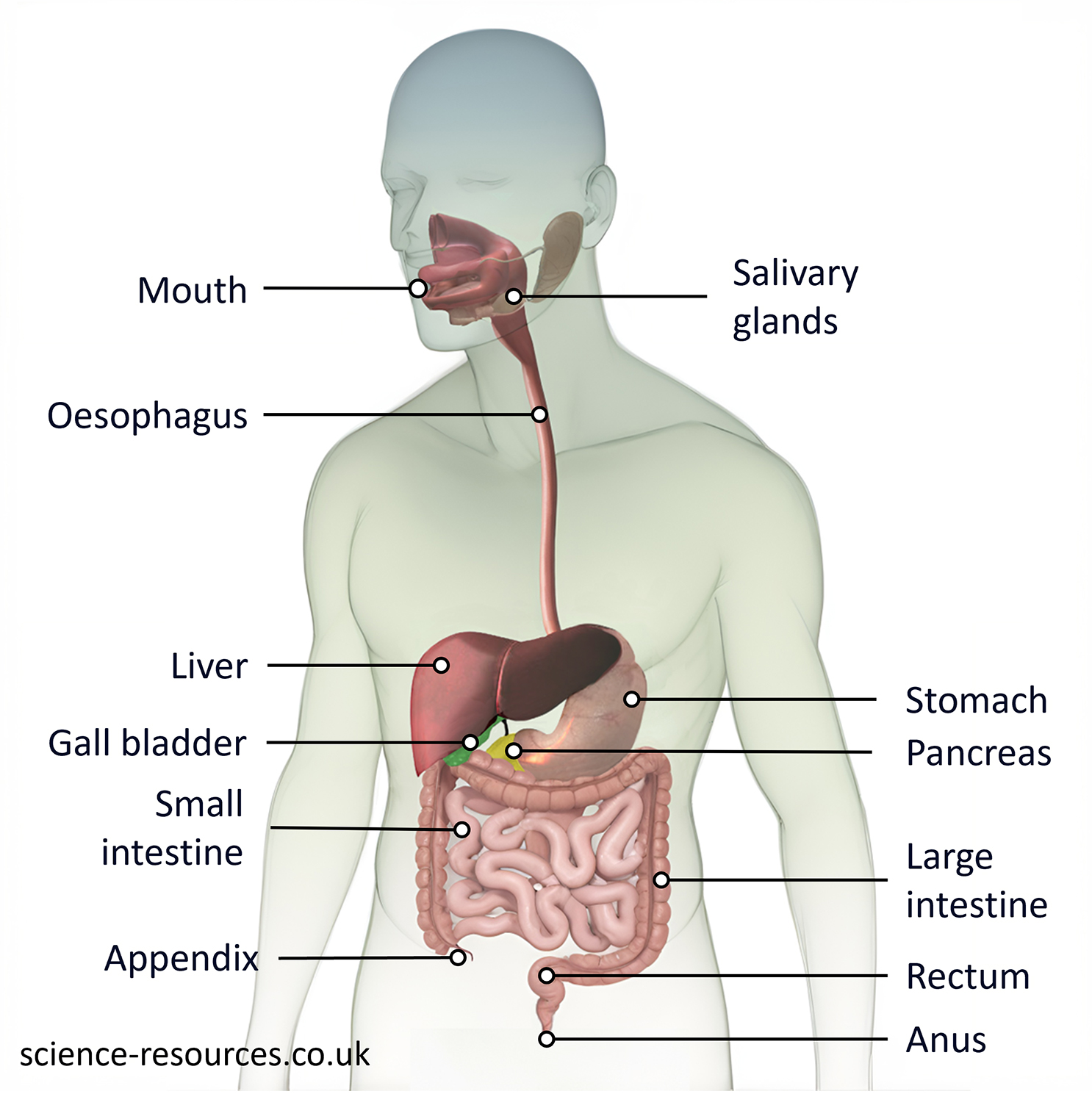
What are the processes involved in digestion? 1. Mechanical and chemical digestion The mouth uses teeth to break down food mechanically, which means they crush it. Chemical digestion happens when enzymes change food into nutrients. 2. Movement of food through the digestive system Muscles in the lining of the oesophagus, and small and large intestines push the digested food along by squeezing it in a process called peristalsis. It is like squeezing a tennis ball through a pair of tights. 3. Absorption of food and water The intestines have many small folds that make a large surface area for taking in nutrients and water. In the small intestine there are also special cells called villi that have tiny hair-like structures sticking into the small intestine to take in digested food.
The liver makes bile and stores it in the gall bladder. This goes into the small intestine to split big molecules of fats into smaller ones. This is not digestion because it does not change fats into nutrients, just smaller drops. This is called emulsification and makes more surface area for enzymes to work on.
How well do you know the journey of your food? Test yourself below! 1. What is the name of the tube that connects the mouth to the stomach? 2. Which organ contains hydrochloric acid to kill bacteria and provide the right pH for enzymes? 3. Villi are found in the small intestine. What is their main purpose? 4. Bile is responsible for 'emulsifying' fats. What does this mean? 5. In which part of the digestive system is water absorbed back into the body? Summary: 🥯 Knowledge Check: The Digestive System
Check Your Answers
2. The Stomach (The acid helps pepsin break down proteins).
3. Increase surface area (More surface = more space for nutrients to enter the blood).
4. Breaking large fat droplets into smaller ones (This gives lipase enzymes a larger surface area to work on).
5. The Large Intestine (This is where waste is condensed into faeces).