Exothermic and endothermic reactions
What are exothermic reactions?
Some chemical reactions release energy to the surroundings. This energy can be heat or light. The surroundings get warmer or brighter because of these reactions. These are called exothermic reactions. For example, handwarmers make heat when they react. They warm up your hands when you use them.
Not all exothermic reactions make heat. Some of them make light instead. For example, glowsticks make light when they react. They glow in the dark without getting hot.
What are endothermic reactions? Exothermic vs. endothermic reactions
Some chemical reactions take in energy from the surroundings. The surroundings lose heat energy and become cooler.
Plants use light energy from the sun to make their own food. This is an example of an endothermic reaction. The leaves of the plants absorb the light energy.
Some chemicals break down when they are heated. This is called thermal decomposition. These reactions are also endothermic because they need heat energy to happen.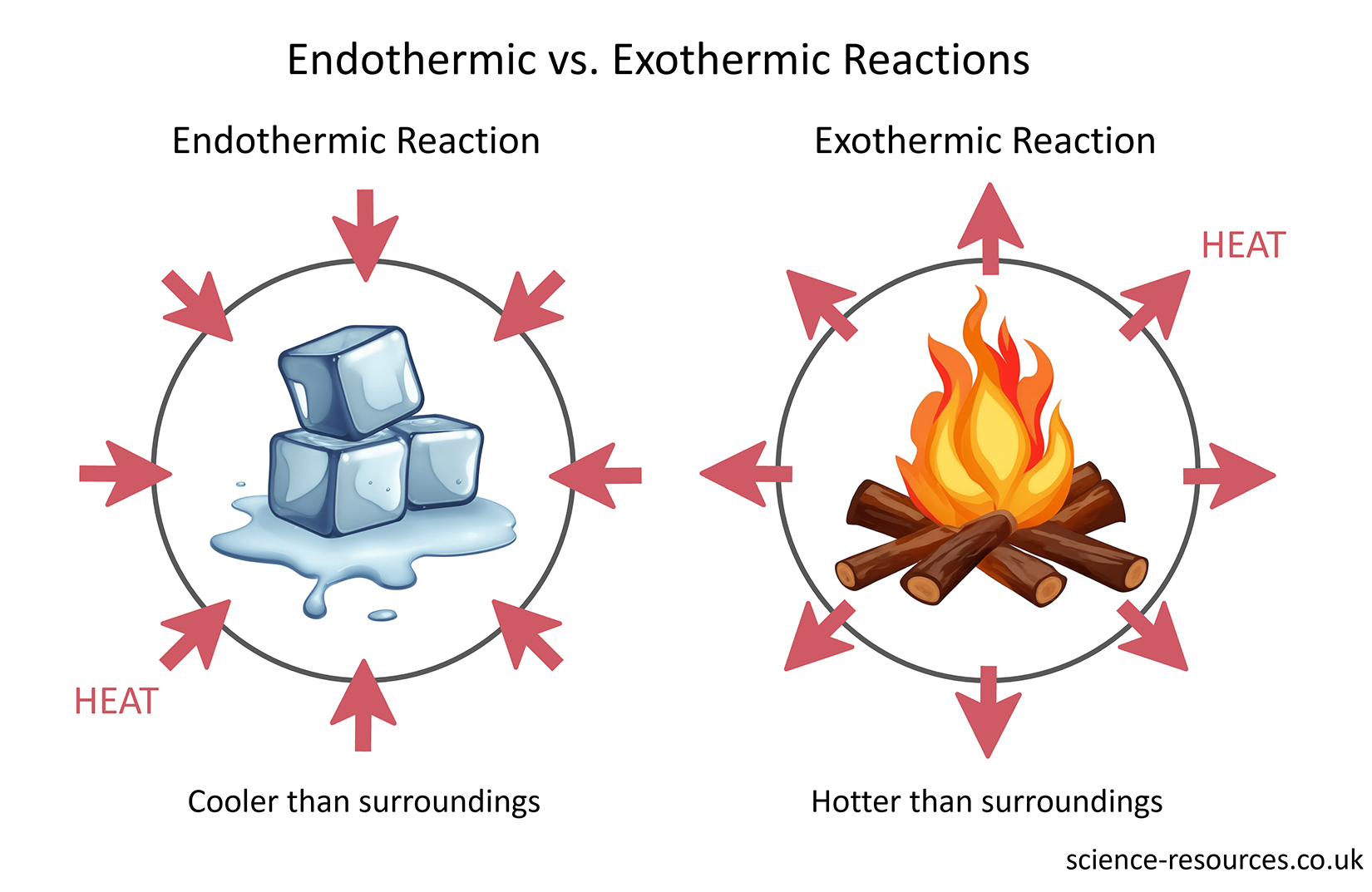
Test your understanding of energy changes and temperature shifts in chemical reactions. 1. In an exothermic reaction, what happens to the energy? 2. Which of the following is an example of an endothermic process? 3. If a thermometer shows a decrease in temperature during a reaction, the reaction is: 4. What type of reaction occurs when calcium carbonate is broken down by heating? 5. Why does the temperature of the surroundings increase during an exothermic reaction? Summary: 🔬 Knowledge Check: Exothermic and Endothermic
Click to Reveal Answers
2. Photosynthesis (Plants take in light energy from the sun).
3. Endothermic (Energy is absorbed from the surroundings, cooling them down).
4. Thermal decomposition (This requires a constant supply of heat energy to break the bonds).
5. The reaction releases thermal energy (Energy transferred from the chemicals to the surroundings).