Games: Circuit Breakout
Aim of the Game Your goal is to escape each level by correctly applying your knowledge of series and parallel circuits. To break out, you must analyse the circuit, answer questions or make decisions based on circuit rules.
Before you start, you should be familiar with: Circuit Breakout – How to play
What you need to know
Series circuits
A series circuit is a circuit where all the components are on the same loop. Below is an example of a series circuit diagram:
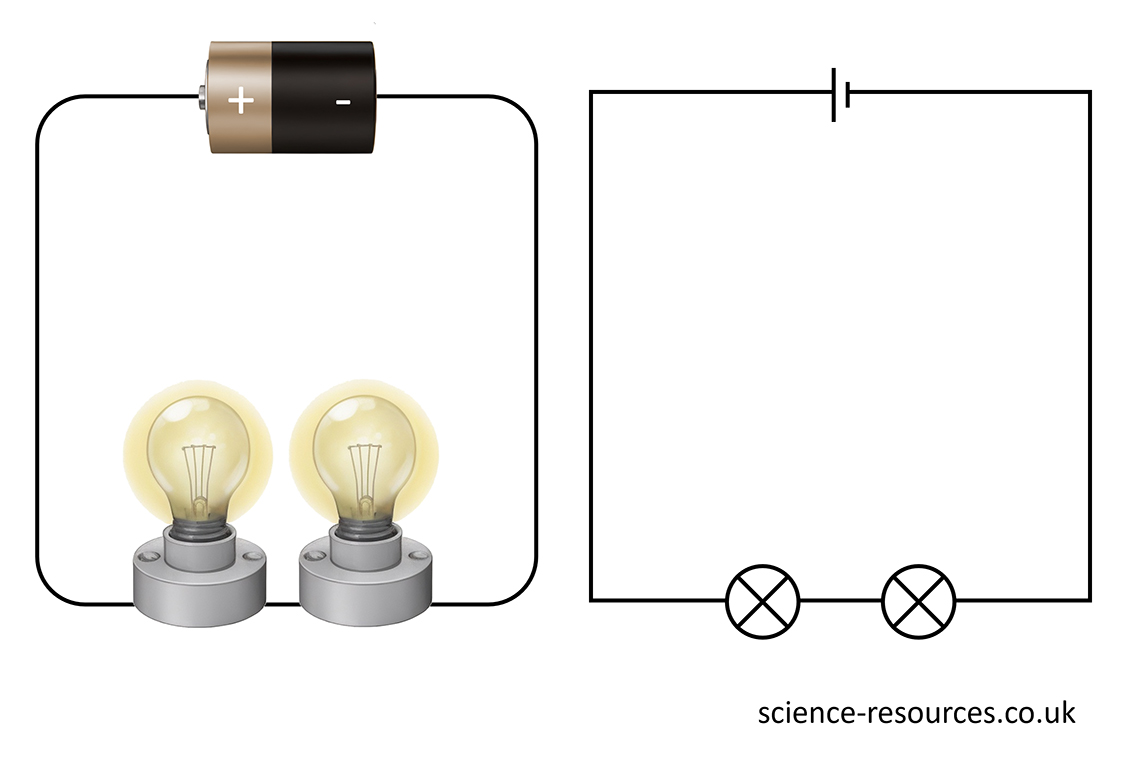
A circuit and circuit diagram containing a cell and two lamps connected in series.
Adding components in series
A series circuit has more resistance when you add more components, so the current goes down.
In the diagram below, the circuit on the left has a lamp, a cell, a switch, and an ammeter. The current is 6 A. The circuit on the right has two lamps, a cell, a switch, and an ammeter. The two lamps have more resistance than one lamp, so the current is lower. The ammeter shows 3 A. This means the lamps are less bright.
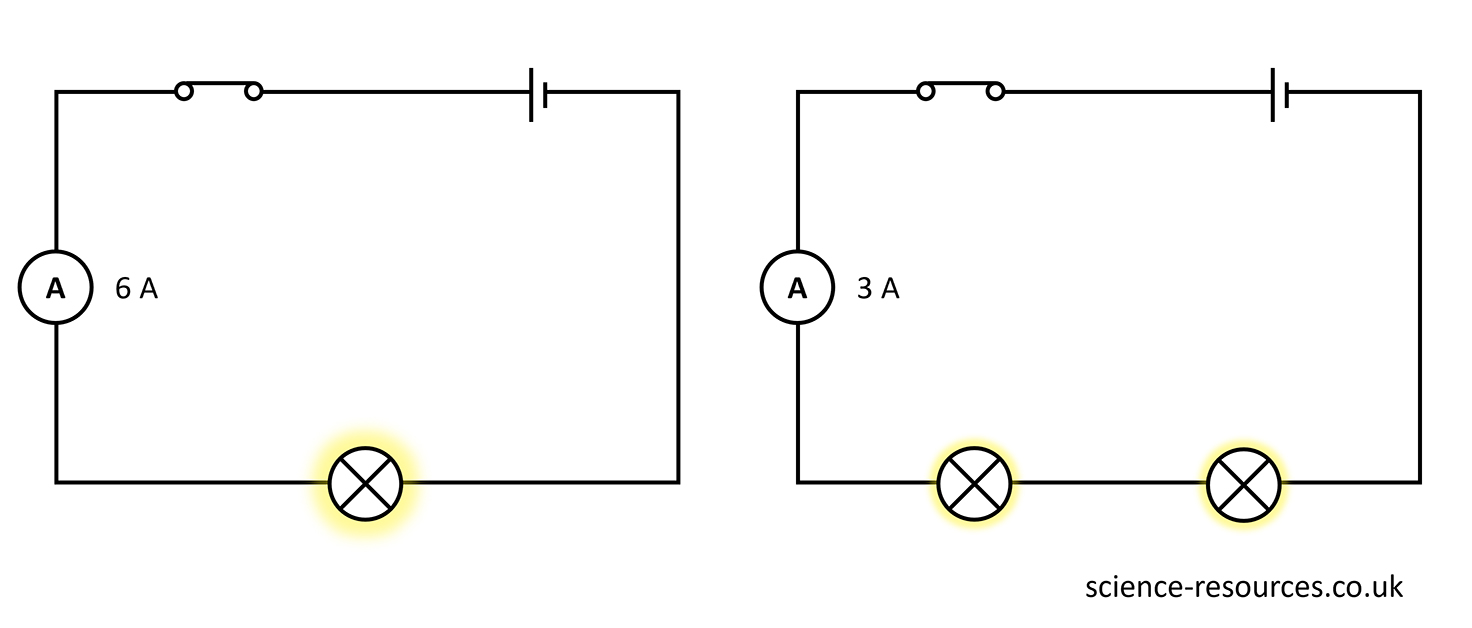
By adding a second lamp to a series circuit, the resistance is increased so the current is lower and the lamps are dimmer.
Parallel circuits
In a parallel circuit, there is more than one way for electrons to flow. The components are in different loops (called branches).
Below is an example of a parallel circuit:
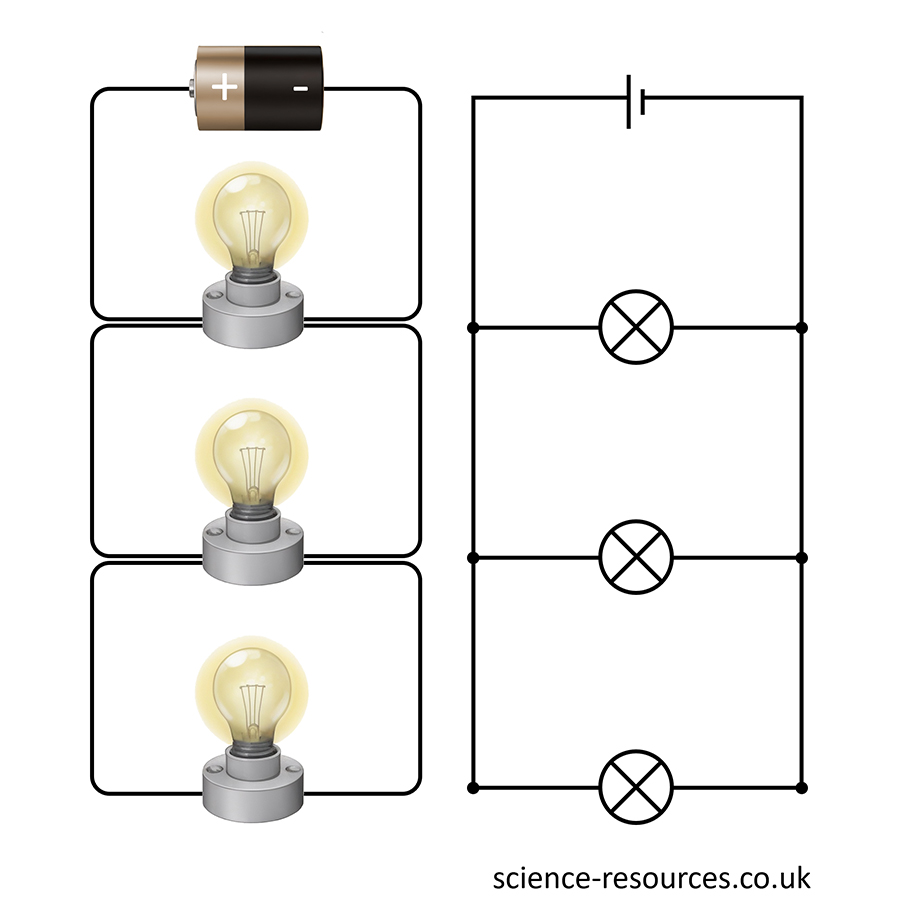
This circuit and circuit diagram contain a cell and three lamps connected in parallel.
Switches in parallel circuits
We can use switches to control which components we want to turn on and off inside a parallel circuit.
The position of switches in parallel circuit is important. If the switch is open, both lamps are off. When the switch is closed, both lamps are on.
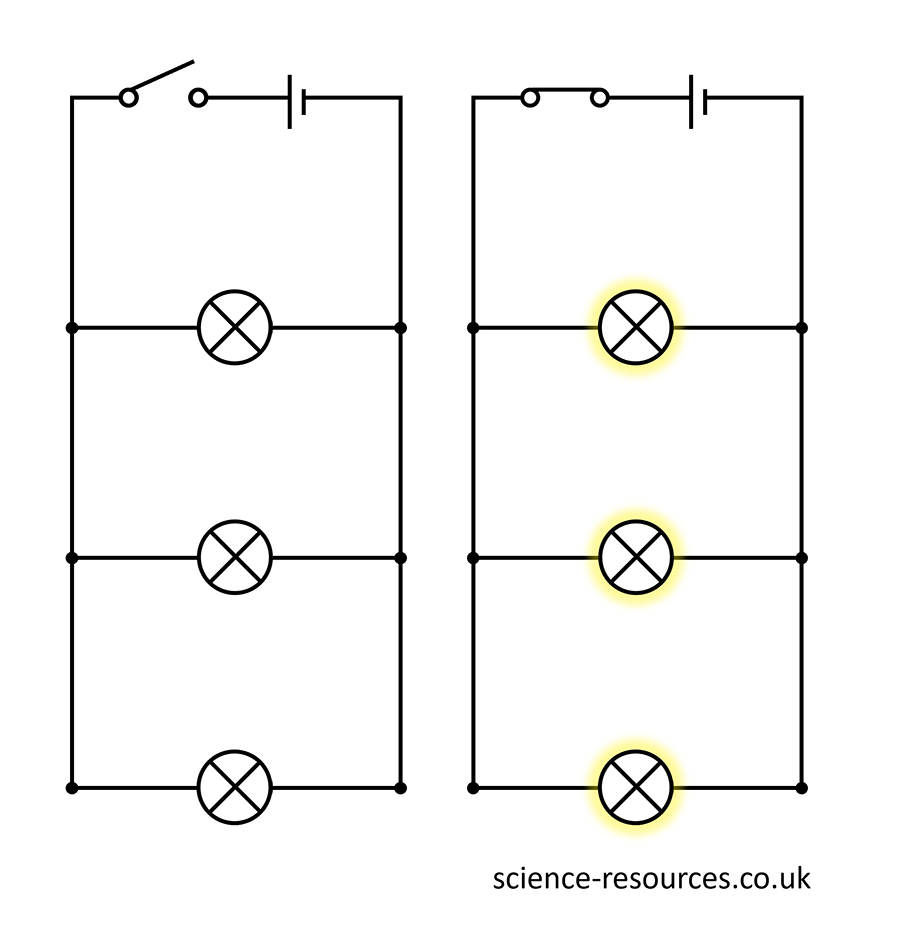
In a parallel circuit, if the switch is open, all the lamps are off but when the switch is closed, all the lamps are lit.
Let’s look at another example:
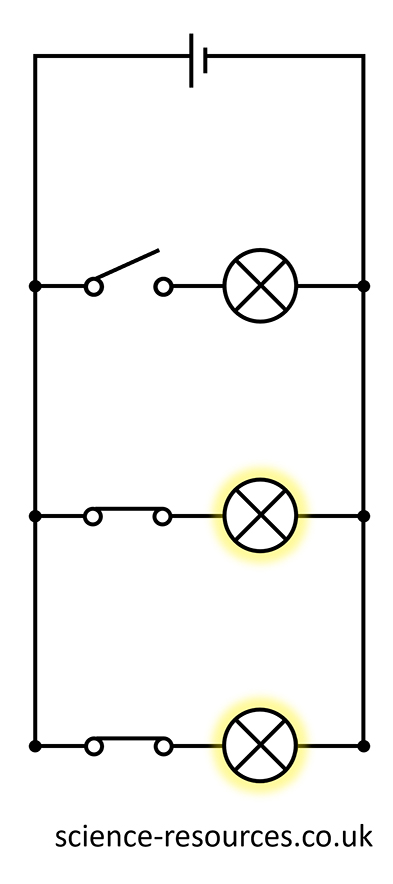
In this parallel circuit, we have a closed switch in the first branch (or loop), an open switch in the second branch and a closed switch in the third branch. In the first branch, the switch is open, so we have an incomplete circuit. Even though the switch is open, the second and third lamps will still be on.