The Earth and the Moon
Orbiting many of the planets are natural satellites,
called moons Our Earth has one moon. It moves
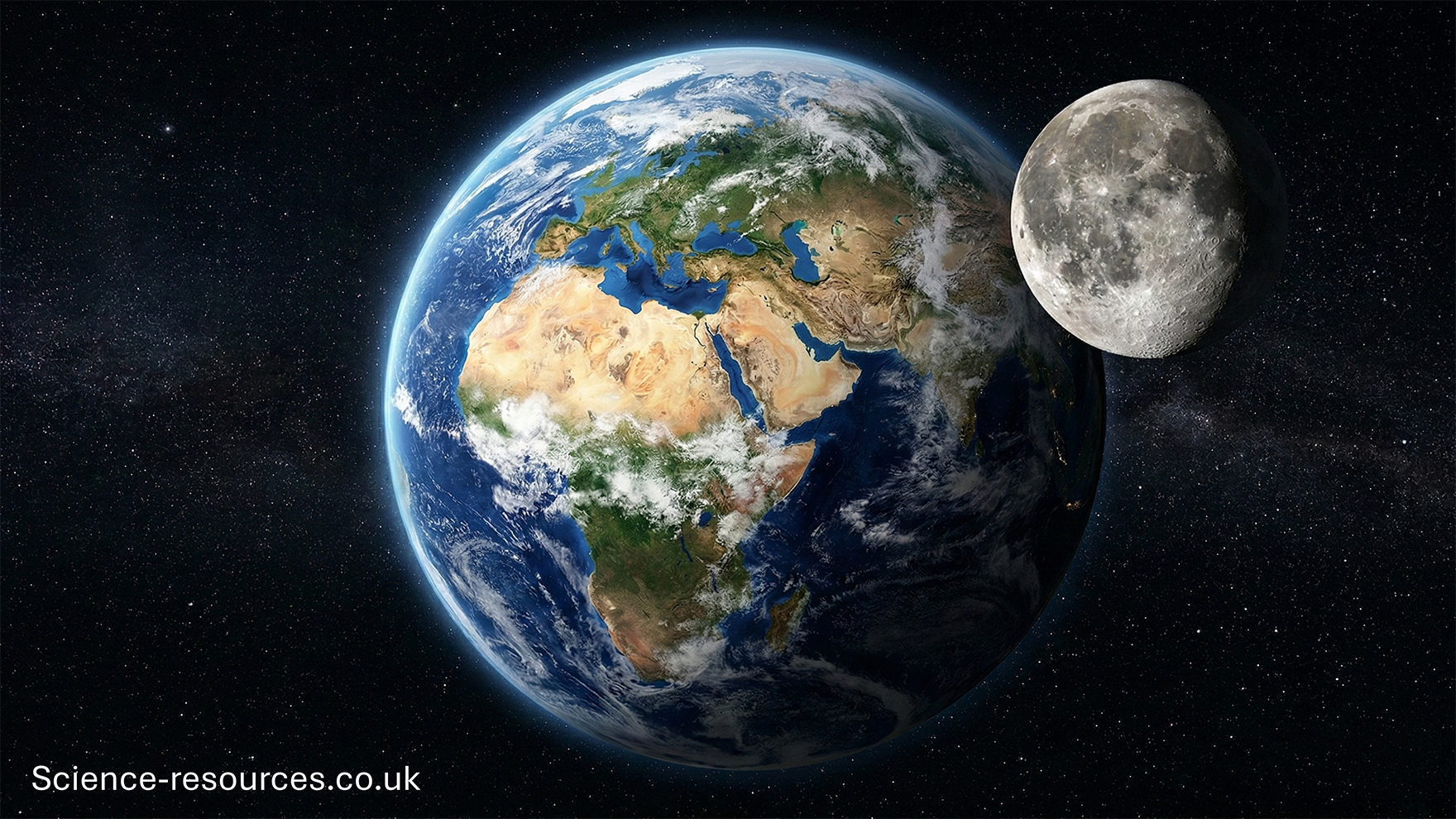
in an orbit round the Earth. It is held in this orbit by the pull of Earth's Gravity. It goes around the Earth in an anti-clockwise direction. The Earth also spins in an anti-clockwise direction at the same time from west to east. It takes one lunar
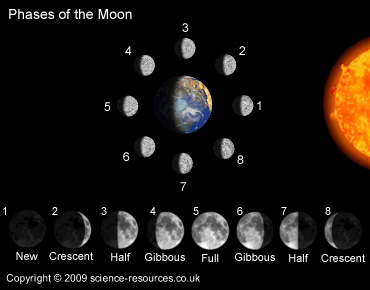
month (28 days) to complete one orbit of the Earth. The Moon is a dead object. It has no light of its own. As it goes around the Earth we see the
moon surface reflecting the Sun's
light. It looks different at different
times of the month, changes its shape. It has phases.
The phases are about 4
days apart. See animation and diagram below.
Earth's
natural satellite - the Moon
 |
What is it like on the Moon- click here?
Continue... Gravity
Test your knowledge on the movement of the Earth and the phases of the Moon based on the lesson content. 1. How long is one lunar month? 2. In which direction does the Earth spin on its axis? 3. Why are we able to see the Moon if it has no light of its own? 4. At what angle is the Earth's axis tilted? 5. Which of the following statements about the Moon is true?🌙 Knowledge Check: Earth and Moon
Click to Reveal Answers
2. Anti-clockwise (West to East).
3. It reflects light from the Sun.
4. 23 degrees.
5. The Moon is a dead object.
Tags: Earth and moon, Earth, Moon