The Solar System
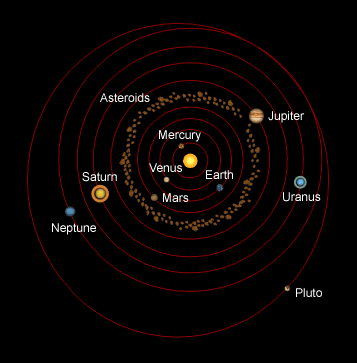
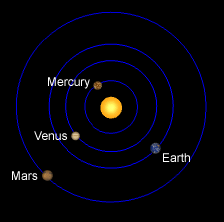
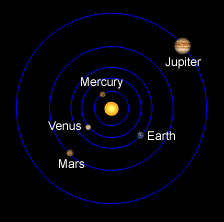
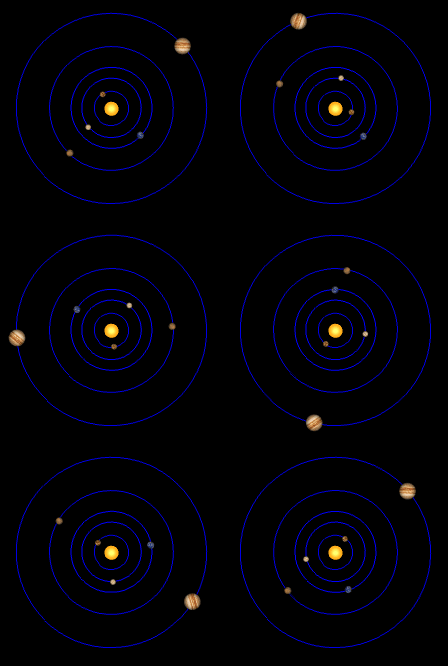
Solar System Map Inner Solar System Inner Solar System
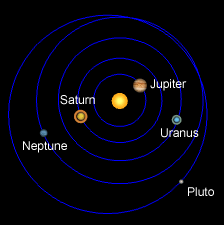
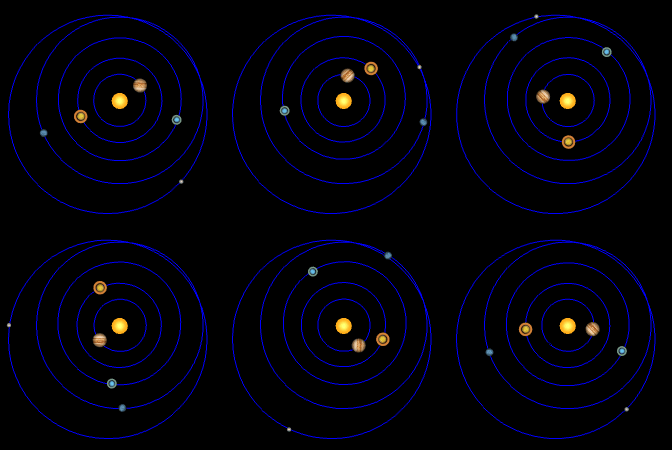
(including Jupiter) Outer Solar System
The Solar System
Test your understanding of how objects move in space and the forces that control them. 1. What is the primary force that keeps planets in orbit around the Sun? 2. Which of these best describes an 'elliptical' orbit? 3. The Moon is considered a natural satellite of Earth because: 4. How does the Sun's gravitational pull change as a planet moves further away? 5. Which of the following is an example of an artificial satellite?🔭 Knowledge Check: Orbits and Gravity
Click to Reveal Answers
2. An oval shape (Most planets have slightly elliptical orbits).
3. It is held in orbit by the Earth's gravitational pull (Moons orbit planets).
4. The gravitational pull gets weaker (Gravity decreases with distance).
5. The ISS (International Space Station) (Artificial means man-made).
Tags: Solar System, Orbits