Energy in food
Food labels Energy can change from one form to another, but it is never lost. Foods and drinks have energy stored as chemical energy. The energy amount is often shown as a calorie (kcal), but a better unit is joules (J) or kilojoules (kJ). Remember: 1 kJ = 1,000 J The energy we get from the food we eat helps our body to do all its functions. The energy amount in different foods is shown on their food labels, which also tell us about the food’s nutrients, such as fat, carbohydrates and salt.
There are many kinds of foods and drinks in supermarkets. We need them to give us enough energy for our daily activities, such as:
Here is an example of a food label: The energy section in the label above shows that each 150g serving contains 1046 kJ of energy, which is the same as 250 kcal.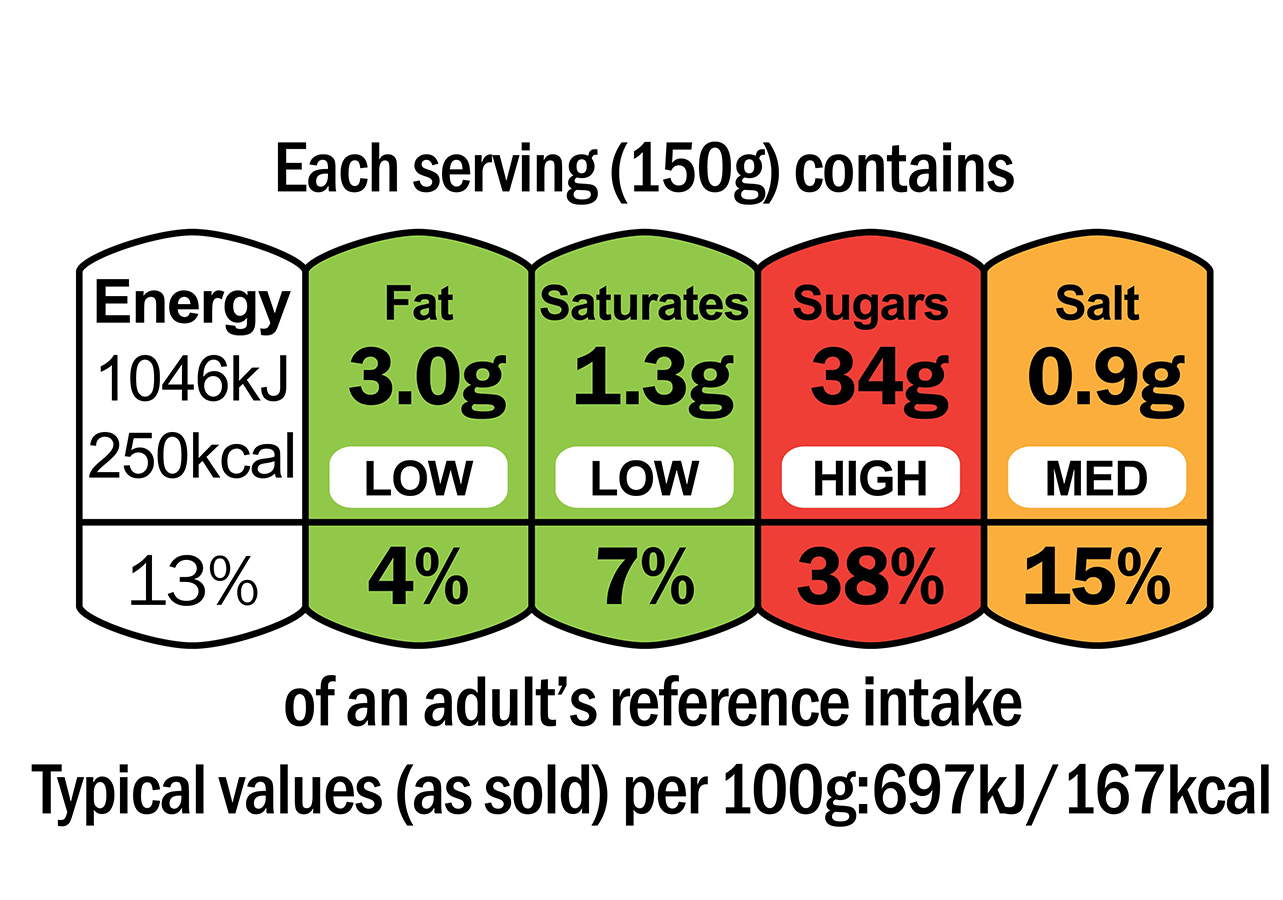
Test your knowledge on how we measure energy in our food and how our bodies use it. 1. Which two units are commonly used on labels to measure the energy content in food? 2. According to the energy values provided, which of these foods contains the most energy per 100g? 3. Why does a person's daily energy requirement increase as they get older (up until adulthood)? 4. If a 15-year-old girl requires approximately 8,000 kJ per day, how would her needs change if she became much more active? 5. Based on the activity table, which of the following uses the most energy per hour? Summary: 🍎 Knowledge Check: Food and Energy
Click to Reveal Answers
2. Peanuts (At 2382 kJ, they have a higher energy density than chocolate or apples).
3. Growth and larger body size (The body requires more energy to maintain and grow larger tissues).
4. Her energy requirement would increase (More physical activity requires more fuel for muscles).
5. Running (At 3000 kJ per hour, it is the most demanding activity listed).