Non-renewable energy resources
Generating electricity Energy resources are systems that can store a lot of energy. Energy resources can be classified into two types: Different energy resources have different availability, advantages and disadvantages. Renewable and non-renewable energy resources Non-renewable energy resources
Electricity is the main source of energy that we use in our homes. Electricity can be produced from different energy resources.
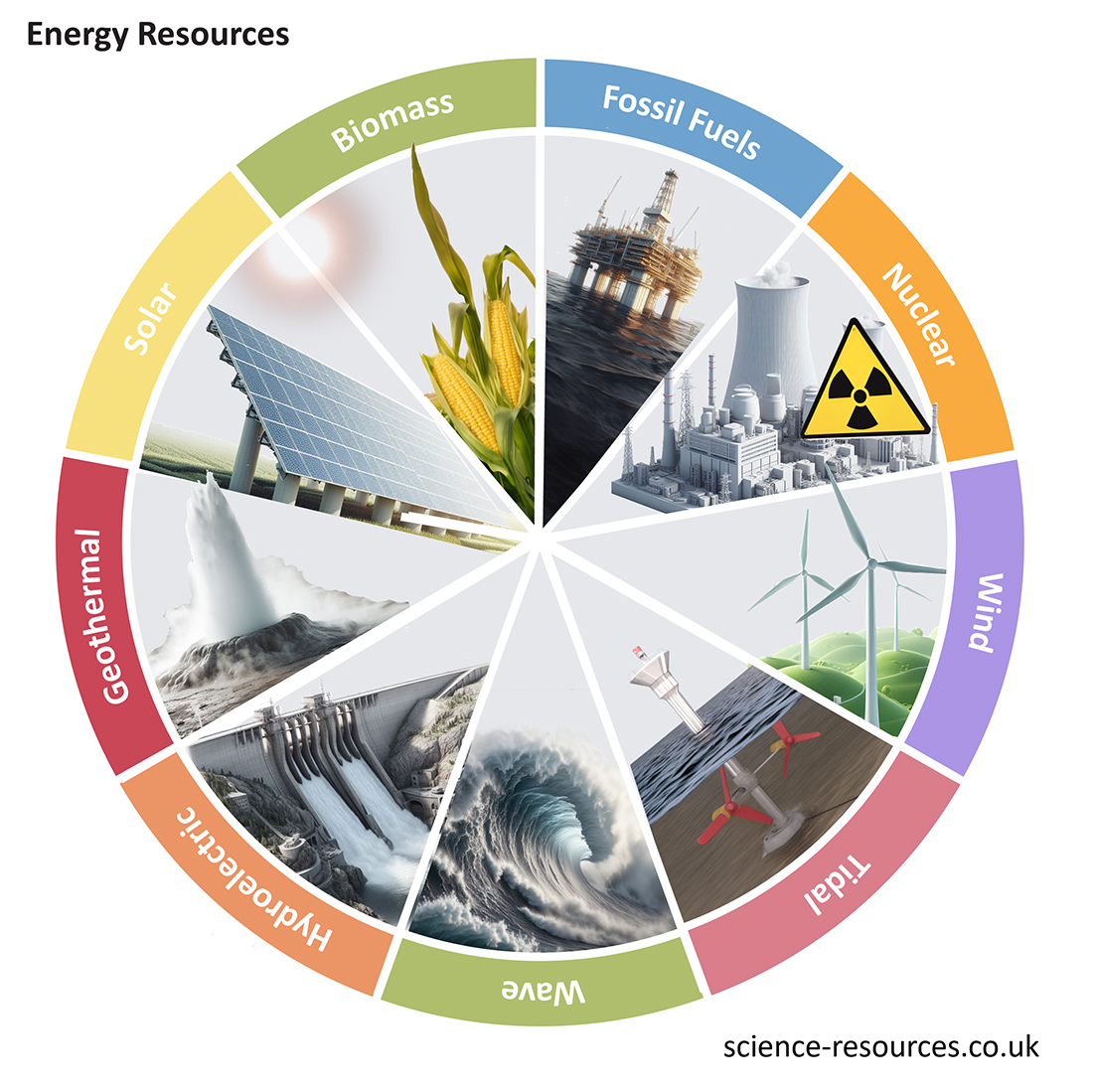
Non-renewable energy resources include coal, natural gas, oil, and nuclear energy. Once these resources are used up, they cannot be replaced.
Coal, oil and gas are all examples of fossil fuels. Coal is made from the remains of dead plants that have been fossilised. Oil and gas are made from the fossilised remains of dead sea creatures over millions of years. These fossil fuels form over millions of years, which means that once we’ve used them all, we will not be able to replace them. This is why they are called non-renewable resources.
How are fossil fuels formed? Fossil fuels were formed from dead plants and animals. All the energy that is stored in fossil fuels, as chemical energy, originally came from the Sun. Coal As the mud piled up, it compressed the plants. As coal is found deep underground, to reach it, miners dig deep shafts and tunnels. It is estimated that there is enough coal to last us 300 years. Fossils of plants are sometimes found in layers of coal. Crude Oil and Natural Gas Cross-Section of Coal and Oil Formations Once the oil is discovered, it is usually under pressure and comes up by it self. The next step is that the hole is lined with steel pipes. Then the oil is pumped through them. It is carried ashore, to an oil refinery, in pipes that run along the land or sea bed. Coal, natural gas and crude oil are fossil fuels. They are an extremely valuable resource and must be used carefully and efficiently because we have a very limited supply of them and the fact that they are non-renewable resources. Advantages and Disadvantages of Fossil Fuels Advantages Disadvantages
About 300 million years ago, the Earth surface was overrun with plant life. Plants died and fell into swampy water and were covered by mud, which stopped them from rotting.
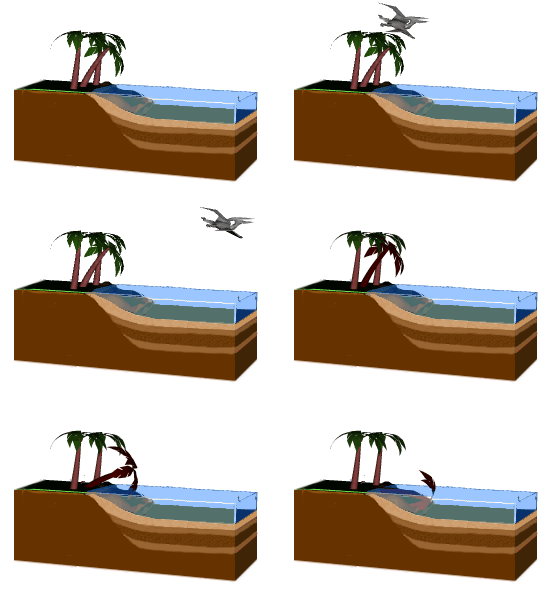
After millions of years of pressure the mud became rock and the plants turned into coal.
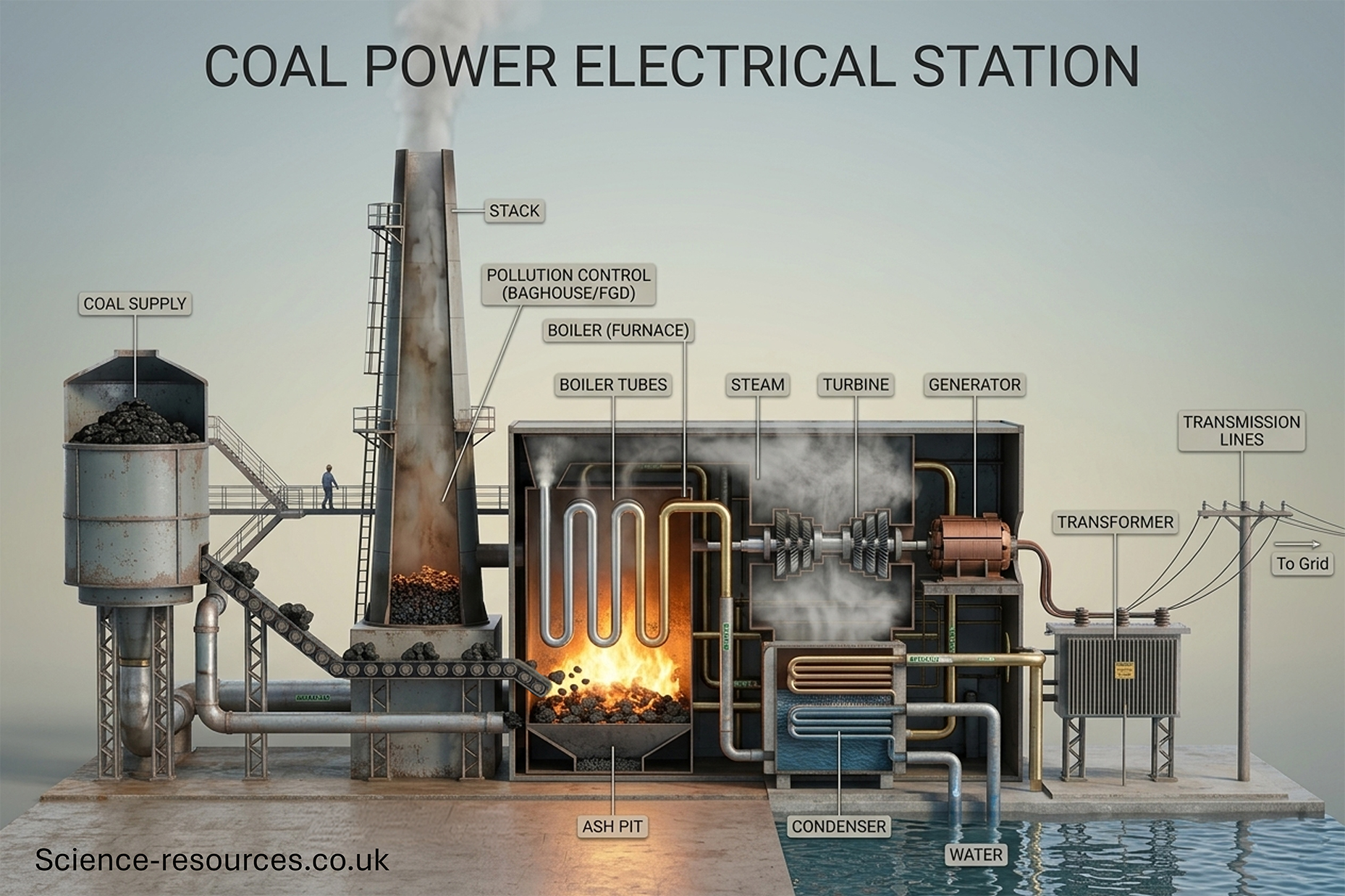 Diagram of a Coal Power Electrical Station
Crude oil and natural gas were formed under similar circumstances as coal. Many parts of the Earth were under water which contained many animals. These animals died and were immediately covered by sediments on the seabed. The dead sea creatures were buried under many layers of mud and sand. They did not decay.
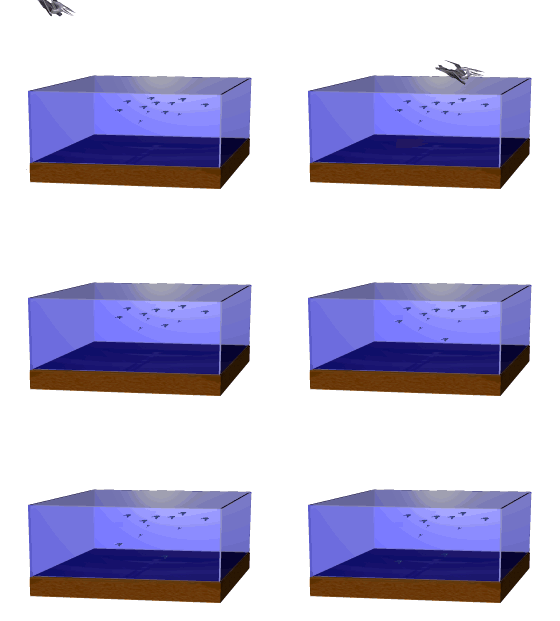
After many millions of years of pressure and heat (90°C to 120°C) this process turned the mud and sand into rock and dead animals into crude oil and natural gas. These two are found very deep underground between layers of impermeable rock. These rocks prevents the oil from seeping through.
Natural gas is found in pockets on top of the crude oil under a layer of non-porous rock. The gas is a mixture of compounds made up of hydrogen and carbon only. These are small molecules with a low molecular mass.
This gas is used on a large scale as a fuel. It is also used for the manufacture of more complex organic substances.
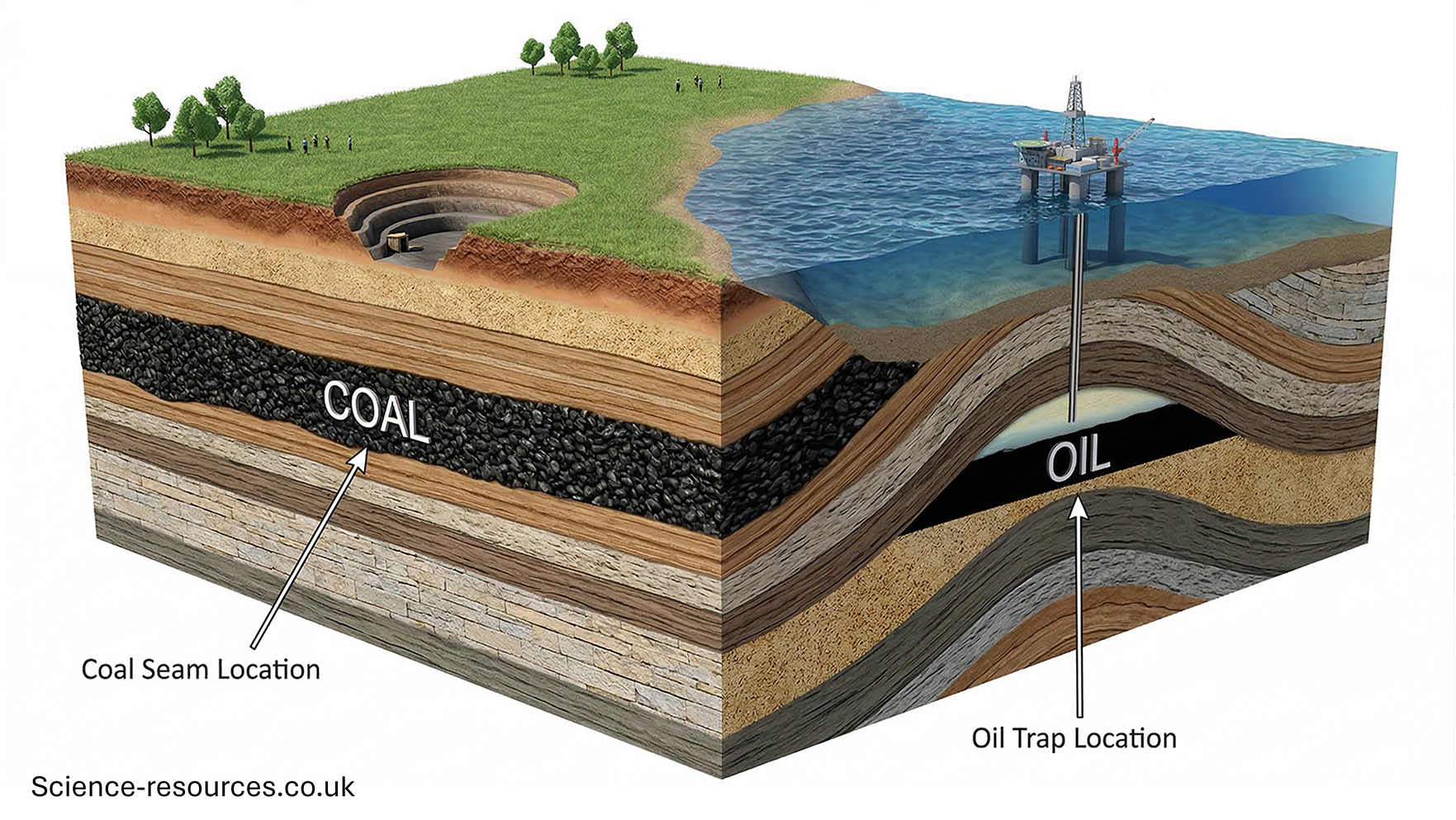
Oil is usually found approximately 2 to 3 miles beneath the ground. It is trapped in rocks as shown on the diagram opposite. To get at the oil, a hole is bored, either in the ground or sea bed, using giant drills. The drill is hung from a giant metal frame, like the one on the left or from a drilling platform in the case of over water, like the one on the right.
Test your knowledge on fossil fuels and nuclear energy resources. 1. Why is nuclear energy considered a non-renewable resource? 2. Which of the following was formed from the remains of tiny sea creatures? 3. Coal was originally formed millions of years ago from: 4. What is a significant environmental disadvantage of burning fossil fuels? 5. Which statement about nuclear power stations is true? Summary: 🔬 Knowledge Check: Non-renewable Energy
Click to Reveal Answers
2. Crude Oil and Gas (Formed from sea organisms buried in sediment).
3. Ancient swamp plants and trees (Buried millions of years ago).
4. Release carbon dioxide (This contributes to global warming via the greenhouse effect).
5. Produce large amounts of energy from small fuel amounts (This is an advantage of nuclear power).