Life cycle of a star
Star formation Example of a stellar nursery, where new stars are born. The Sun is in the stable phase of its lifecycle, also known as the main sequence stage.
Stars are born from huge clouds of dust and gas, called nebulae. Gravity makes the dust and gas come together and this squeezes the gas, making the temperature go up.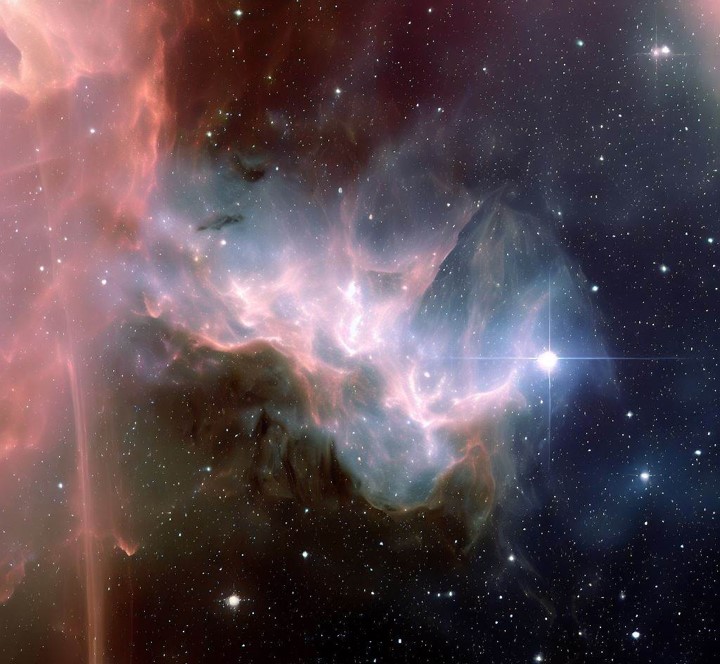
When the gas gets hot enough, nuclear fusion reactions start. This generates heat and light.
The star will keep emitting energy for many millions of years. This phase of the star’s lifecycle is known as the main sequence phase.
The Sun is currently in the main sequence phase.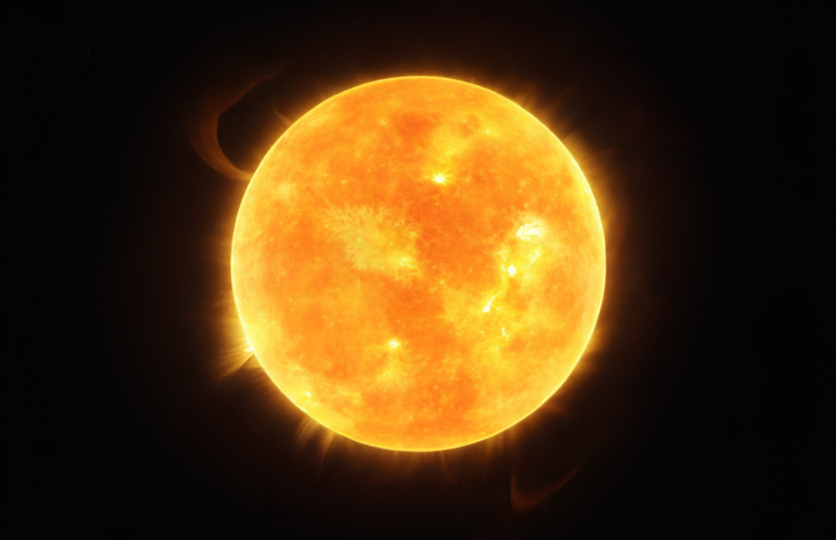
What happens at the end of the life of a star? Life cycle of a star
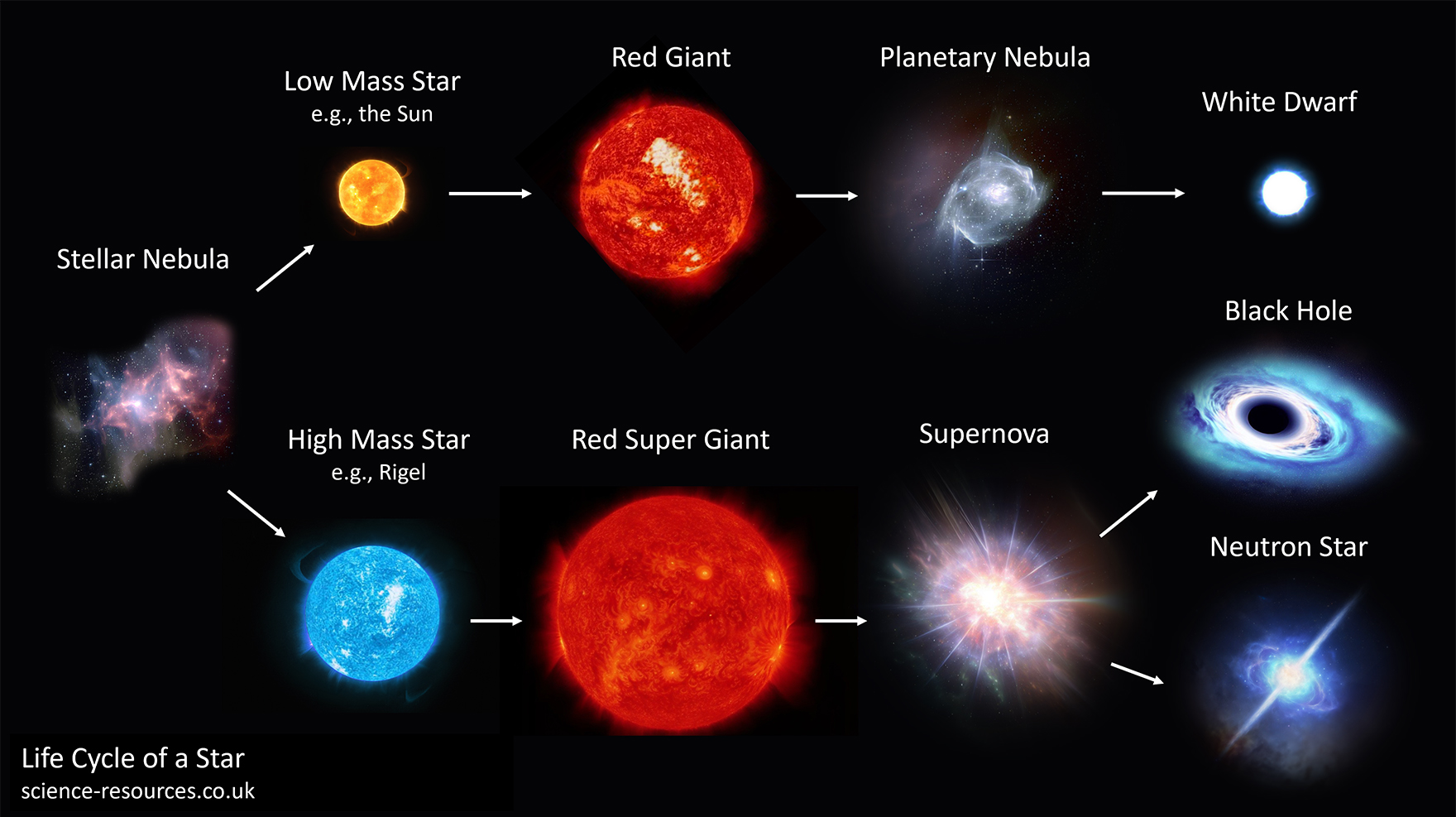
When a star runs out of most of the hydrogen in its core, it can no longer release energy by nuclear fusion. Small stars like the Sun will shrink in size and cool down until they finally stop emitting energy and turn into a black dwarf.
Stars that are much more massive than the Sun have a different sequence of changes at the end of their lives, and this can lead to a huge explosion called a supernova. Afterwards, they can become a neutron star or a black hole.
Test your understanding of stellar evolution based on the information provided on the page. 1. What is a 'Nebula'? 2. What force is responsible for pulling dust and gas together to form a protostar? 3. Which stage follows the 'Main Sequence' for a star about the same mass as our Sun? 4. What determines whether a star will eventually become a neutron star or a black hole? 5. What is the small, hot, dense remnant left behind after a red giant sheds its outer layers? Summary: ⭐ Knowledge Check: Star Lifecycle
Click to Reveal Answers
2. Gravity (The force that clumps stellar matter together).
3. Red Giant (Average mass stars expand into red giants after the main sequence).
4. Its initial mass (Only the most massive stars end as black holes).
5. White Dwarf (The final cooling stage for stars like our Sun).