Dinosaurs A:Z | O
You may also be intrested in: Free Dinosaur games
Dinosaurs: Ouranosaurus (Brave Lizard)
You may also be intrested in: Free Dinosaur games
Ouranosaurus was a remarkable dinosaur that roamed the Earth during the Early Cretaceous Period, about 125–112 million years ago in what is now North Africa (mainly Niger). It is best known for the tall, sail-like structure on its back, which looked a bit like a giant fin or a stretched-out hump! Scientists think Ouranosaurus may have used this sail for display, temperature control, or to store fat, much like a modern-day camel. Ouranosaurus was a large, plant-eating dinosaur. It could grow up to 7 metres (23 feet) in length and stood about 2.7 metres (9 feet) tall at the hips. Weighing around 2–4 tonnes (about as much as a small van), it was an impressive sight in its ancient world! Ouranosaurus had a long, flat tail, sturdy hind legs, and could walk on both two legs and all fours. Its most distinctive feature was its tall sail, made of long spines extending from its back vertebrae, possibly covered with skin or fat. This sail could have been brightly coloured to attract mates or warn off rivals. The rest of its body was covered in scaly skin, and it had a thumb spike on each hand, possibly used for defence.
Ouranosaurus was a herbivore, meaning it ate only plants. It had a broad, beak-like mouth and rows of teeth perfect for grinding tough vegetation. Its diet probably included ferns, cycads, and conifers, which were common in its swampy, river-filled environment. Fossils of Ouranosaurus have been found in the Elrhaz Formation of Niger, North Africa. During the Early Cretaceous, this area was a lush, river-filled landscape with plenty of plants, making it a perfect home for a plant-eater.
What is an Ouranosaurus?
How big was Ouranosaurus?
Appearance
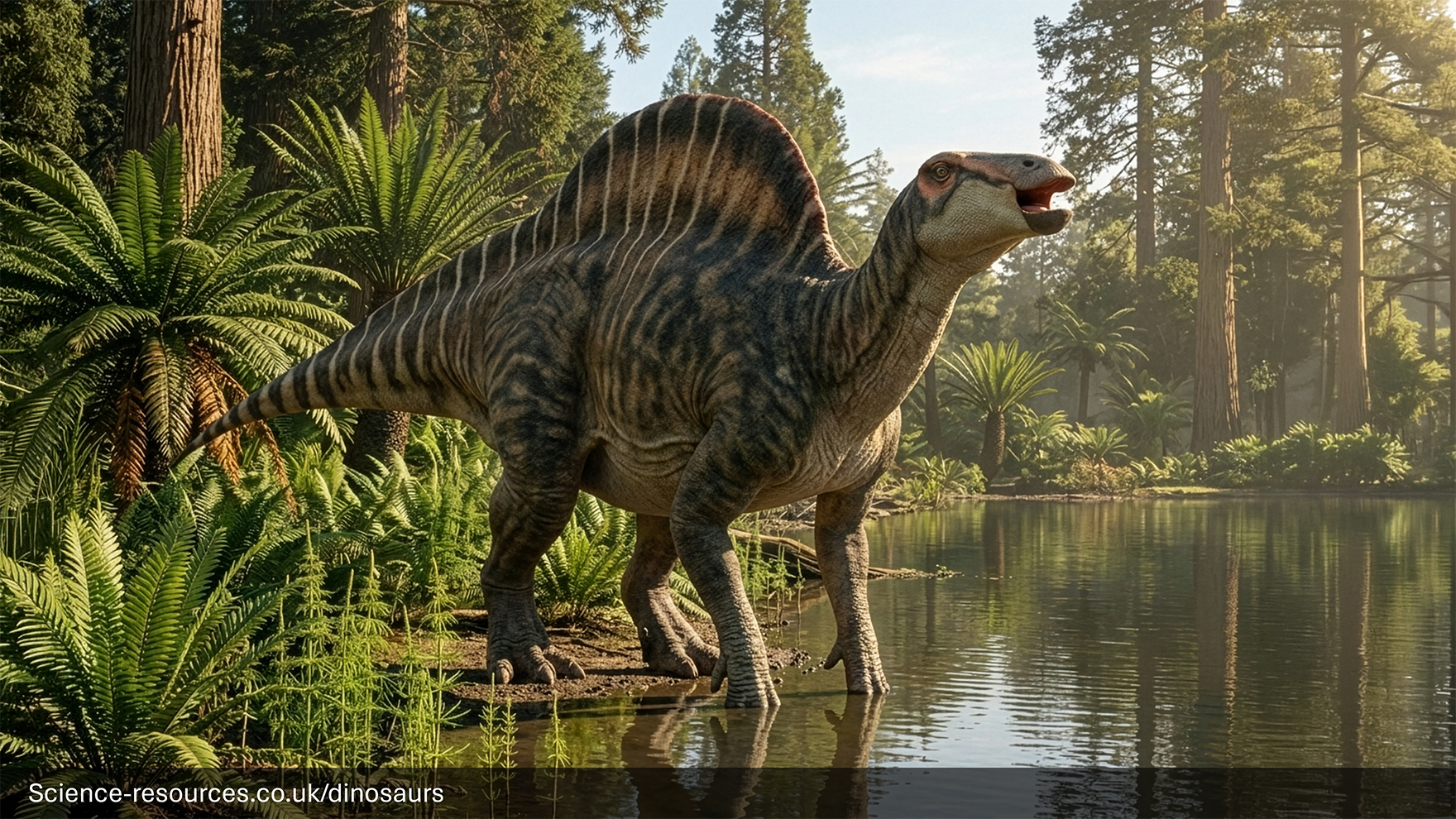 Ouranosaurus
What did Ouranosaurus eat?
Where did Ouranosaurus live?
Interesting facts
Pronounced: oo-RAH-noh-SORE-us Name Means: "Brave Lizard" (from the Tuareg word "ourane" meaning brave) Length: up to 7 m (23 feet) Height: up to 2.7 m (9 feet) at the hips Weight: about 2,000–4,000 kilograms (2–4 tonnes) Diet: Herbivore (plants) Time: Early Cretaceous (about 125–112 million years ago) Fossils Found: North Africa (Niger)
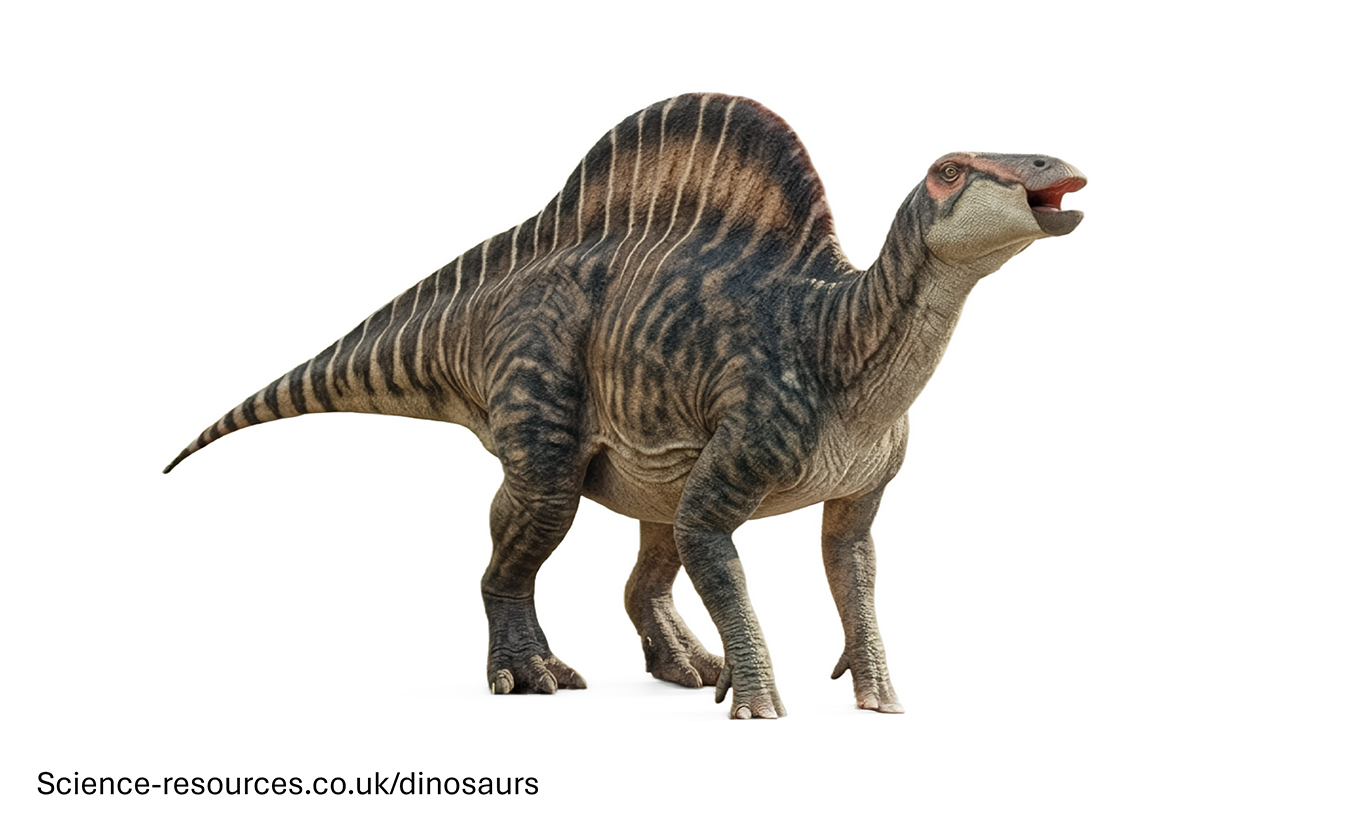
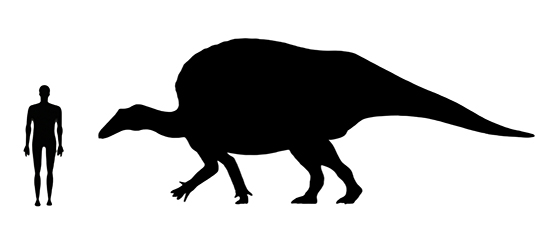
Ouranosaurus Facts
Ouranosaurus was part of the Iguanodontidae family, a group of plant-eating dinosaurs known for their beak-like mouths and thumb spikes. Iguanodonts were widespread during the Early Cretaceous in Europe, Africa, and Asia.
Scientists believe Ouranosaurus may have lived in groups, or herds, much like modern grazing animals. Living in herds would have helped protect them from predators and made it easier to find food and care for the young.
During the Early Cretaceous, Ouranosaurus shared its habitat with several large carnivores that could have posed a threat, especially to youngsters or sick individuals. One of the main predators was likely Suchomimus, a sizeable, fish-eating spinosaurid with strong jaws and claws. While Suchomimus primarily hunted aquatic prey, it may have taken advantage of vulnerable Ouranosaurus if the opportunity arose. Another possible predator was Kryptops, a meat-eating abelisaurid, which might have targeted smaller or weaker members of a herd. In addition, enormous prehistoric crocodiles like Sarcosuchus lurked in the same rivers and could have ambushed Ouranosaurus while drinking or crossing waterways. Living in groups would have helped Ouranosaurus keep watch for these dangers and improve their chances of survival.
Yes! Ouranosaurus had a row of tall spines, some up to 1 metre (3.3 feet) long, running along its back, forming a large sail or hump. Scientists are still debating its exact purpose, but it might have helped with temperature regulation, storing fat, or attracting mates.
During the Early Cretaceous, Ouranosaurus shared its world with other dinosaurs, such as:
- Suchomimus: A large, fish-eating dinosaur with a long, crocodile-like snout.
- Lurdusaurus: Another plant-eating iguanodont, but bulkier and heavier than Ouranosaurus.
- Kryptops: A meat-eating dinosaur, and a possible predator of smaller or young Ouranosaurus.
- Sarcosuchus: Not a dinosaur, but a giant prehistoric crocodile living in the same rivers!
Q1: What is an Ouranosaurus?
A1: Ouranosaurus was a plant-eating dinosaur from the Early Cretaceous period, known for the distinctive tall sail or hump on its back.
Q2: When did Ouranosaurus live?
A2: It lived around 125–112 million years ago in what is now North Africa.
Q3: How big was Ouranosaurus?
A3: It was about 7–8 metres long and could weigh around 2 tonnes, roughly the size of a large van.
Q4: What did the sail on its back do?
A4: Scientists aren’t sure, but it may have been used for temperature control, display, or for storing fat reserves like a camel’s hump.
Q5: What did Ouranosaurus eat?
A5: It was a herbivore, eating plants such as ferns, leaves, and possibly early flowering plants.
Q6: How did Ouranosaurus move?
A6: It could walk on four legs most of the time but likely stood or ran on two legs when needed.
Q7: Where have Ouranosaurus fossils been found?
A7: Most fossils come from Niger in Africa.
Q8: Did Ouranosaurus live alone or in groups?
A8: Many palaeontologists think it lived in herds, which helped protect it from large predators.
Q9: What predators did Ouranosaurus face?
A9: It lived alongside dangerous hunters such as Carcharodontosaurus and huge crocodile-like reptiles like Sarcosuchus.
Q10: What makes Ouranosaurus unique?
A10: Its combination of a long, low body, a tall sail or hump, and a duck-bill-like face makes it one of the most distinctive dinosaurs of the Early Cretaceous.
Generative AI Notification: Some elements of this image have been created or enhanced using AI technology. To find out how we create all our dinosaurs, click here.
Which family of Dinosaurs did Ouranosaurus belong to?
Did Ouranosaurus live in herds?
What were the predators of Ouranosaurus?
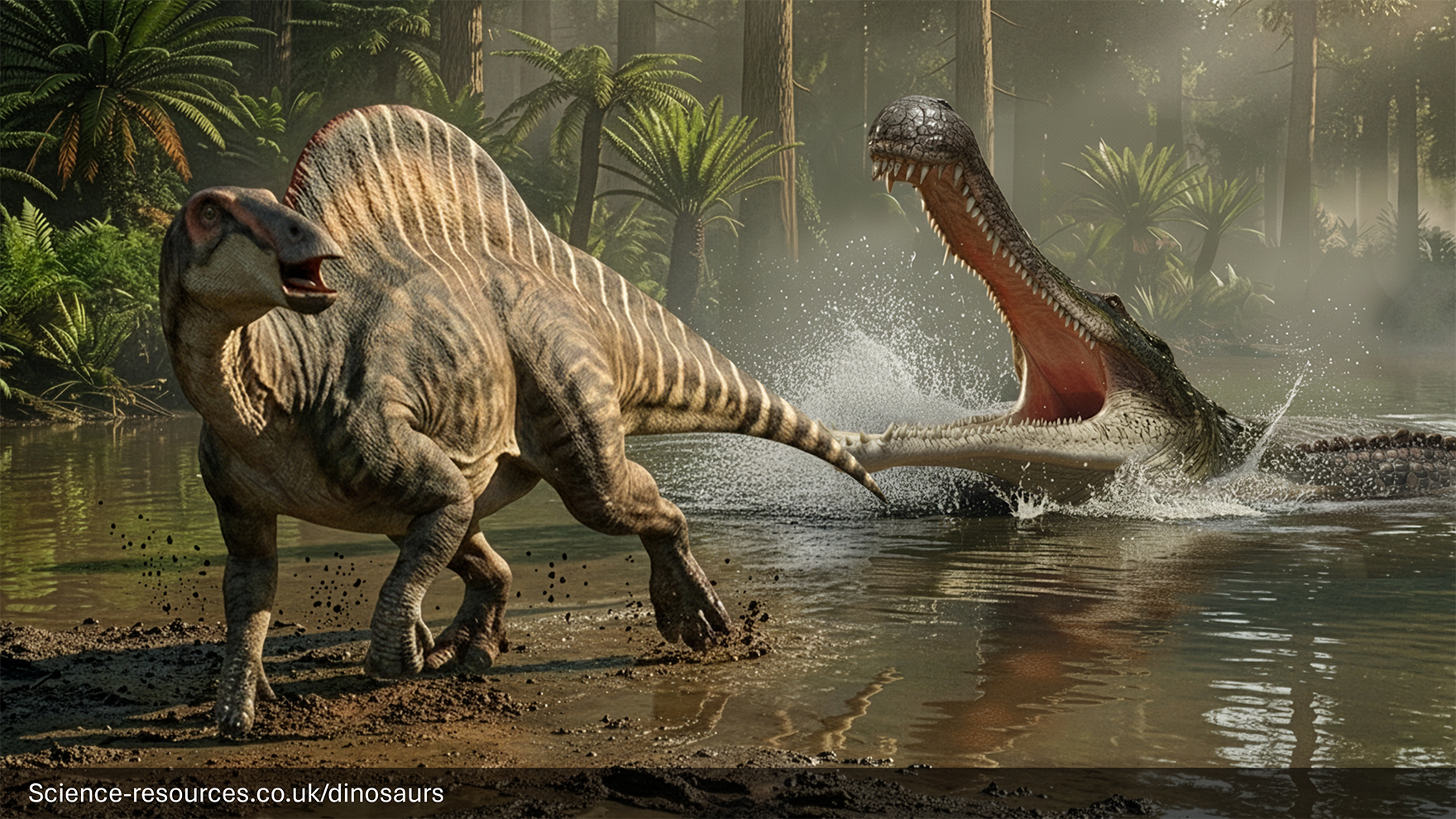 Ouranosaurus flees as a Sarcosuchus lunges from the water in a dramatic prehistoric ambush.
Did Ouranosaurus have a sail like Spinosaurus?
What other dinosaurs lived at the same time as Ouranosaurus?
Ouranosaurus FAQ
You may also be intrested in:
Tags: How big was Ouranosaurus, Ouranosaurus size, where does Ouranosauruss live, how tall are Ouranosaurus, what does Ouranosaurus mean, Ouranosaurus, Ouranosaurus facts