Dinosaurs A:Z | S
You may also be intrested in: Free Dinosaur games
Dinosaurs and other prehistoric animals:
Sarcosuchus (Flesh Crocodile)
You may also be intrested in: Free Dinosaur games
Last updated: 7th August 2025 Sarcosuchus was a gigantic prehistoric reptile that lived millions of years ago. It is not a dinosaur, but a type of ancient crocodyliform, a relative of today’s crocodiles. Its name means "flesh crocodile," which gives a clue to its fearsome nature! Sarcosuchus lived during the Early Cretaceous period, which was around 133 to 112 million years ago. Fossils of Sarcosuchus have been found in Africa, particularly in regions that are now part of the Sahara Desert, such as Niger and Tunisia. Length: Sarcosuchus could grow to about 11–12 metres (36–39 feet) long, making it one of the largest crocodyliforms ever discovered. Weight: It is estimated to have weighed up to 8 tonnes, roughly as much as a school bus! Sarcosuchus had a long, broad snout packed with over 100 teeth, ideal for catching slippery prey. Its body was covered in tough, armour-like scales, and it had a powerful tail to help it swim. Unlike modern crocodiles, its snout was much longer and broader, giving it a unique look. Sarcosuchus was a carnivore, meaning it ate meat. It likely hunted large fish, turtles, and possibly even small dinosaurs or other animals that ventured too close to the water’s edge. Its massive jaws and conical teeth were perfect for gripping and crushing prey. What is Sarcosuchus?
When and where did Sarcosuchus live?
How big was Sarcosuchus?
Appearance
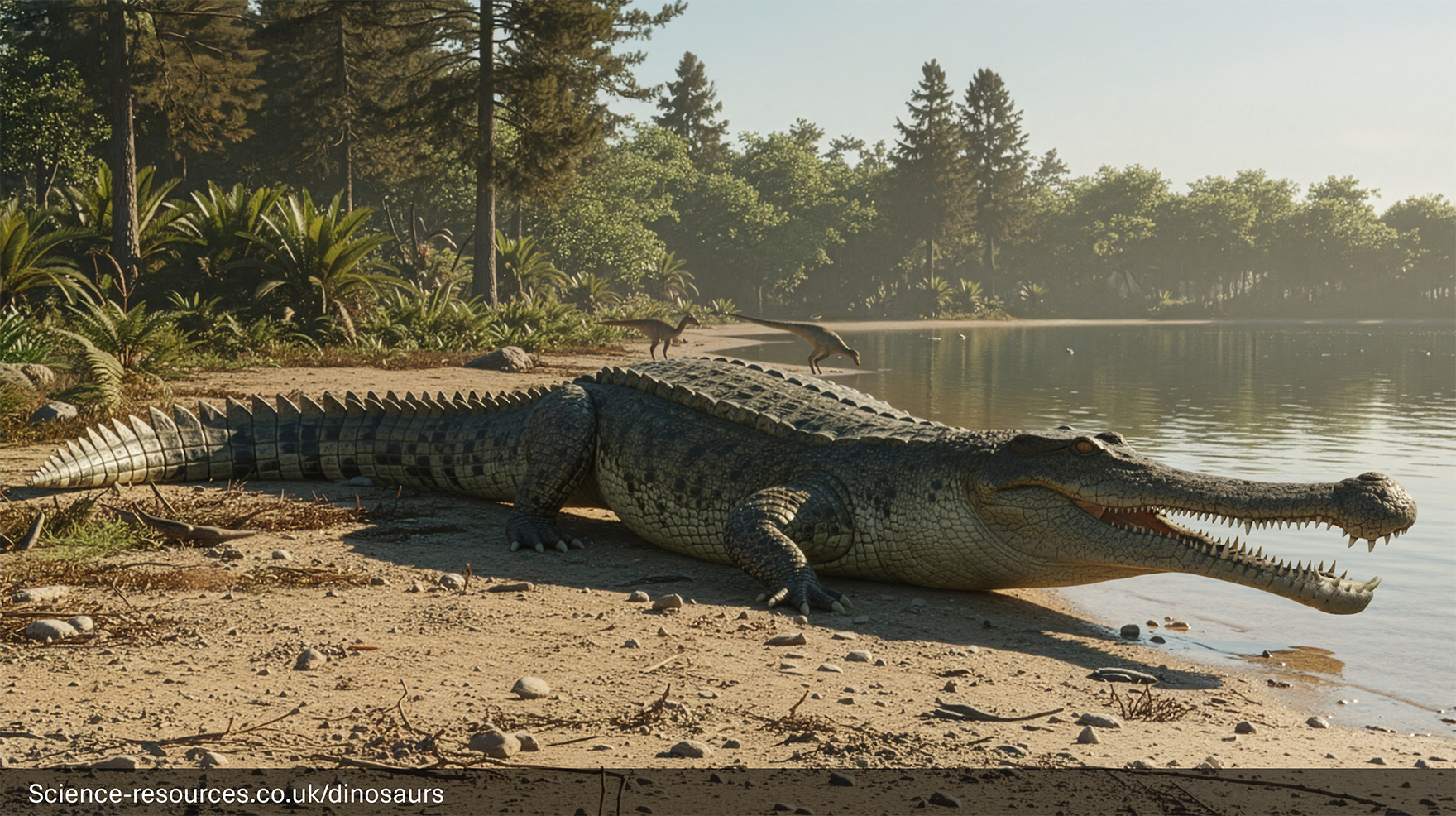 Sarcosuchus
What did Sarcosuchus eat?
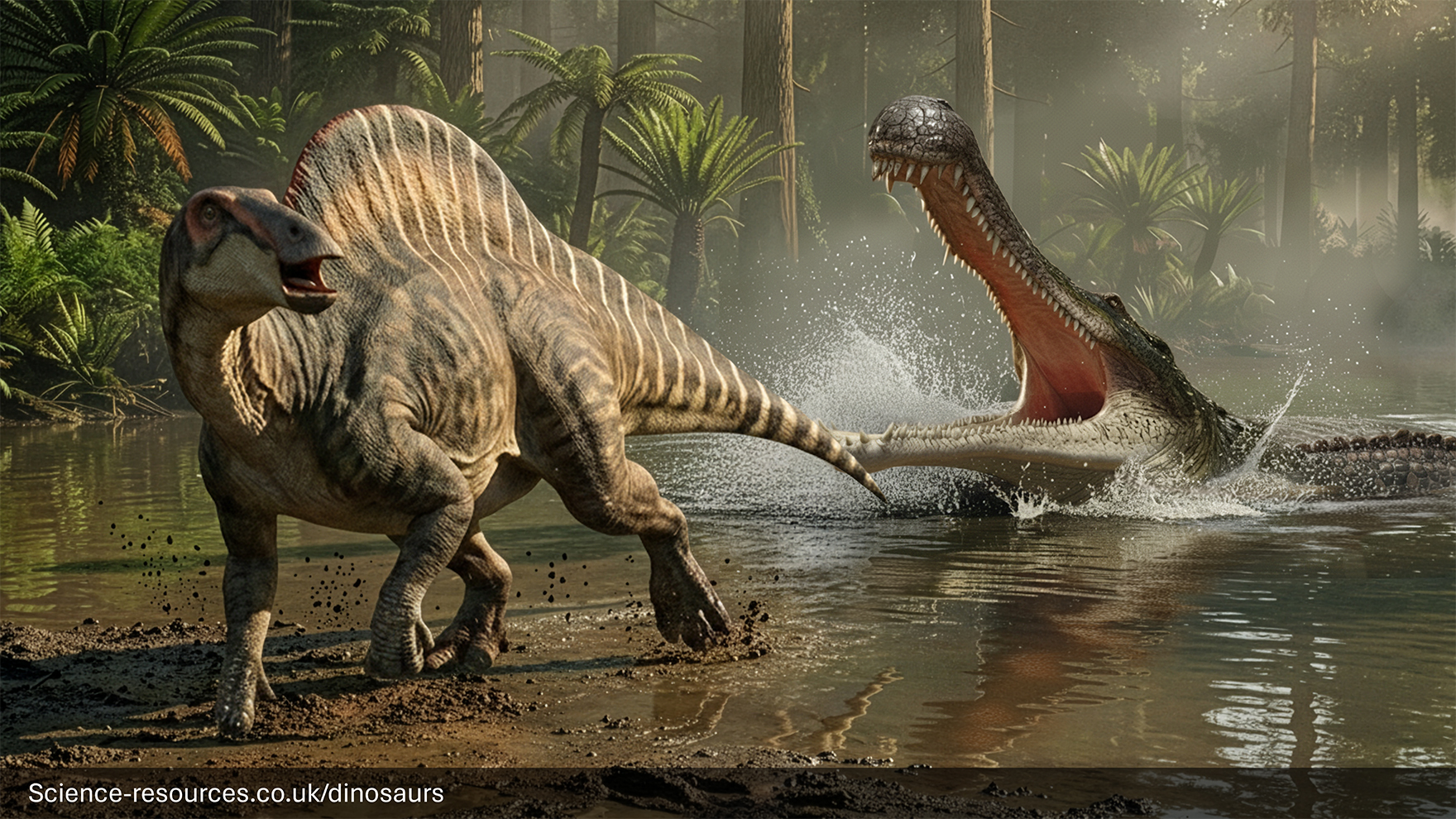 Ouranosaurus flees as a Sarcosuchus lunges from the water in a dramatic prehistoric ambush.
Interesting facts
Pronounced: sar-ko-SOO-kus Name Means: "Flesh crocodile" Length: Up to 11–12 metres (36–39 feet) Diet: Carnivore (Fish, dinosaurs, other prey) Time: Early Cretaceous – around 133 to 112 million years ago Habitat: Ancient river systems and wetlands Fossils Found: Africa (notably Niger) and South America
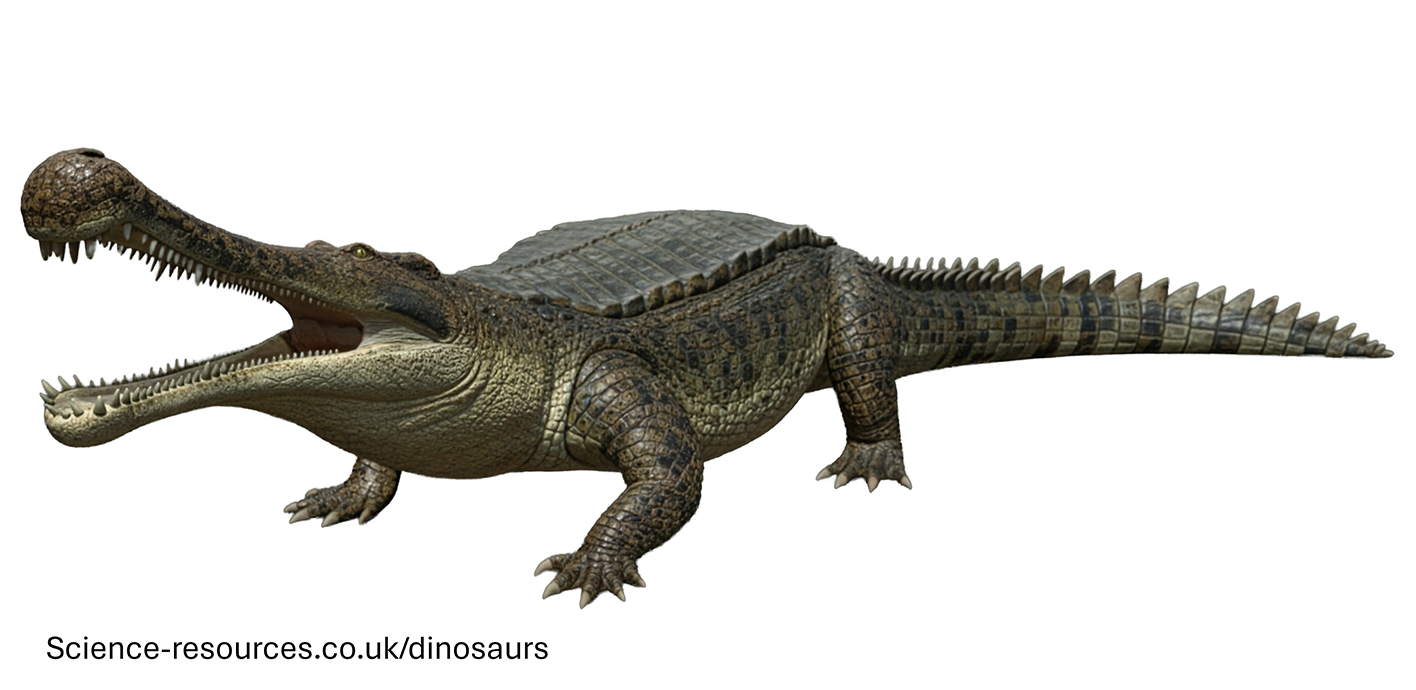
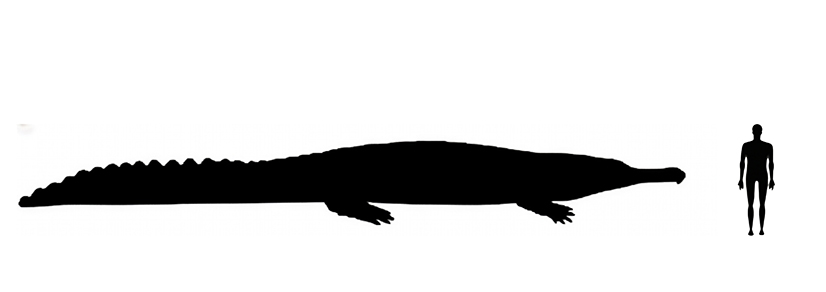
Sarcosuchus belonged to the crocodyliforms, a group related to modern crocodiles. However, it was not a true crocodile, but a distant cousin from a time when reptiles ruled the rivers.
Sarcosuchus was a strong swimmer, using its muscular tail to propel itself through water. On land, it would have moved slowly, dragging its massive body, much like modern crocodiles do today. Its body shape was perfect for lurking in the water and ambushing prey.
During the Early Cretaceous Period, which lasted for about 79 million years, Sarcosuchus shared the planet with a multitude of other fascinating dinosaurs and prehistoric animals. Some of the notable contemporaries of Sarcosuchus include:
Which family of reptiles did Sarcosuchus belong to?
How did Sarcosuchus move?
What Were the Unique Features of Sarcosuchus?
What other Dinosaurs / Prehistoric animals lived at the same time as Sarcosuchus?
These diverse inhabitants of the Early Cretaceous Period contributed to a vibrant and complex ecosystem, each playing unique roles in their environment.
Sarcosuchus FAQ
Q1: What is a Sarcosuchus?
A1: Sarcosuchus was a gigantic prehistoric crocodile-like reptile, often nicknamed “SuperCroc” because of its enormous size.
Q2: When did Sarcosuchus live?
A2: It lived during the Early Cretaceous period, about 133–112 million years ago.
Q3: How big was Sarcosuchus?
A3: It could reach about 11–12 metres long and weigh up to 8 tonnes, making it much larger than modern crocodiles.
Q4: What did Sarcosuchus eat?
A4: It was a carnivore and probably ate large fish, turtles, and sometimes dinosaurs that came too close to the water.
Q5: Where have Sarcosuchus fossils been found?
A5: Fossils have been discovered mainly in Niger and Brazil, showing it lived in warm, swampy river systems.
Q6: What made Sarcosuchus different from modern crocodiles?
A6: It had a long, narrow snout filled with over 100 teeth, and a bulb-like bump at the end of its nose called a bulla.
Q7: How strong was its bite?
A7: Its bite wasn’t as powerful as a modern saltwater crocodile’s, but its jaws were built for grabbing and holding slippery prey like fish.
Q8: How did Sarcosuchus hunt?
A8: It likely used an ambush strategy, hiding in shallow water before lunging at prey that came near the river’s edge.
Q9: Did Sarcosuchus live alongside dinosaurs?
A9: Yes. It shared its environment with many dinosaurs, including herbivores like Ouranosaurus and large predators.
Q10: Why is Sarcosuchus important to scientists?
A10: It helps palaeontologists understand how ancient crocodiles evolved and how prehistoric river ecosystems worked.
You may also be intrested in:
- How we create our dinosaurs
- How big were dinosaurs
- Dinosaurs: A-Z
Tags: How big was Sarcosuchus, Sarcosuchus size, where does Sarcosuchus live, how long was Sarcosuchus, what does Sarcosuchus mean, Sarcosuchus, Mosasaur, Sarcosuchus factsGenerative AI Notification: Some elements of this image have been created or enhanced using AI technology. To find out how we create all our dinosaurs, click here.