The circulatory system
Blood vessels – arteries, veins and capillaries Arteries Veins Veins: Capillaries
Blood vessels are tubes that carry blood in your body. There are three kinds: arteries, veins, and capillaries.
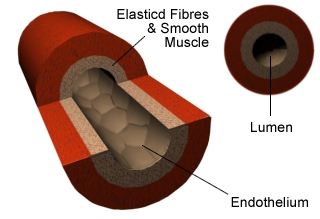
Arteries take blood away from the heart after it is pumped. The blood is under high pressure. The arteries have thick and elastic muscle walls to handle this pressure. The elastic walls also let the blood pulse when your heart beats.
Arteries:
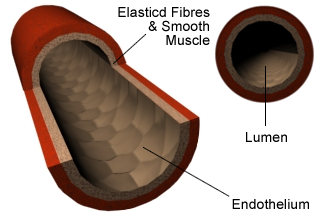
Veins bring blood back to the heart. The blood is under low pressure because some of it is lost as it goes around your body. The veins have thin and less elastic muscle walls than arteries. The veins have one-way valves to stop the blood from going backwards.
Capillaries are very small blood vessels that go into every tissue in your body. They carry oxygen and glucose for respiration to your cells and take away carbon dioxide and other wastes. They have very thin walls to let these substances move in and out of your cells by diffusion. Capillaries connect your arteries and veins.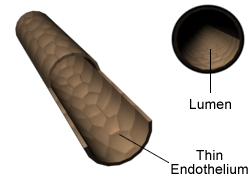
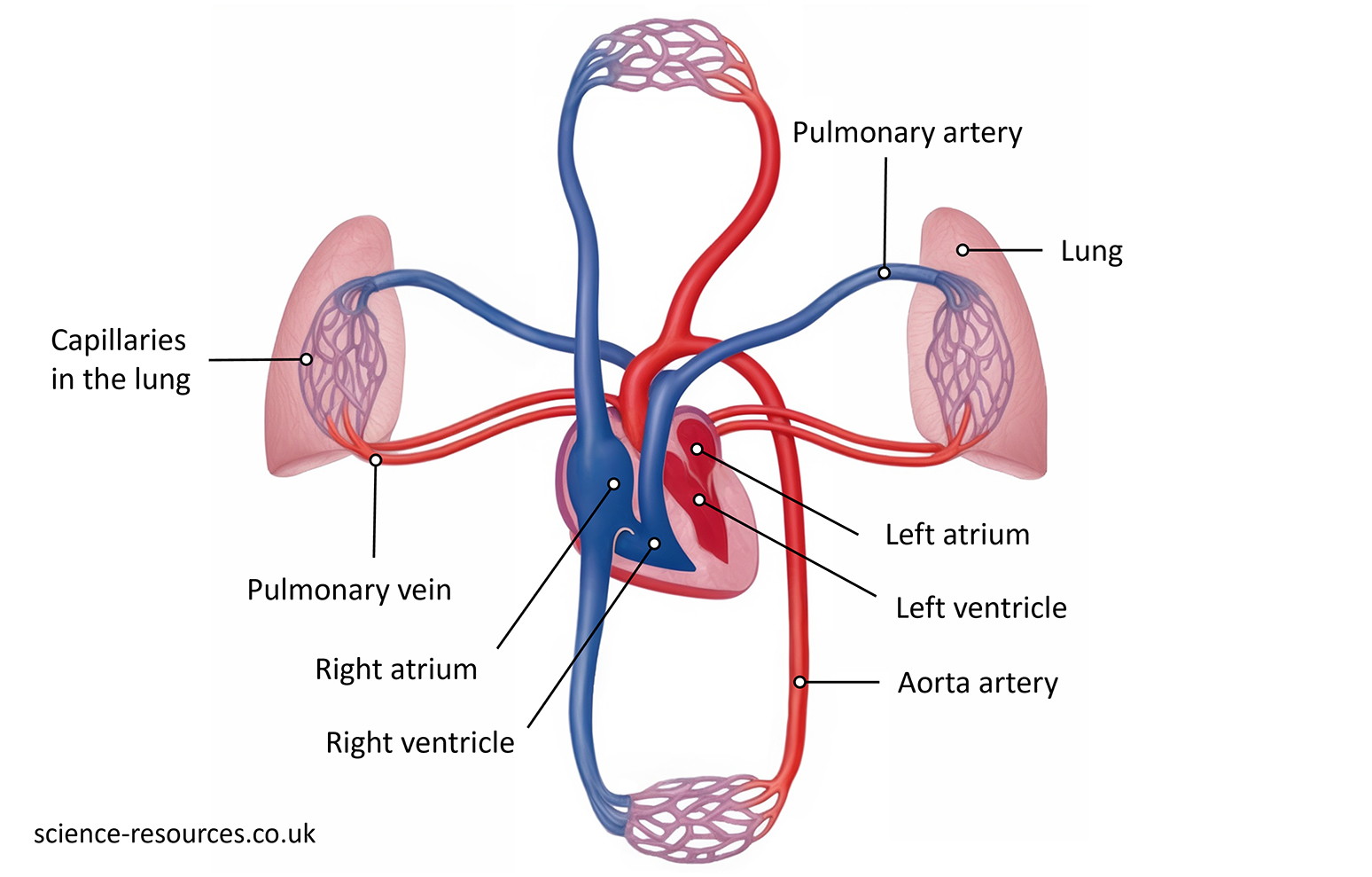
Capillaries: The heart with the arteries, veins and capillaries The image (above) shows how blood moves in the four chambers of the heart. The heart’s wall is thick and strong. The upper chambers are the atria (right and left) and the lower chambers are the ventricles (right and left). The atria receive blood and send it to the ventricles. The ventricles then push the blood to the body. The ventricles look bigger, but the chambers are all the same size. The ventricles have more muscle because they need to pump blood farther than the atria.
Heart
The heart is a powerful muscle that pumps blood to your lungs and the rest of your body. It has four sections called chambers.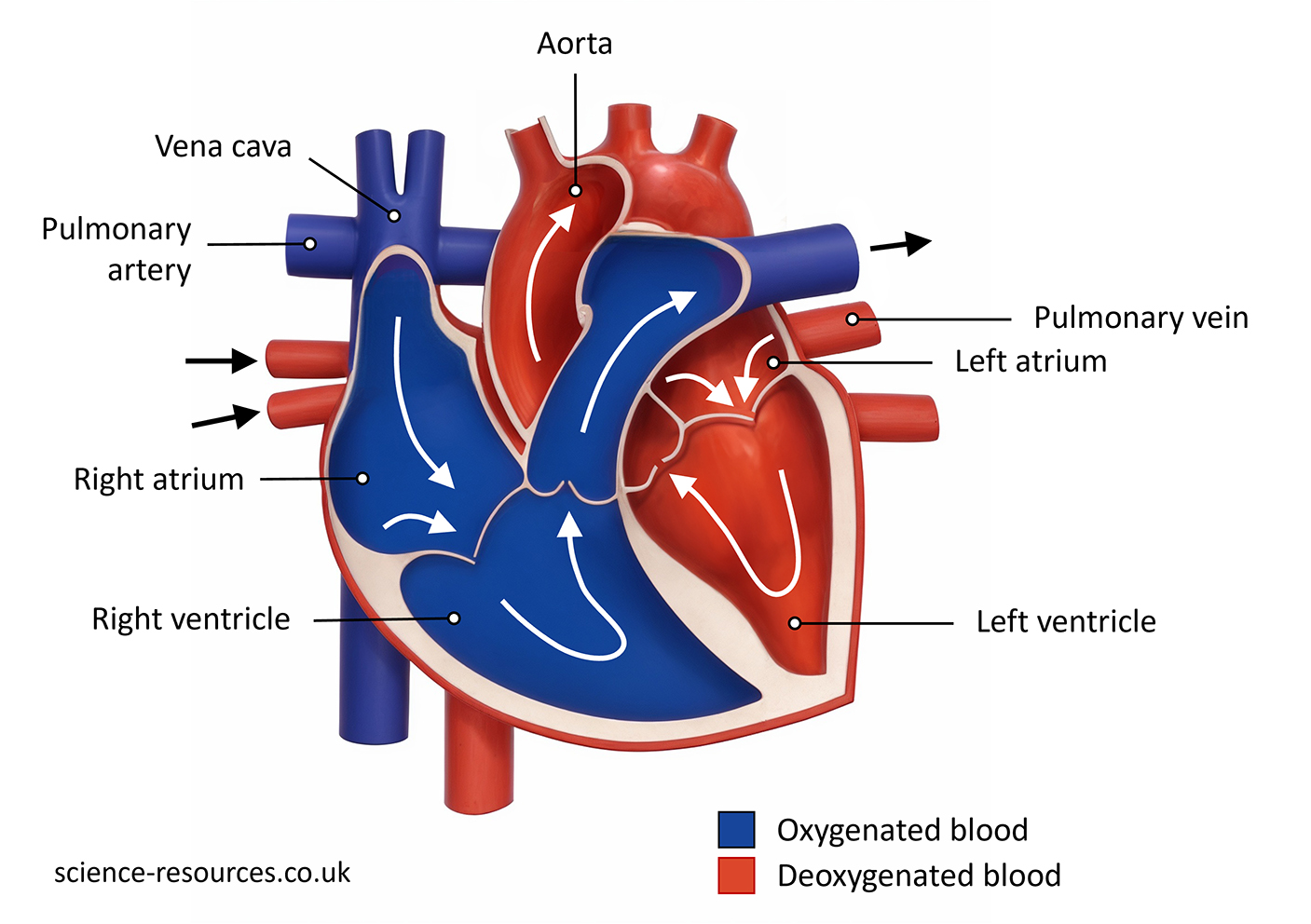
Test your understanding of the heart, blood vessels, and the movement of blood through the body. 1. Which component of the blood is responsible for carrying oxygen around the body? 2. Which blood vessel has thick, muscular walls to withstand high blood pressure? 3. What is the main purpose of the valves found inside the heart and veins? 4. In the double circulatory system, where does the right side of the heart pump blood? 5. Which component of blood is a straw-coloured liquid that transports dissolved carbon dioxide and nutrients? Summary: 🩸 Knowledge Check: The Circulatory System
Click to Reveal Answers
2. Artery (Thick walls are needed to handle the high pressure from the heart).
3. To prevent blood from flowing backwards (Valves ensure a one-way system).
4. To the lungs (The right side pumps deoxygenated blood to the lungs to pick up oxygen).
5. Plasma (The liquid part of blood that carries cells, nutrients, and waste).