The relationship between Photosynthesis and Respiration
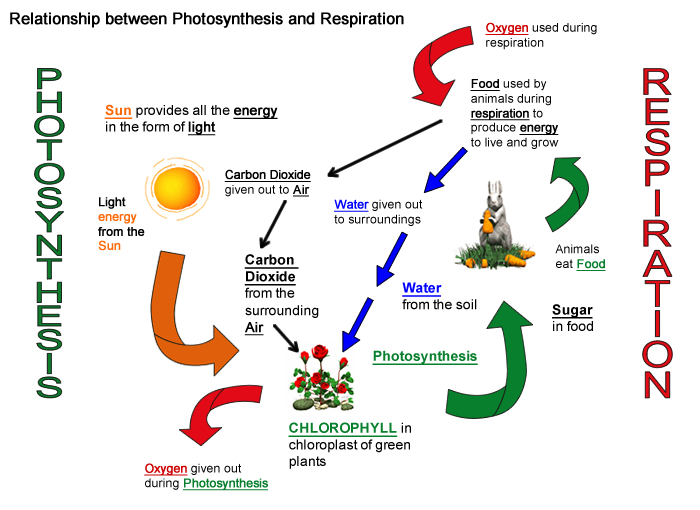
Plants make
food for all other living things by photosynthesis. Plants
capture the Sun's energy and turn it into Glucose (food) - which is
stored chemical energy Without
plants (photosynthesis) all animals would die. Animals
eat food to extract energy in order
live and grow. During respiration Glucose and
oxygen are used up and turned back into carbon dioxide and water. in
fact respiration is the opposite of photosynthesis! If you look
at the chemical equations of these two processes, you will notice that they are
the same, but in opposite directions: CARBON DIOXIDE + WATER SUNLIGHT GLUCOSE + OXYGEN CHLOROPHYLL GLUCOSE + OXYGEN CARBON DIOXIDE + WATER During respiration energy is used to do work. During photosynthesis energy is
trapped and stored. During respiration food is used. Photosynthesis make food. Carbon
dioxide, water and energy are released during respiration. Carbon
dioxide, water and energy are used during photosynthesis to make food. Remember this:
PHOTOSYNTHESIS
- Requires energy

RESPIRATION
- releases energy
RESPIRATION
- eating food and using energy
PHOTOSYNTHESIS
- the energy factory
Remember:
Respiration releases energy stored during
photosynthesis
Plants
also do respiration We know
that during daylight (or artificial light, except green) plants carry out
photosynthesis and release OXYGEN. Like
animals, plants also require energy to live and grow. This energy comes
from glucose during respiration. Respiration uses oxygen and give up
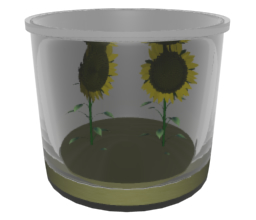
carbon dioxide. To demonstrate this, we can do the following: Enclosed plant,
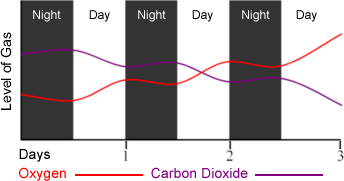
with different levels of O2 and CO2 The graph
shows that the level of oxygen rises in the daytime. This is due to photosynthesis producing more oxygen than the plant's respiration
using it up. The level of oxygen falls during night due to the plant's
respiration using it up and no more is being produced as there is no
photosynthesis happening. The amount of oxygen rises
gradually, over the period of time. The level of
CO2 falls during day time due to photosynthesis using it
up. However, it rises at night because of respiration. On the whole
the level of CO2 falls since the plant use up more CO2 than it produces.
Test your understanding of how plants balance these two vital processes. 1. Which process in plants occurs 24 hours a day? 2. During the night, what is the net gas exchange for a plant? 3. What is meant by the 'Compensation Point'? 4. In which cell organelle does respiration take place? 5. During bright daylight, why is there a net production of oxygen?🔬 Knowledge Check: Photosynthesis & Respiration
Click to Reveal Answers
2. Oxygen is taken in and Carbon Dioxide is given out (Only respiration occurs at night).
3. When the rates of photosynthesis and respiration are equal (Usually occurs at dawn and dusk).
4. Mitochondria (The 'powerhouse' where respiration occurs).
5. Because photosynthesis happens faster than respiration (More oxygen is produced than is consumed).
Tags:Photosynthesis, Oxygen, Carbon dioxide, Respiration, Glocose, Energy, Chlorophyll