The four components of the blood
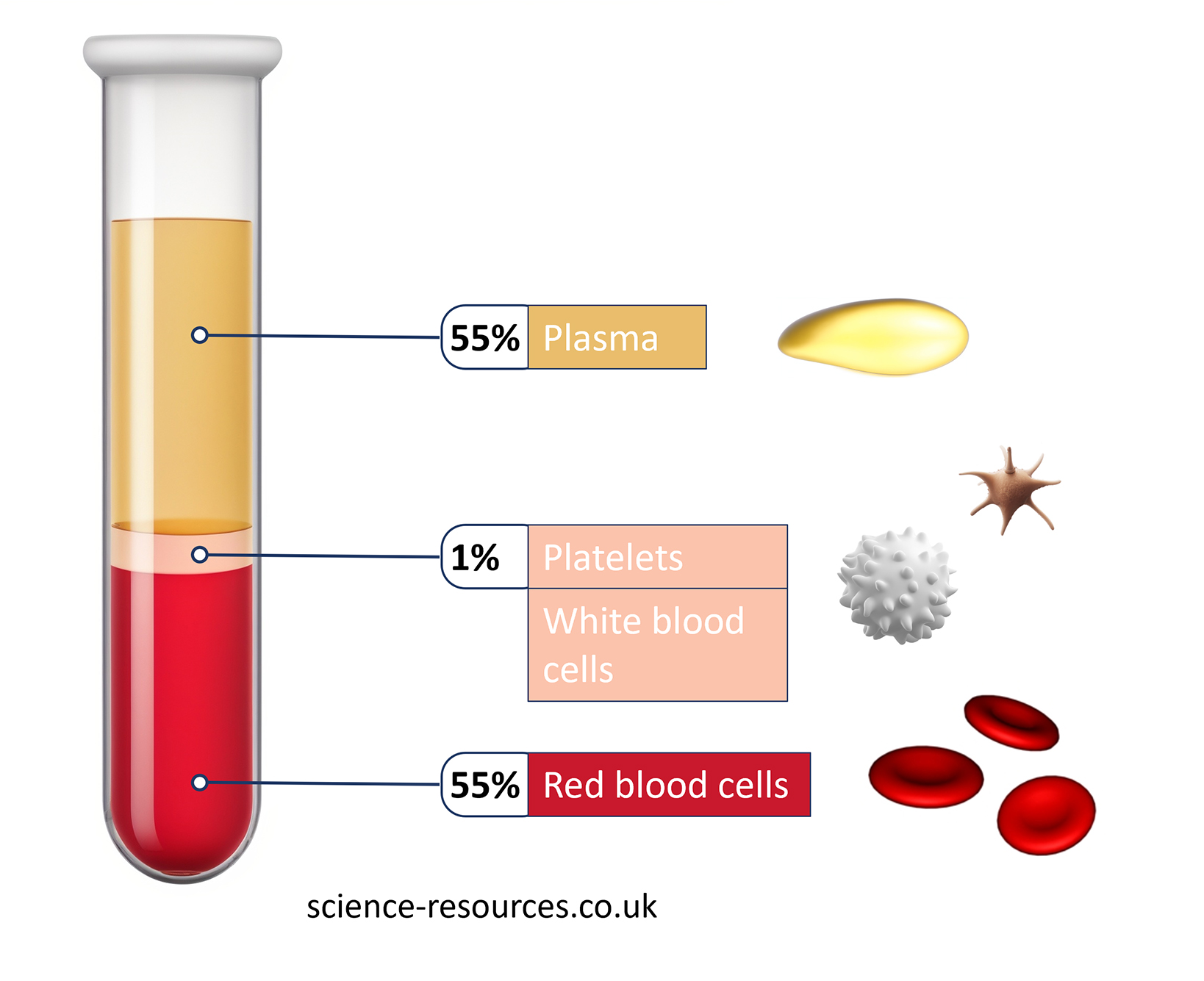
Component functions The parts of the blood (not to scale) Function Red blood cell Carries oxygen from lungs to every cell White blood cell Fights infection by pathogens and prevents disease Plasma Carries the blood cells and platelets Platelet Forms scabs from broken down cells There are different amounts of the four components in the blood. Components of the blood (shown as percentages).
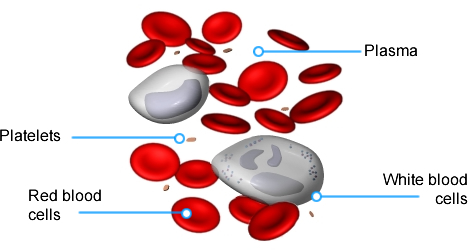
Each component has a function.
Component
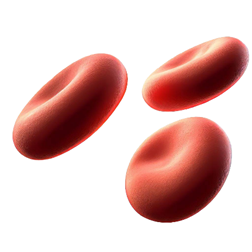
Red blood cells They take oxygen from the lungs to the cells for respiration. They have haemoglobin, a red chemical that binds with oxygen. This makes oxyhaemoglobin. Near the cells, this reverses. Red blood cells have no nucleus to fit more oxygen. They are biconcave, meaning they have dips on both sides. This makes their surface area bigger to absorb oxygen faster. White blood cells White blood cells have two types: Phagocytes that surround, engulf and destroy pathogens. Platelets They are made in bone marrow like red and white blood cells.
Red blood cells are the most common blood cells. They have about 3-5 million in a drop of blood. They are made in bone marrow.
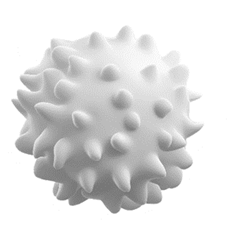
White blood cells are part of the immune system that protects us from infection and disease. They have 10,000-20,000 in a drop of blood, and more when we are sick. They are made in bone marrow.
Lymphocytes that make antibodies that stick pathogens together. This helps phagocytes destroy the pathogens. Phagocytes do not have a mouth, so they ‘engulf’ pathogens instead of ‘eat’ them.
Plasma
Plasma is the liquid part of the blood. It is mostly water and is pale yellow. It carries the blood cells, platelets, hormones, glucose, salts and enzymes in the body. It also carries waste products like carbon dioxide.

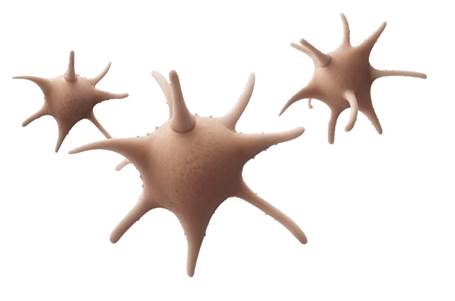
Platelets are tiny, colourless cell pieces that form scabs to stop bleeding. They have hundreds of thousands in a drop of blood.
How well do you know your own biology? Test your knowledge of the circulatory system below! 1. Which component of blood contains haemoglobin? 2. Why do red blood cells have a 'biconcave' shape? 3. What is the primary function of platelets? 4. In which part of the blood is Carbon Dioxide (CO2) mostly transported? 5. True or False: White blood cells have a nucleus. Summary: 🩸 Knowledge Check: Blood Components
Check Your Answers
2. Increase surface area (A larger surface area allows oxygen to diffuse more quickly).
3. Help the blood clot (Essential for stopping bleeding and preventing infection).
4. The Plasma (Dissolved CO2 is carried back to the lungs in the liquid plasma).
5. True (Unlike red blood cells, white blood cells contain a nucleus to coordinate their immune response).