Skeletal muscles
The skeleton Joints
The skeleton is made up of more than 200 bones. It has four main functions:
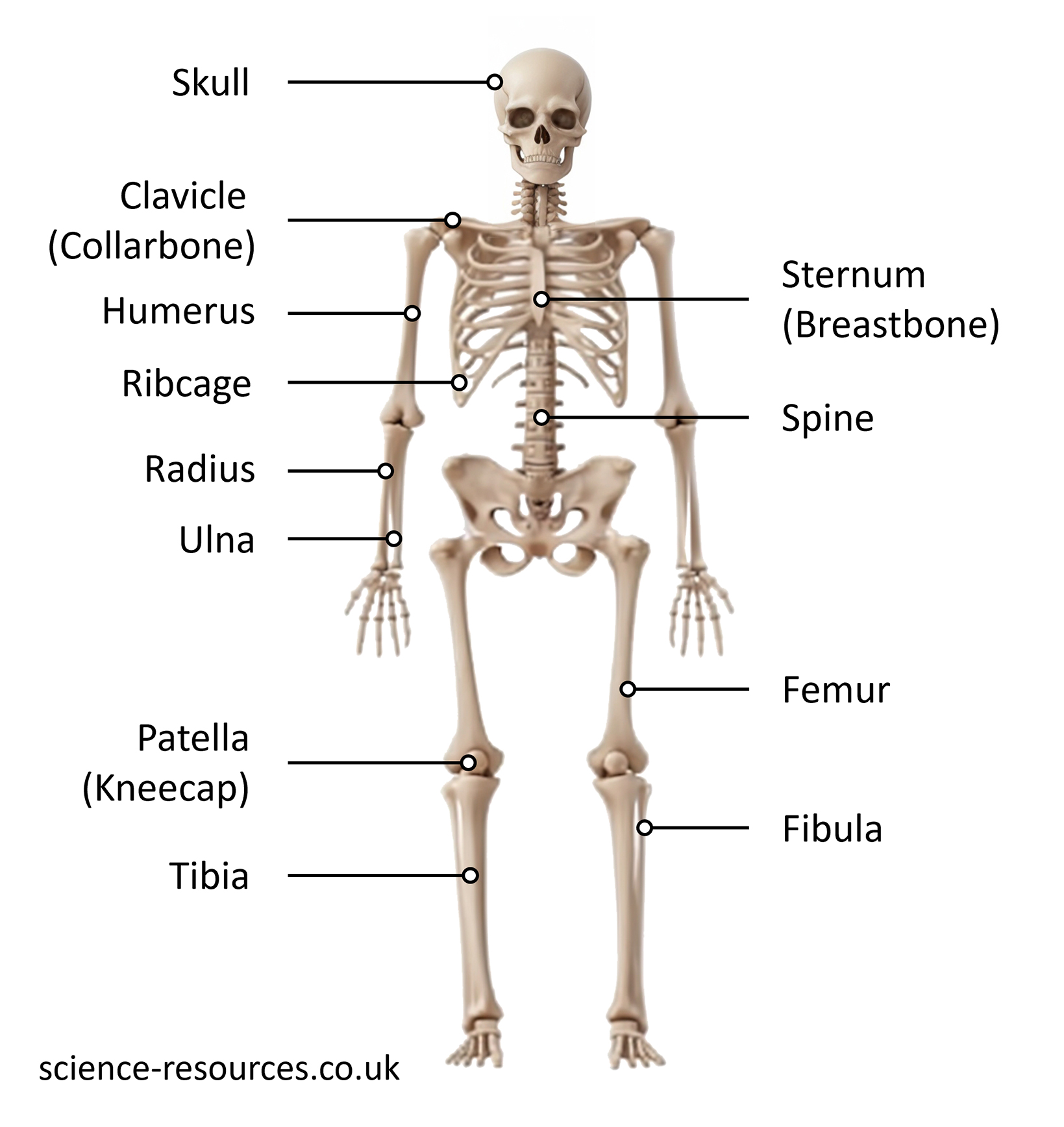
Joints are where bones move in different directions, like elbows and knees. Muscles pull bones at joints, but they are not directly connected. Bones have ligaments, which are strong cords that attach them to each other. Muscles have tendons, which are also strong cords that attach them to bones. Muscles contract and relax to move bones at joints.
Muscles Antagonistic pairs
Muscles are bundles of cells that form muscle tissue. There are three kinds of muscle cells: cardiac, smooth, and skeletal. Cardiac cells pump blood in our bodies. Smooth cells make thin muscles, like in the stomach. Skeletal cells join bones and move them at joints. Muscles can only contract and relax. Skeletal muscles can only pull bones, not push them. So they work in pairs, called antagonistic muscles, to move joints back and forth.
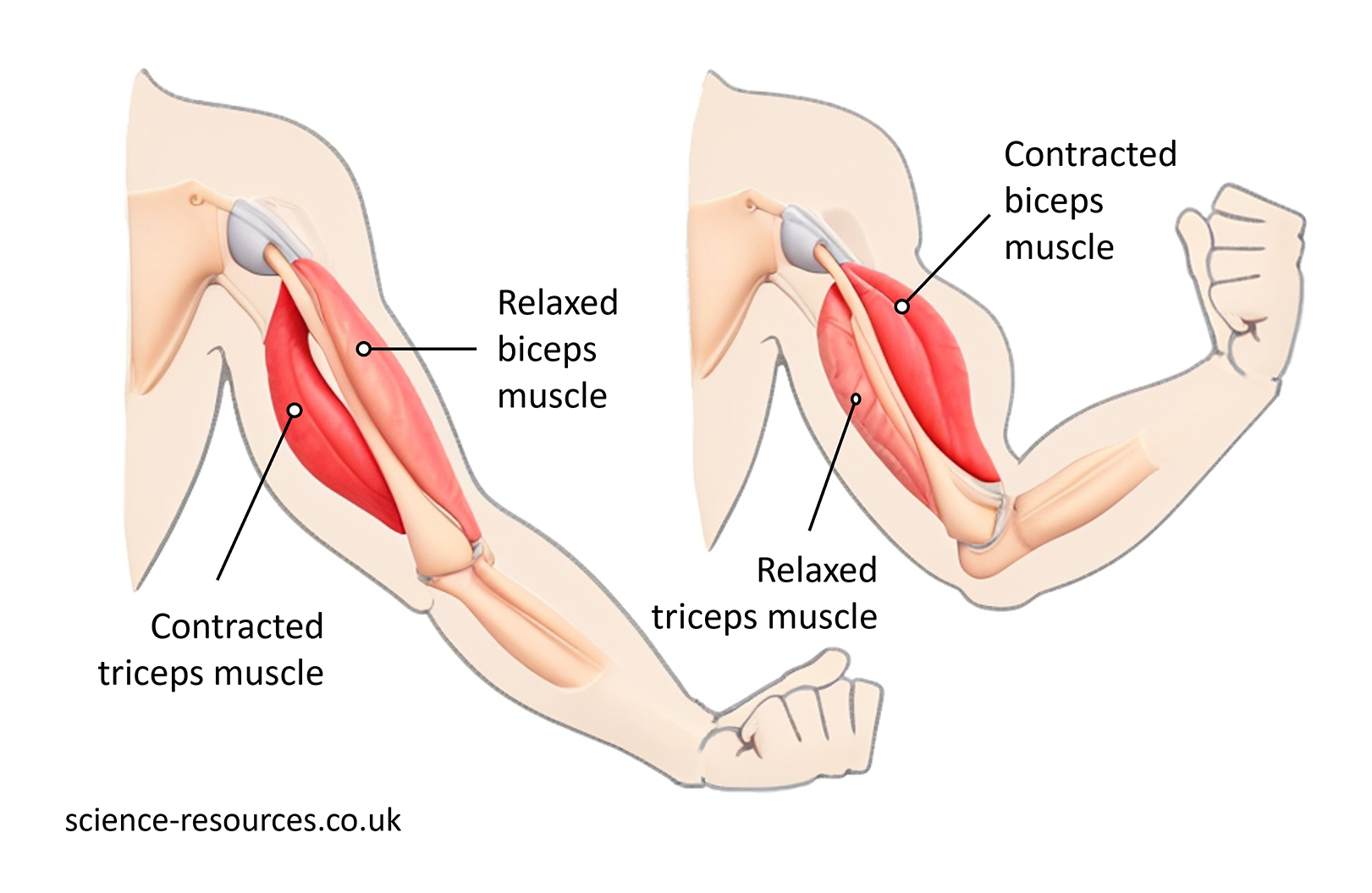
Muscles work together in pairs at a joint to allow movement, called antagonistic pairs. One muscle in the pair contracts while the other relaxes. For example, at the elbow joint:
Test your understanding of how the human body moves and supports itself. 1. Which part of the bone is responsible for making red and white blood cells? 2. Muscles can only perform which of the following actions? 3. When you bend your arm at the elbow, what are the biceps and triceps doing? 4. Which tissue connects a muscle to a bone? Summary: 💪 Knowledge Check: Muscles & Bones
Check Your Answers
2. Pulling only (This is why they must work in antagonistic pairs).
3. Biceps contract and triceps relax (The biceps is the agonist in this movement).
4. Tendon (Remember: Tendons for Tightening/moving; Ligaments for Linking bones).