Structure of the Earth
Have you ever wondered
what the planet Earth is made
of? Think of a boiled egg.
An egg constitutes the thin shell,
the white and the yellow yolk in the middle. Like wise the earth is
made up of the thin outermost layer called the crust, the innermost part called the core,
and the part in between them called the mantle.
Structure of the Earth – Cross Section Diagram At the start,
the early earth seemed to have heated up. The centre became molten, and convection
currents developed. The lighter materials floated
towards the surface forming the brittle crust. The crust is very thin approximately 40 km or so
thick. Together
with the top part of the mantle, it formed the hard slabs known
as lithosphere.
The continents are set in these slabs. The lithosphere is divided into 2 parts, the oceanic
(Sima) and continental crusts (Sial). Sima , the floor of the deep oceans, is about 8Km thick and is composed
of relatively dense rocks like basalt. Sial, however, is
much thicker, averaging 32Km, and is made up of relatively light
material, for example granite. The denser materials such as iron and nickel sank to form the core.
The coreis made up of
two parts, the inner and outer core. The inner
core is solid, made up of iron and nickel. This is where
the Earth's magnetic
field originates. The outer
core is liquid and it is extremely hot, about 3000ºC. Between the core and the crust,
the intermediate zone forms the mantle.
This is liquid but very viscous and is made up of molten
rocks, called the magma. Radioactive
decay in the inner core creates all the heat inside
the Earth. This heat causes the convection
currents which cause the plates of the crust to move.
Continue... Continental Drift 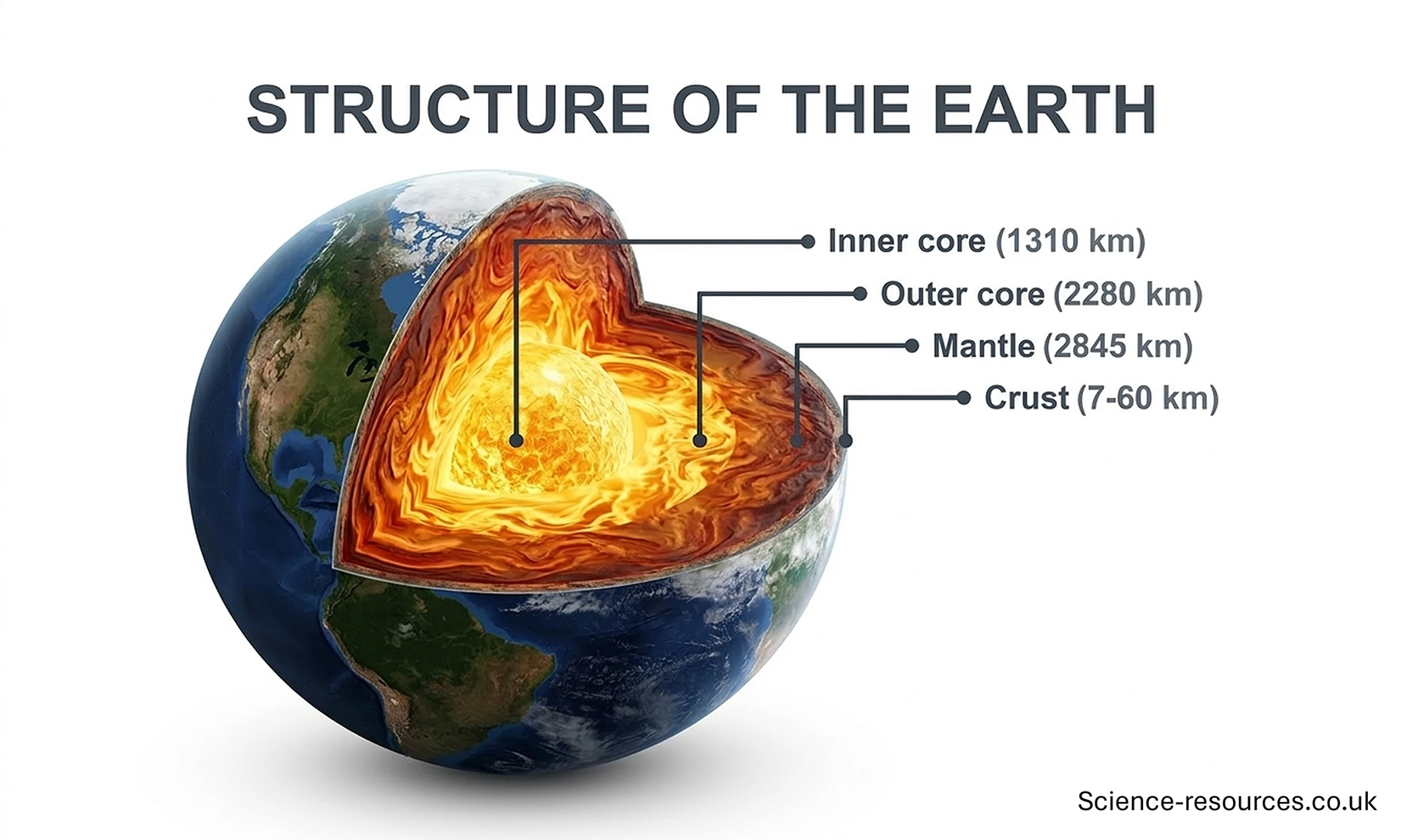
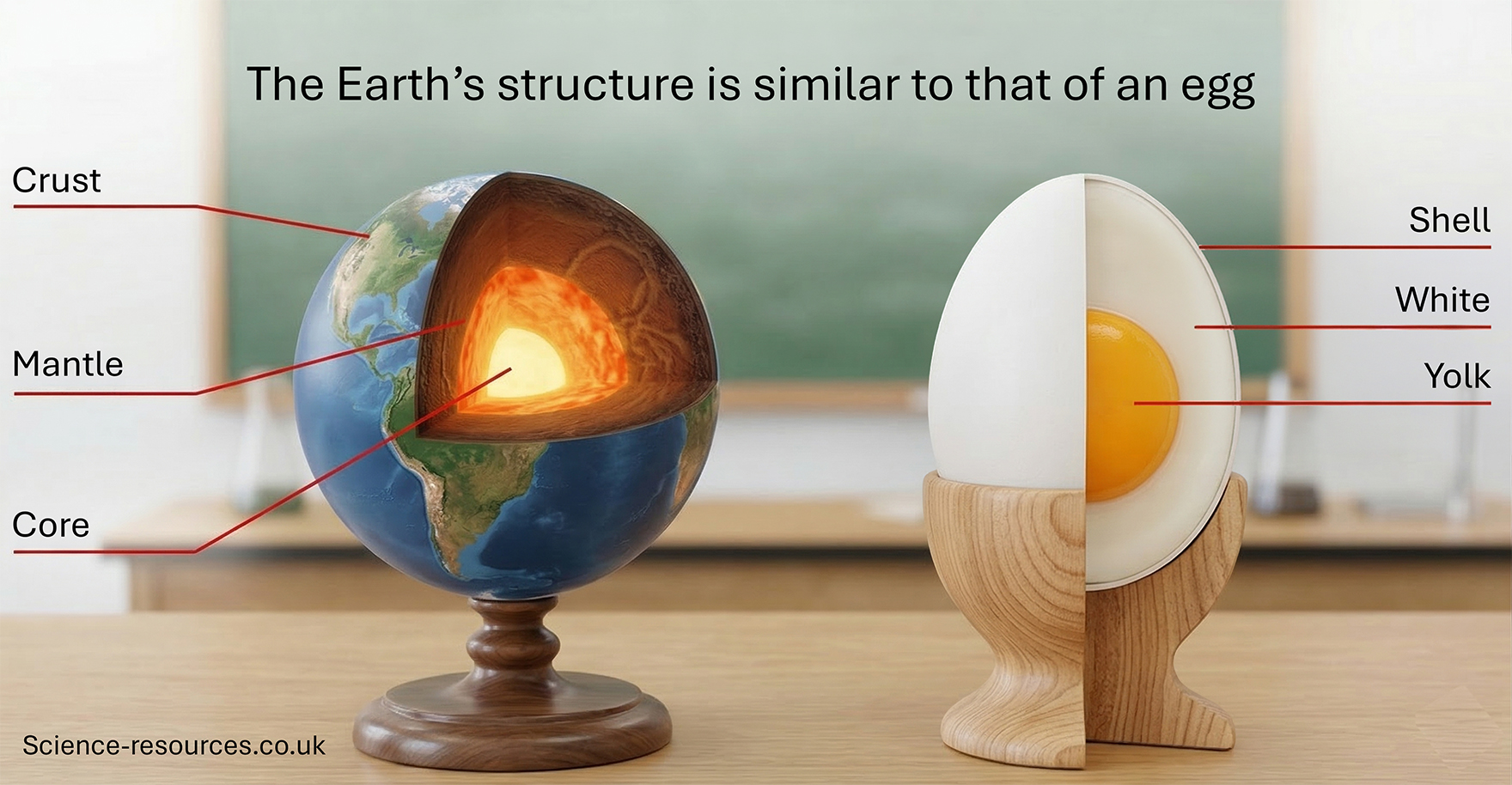 Comparison of Earth's internal layers and an egg's structure
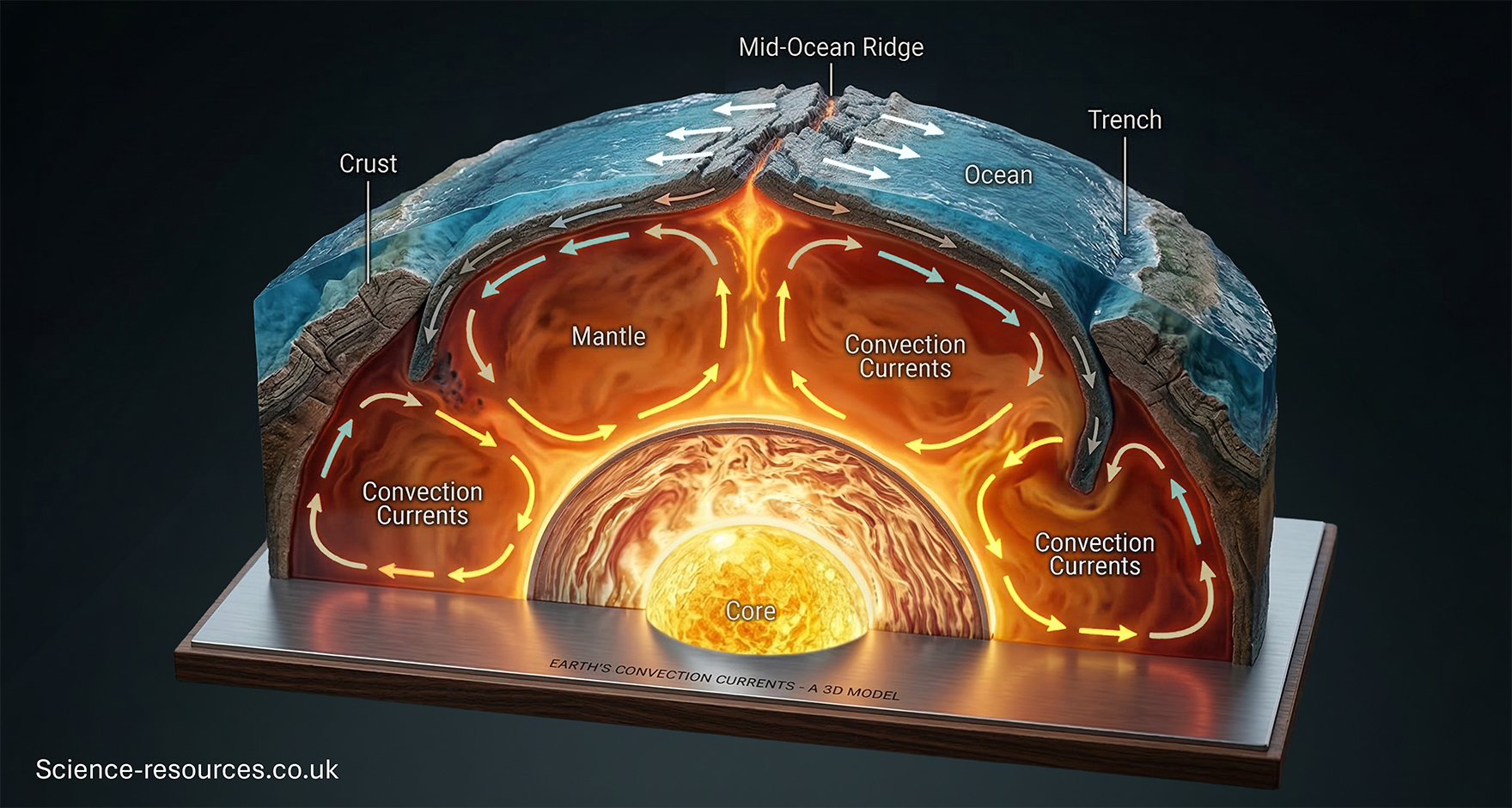 Convection Currents
How well do you know what's beneath your feet? Test your knowledge on the Earth's layers. 1. Which layer of the Earth is the thinnest? 2. The Earth's core is primarily made of which two metals? 3. Which layer is described as 'semi-liquid' rock that can flow? 4. Why is the Inner Core solid even though it is extremely hot? 5. What is the approximate temperature of the Earth's Inner Core?🌍 Knowledge Check: Structure of the Earth
Click to Reveal Answers
2. Iron and Nickel (These heavy metals sank to the centre when Earth was formed).
3. The Mantle (The thickest layer, consisting of slow-moving magma).
4. Extreme pressure (The pressure is so great that atoms are forced together into a solid).
5. 5500°C (About the same temperature as the surface of the Sun).
Tags:Earth structure, Mantle, Crust, Core, Convection currents