Generative AI Notification: Some elements of this image have been created or enhanced using AI technology. To find out how we create all our prehistoric animals, click here.
Last updated: 4th August 2025
Extinct Animals: Entelodon
Entelodon, the fearsome, pig-like extinct mammal that roamed with a massive jaw and bone-crushing teeth.
Entelodon (Terminator Pig)
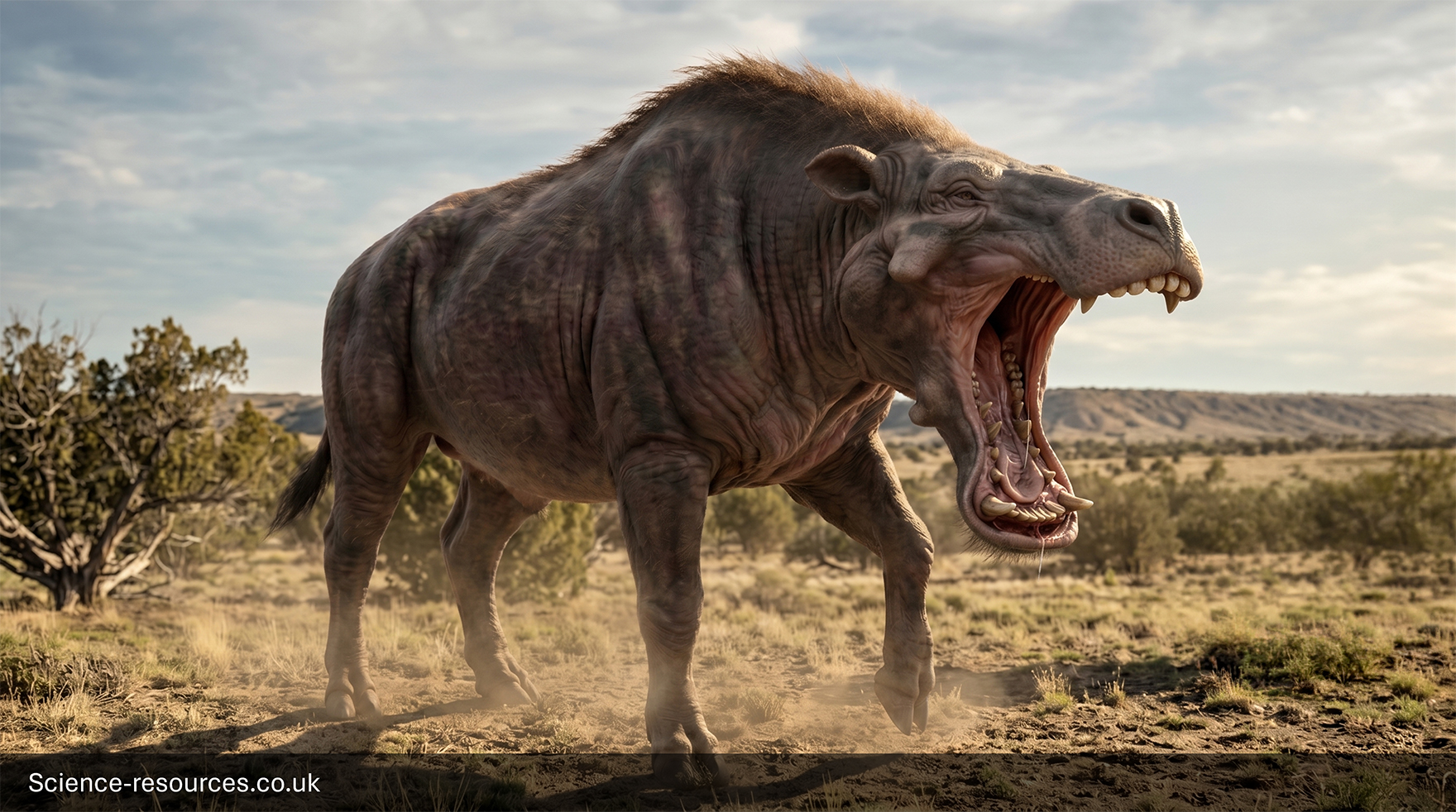 Entelodon
What is Entelodon?
Entelodons were a group of large, pig-like mammals that lived in Eurasia during the late Eocene and Oligocene epochs.
How big was Entelodon?
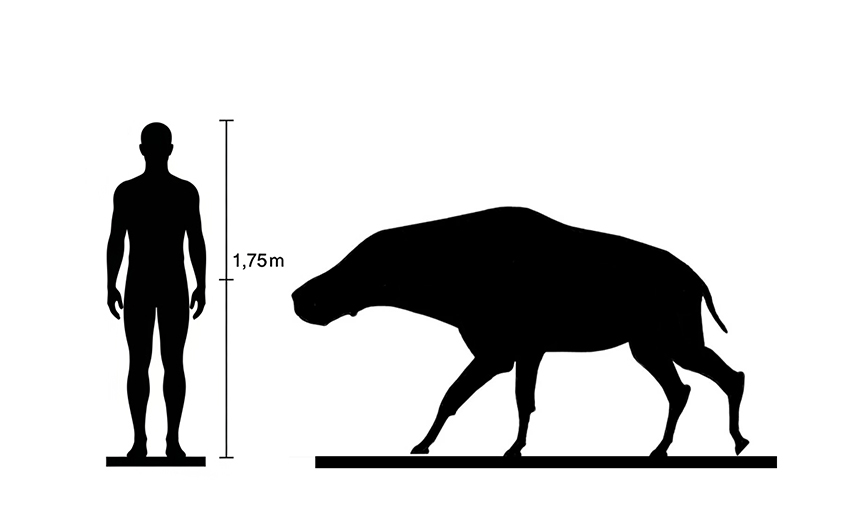
European species of Entelodon were around 1.35 metres (4 ft 5 in) tall at the shoulders.
What did Entelodon eat?
They were omnivores, likely eating plants, carrion, and live prey. Their powerful jaws were capable of crushing bones.
Entelodon appearance
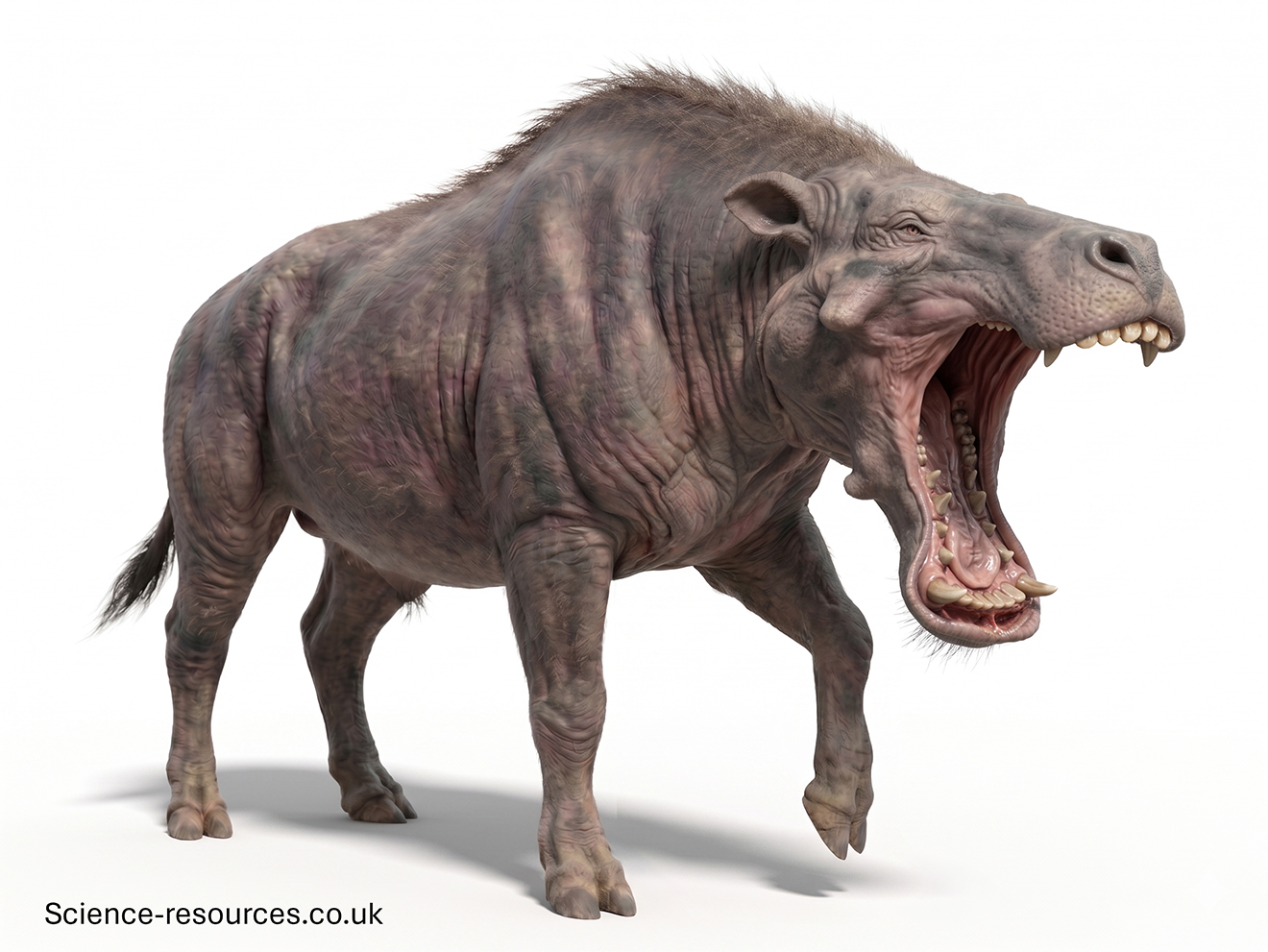
Known as "Terminator pigs", they had large, tusk-like teeth and prominent bony growths on their skulls. They had long snouts and a hump over their shoulders.
Where did Entelodons live?
Fossils have been found in North America and Asia.
Interesting facts
They are often referred to as "terminator pigs" due to their intimidating size and appearance.
Entelodon Facts
Pronounced: EN-tuh-loh-don
Name Means: "Complete teeth"
Height: Around 1.35 meters (4 feet) at the shoulder
Weight: Up to 1,000 kilograms (2,200 pounds)
Diet: Omnivore (Plants and Meat)
Time: Late Eocene-Middle Oligocene (37-27 million years ago)
Fossils Found: Eurasia
Which family of animals did Entelodon belong to?
They were part of the extinct family Entelodontidae which also included Daeodon.
What other animals lived at the same time as Entelodon?
They lived alongside early horses, camels, and rhinoceroses, often competing with predators like Hyaenodon.
Entelodon FAQ
Q1: What were Entelodon?
A1: Entelodons were a family of extinct, pig-like omnivorous mammals that lived from the late Eocene to the Miocene, roughly 37 to 16 million years ago. Despite their nickname “terminator pigs,” they were not closely related to modern pigs.
Q2: Why are they called “terminator pigs”?
A2: The nickname comes from their terrifying appearance—massive skulls, powerful jaws, and bone-crushing teeth—as well as their aggressive behavior and dominance in prehistoric ecosystems.
Q3: What did Entelodon look like?
A3: They had large, muscular bodies, long limbs, and disproportionately large heads with gaping jaws. Some species stood as tall as a horse and had bony lumps on their skulls, possibly for protection or display.
Q4: Were Entelodons predators or scavengers?
A4: Scientists believe they were omnivores. Their teeth suggest they could crush bones and eat meat, but they were also capable of consuming tough plant material. They likely hunted, scavenged, and bullied other animals for food.
Q5: Where did Entelodons live?
A5: They roamed across prehistoric North America, with fossils found from the Dakotas to Texas. They lived in diverse environments including plains, woodlands, and river valleys.
Q6: What was the largest species of Entelodont?
A6: Daeodon shoshonensis was the largest known entelodont, standing over six feet tall at the shoulder and weighing up to 2,000 pounds. Its skull alone was nearly three feet long.
Q7: Did Entelodon live in groups or alone?
A7: Their social behaviour is still debated. Some evidence suggests they may have been solitary, while other clues—like bite marks on bones—hint at possible group interactions or territorial fights.
Q8: What adaptations helped Entelodon survive?
A8: They had strong jaws for a varied diet, long legs for travel, and possibly used their bony skull lumps in head-butting contests. These traits made them versatile and dominant for millions of years.
Q9: Why did Entelodons go extinct?
A9: Their extinction may have been caused by climate change, habitat shifts, and competition with more advanced predators and herbivores. As grasslands spread and ecosystems changed, entelodons struggled to adapt.
Q10: What is the legacy of Entelodons in science?
A10: Entelodons fascinate scientists and the public alike. Their fossils help researchers understand mammalian evolution, predator-prey dynamics, and the impact of environmental change on species survival.
You may also be intrested in:
- Extinct Animals: A-Z
- Dinosaurs: A-Z
Tags: How big were Entelodon, Entelodon, where did Entelodon live, how tall were Entelodon, what does Entelodon mean, Entelodon facts
Previous: Embolotherium
Up next: Gastornis
© 2012 science-resources.co.uk. All rights reserved | Design by W3layouts
Extinct Animals: Entelodon
Entelodon, the fearsome, pig-like extinct mammal that roamed with a massive jaw and bone-crushing teeth.
Entelodon (Terminator Pig)
Entelodon
What is Entelodon?
Entelodons were a group of large, pig-like mammals that lived in Eurasia during the late Eocene and Oligocene epochs.
How big was Entelodon?
European species of Entelodon were around 1.35 metres (4 ft 5 in) tall at the shoulders.
What did Entelodon eat?
They were omnivores, likely eating plants, carrion, and live prey. Their powerful jaws were capable of crushing bones.
Entelodon appearance
Known as "Terminator pigs", they had large, tusk-like teeth and prominent bony growths on their skulls. They had long snouts and a hump over their shoulders.
Where did Entelodons live?
Fossils have been found in North America and Asia.
Interesting facts
They are often referred to as "terminator pigs" due to their intimidating size and appearance.
Entelodon Facts
Pronounced: EN-tuh-loh-don
Name Means: "Complete teeth"
Height: Around 1.35 meters (4 feet) at the shoulder
Weight: Up to 1,000 kilograms (2,200 pounds)
Diet: Omnivore (Plants and Meat)
Time: Late Eocene-Middle Oligocene (37-27 million years ago)
Fossils Found: Eurasia
Which family of animals did Entelodon belong to?
They were part of the extinct family Entelodontidae which also included Daeodon.
What other animals lived at the same time as Entelodon?
They lived alongside early horses, camels, and rhinoceroses, often competing with predators like Hyaenodon.
Entelodon FAQ
Q1: What were Entelodon?
A1: Entelodons were a family of extinct, pig-like omnivorous mammals that lived from the late Eocene to the Miocene, roughly 37 to 16 million years ago. Despite their nickname “terminator pigs,” they were not closely related to modern pigs.
Q2: Why are they called “terminator pigs”?
A2: The nickname comes from their terrifying appearance—massive skulls, powerful jaws, and bone-crushing teeth—as well as their aggressive behavior and dominance in prehistoric ecosystems.
Q3: What did Entelodon look like?
A3: They had large, muscular bodies, long limbs, and disproportionately large heads with gaping jaws. Some species stood as tall as a horse and had bony lumps on their skulls, possibly for protection or display.
Q4: Were Entelodons predators or scavengers?
A4: Scientists believe they were omnivores. Their teeth suggest they could crush bones and eat meat, but they were also capable of consuming tough plant material. They likely hunted, scavenged, and bullied other animals for food.
Q5: Where did Entelodons live?
A5: They roamed across prehistoric North America, with fossils found from the Dakotas to Texas. They lived in diverse environments including plains, woodlands, and river valleys.
Q6: What was the largest species of Entelodont?
A6: Daeodon shoshonensis was the largest known entelodont, standing over six feet tall at the shoulder and weighing up to 2,000 pounds. Its skull alone was nearly three feet long.
Q7: Did Entelodon live in groups or alone?
A7: Their social behaviour is still debated. Some evidence suggests they may have been solitary, while other clues—like bite marks on bones—hint at possible group interactions or territorial fights.
Q8: What adaptations helped Entelodon survive?
A8: They had strong jaws for a varied diet, long legs for travel, and possibly used their bony skull lumps in head-butting contests. These traits made them versatile and dominant for millions of years.
Q9: Why did Entelodons go extinct?
A9: Their extinction may have been caused by climate change, habitat shifts, and competition with more advanced predators and herbivores. As grasslands spread and ecosystems changed, entelodons struggled to adapt.
Q10: What is the legacy of Entelodons in science?
A10: Entelodons fascinate scientists and the public alike. Their fossils help researchers understand mammalian evolution, predator-prey dynamics, and the impact of environmental change on species survival.
Tags: How big were Entelodon, Entelodon, where did Entelodon live, how tall were Entelodon, what does Entelodon mean, Entelodon facts
Previous: Embolotherium
Up next: Gastornis
© 2012 science-resources.co.uk. All rights reserved | Design by W3layouts