Generative AI Notification: Some elements of this image have been created or enhanced using AI technology. To find out how we create all our prehistoric animals, click here.
Last updated: 4th August 2025
Extinct Animals: Eohippus
Eohippus, an extinct, small, dog-sized ancestor of the modern horse.
Eohippus (Dawn Horse)
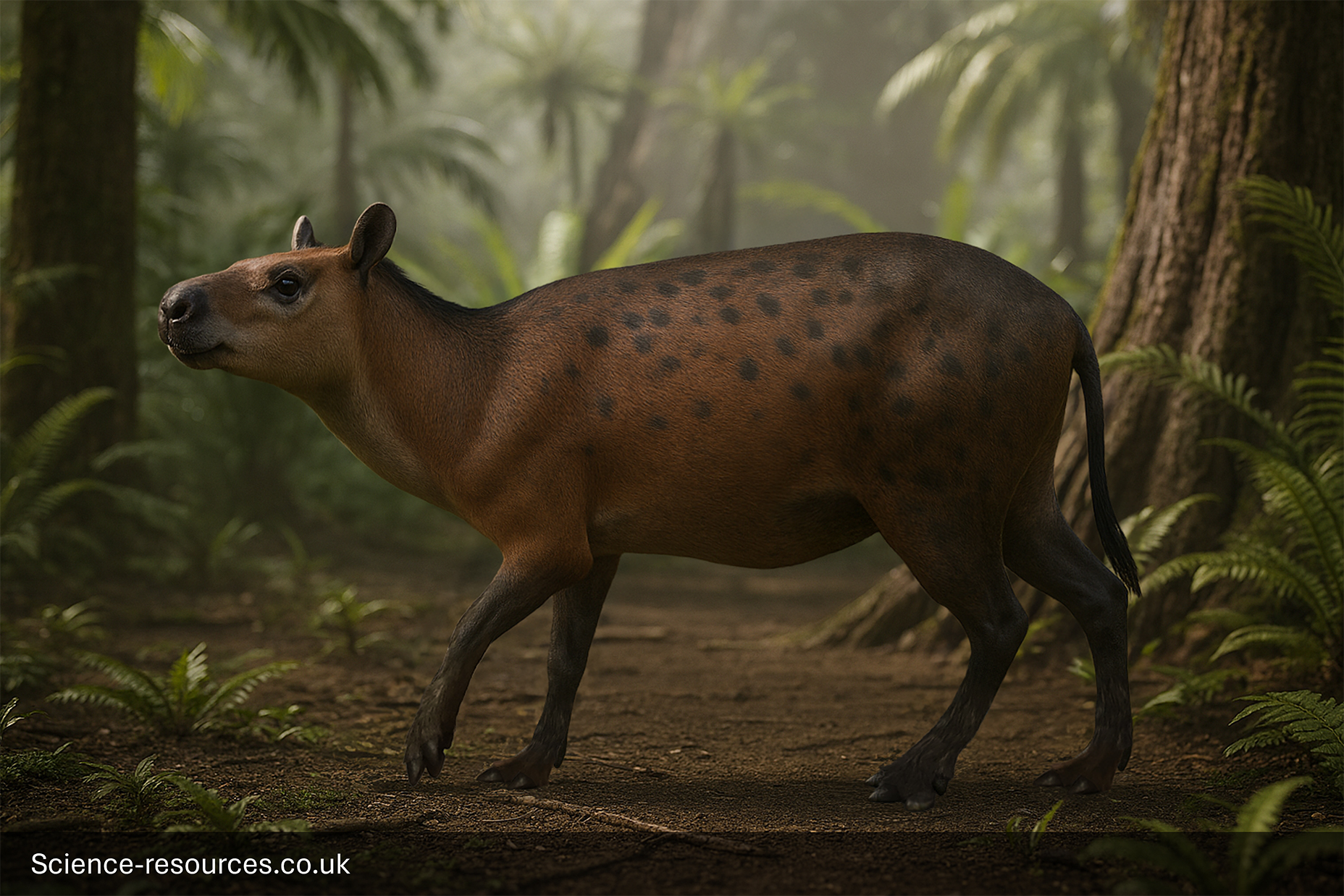 Eohippus
What is Eohippus?
Eohippus was a tiny, early ancestor of the modern horse. It lived during the Eocene epoch, about 56 to 45 million years ago, and is famous for being one of the earliest known members of the horse family.
How big was Eohippus?
Eohippus was much smaller than today’s horses. It measured about 60 centimetres (2 feet) long, stood around 30 to 40 centimetres (1 to 1.5 feet) high at the shoulder, and weighed roughly 5 to 10 kilograms (11 to 22 pounds). That’s about the size of a small dog!
What did Eohippus eat?
As a herbivore, Eohippus nibbled on soft leaves, fruits, and low-growing plants that grew in the forests and woodlands where it lived. Its teeth were adapted to browsing rather than grazing.
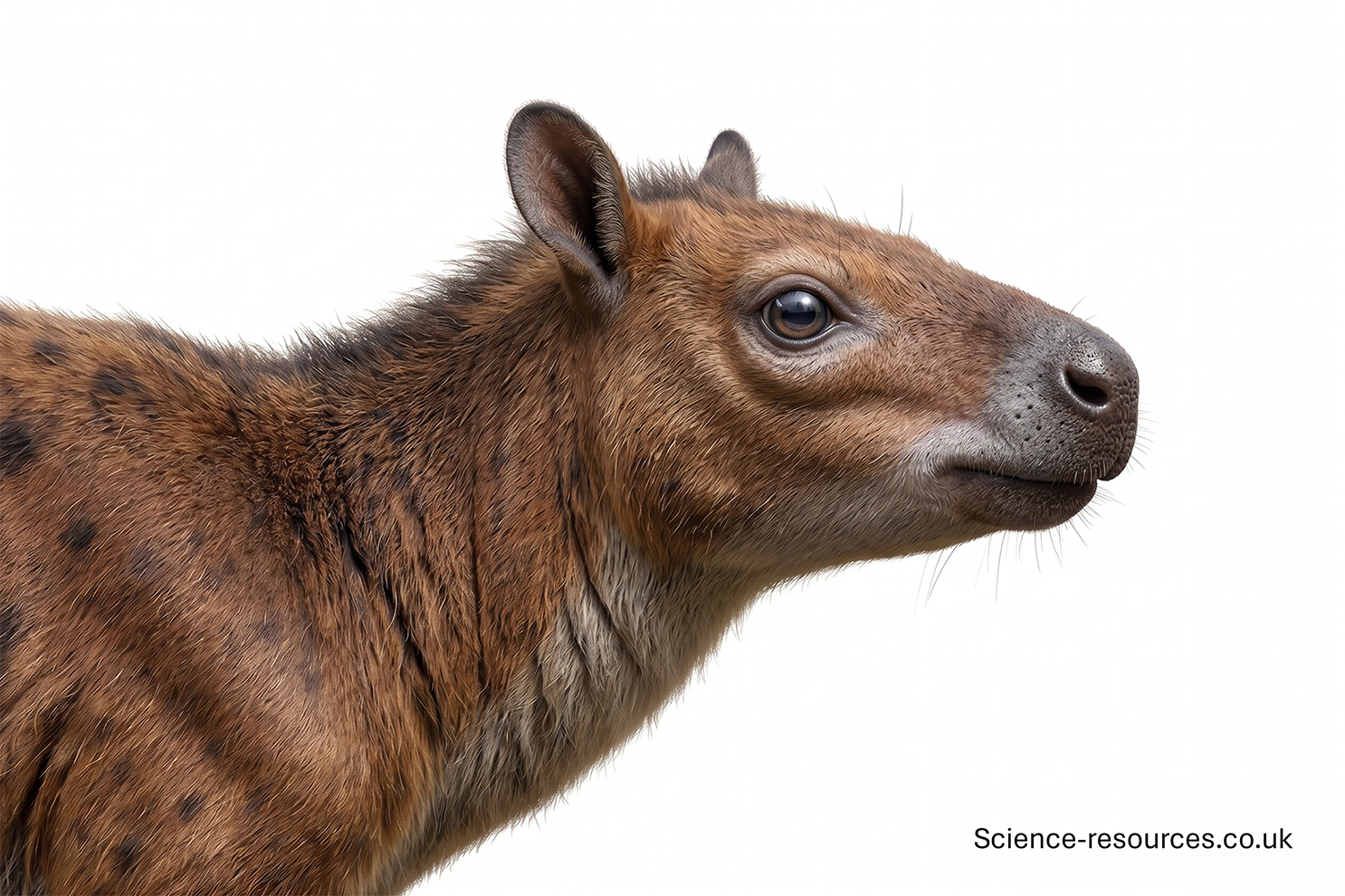
Eohippus appearance
Eohippus had a slim body, short legs, and a long tail. Unlike modern horses, it had four toes on its front feet and three on its hind feet. Its feet were padded, helping it walk quietly through thick forests.
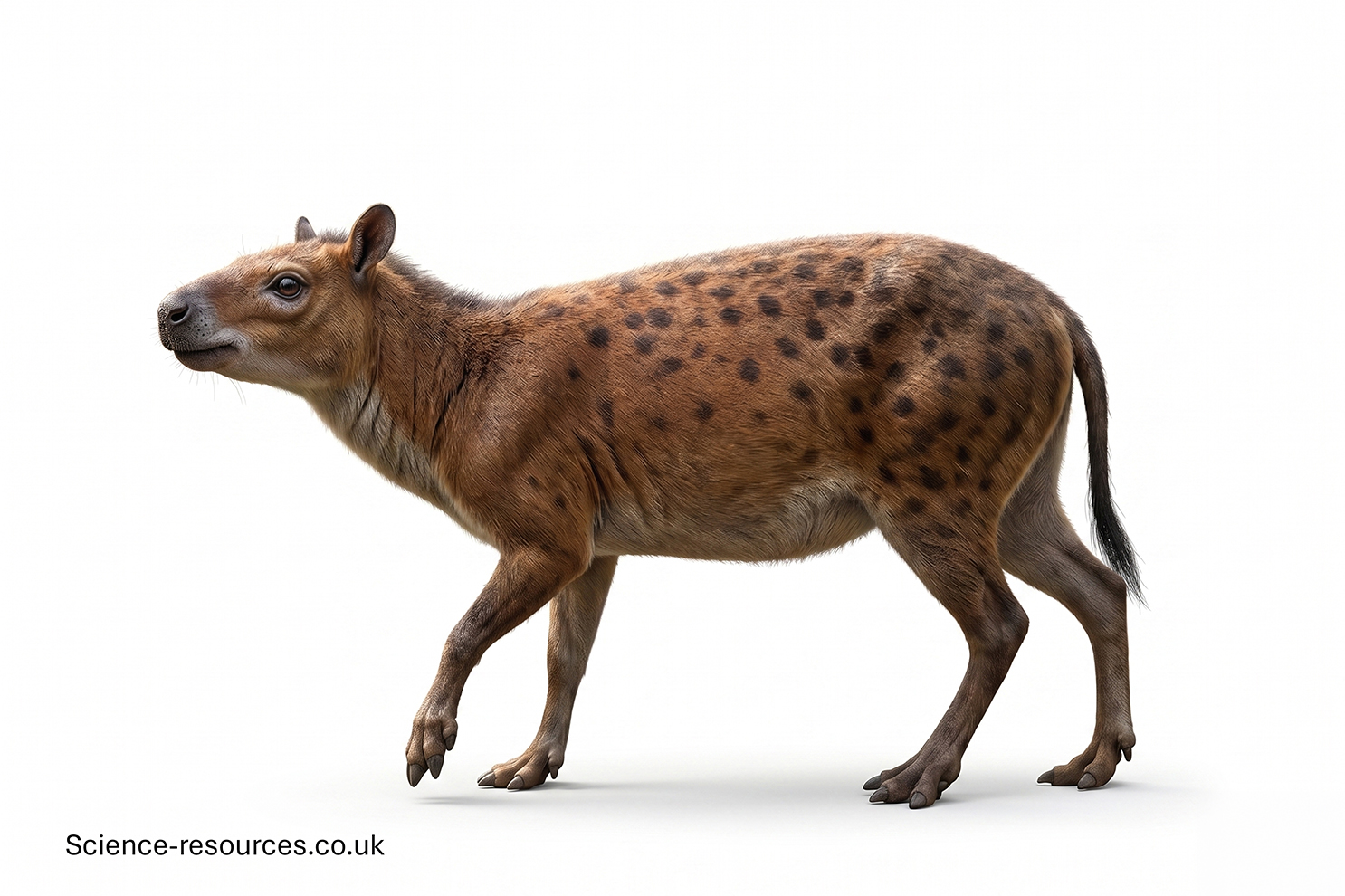 Eohippus appearance
Where did Eohippus live?
Fossils of Eohippus have been found in North America, mainly in what are now the United States and Canada. During its time, this region was covered in dense forests and warm, humid climates.
Interesting facts
- Eohippus means “Dawn Horse” because it lived at the dawn of horse evolution.
- It was originally called Hyracotherium, which means “hyrax beast” because it was thought to resemble a hyrax.
- Its small size and many toes helped it escape predators and move quickly through the undergrowth.
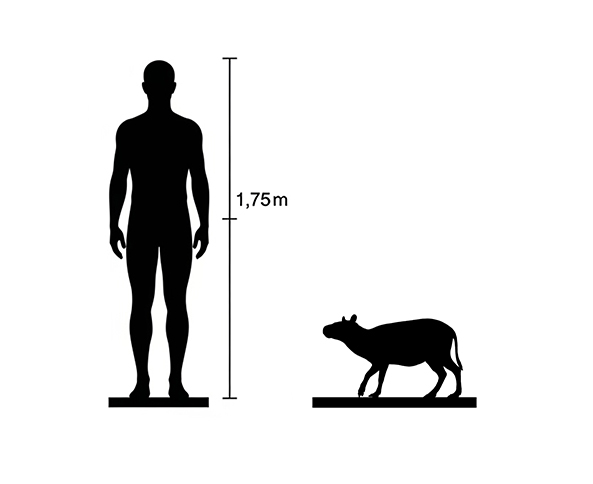
Eohippus Facts
Pronounced: ee-oh-HIP-us
Name Means: “Dawn Horse”
Length: About 60 centimetres (2 feet)
Height: 30–40 centimetres (1–1.5 feet) at the shoulder
Weight: 5–10 kilograms (11–22 pounds)
Diet: Herbivore (soft leaves, fruit, and low plants)
Time: Eocene epoch (about 56–45 million years ago)
Fossils Found: North America (mainly USA and Canada)
Which family of animals did Eohippus belong to?
Eohippus was part of the family Equidae, making it an early member of the horse family. It is a distant ancestor of modern horses, zebras, and donkeys.
What other animals lived at the same time as Eohippus?
During the Eocene, Eohippus shared its habitat with ancient primates, early carnivorous mammals, and other odd-toed ungulates. The world was much warmer and wetter, with lots of forests and strange animals.
Eohippus FAQ
Q1: What were Eohippus?
Eohippus was a small, early horse that lived during the Eocene epoch. It is one of the earliest known ancestors of modern horses.
Q2: What did Eohippus look like?
A2: Eohippus looked like a small, dog-sized animal with a slim body, long tail, and padded feet with several toes. It did not look much like today’s horses!
Q3: How big was Eohippus?
A3: It was about 60 centimetres long, 30–40 centimetres tall at the shoulder, and weighed between 5 and 10 kilograms.
Q4: What did Eohippus eat?
A4: Eohippus ate soft leaves, fruit, and low-growing plants in the forests and woodlands.
Q5: Where did Eohippus live?
A5: Fossils have been found in North America, in areas that were once ancient forests.
Q6: When did Eohippus go extinct?
A6: Eohippus disappeared about 45 million years ago as it slowly evolved into larger, more horse-like animals over millions of years.
Q7: Why did Eohippus have so many toes?
A7: Its multiple toes and padded feet helped it move easily through the soft, leafy ground of its forest home, giving it speed and agility.
Q8: How is Eohippus related to modern animals?
A8: Eohippus is an ancient ancestor of modern horses, zebras, and donkeys. Over time, it evolved into larger horses with fewer toes.
Q9: Who discovered Eohippus?
A9: Fossils of Eohippus were first described by scientist Richard Owen in 1841. The name Eohippus was given later, in 1876, by Othniel C. Marsh.
Q10: Are there any complete skeletons of Eohippus?
A10: Several well-preserved skeletons and fossils of Eohippus have been found, allowing scientists to study its shape and way of life.
You may also be intrested in:
- Extinct Animals: A-Z
- Dinosaurs: A-Z
Tags: How big were Eohippus, Eohippus, where did Eohippus live, how tall were Eohippus, what does Eohippus mean, Eohippus facts
Previous: Entelodon
Up next: Gastornis
© 2012 science-resources.co.uk. All rights reserved | Design by W3layouts
Extinct Animals: Eohippus
Eohippus, an extinct, small, dog-sized ancestor of the modern horse.
Eohippus (Dawn Horse)
Eohippus
What is Eohippus?
Eohippus was a tiny, early ancestor of the modern horse. It lived during the Eocene epoch, about 56 to 45 million years ago, and is famous for being one of the earliest known members of the horse family.
How big was Eohippus?
Eohippus was much smaller than today’s horses. It measured about 60 centimetres (2 feet) long, stood around 30 to 40 centimetres (1 to 1.5 feet) high at the shoulder, and weighed roughly 5 to 10 kilograms (11 to 22 pounds). That’s about the size of a small dog!
What did Eohippus eat?
As a herbivore, Eohippus nibbled on soft leaves, fruits, and low-growing plants that grew in the forests and woodlands where it lived. Its teeth were adapted to browsing rather than grazing.
Eohippus appearance
Eohippus had a slim body, short legs, and a long tail. Unlike modern horses, it had four toes on its front feet and three on its hind feet. Its feet were padded, helping it walk quietly through thick forests.
Eohippus appearance
Where did Eohippus live?
Fossils of Eohippus have been found in North America, mainly in what are now the United States and Canada. During its time, this region was covered in dense forests and warm, humid climates.
Interesting facts
- Eohippus means “Dawn Horse” because it lived at the dawn of horse evolution.
- It was originally called Hyracotherium, which means “hyrax beast” because it was thought to resemble a hyrax.
- Its small size and many toes helped it escape predators and move quickly through the undergrowth.
Eohippus Facts
Pronounced: ee-oh-HIP-us
Name Means: “Dawn Horse”
Length: About 60 centimetres (2 feet)
Height: 30–40 centimetres (1–1.5 feet) at the shoulder
Weight: 5–10 kilograms (11–22 pounds)
Diet: Herbivore (soft leaves, fruit, and low plants)
Time: Eocene epoch (about 56–45 million years ago)
Fossils Found: North America (mainly USA and Canada)
Which family of animals did Eohippus belong to?
Eohippus was part of the family Equidae, making it an early member of the horse family. It is a distant ancestor of modern horses, zebras, and donkeys.
What other animals lived at the same time as Eohippus?
During the Eocene, Eohippus shared its habitat with ancient primates, early carnivorous mammals, and other odd-toed ungulates. The world was much warmer and wetter, with lots of forests and strange animals.
Eohippus FAQ
Q1: What were Eohippus?
Eohippus was a small, early horse that lived during the Eocene epoch. It is one of the earliest known ancestors of modern horses.
Q2: What did Eohippus look like?
A2: Eohippus looked like a small, dog-sized animal with a slim body, long tail, and padded feet with several toes. It did not look much like today’s horses!
Q3: How big was Eohippus?
A3: It was about 60 centimetres long, 30–40 centimetres tall at the shoulder, and weighed between 5 and 10 kilograms.
Q4: What did Eohippus eat?
A4: Eohippus ate soft leaves, fruit, and low-growing plants in the forests and woodlands.
Q5: Where did Eohippus live?
A5: Fossils have been found in North America, in areas that were once ancient forests.
Q6: When did Eohippus go extinct?
A6: Eohippus disappeared about 45 million years ago as it slowly evolved into larger, more horse-like animals over millions of years.
Q7: Why did Eohippus have so many toes?
A7: Its multiple toes and padded feet helped it move easily through the soft, leafy ground of its forest home, giving it speed and agility.
Q8: How is Eohippus related to modern animals?
A8: Eohippus is an ancient ancestor of modern horses, zebras, and donkeys. Over time, it evolved into larger horses with fewer toes.
Q9: Who discovered Eohippus?
A9: Fossils of Eohippus were first described by scientist Richard Owen in 1841. The name Eohippus was given later, in 1876, by Othniel C. Marsh.
Q10: Are there any complete skeletons of Eohippus?
A10: Several well-preserved skeletons and fossils of Eohippus have been found, allowing scientists to study its shape and way of life.
Tags: How big were Eohippus, Eohippus, where did Eohippus live, how tall were Eohippus, what does Eohippus mean, Eohippus facts
Previous: Entelodon
Up next: Gastornis
© 2012 science-resources.co.uk. All rights reserved | Design by W3layouts