Generative AI Notification: Some elements of this image have been created or enhanced using AI technology. To find out how we create all our prehistoric animals, click here.
Last updated: 25th January 2026
Extinct Animals: Titanoboa
Titanoboa, the enormous, prehistoric snake that lived millions of years ago.
Titanoboa (Titanic Boa)
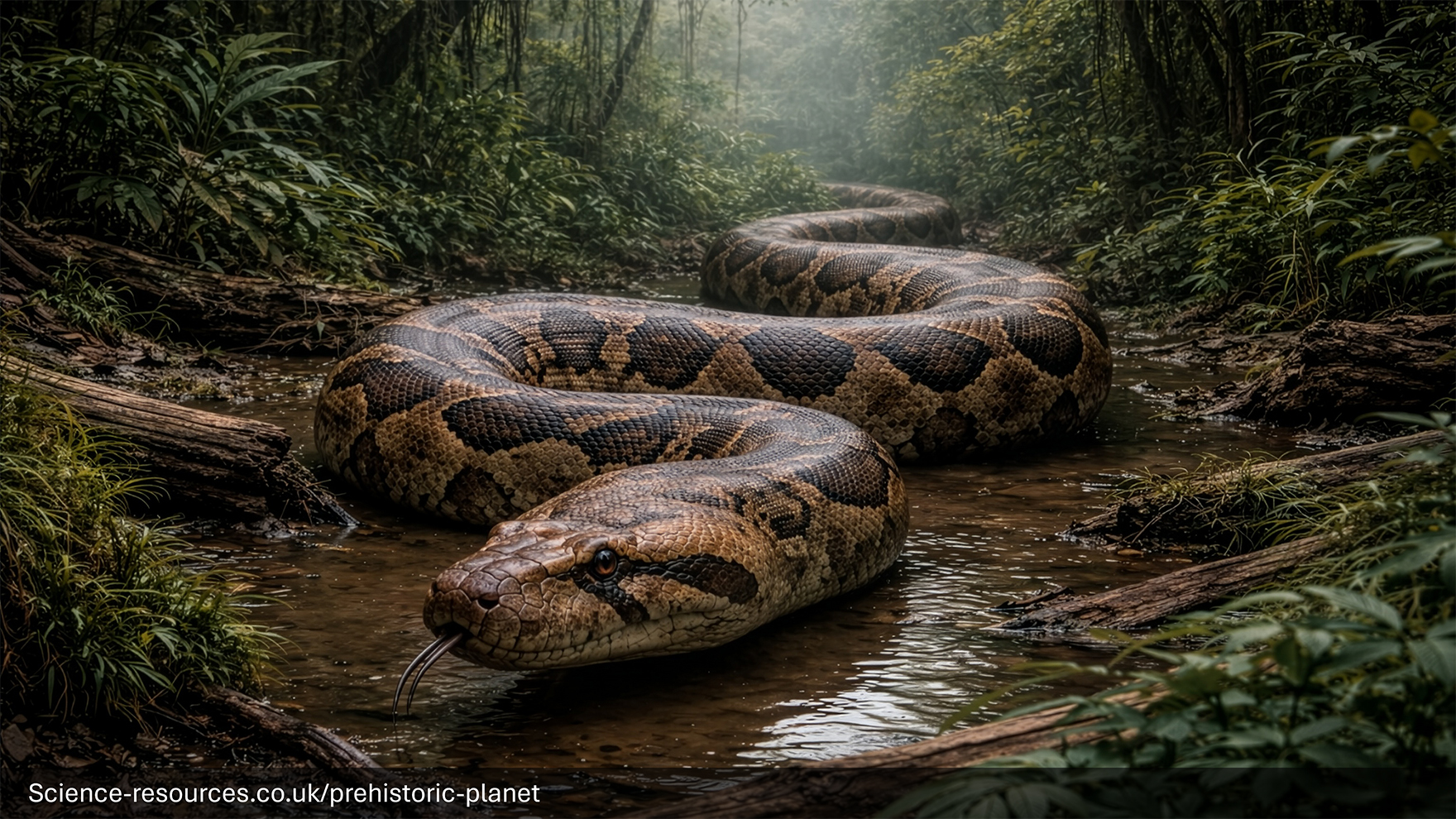 Titanoboa
What is Titanoboa?
The Titanoboa was an enormous, prehistoric snake that lived millions of years ago, after the dinosaurs went extinct. It slithered through the hot, swampy forests of ancient South America and was the largest snake ever discovered by scientists.
How big was Titanoboa?
Titanoboa was much bigger and heavier than any snake alive today. It could reach up to 13 metres (about 42 feet) in length and may have weighed over 1,100 kilograms (about 2,425 pounds) – that’s as long as a bus and as heavy as a small car!
What did Titanoboa eat?
Titanoboa was a carnivore. It preyed on large animals living in its swampy habitat, such as ancient crocodile-like reptiles and huge fish. Titanoboa would ambush its prey, wrap its powerful body around it, and crush it before swallowing it whole.
Titanoboa appearance
Titanoboa looked like a giant version of today’s boa constrictors and anacondas. It had a thick, muscular body, smooth scales, and a wide, powerful jaw. Its size made it the undisputed top predator in its environment.
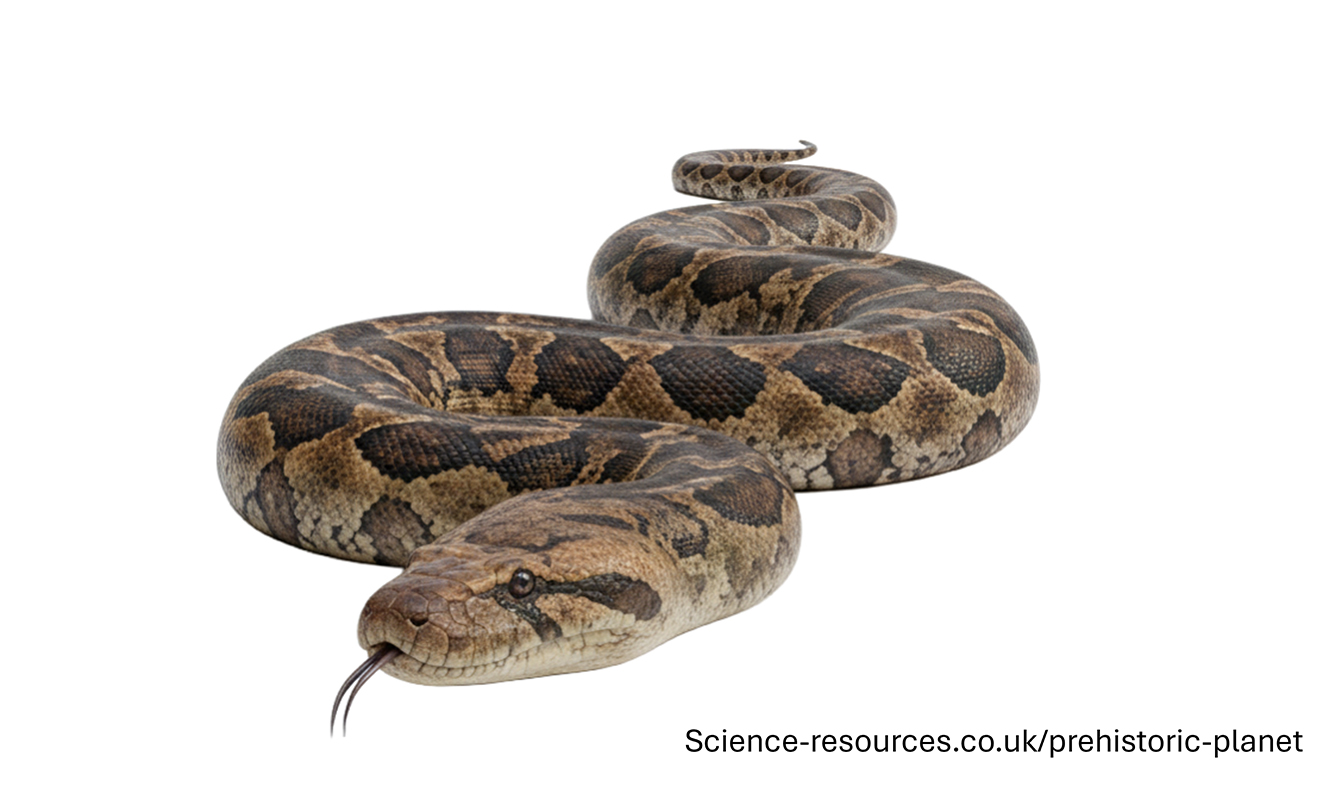 Titanoboa
Where did Titanoboa live?
Fossils of Titanoboa have been found in what is now Colombia, South America, in a place called the Cerrejón coal mine. Millions of years ago, this area was a hot, steamy rainforest near the equator.
Interesting facts
- Titanoboa’s name means “titanic boa” because of its enormous size.
- It lived about 60 million years ago, during the Palaeocene Epoch, just after the dinosaurs disappeared.
- Titanoboa is the largest snake that ever lived, longer and heavier than any python or anaconda today.
- Scientists think Titanoboa liked very hot climates, which helped it grow so big.
- It probably spent most of its time in water, where its huge body was easier to move around.
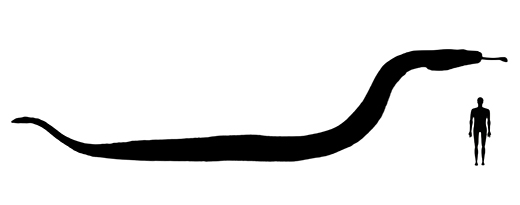
Titanoboa Facts
Pronounced: tie-TAN-oh-BOH-ah
Name Means: "Titanic Boa"
Length: Up to 13 metres (42 feet)
Weight: Over 1,100 kilograms (2,425 pounds)
Diet: Carnivore (meat)
Time: Palaeocene Epoch (about 60 million years ago)
Fossils Found: Colombia, South America (Cerrejón coal mine)
Which family of animals did Titanoboa belong to?
Titanoboa belonged to the same family as modern boas and anacondas, the Boidae family. It was closely related to modern-day boas, but much larger than any snake alive today.
What other animals lived at the same time as Titanoboa?
Titanoboa shared its world with giant turtles, huge crocodile-like reptiles called dyrosaurids, and many ancient fish. The rainforests were full of strange and wonderful creatures during the time of Titanoboa.
Titanoboa FAQ
Q1: What is Titanoboa?
A1: Titanoboa was the largest snake ever discovered, living in South America about 60 million years ago.
Q2: What did Titanoboa look like?
A2: It looked like a giant boa constrictor – long, thick, and very strong.
Q3: How big was Titanoboa?
A3: It could grow up to 13 metres (42 feet) long and weigh over 1,100 kg (2,425 lbs).
Q4: What did Titanoboa eat?
A4: Titanoboa ate large animals like ancient crocodiles and big fish.
Q5: Where did Titanoboa live?
A5: Fossils have been found in Colombia, South America, in a hot, swampy rainforest.
Q6: When did Titanoboa go extinct?
A6: Titanoboa disappeared around 58 million years ago, possibly as the climate changed and its giant prey became rare.
Q7: Did Titanoboa hunt in groups?
A7: Like modern boas, Titanoboa probably hunted alone, using stealth and strength to catch its food.
Q8: How is Titanoboa related to modern animals?
A8: Titanoboa is a distant relative of today’s boa constrictors and anacondas.
Q9: Who discovered Titanoboa?
A9: Titanoboa fossils were first described in 2009 by a team of scientists led by Dr. Jonathan Bloch and Dr. Jason Head.
Q10: Are there any complete skeletons of Titanoboa?
A10: Many fossil bones have been found, including vertebrae and ribs, which have helped scientists understand its enormous size.
You may also be intrested in:
- Extinct Animals: A-Z
- Dinosaurs: A-Z
Tags: How big were Daeodon, Daeodon, where did Daeodon live, how tall were Daeodon, what does Daeodon mean, Daeodon facts
Previous: Basilosaurus
Up next: Dire Wolf
© 2012 science-resources.co.uk. All rights reserved | Design by W3layouts
Extinct Animals: Titanoboa
Titanoboa, the enormous, prehistoric snake that lived millions of years ago.
Titanoboa (Titanic Boa)
Titanoboa
What is Titanoboa?
The Titanoboa was an enormous, prehistoric snake that lived millions of years ago, after the dinosaurs went extinct. It slithered through the hot, swampy forests of ancient South America and was the largest snake ever discovered by scientists.
How big was Titanoboa?
Titanoboa was much bigger and heavier than any snake alive today. It could reach up to 13 metres (about 42 feet) in length and may have weighed over 1,100 kilograms (about 2,425 pounds) – that’s as long as a bus and as heavy as a small car!
What did Titanoboa eat?
Titanoboa was a carnivore. It preyed on large animals living in its swampy habitat, such as ancient crocodile-like reptiles and huge fish. Titanoboa would ambush its prey, wrap its powerful body around it, and crush it before swallowing it whole.
Titanoboa appearance
Titanoboa looked like a giant version of today’s boa constrictors and anacondas. It had a thick, muscular body, smooth scales, and a wide, powerful jaw. Its size made it the undisputed top predator in its environment.
Titanoboa
Where did Titanoboa live?
Fossils of Titanoboa have been found in what is now Colombia, South America, in a place called the Cerrejón coal mine. Millions of years ago, this area was a hot, steamy rainforest near the equator.
Interesting facts
- Titanoboa’s name means “titanic boa” because of its enormous size.
- It lived about 60 million years ago, during the Palaeocene Epoch, just after the dinosaurs disappeared.
- Titanoboa is the largest snake that ever lived, longer and heavier than any python or anaconda today.
- Scientists think Titanoboa liked very hot climates, which helped it grow so big.
- It probably spent most of its time in water, where its huge body was easier to move around.
Titanoboa Facts
Pronounced: tie-TAN-oh-BOH-ah
Name Means: "Titanic Boa"
Length: Up to 13 metres (42 feet)
Weight: Over 1,100 kilograms (2,425 pounds)
Diet: Carnivore (meat)
Time: Palaeocene Epoch (about 60 million years ago)
Fossils Found: Colombia, South America (Cerrejón coal mine)
Which family of animals did Titanoboa belong to?
Titanoboa belonged to the same family as modern boas and anacondas, the Boidae family. It was closely related to modern-day boas, but much larger than any snake alive today.
What other animals lived at the same time as Titanoboa?
Titanoboa shared its world with giant turtles, huge crocodile-like reptiles called dyrosaurids, and many ancient fish. The rainforests were full of strange and wonderful creatures during the time of Titanoboa.
Titanoboa FAQ
Q1: What is Titanoboa?
A1: Titanoboa was the largest snake ever discovered, living in South America about 60 million years ago.
Q2: What did Titanoboa look like?
A2: It looked like a giant boa constrictor – long, thick, and very strong.
Q3: How big was Titanoboa?
A3: It could grow up to 13 metres (42 feet) long and weigh over 1,100 kg (2,425 lbs).
Q4: What did Titanoboa eat?
A4: Titanoboa ate large animals like ancient crocodiles and big fish.
Q5: Where did Titanoboa live?
A5: Fossils have been found in Colombia, South America, in a hot, swampy rainforest.
Q6: When did Titanoboa go extinct?
A6: Titanoboa disappeared around 58 million years ago, possibly as the climate changed and its giant prey became rare.
Q7: Did Titanoboa hunt in groups?
A7: Like modern boas, Titanoboa probably hunted alone, using stealth and strength to catch its food.
Q8: How is Titanoboa related to modern animals?
A8: Titanoboa is a distant relative of today’s boa constrictors and anacondas.
Q9: Who discovered Titanoboa?
A9: Titanoboa fossils were first described in 2009 by a team of scientists led by Dr. Jonathan Bloch and Dr. Jason Head.
Q10: Are there any complete skeletons of Titanoboa?
A10: Many fossil bones have been found, including vertebrae and ribs, which have helped scientists understand its enormous size.
Tags: How big were Daeodon, Daeodon, where did Daeodon live, how tall were Daeodon, what does Daeodon mean, Daeodon facts
Previous: Basilosaurus
Up next: Dire Wolf
© 2012 science-resources.co.uk. All rights reserved | Design by W3layouts