Generative AI Notification: Some elements of this image have been created or enhanced using AI technology. To find out how we create all our prehistoric animals, click here.
Last updated: 4th August 2025
Extinct Animals: Gigantopithecus
Gigantopithecus, a giant prehistoric ape that lived a very long time ago.
Gigantopithecus (Giant ape)
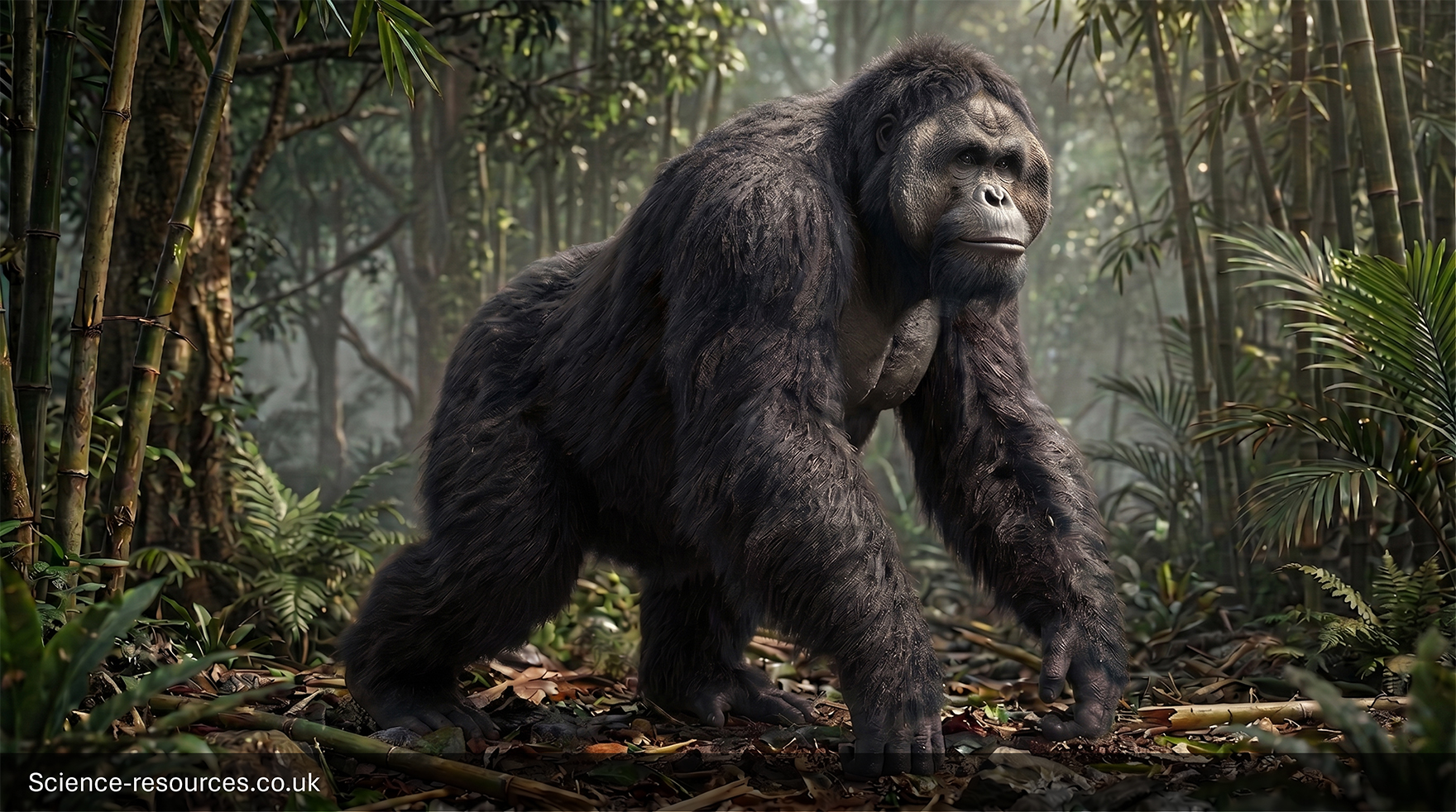 Gigantopithecus
What is Gigantopithecus?
Gigantopithecus was a giant prehistoric ape that lived in the subtropical forests of southern China from about two million years ago until it went extinct roughly 295,000 to 215,000 years ago. It is one of the biggest primates scientists have ever discovered.
How big was Gigantopithecus?
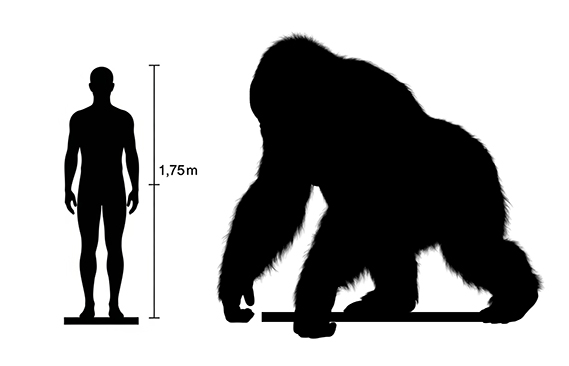
Gigantopithecus is the largest primate to ever walk the Earth. Because no complete skeleton of the aninal as ever been found, this extinct relative of modern orangutans is estimated to have stood up to 3 meters (nearly 10 feet) tall and weighed between 200 and 300 kg (440 to 660 pounds).
What did Gigantopithecus eat?
Gigantopithecus was a plant-eater. It probably ate leaves, fruits, stems, roots and other tough forest plants. Its large flat teeth were perfect for grinding food.
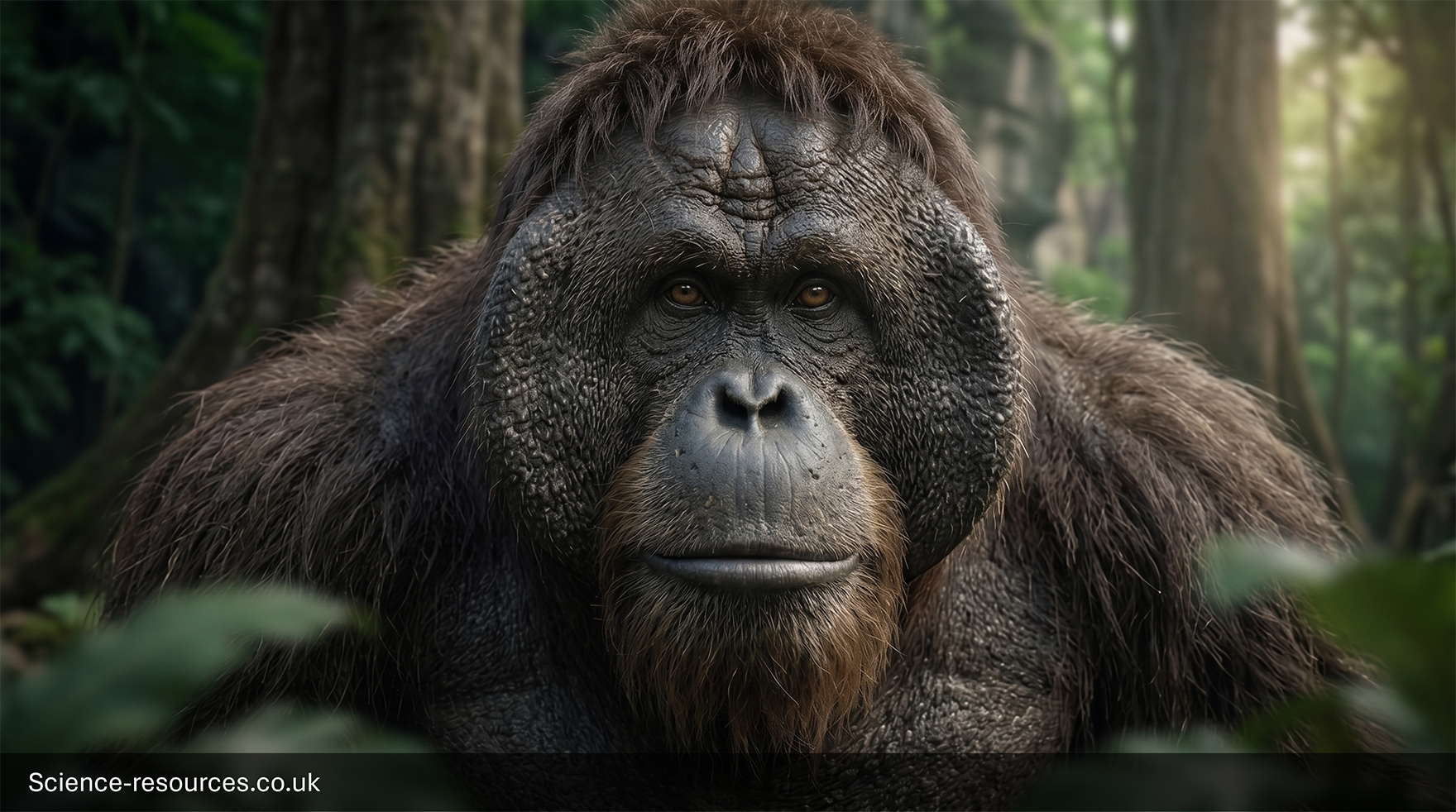
Gigantopithecus, an extinct relative of modern orangutans.
Gigantopithecus appearance
Gigantopithecus was an enormous ape. Athough we don't have complete skeletons, scientists believe it may have resembled a giant gorilla or orangutan. Some estimates suggest it may have stood up to about 3 metres (10 feet) tall if it stood upright. It had a very strong jaw and huge teeth for chewing tough food.
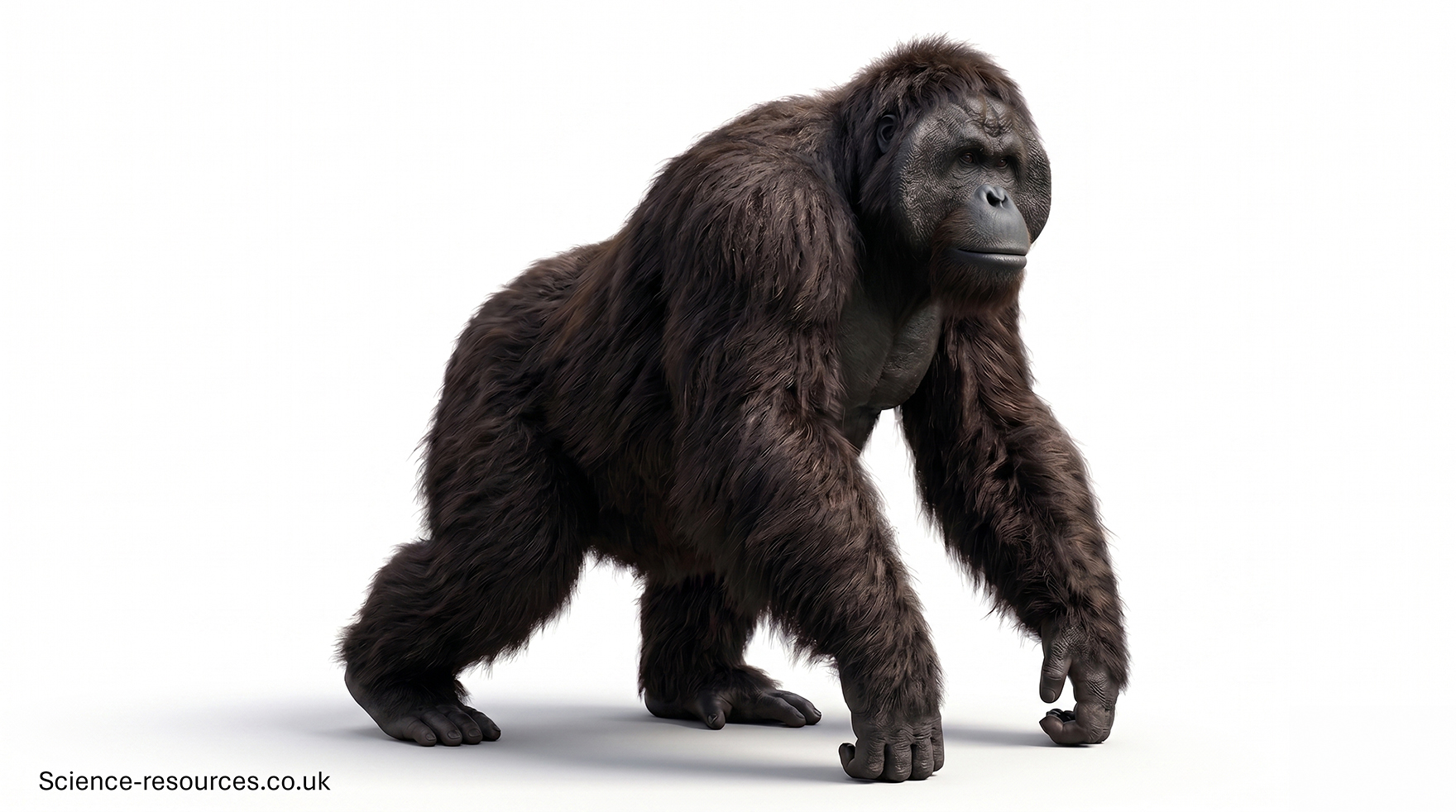
Gigantopithecus with gorilla-like hair
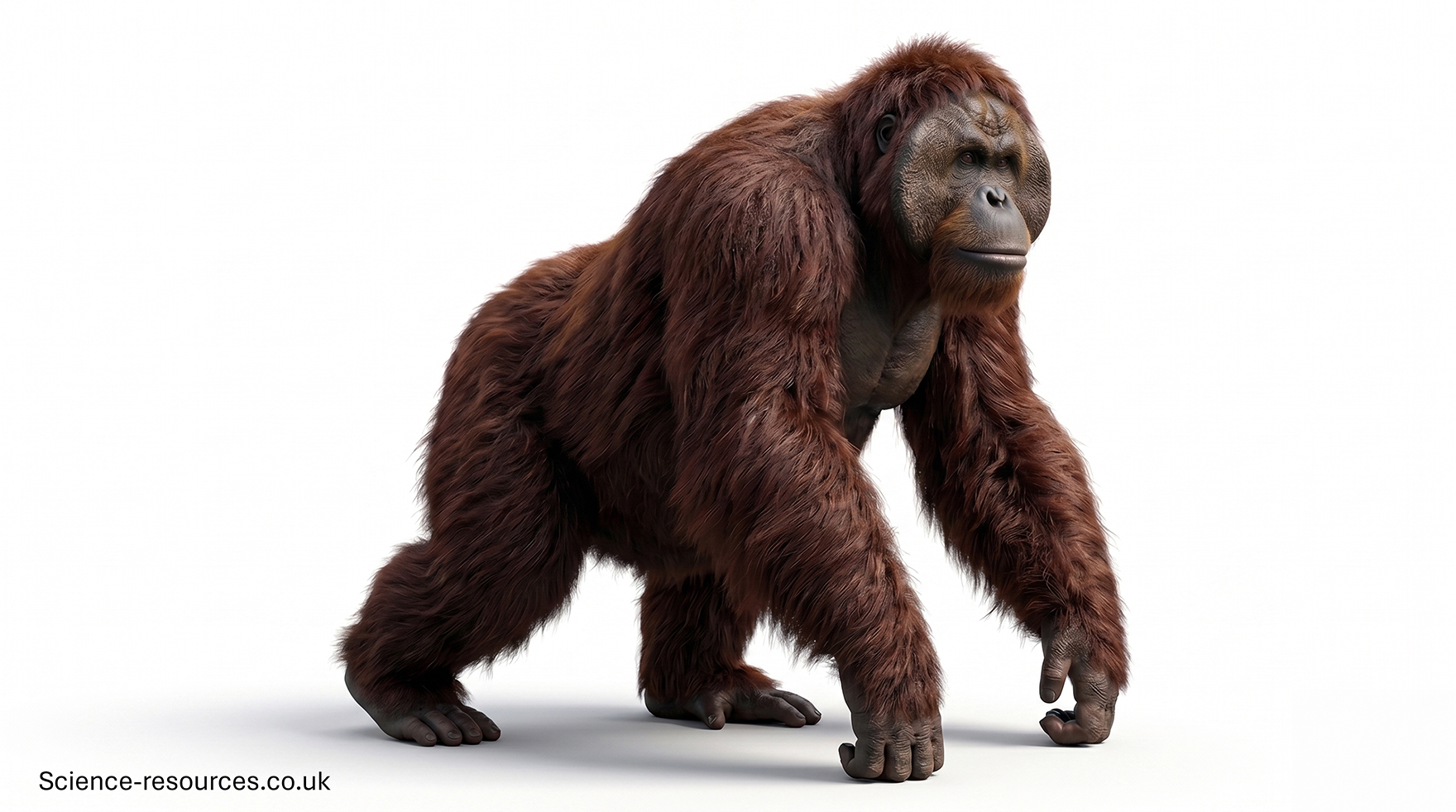
Gigantopithecus with orangutan-like hair
Where did Gigantopithecus live?
Gigantopithecus lived in the subtropical forests of southern China.
How do scientists know about Gigantopithecus?
Scientists know about Gigantopithecus from fossils. Most of the fossils found so far are teeth and parts of lower jaws. These clues help scientists work out its size, diet and where it lived.
Why did Gigantopithecus become extinct?
Scientists think Gigantopithecus became extinct when the climate changed and forests shrank. With less of its favourite food available, it may not have been able to survive.
Interesting facts
- Gigantopithecus may have been the largest ape that ever lived.
- Its closest living relative is thought to be the orangutan.
- It is known mostly from teeth and jawbones, so some details are still a mystery.
Gigantopithecus Facts
Pronounced: JY-gan-toh-pih-THEE-kus
Name means: “Giant ape”
Height: Up to about 3 metres (10 feet) tall when standing upright
Weight: Estimates vary, but it may have weighed around 200 to 300 kilograms (440 to 660 pounds)
Diet: Herbivore (plants)
Time: Pleistocene Epoch, about 2 million to 300,000 years ago
Fossils found: Southern China, with possible finds in Vietnam and Thailand
Fossils Found: North America, Europe, and Asia
Which family of animals did Gigantopithecus belong to?
Gigantopithecus belonged to the great ape family Hominidae. Its closest living relatives are modern orangutans.
What other animals lived at the same time as Gigantopithecus?
Gigantopithecus lived during the Pleistocene Epoch, from about 2 million years ago until roughly 300,000 years ago. Gigantopithecus shared its world with many other prehistoric animals. In southern China and nearby parts of Asia, there were ancient orangutans, elephants called stegodons, tapirs, deer, giant pandas and powerful predators such as hyenas. Early humans may also have lived in some of these places during part of the same time period.
Gigantopithecus FAQ
Q1: What is Gigantopithecus?
A1: Gigantopithecus was a giant extinct ape that lived in Asia during the Pleistocene.
Q2: Was Gigantopithecus the biggest ape ever?
A2: It is widely considered the largest ape known to science, although exact size estimates are uncertain.
Q3: Where did Gigantopithecus live?
A3: Most fossils have been found in southern China, with possible evidence from nearby parts of Southeast Asia.
Q4: What did Gigantopithecus eat?
A4: It was a herbivore that likely ate fruit, leaves, roots and other forest plants.
Q5: How do we know about Gigantopithecus?
A5: Scientists study its fossil teeth and lower jawbones, which are the main remains found so far.
Q6: How tall was Gigantopithecus?
A6: Some estimates suggest it may have reached about 3 metres tall, but no complete skeleton has been found.
Q7: Was Gigantopithecus related to humans?
A7: It was a great ape, but it is thought to have been more closely related to orangutans than to humans.
Q8: When was Gigantopithecus discovered?
A8: The first known fossils were identified in the 1930s from large teeth found in Chinese medicine shops.
Q9: Why did Gigantopithecus go extinct?
A9: Scientists think climate change altered its forest habitat and food supply, and it could not adapt well enough.
Q10: Did Gigantopithecus live alongside early humans?
A10: Some researchers think it may have shared parts of Asia with early humans, but the evidence is limited.
You may also be intrested in:
- Extinct Animals: A-Z
- Dinosaurs: A-Z
Tags: How big were Gigantopithecus, Gigantopithecus, where did Gigantopithecus live, how tall were Gigantopithecus, what does Gigantopithecus mean, Gigantopithecus facts
Previous: Gastornis
Up next: Glyptodon
© 2012 science-resources.co.uk. All rights reserved | Design by W3layouts
Extinct Animals: Gigantopithecus
Gigantopithecus, a giant prehistoric ape that lived a very long time ago.
Gigantopithecus (Giant ape)
Gigantopithecus
What is Gigantopithecus?
Gigantopithecus was a giant prehistoric ape that lived in the subtropical forests of southern China from about two million years ago until it went extinct roughly 295,000 to 215,000 years ago. It is one of the biggest primates scientists have ever discovered.
How big was Gigantopithecus?
Gigantopithecus is the largest primate to ever walk the Earth. Because no complete skeleton of the aninal as ever been found, this extinct relative of modern orangutans is estimated to have stood up to 3 meters (nearly 10 feet) tall and weighed between 200 and 300 kg (440 to 660 pounds).
What did Gigantopithecus eat?
Gigantopithecus was a plant-eater. It probably ate leaves, fruits, stems, roots and other tough forest plants. Its large flat teeth were perfect for grinding food.
Gigantopithecus, an extinct relative of modern orangutans.
Gigantopithecus appearance
Gigantopithecus was an enormous ape. Athough we don't have complete skeletons, scientists believe it may have resembled a giant gorilla or orangutan. Some estimates suggest it may have stood up to about 3 metres (10 feet) tall if it stood upright. It had a very strong jaw and huge teeth for chewing tough food.
Gigantopithecus with gorilla-like hair
Gigantopithecus with orangutan-like hair
Where did Gigantopithecus live?
Gigantopithecus lived in the subtropical forests of southern China.
How do scientists know about Gigantopithecus?
Scientists know about Gigantopithecus from fossils. Most of the fossils found so far are teeth and parts of lower jaws. These clues help scientists work out its size, diet and where it lived.
Why did Gigantopithecus become extinct?
Scientists think Gigantopithecus became extinct when the climate changed and forests shrank. With less of its favourite food available, it may not have been able to survive.
Interesting facts
- Gigantopithecus may have been the largest ape that ever lived.
- Its closest living relative is thought to be the orangutan.
- It is known mostly from teeth and jawbones, so some details are still a mystery.
Gigantopithecus Facts
Pronounced: JY-gan-toh-pih-THEE-kus
Name means: “Giant ape”
Height: Up to about 3 metres (10 feet) tall when standing upright
Weight: Estimates vary, but it may have weighed around 200 to 300 kilograms (440 to 660 pounds)
Diet: Herbivore (plants)
Time: Pleistocene Epoch, about 2 million to 300,000 years ago
Fossils found: Southern China, with possible finds in Vietnam and Thailand
Fossils Found: North America, Europe, and Asia
Which family of animals did Gigantopithecus belong to?
Gigantopithecus belonged to the great ape family Hominidae. Its closest living relatives are modern orangutans.
What other animals lived at the same time as Gigantopithecus?
Gigantopithecus lived during the Pleistocene Epoch, from about 2 million years ago until roughly 300,000 years ago. Gigantopithecus shared its world with many other prehistoric animals. In southern China and nearby parts of Asia, there were ancient orangutans, elephants called stegodons, tapirs, deer, giant pandas and powerful predators such as hyenas. Early humans may also have lived in some of these places during part of the same time period.
Gigantopithecus FAQ
Q1: What is Gigantopithecus?
A1: Gigantopithecus was a giant extinct ape that lived in Asia during the Pleistocene.
Q2: Was Gigantopithecus the biggest ape ever?
A2: It is widely considered the largest ape known to science, although exact size estimates are uncertain.
Q3: Where did Gigantopithecus live?
A3: Most fossils have been found in southern China, with possible evidence from nearby parts of Southeast Asia.
Q4: What did Gigantopithecus eat?
A4: It was a herbivore that likely ate fruit, leaves, roots and other forest plants.
Q5: How do we know about Gigantopithecus?
A5: Scientists study its fossil teeth and lower jawbones, which are the main remains found so far.
Q6: How tall was Gigantopithecus?
A6: Some estimates suggest it may have reached about 3 metres tall, but no complete skeleton has been found.
Q7: Was Gigantopithecus related to humans?
A7: It was a great ape, but it is thought to have been more closely related to orangutans than to humans.
Q8: When was Gigantopithecus discovered?
A8: The first known fossils were identified in the 1930s from large teeth found in Chinese medicine shops.
Q9: Why did Gigantopithecus go extinct?
A9: Scientists think climate change altered its forest habitat and food supply, and it could not adapt well enough.
Q10: Did Gigantopithecus live alongside early humans?
A10: Some researchers think it may have shared parts of Asia with early humans, but the evidence is limited.
Tags: How big were Gigantopithecus, Gigantopithecus, where did Gigantopithecus live, how tall were Gigantopithecus, what does Gigantopithecus mean, Gigantopithecus facts
Previous: Gastornis
Up next: Glyptodon
© 2012 science-resources.co.uk. All rights reserved | Design by W3layouts