Generative AI Notification: Some elements of this image have been created or enhanced using AI technology. To find out how we create all our prehistoric animals, click here.
Last updated: 4th August 2025
Extinct Animals: Arsinoitherium
Discover the ancient "swamp beast" of North Africa—a massive, double-horned giant related to elephants that waded through prehistoric mangroves millions of years ago.
Arsinoitherium (Arsinoe’s Beast)
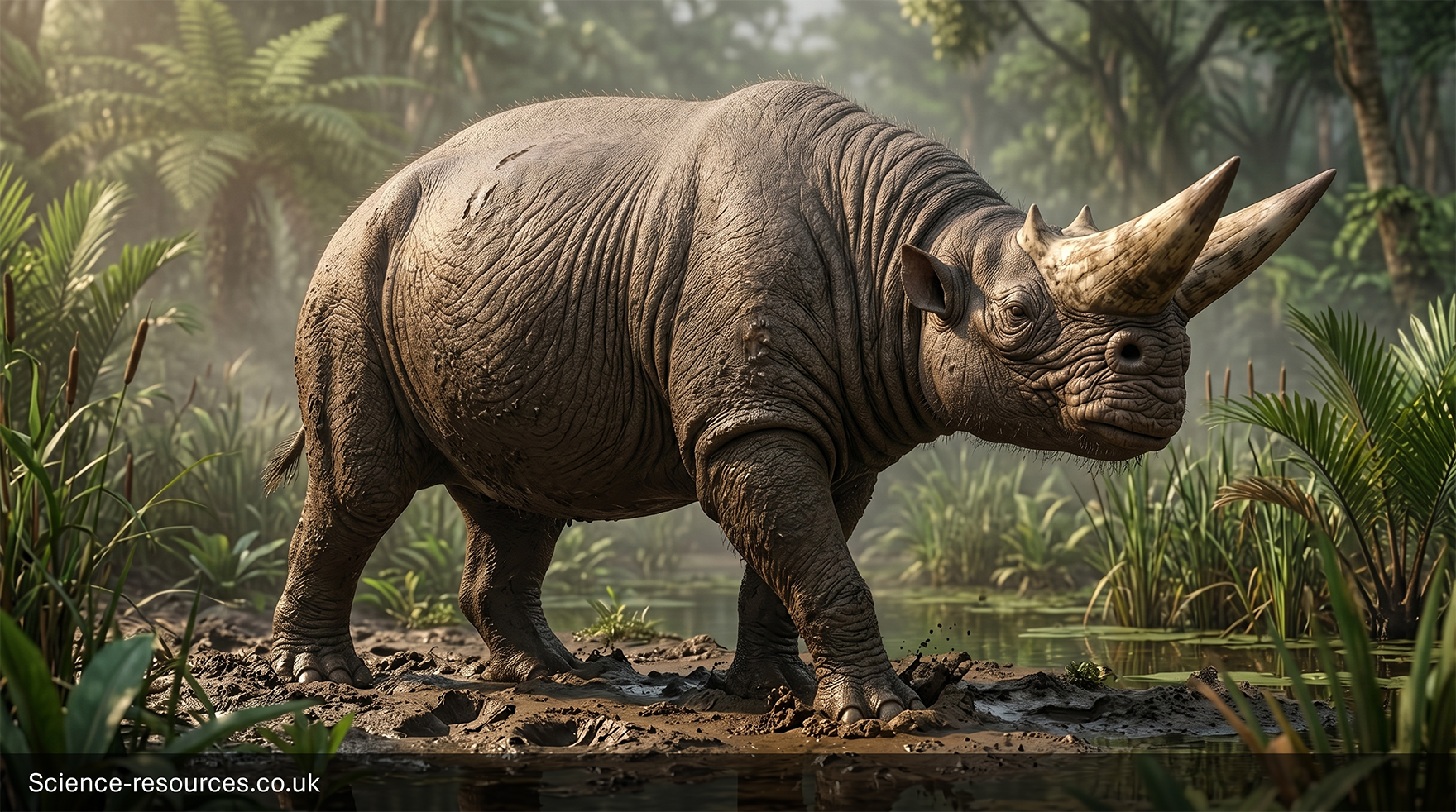 Arsinoitherium
What is Arsinoitherium?
Arsinoitherium was a bizarre prehistoric mammal that lived long before the Ice Age. While it looked a lot like a modern rhinoceros, it was not actually related to rhinos at all! Instead, scientists have discovered it was an ancient relative of elephants, sea cows (manatees), and hyraxes. Its most striking feature was a pair of enormous, hollow bone horns growing side-by-side right above its nose.
How big was Arsinoitherium?
Arsinoitherium was a massive, prehistoric herbivore that was roughly the size and build of a large modern rhinoceros. It measured about 3 meters (10 feet) long and stood 1.75 to 1.8 meters (nearly 6 feet) tall at the shoulder. Depending on the exact species, adults weighed between 1,000 kg and 2,500 kg.
What did Arsinoitherium eat?
Arsinoitherium was a herbivore. It probably ate leaves, soft plants and other vegetation growing in damp, tropical habitats.
Arsinoitherium appearance
Arsinoitherium had a heavy body, strong legs and two enormous horn-like structures above its nose. It also had a smaller pair of bony knobs above its eyes.
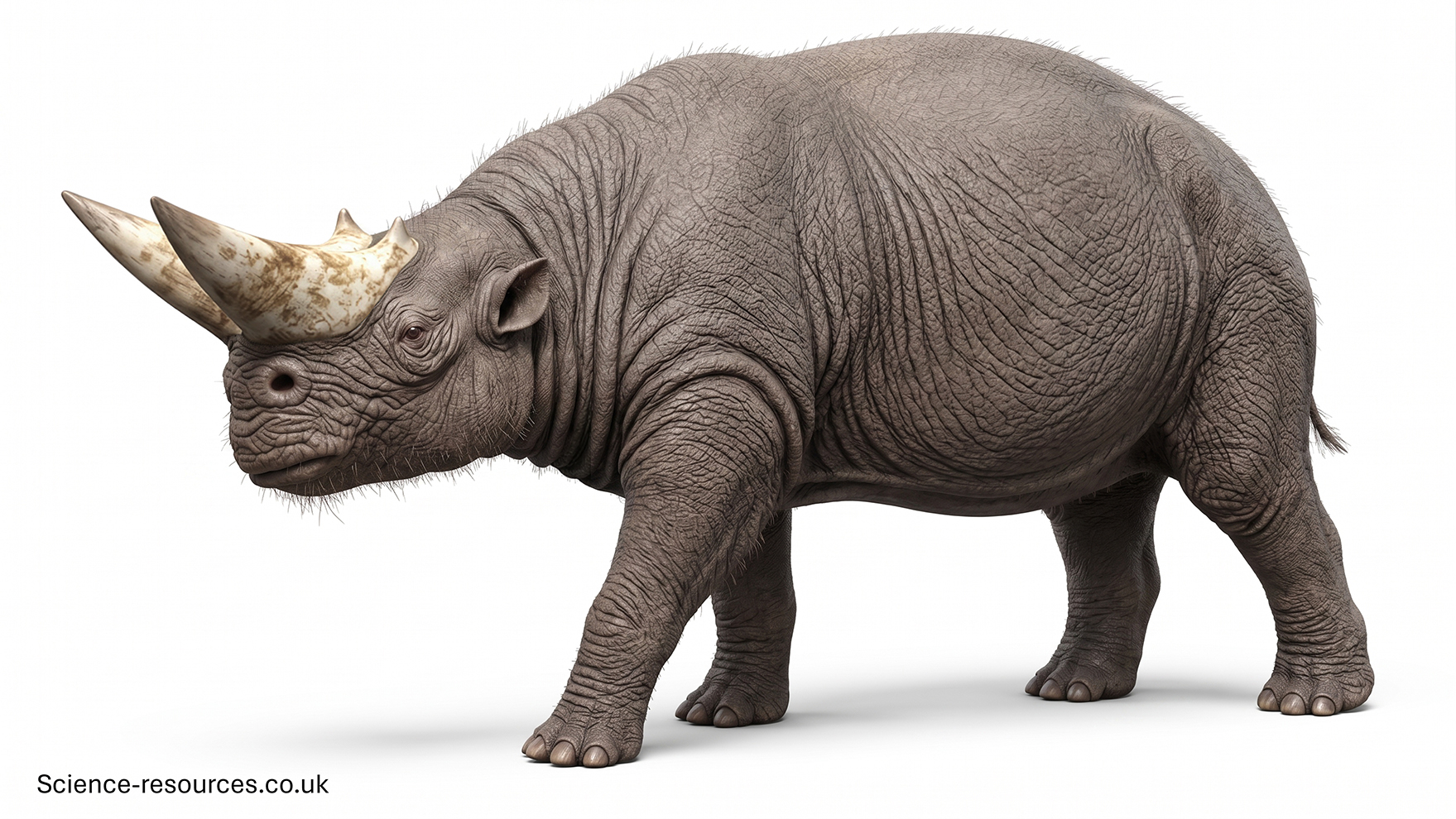
Arsinoitherium appearance
Where did Arsinoitherium live?
Scientists have found Arsinoitherium fossils in Egypt, especially in the Fayum area. It probably lived in warm, wet habitats such as forests, swamps and areas near mangroves in North Africa.
How do scientists know about Arsinoitherium?
Scientists know about Arsinoitherium from fossils, including skulls, teeth and other bones. These fossils help scientists work out its size, body shape, diet and where it lived.
Why did Arsinoitherium become extinct?
Scientists are not completely sure, but changing climates and habitats may have made it harder for Arsinoitherium to survive. As environments changed, its food sources and living spaces may have shrunk.
Interesting facts
- Arsinoitherium looked like a rhino, but it was not one.
- Its huge horns were made of bone at the core and may have been covered with keratin in life.
- The first fossils were found in Egypt, and its name links back to Arsinoe, a queen from ancient Egypt.
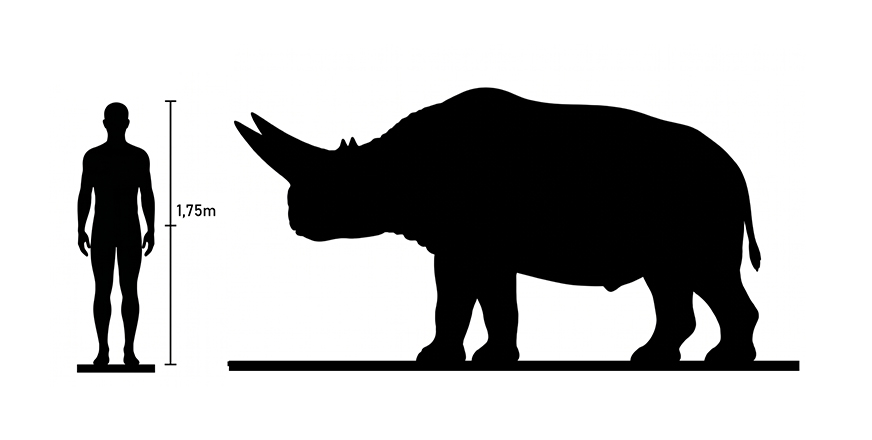
Arsinoitherium Facts
Pronounced: Ar-sin-oy-THEE-ree-um
Name means: “Arsinoe’s beast”
Height: About 1.75 metres (5.7 feet) at the shoulder
Length: About 3 to 3.5 metres (10 to 11 feet)
Weight: Estimates vary, but it may have weighed around 1 to 2 tonnes
Diet: Herbivore (plants)
Time: Late Eocene to Early Oligocene, about 36 to 27 million years ago
Fossils found: Mainly Egypt, with related finds from other parts of Africa and Arabia
Which family of animals did Arsinoitherium belong to?
Arsinoitherium belongs to the extinct family Arsinoitheriidae. Though it looked like a modern rhinoceros, it was actually more closely related to elephants and sea cows.
What other animals lived at the same time as Arsinoitherium?
Arsinoitherium shared its world with other early mammals, crocodiles, turtles and ancient relatives of elephants. In the warm wetlands and forests of North Africa, many strange and now-extinct animals lived alongside it.
Arsinoitherium FAQ
Q1: What is Arsinoitherium?
A1. Arsinoitherium is an extinct, giant mammal that lived in the tropical swamps of ancient Africa.
It looked like a rhino but was related to elephants.
Q2. What did it use its giant horns for?
A2. Because the horns were hollow, they were probably too fragile for heavy fighting. Scientists think they were used to display to mates, scare off rival animals, or make loud calling noises.
Q3. Was Arsinoitherium a type of rhinoceros?
A3. No. Even though it had large horns on its nose and a similar body shape, this is an example of convergent evolution (different animals developing similar traits because they live in similar ways).
Q4. Could Arsinoitherium walk well on land?
A4. It could walk on land, but its heavy legs and feet were much better suited for wading slowly through soft mud and shallow swamp water without sinking.
Q5. How many horns did it have?
A5. It had four horns in total. Two giant, knife-like horns sat on its nose, and two much smaller, rounded bony bumps sat right behind them on its forehead.
Q6. What was the climate like where it lived?
A6. It lived in a highly tropical, warm, and humid climate surrounded by coastal mangrove swamps and thick rainforest networks.
Q7. Did humans ever hunt Arsinoitherium?
A7. No. Arsinoitherium went extinct more than 26 million years before the very first primitive human ancestors appeared on Earth.
Q8. Why did Arsinoitherium go extinct?
A8. Around 27 million years ago, the Earth's climate began to dry out. The tropical rainforests and mangrove swamps vanished, replacing its home with dry grasslands, leaving the animal without enough food or water.
Q9. How do scientists know what it ate?
A9. Paleontologists study the wear patterns on its fossilized teeth.
The high crowns and smooth wear indicate it mashed up soft, non-abrasive forest leaves and fruits.
Q10. Where is the best place to see an Arsinoitherium fossil?
A10. The absolute best-preserved skeletons were recovered from the Fayum Oasis in Egypt and are displayed in major natural history museums, including the Cairo Geological Museum and the Natural History Museum in London.
You may also be intrested in:
- Extinct Animals: A-Z
- Dinosaurs: A-Z
Tags: How big were Arsinoitherium, Arsinoitherium, where did Arsinoitherium live, how tall were Arsinoitherium, what does Arsinoitherium mean, Arsinoitherium facts
Up next: Basilosaurus
© 2012 science-resources.co.uk. All rights reserved | Design by W3layouts
Extinct Animals: Arsinoitherium
Discover the ancient "swamp beast" of North Africa—a massive, double-horned giant related to elephants that waded through prehistoric mangroves millions of years ago.
Arsinoitherium (Arsinoe’s Beast)
Arsinoitherium
What is Arsinoitherium?
Arsinoitherium was a bizarre prehistoric mammal that lived long before the Ice Age. While it looked a lot like a modern rhinoceros, it was not actually related to rhinos at all! Instead, scientists have discovered it was an ancient relative of elephants, sea cows (manatees), and hyraxes. Its most striking feature was a pair of enormous, hollow bone horns growing side-by-side right above its nose.
How big was Arsinoitherium?
Arsinoitherium was a massive, prehistoric herbivore that was roughly the size and build of a large modern rhinoceros. It measured about 3 meters (10 feet) long and stood 1.75 to 1.8 meters (nearly 6 feet) tall at the shoulder. Depending on the exact species, adults weighed between 1,000 kg and 2,500 kg.
What did Arsinoitherium eat?
Arsinoitherium was a herbivore. It probably ate leaves, soft plants and other vegetation growing in damp, tropical habitats.
Arsinoitherium appearance
Arsinoitherium had a heavy body, strong legs and two enormous horn-like structures above its nose. It also had a smaller pair of bony knobs above its eyes.
Arsinoitherium appearance
Where did Arsinoitherium live?
Scientists have found Arsinoitherium fossils in Egypt, especially in the Fayum area. It probably lived in warm, wet habitats such as forests, swamps and areas near mangroves in North Africa.
How do scientists know about Arsinoitherium?
Scientists know about Arsinoitherium from fossils, including skulls, teeth and other bones. These fossils help scientists work out its size, body shape, diet and where it lived.
Why did Arsinoitherium become extinct?
Scientists are not completely sure, but changing climates and habitats may have made it harder for Arsinoitherium to survive. As environments changed, its food sources and living spaces may have shrunk.
Interesting facts
- Arsinoitherium looked like a rhino, but it was not one.
- Its huge horns were made of bone at the core and may have been covered with keratin in life.
- The first fossils were found in Egypt, and its name links back to Arsinoe, a queen from ancient Egypt.
Arsinoitherium Facts
Pronounced: Ar-sin-oy-THEE-ree-um
Name means: “Arsinoe’s beast”
Height: About 1.75 metres (5.7 feet) at the shoulder
Length: About 3 to 3.5 metres (10 to 11 feet)
Weight: Estimates vary, but it may have weighed around 1 to 2 tonnes
Diet: Herbivore (plants)
Time: Late Eocene to Early Oligocene, about 36 to 27 million years ago
Fossils found: Mainly Egypt, with related finds from other parts of Africa and Arabia
Which family of animals did Arsinoitherium belong to?
Arsinoitherium belongs to the extinct family Arsinoitheriidae. Though it looked like a modern rhinoceros, it was actually more closely related to elephants and sea cows.
What other animals lived at the same time as Arsinoitherium?
Arsinoitherium shared its world with other early mammals, crocodiles, turtles and ancient relatives of elephants. In the warm wetlands and forests of North Africa, many strange and now-extinct animals lived alongside it.
Arsinoitherium FAQ
Q1: What is Arsinoitherium?
A1. Arsinoitherium is an extinct, giant mammal that lived in the tropical swamps of ancient Africa. It looked like a rhino but was related to elephants.
Q2. What did it use its giant horns for?
A2. Because the horns were hollow, they were probably too fragile for heavy fighting. Scientists think they were used to display to mates, scare off rival animals, or make loud calling noises.
Q3. Was Arsinoitherium a type of rhinoceros?
A3. No. Even though it had large horns on its nose and a similar body shape, this is an example of convergent evolution (different animals developing similar traits because they live in similar ways).
Q4. Could Arsinoitherium walk well on land?
A4. It could walk on land, but its heavy legs and feet were much better suited for wading slowly through soft mud and shallow swamp water without sinking.
Q5. How many horns did it have?
A5. It had four horns in total. Two giant, knife-like horns sat on its nose, and two much smaller, rounded bony bumps sat right behind them on its forehead.
Q6. What was the climate like where it lived?
A6. It lived in a highly tropical, warm, and humid climate surrounded by coastal mangrove swamps and thick rainforest networks.
Q7. Did humans ever hunt Arsinoitherium?
A7. No. Arsinoitherium went extinct more than 26 million years before the very first primitive human ancestors appeared on Earth.
Q8. Why did Arsinoitherium go extinct?
A8. Around 27 million years ago, the Earth's climate began to dry out. The tropical rainforests and mangrove swamps vanished, replacing its home with dry grasslands, leaving the animal without enough food or water.
Q9. How do scientists know what it ate?
A9. Paleontologists study the wear patterns on its fossilized teeth. The high crowns and smooth wear indicate it mashed up soft, non-abrasive forest leaves and fruits.
Q10. Where is the best place to see an Arsinoitherium fossil?
A10. The absolute best-preserved skeletons were recovered from the Fayum Oasis in Egypt and are displayed in major natural history museums, including the Cairo Geological Museum and the Natural History Museum in London.
Tags: How big were Arsinoitherium, Arsinoitherium, where did Arsinoitherium live, how tall were Arsinoitherium, what does Arsinoitherium mean, Arsinoitherium facts
Up next: Basilosaurus
© 2012 science-resources.co.uk. All rights reserved | Design by W3layouts