Generative AI Notification: Some elements of this image have been created or enhanced using AI technology. To find out how we create all our prehistoric animals, click here.
Last updated: 4th August 2025
Extinct Animals: Elasmotherium
Discover the ancient "Siberian unicorn" of the Ice Age—a giant, woolly rhinoceros with a single colossal horn that roamed the frozen plains.
Elasmotherium (Thin Plate Beast)
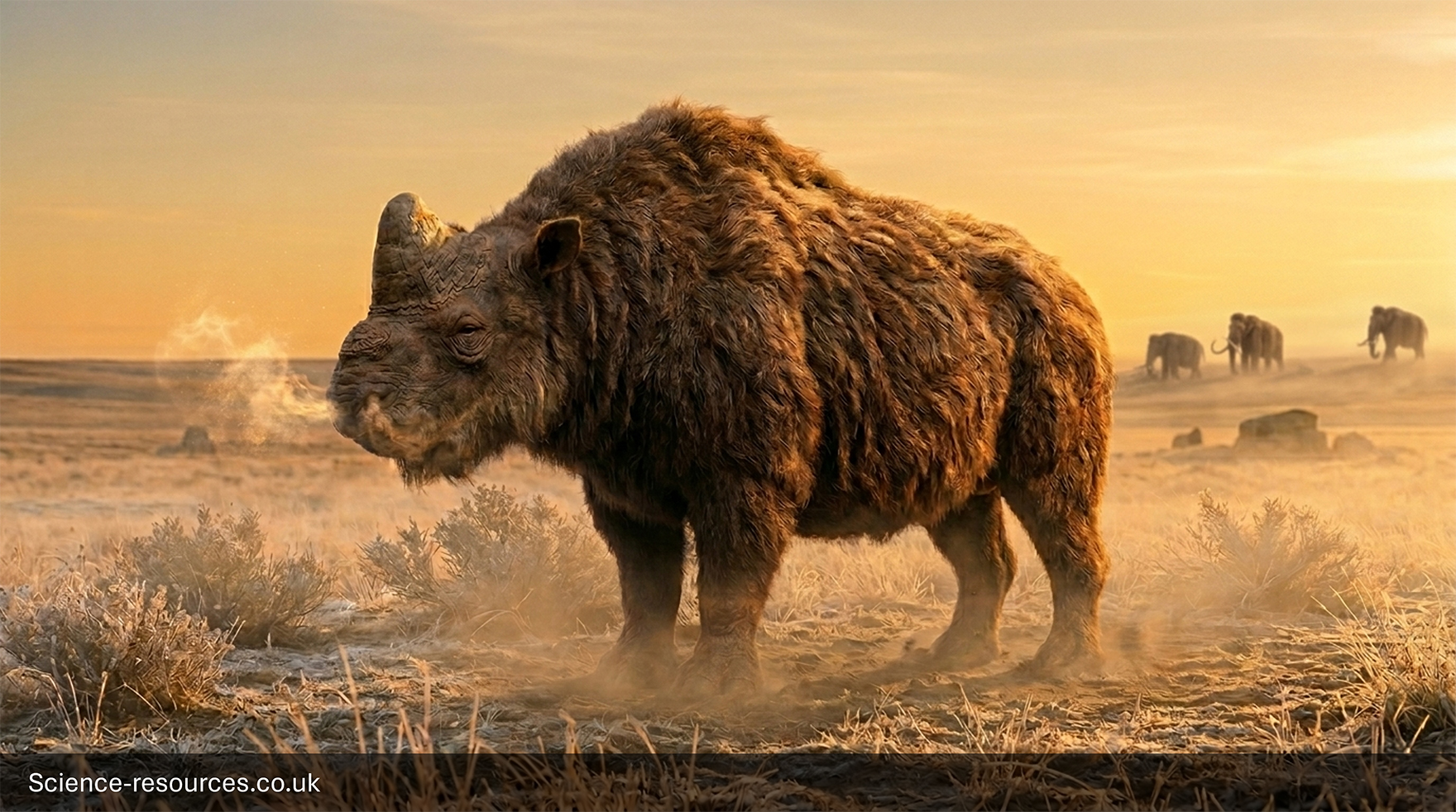 Elasmotherium
What is Elasmotherium?
Elasmotherium was a spectacular species of giant prehistoric rhinoceros that lived during the Ice Age. It is famously nicknamed the "Siberian unicorn" because it featured a single, incredibly massive horn growing right out of its forehead. Unlike modern rhinos, which are mostly hairless and live in warm climates, Elasmotherium was covered in a thick, shaggy coat of fur to keep it warm in the freezing northern wilderness.
How big was Elasmotherium?
Elasmotherium was one of the largest rhinoceros species to ever walk the earth. It grew to a massive size, standing up to 2.5 metres tall at the shoulder and reaching about 4.5 metres in length. It weighed an incredible 3.5 to 5 tonnes! This made it significantly larger than modern white rhinoceroses and nearly as heavy as a modern African elephant.
What did Elasmotherium eat?
Elasmotherium was a herbivore (plant-eater) that specialised in grazing. Because its head naturally pointed downward, it spent its day eating tough grasses, roots, and underground bulbs from the frozen ground. It had highly unique, ever-growing molar teeth with complex "thin plate" enamel folds, which were perfectly adapted for grinding down gritty, dirt-covered vegetation without wearing out.
Elasmotherium appearance
- A massive, heavily-built body with a high, muscular hump on its shoulders to support its heavy head.
- Long, strong legs compared to modern rhinos, which allowed it to gallop surprisingly fast across the plains.
- A thick, shaggy woolly coat to protect it from harsh, sub-zero Ice Age blizzards.
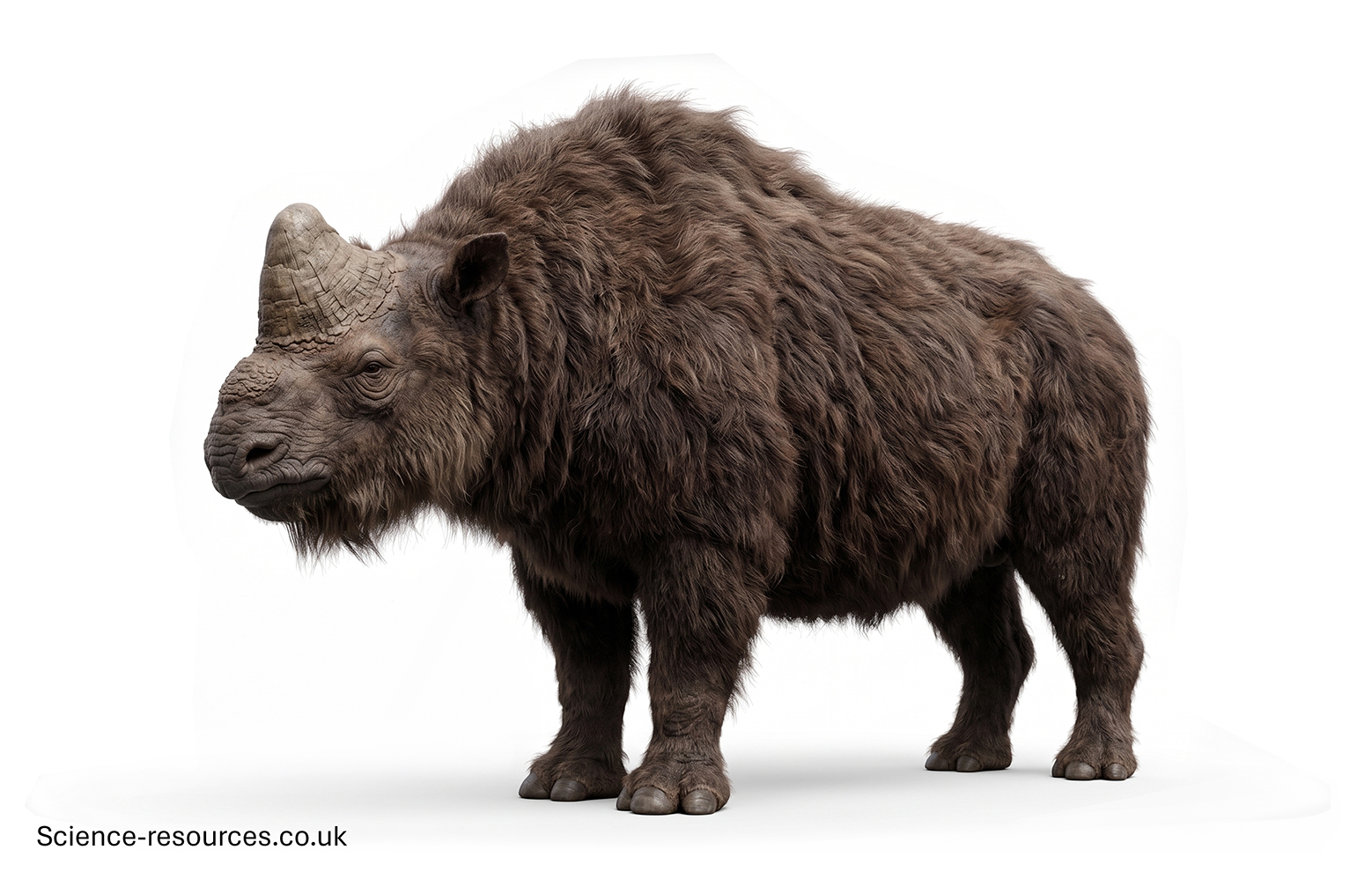
Elasmotherium with a bony dome on its head
Because rhinoceros horns are made of keratin (the same protein as human hair and fingernails), they decompose rather than fossilise. Paleontologists have to guess the horn's size and shape by looking at the attachment sites on the skull. Below is an artistic impression of a large-horned Elasmotherium.
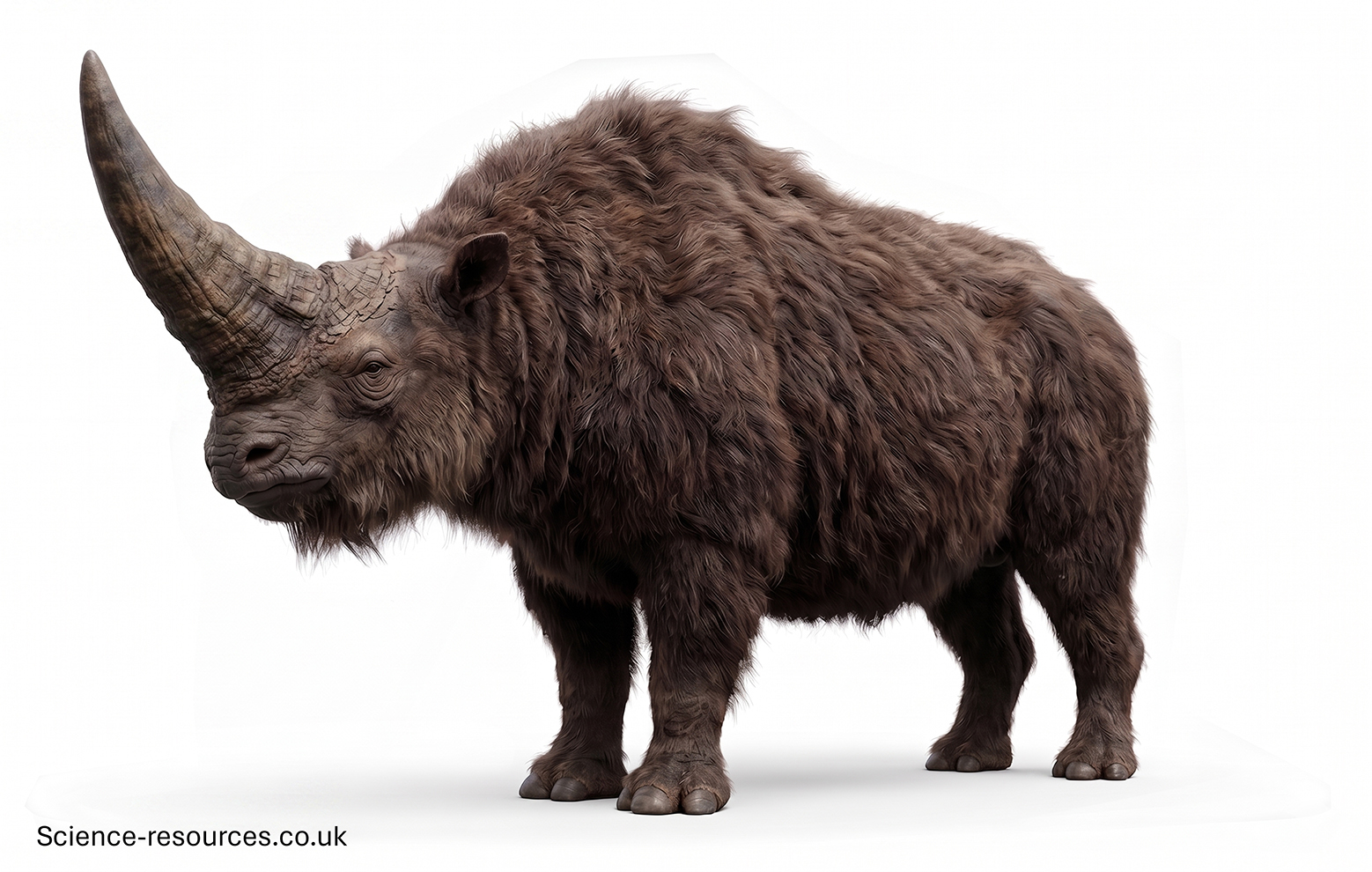
A large-horned Elasmotherium
Where did Elasmotherium live?
Fossils of Elasmotherium have been discovered across a vast area stretching from Eastern Europe through Russia, Kazakhstan, and Siberia. They preferred flat, open environments like the mammoth steppe, riverside grass meadows, and sweeping windswept plains where grass was abundant.
When did Elasmotherium live?
Elasmotherium appeared about 2.6 million years ago. While older studies suggested they died out much earlier, recent advanced fossil dating proves that they survived until at least 36,000 years ago. This means they lived at the exact same time as early modern humans and Neanderthals!
Interesting facts
- Its name means "thin plate beast," which refers to the unique, folded plate-like enamel layers found on its giant grinding teeth. Its giant horn was made of keratin—the exact same material as human fingernails and hair.
- Because keratin rot away easily, no fossilized horns have ever been found, but scientists know it existed because of a huge, bony dome attachment point on the animal's skull.
- The muscular hump on its back wasn't for fat storage; it was full of massive neck muscles and ligaments needed to hold up its heavy head and colossal horn.
- Some historians think that early human memories and stories about Elasmotherium might have inspired the famous legends of the mythical unicorn!
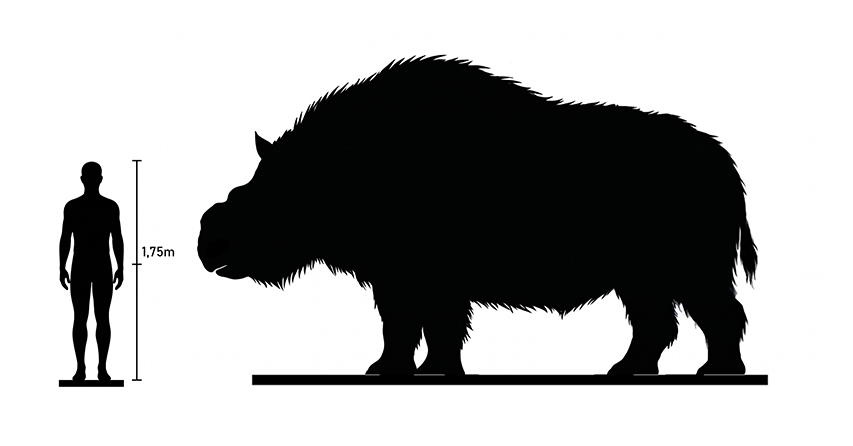
Elasmotherium Facts
Pronounced: Eh-laz-moh-THEE-ree-um
Name means: “Thin Plate Beast”
Length: Around 4.5 metres (15 feet) long
Height: Up to 2.5 metres (8 feet) tall at the shoulder
Weight: Between 3,500 to 5,000 kilograms (7,700 to 11,000 pounds)
Diet: Herbivore (Tough grasses, roots, and tubers)
Time: Lived from about 2.6 million years ago to 36,000 years ago
Fossils Found: Russia, Ukraine, Kazakhstan, and Uzbekistan
Which family of animals did Elasmotherium belong to?
They belonged to the family Rhinocerotidae (the rhinoceros family) but belonged to an ancient, unique subfamily called Elasmotheriinae, which separated from modern rhinos millions of years ago.
What other animals lived at the same time as Elasmotherium?
Elasmotherium shared their freezing cold steppe environments with woolly mammoths, cave lions, woolly rhinos, steppe bison, saiga antelopes, and early human hunters.
Elasmotherium FAQ
Q1: What is Elasmotherium?
A1. Elasmotherium is an extinct, giant prehistoric rhinoceros that lived during the Ice Age. It is famous for its massive size and the single huge horn on its forehead.
Q2. Why is it called the "Siberian unicorn"?
A2. It received this nickname because it lived in the cold regions of Siberia and possessed one single, enormous horn growing straight out of its skull, just like a mythical unicorn.
Q3. How long was Elasmotherium's horn?
A3. While a real horn has never been found, the massive size of its skull indicates the horn could easily have grown between 1.5 to 2 metres (5 to 6.5 feet) long!
Q4. Did Elasmotherium have two horns like a modern African rhino?
A4. No. Unlike modern rhinos that have a smaller horn behind a larger one on their nose, Elasmotherium only had one single horn located higher up on its forehead.
Q5. What did Elasmotherium use its horn for?
A5. Scientists believe they used their horns for defense against predators, fighting rivals for territory, clearing heavy snow off the ground to find buried grass, and digging up nutritious roots.
Q6. Could Elasmotherium run fast?
A6. Yes! Analysis of its leg bones shows they were longer and more slender than modern rhino legs, meaning it was adapted for trotting and galloping across flat plains quite efficiently.
Q7. Did humans ever see a live Elasmotherium?
A7. Yes. Humans lived in Eurasia 36,000 years ago when Elasmotherium was still alive, and ancient cave paintings found in France show drawings of large, single-horned rhinos.
Q8. Why did Elasmotherium have such strange teeth?
A8. Its teeth grew continuously throughout its life because eating dusty, gritty grass close to the ground wore its teeth down quickly. The "thin plate" enamel made them extra tough.
Q9. Why did Elasmotherium go extinct?
A9. They went extinct due to extreme climate changes during the Ice Age. As the weather shifted, the grassy steppes turned into mossy bogs and forests, meaning their favorite food completely disappeared.
Q10. Where can scientists find Elasmotherium fossils?
A10. Most fossils have been discovered in Russia and Kazakhstan, and complete skulls can be seen on display in museums in Moscow and London.
You may also be intrested in:
- Extinct Animals: A-Z
- Dinosaurs: A-Z
Tags: How big were Elasmotherium, Elasmotherium, where did Elasmotherium live, how tall were Elasmotherium, what does Elasmotherium mean, Elasmotherium facts
Previous: Doedicurus
Up next: Embolotherium
© 2012 science-resources.co.uk. All rights reserved | Design by W3layouts
Extinct Animals: Elasmotherium
Discover the ancient "Siberian unicorn" of the Ice Age—a giant, woolly rhinoceros with a single colossal horn that roamed the frozen plains.
Elasmotherium (Thin Plate Beast)
Elasmotherium
What is Elasmotherium?
Elasmotherium was a spectacular species of giant prehistoric rhinoceros that lived during the Ice Age. It is famously nicknamed the "Siberian unicorn" because it featured a single, incredibly massive horn growing right out of its forehead. Unlike modern rhinos, which are mostly hairless and live in warm climates, Elasmotherium was covered in a thick, shaggy coat of fur to keep it warm in the freezing northern wilderness.
How big was Elasmotherium?
Elasmotherium was one of the largest rhinoceros species to ever walk the earth. It grew to a massive size, standing up to 2.5 metres tall at the shoulder and reaching about 4.5 metres in length. It weighed an incredible 3.5 to 5 tonnes! This made it significantly larger than modern white rhinoceroses and nearly as heavy as a modern African elephant.
What did Elasmotherium eat?
Elasmotherium was a herbivore (plant-eater) that specialised in grazing. Because its head naturally pointed downward, it spent its day eating tough grasses, roots, and underground bulbs from the frozen ground. It had highly unique, ever-growing molar teeth with complex "thin plate" enamel folds, which were perfectly adapted for grinding down gritty, dirt-covered vegetation without wearing out.
Elasmotherium appearance
- A massive, heavily-built body with a high, muscular hump on its shoulders to support its heavy head.
- Long, strong legs compared to modern rhinos, which allowed it to gallop surprisingly fast across the plains.
- A thick, shaggy woolly coat to protect it from harsh, sub-zero Ice Age blizzards.
Elasmotherium with a bony dome on its head
Because rhinoceros horns are made of keratin (the same protein as human hair and fingernails), they decompose rather than fossilise. Paleontologists have to guess the horn's size and shape by looking at the attachment sites on the skull. Below is an artistic impression of a large-horned Elasmotherium.
A large-horned Elasmotherium
Where did Elasmotherium live?
Fossils of Elasmotherium have been discovered across a vast area stretching from Eastern Europe through Russia, Kazakhstan, and Siberia. They preferred flat, open environments like the mammoth steppe, riverside grass meadows, and sweeping windswept plains where grass was abundant.
When did Elasmotherium live?
Elasmotherium appeared about 2.6 million years ago. While older studies suggested they died out much earlier, recent advanced fossil dating proves that they survived until at least 36,000 years ago. This means they lived at the exact same time as early modern humans and Neanderthals!
Interesting facts
- Its name means "thin plate beast," which refers to the unique, folded plate-like enamel layers found on its giant grinding teeth. Its giant horn was made of keratin—the exact same material as human fingernails and hair.
- Because keratin rot away easily, no fossilized horns have ever been found, but scientists know it existed because of a huge, bony dome attachment point on the animal's skull.
- The muscular hump on its back wasn't for fat storage; it was full of massive neck muscles and ligaments needed to hold up its heavy head and colossal horn.
- Some historians think that early human memories and stories about Elasmotherium might have inspired the famous legends of the mythical unicorn!
Elasmotherium Facts
Pronounced: Eh-laz-moh-THEE-ree-um
Name means: “Thin Plate Beast”
Length: Around 4.5 metres (15 feet) long
Height: Up to 2.5 metres (8 feet) tall at the shoulder
Weight: Between 3,500 to 5,000 kilograms (7,700 to 11,000 pounds)
Diet: Herbivore (Tough grasses, roots, and tubers)
Time: Lived from about 2.6 million years ago to 36,000 years ago
Fossils Found: Russia, Ukraine, Kazakhstan, and Uzbekistan
Which family of animals did Elasmotherium belong to?
They belonged to the family Rhinocerotidae (the rhinoceros family) but belonged to an ancient, unique subfamily called Elasmotheriinae, which separated from modern rhinos millions of years ago.
What other animals lived at the same time as Elasmotherium?
Elasmotherium shared their freezing cold steppe environments with woolly mammoths, cave lions, woolly rhinos, steppe bison, saiga antelopes, and early human hunters.
Elasmotherium FAQ
Q1: What is Elasmotherium?
A1. Elasmotherium is an extinct, giant prehistoric rhinoceros that lived during the Ice Age. It is famous for its massive size and the single huge horn on its forehead.
Q2. Why is it called the "Siberian unicorn"?
A2. It received this nickname because it lived in the cold regions of Siberia and possessed one single, enormous horn growing straight out of its skull, just like a mythical unicorn.
Q3. How long was Elasmotherium's horn?
A3. While a real horn has never been found, the massive size of its skull indicates the horn could easily have grown between 1.5 to 2 metres (5 to 6.5 feet) long!
Q4. Did Elasmotherium have two horns like a modern African rhino?
A4. No. Unlike modern rhinos that have a smaller horn behind a larger one on their nose, Elasmotherium only had one single horn located higher up on its forehead.
Q5. What did Elasmotherium use its horn for?
A5. Scientists believe they used their horns for defense against predators, fighting rivals for territory, clearing heavy snow off the ground to find buried grass, and digging up nutritious roots.
Q6. Could Elasmotherium run fast?
A6. Yes! Analysis of its leg bones shows they were longer and more slender than modern rhino legs, meaning it was adapted for trotting and galloping across flat plains quite efficiently.
Q7. Did humans ever see a live Elasmotherium?
A7. Yes. Humans lived in Eurasia 36,000 years ago when Elasmotherium was still alive, and ancient cave paintings found in France show drawings of large, single-horned rhinos.
Q8. Why did Elasmotherium have such strange teeth?
A8. Its teeth grew continuously throughout its life because eating dusty, gritty grass close to the ground wore its teeth down quickly. The "thin plate" enamel made them extra tough.
Q9. Why did Elasmotherium go extinct?
A9. They went extinct due to extreme climate changes during the Ice Age. As the weather shifted, the grassy steppes turned into mossy bogs and forests, meaning their favorite food completely disappeared.
Q10. Where can scientists find Elasmotherium fossils?
A10. Most fossils have been discovered in Russia and Kazakhstan, and complete skulls can be seen on display in museums in Moscow and London.
Tags: How big were Elasmotherium, Elasmotherium, where did Elasmotherium live, how tall were Elasmotherium, what does Elasmotherium mean, Elasmotherium facts
Previous: Doedicurus
Up next: Embolotherium
© 2012 science-resources.co.uk. All rights reserved | Design by W3layouts