Generative AI Notification: Some elements of this image have been created or enhanced using AI technology. To find out how we create all our prehistoric animals, click here.
Last updated: 4th August 2025
Extinct Animals: Homotherium
Discover the ancient "scimitar-toothed cat" of the Ice Age—a deadly, long-legged predator built for chasing down prey across continents.
Homotherium (Same Beast)
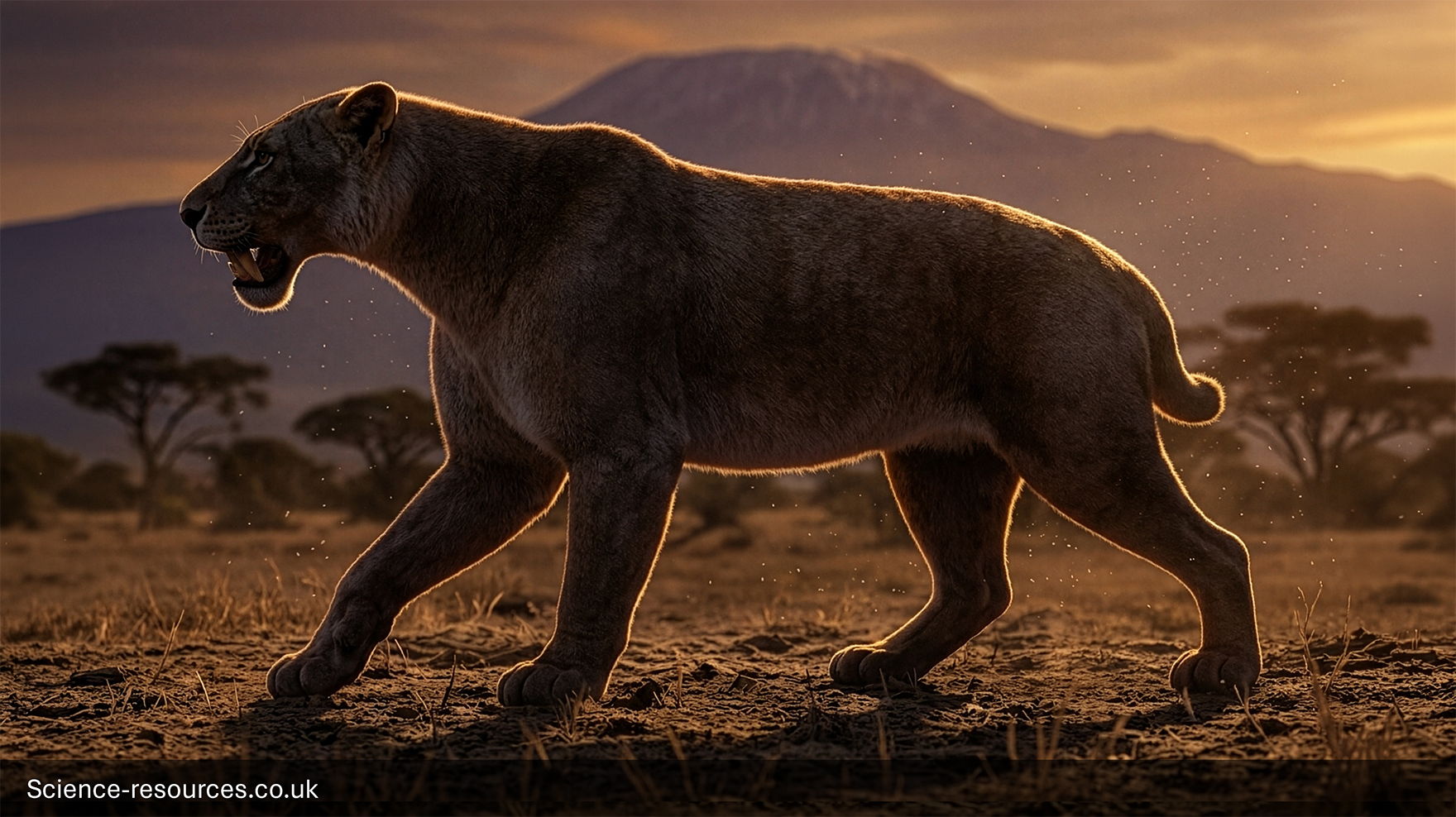 Homotherium
What is Homotherium?
Homotherium was an impressive species of prehistoric cat that roamed the earth during the Ice Age. It belongs to the famous group known as saber-toothed cats. However, unlike its heavy cousin Smilodon, Homotherium was a sleek, athletic hunter built for running long distances. It is often called the "scimitar-toothed cat" because its upper fangs were shaped like curved scimitar swords, complete with jagged, serrated edges for slicing.
How big were Homotherium?
Homotherium was roughly the same size as a modern African lion, but it had a very different body shape. It stood about 1.1 metres tall at the shoulder and reached around 2 metres in length. It weighed between 150 and 250 kilograms. It had very long front legs and shorter back legs, giving it a sloping back that made it look a bit like a modern spotted hyena.
What did Homotherium eat?
Homotherium was a hypercarnivore—meaning its diet consisted almost entirely of meat. It specialised in hunting large, thick-skinned herbivores. Fossil evidence from ancient dens reveals that they were expert hunters of juvenile mammoths, mastodons, woolly rhinoceroses, and ancient horses. Their flattened, serrated teeth were perfect for causing massive blood loss to bring down huge targets quickly.
Homotherium appearance
- An unusual body shape with high, powerful shoulders and a sloping back.
- Shorter, flattened upper canine teeth that were hidden inside its lips when its mouth was closed.
- Large, wide nasal passages to breathe in plenty of oxygen while running or living in freezing cold climates.
- Strong, non-retractable claws (like a dog) that gave it excellent grip on slippery or muddy ground.
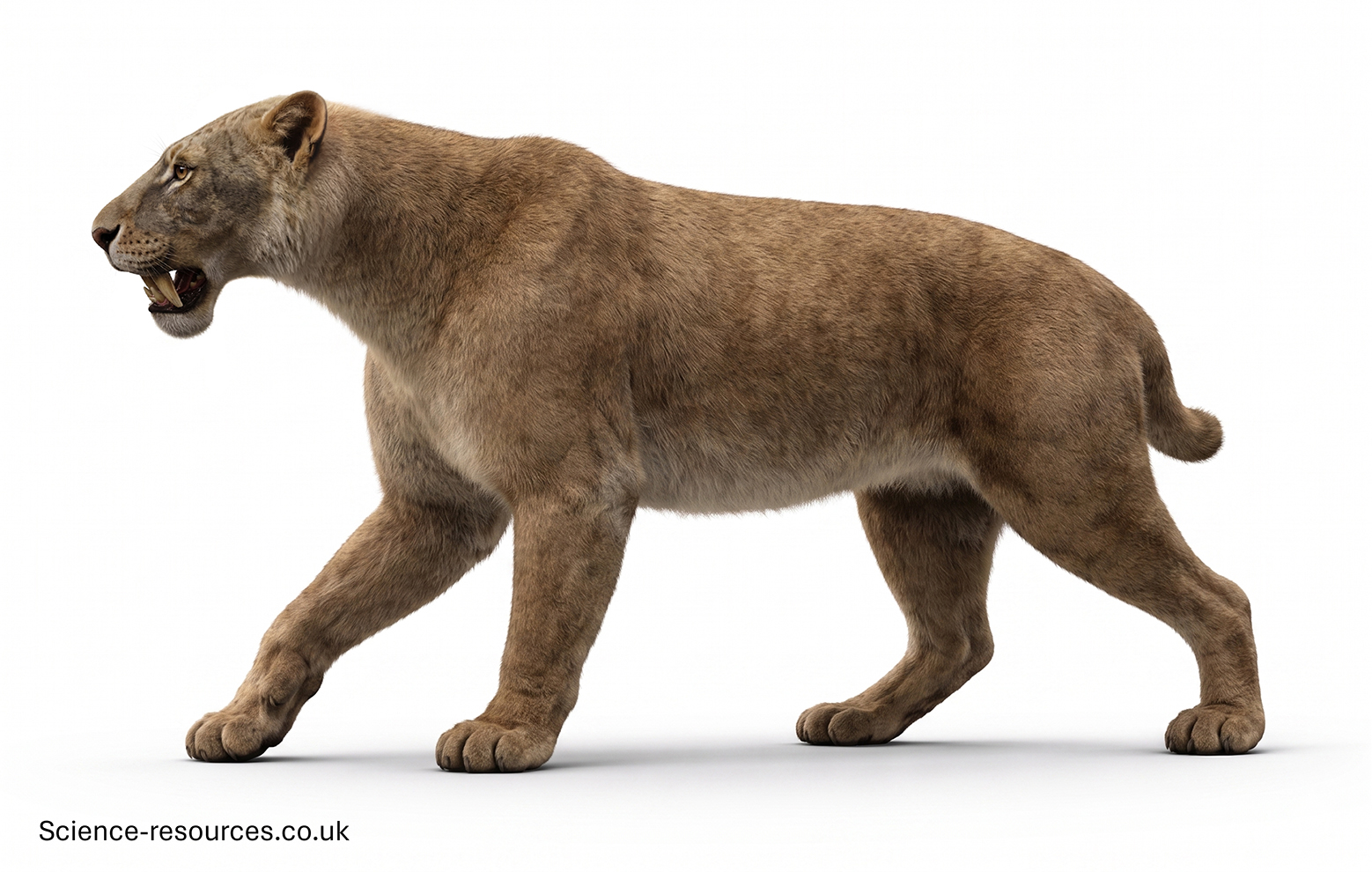
African Homotherium
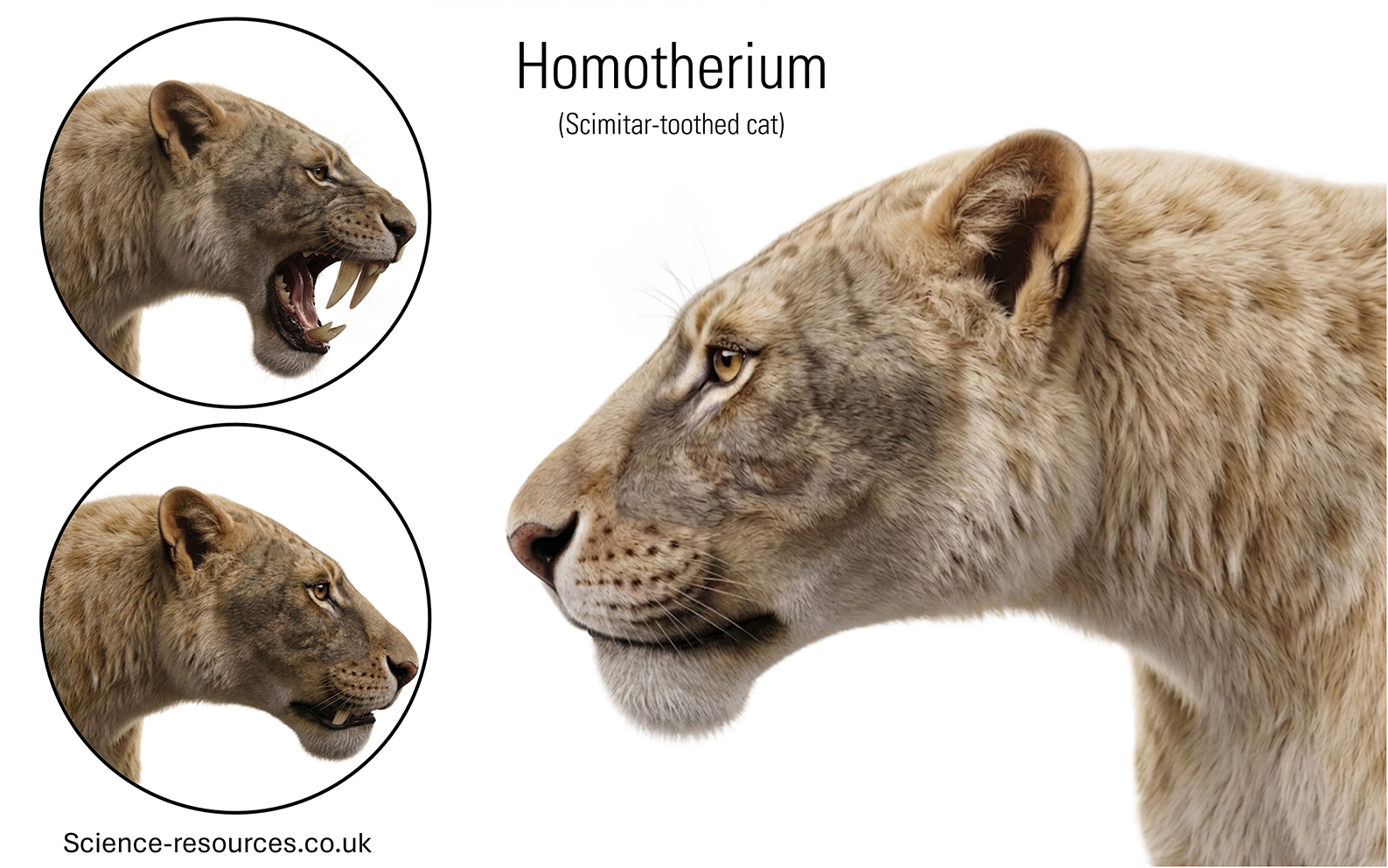
Homotherium had shorter, flattened upper canine teeth that were hidden inside its lips when its mouth was closed.
Where did Homotherium live?
Homotherium was one of the most successful predators in history, living in North America, South America, Eurasia, and Africa. They were highly adaptable, making homes in open grasslands, flat tundra steppes, and semi-forested valleys where they could easily spot large herds of grazing animals.
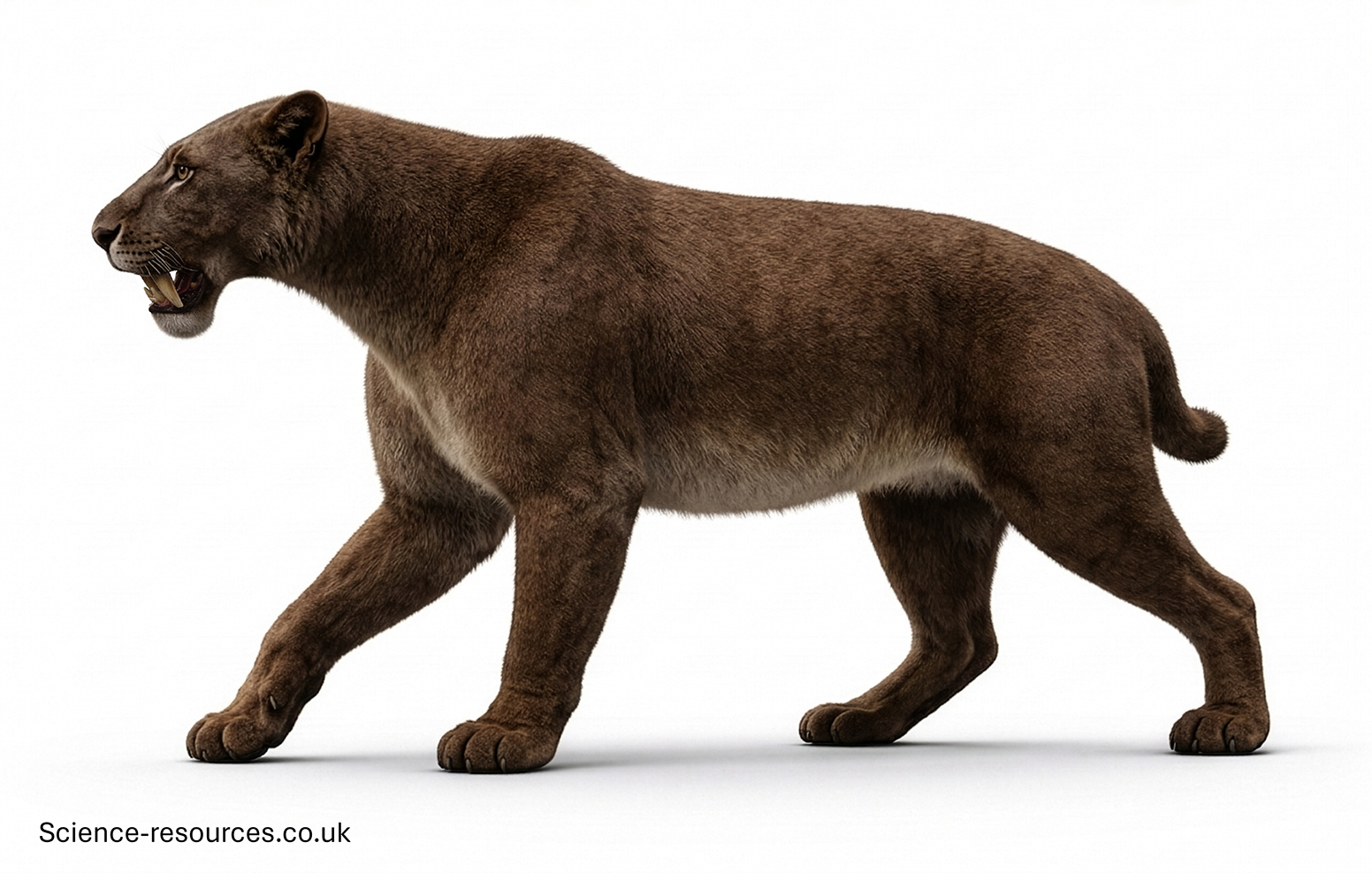
American (forest-dwelling) Homotherium
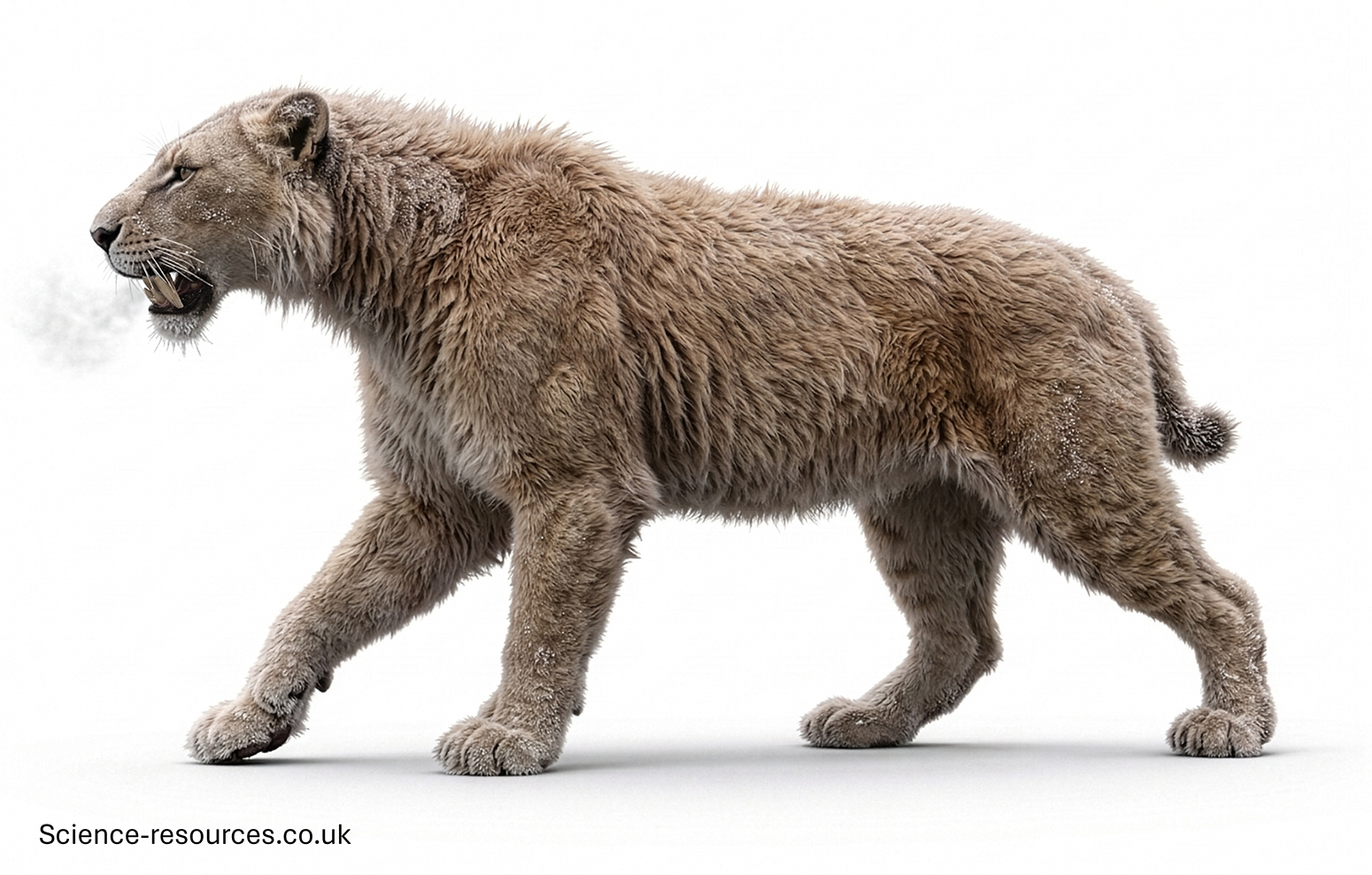
Siberian Homotherium
When did Homotherium live?
Homotherium was a very long-lived genus, appearing about 4 million years ago. They survived through most of the Ice Age, finally going extinct around 12,000 years ago. Early humans lived alongside Homotherium for thousands of years and competed with them for the same prey.
Interesting facts
- Its name means "same beast," which scientists chose because its bones looked similar to other prehistoric mammals found in the same fossil layers.
- Unlike most modern cats that hunt alone at night, Homotherium had large eyes and brain structures suited for hunting in packs during broad daylight.
- Their long legs and large heels suggest they were endurance runners, chasing down prey over miles until the target was too exhausted to fight back.
- In a cave in Texas, USA, scientists found the fossil remains of hundreds of juvenile mammoths alongside Homotherium bones, proving it was a specialised mammoth hunter!
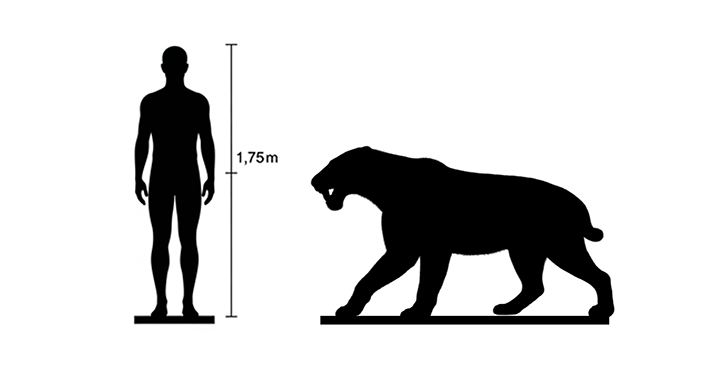
Homotherium Facts
Pronounced: Hoh-moh-THEE-ree-um
Name Means: "Same Beast"
Length: Around 2 metres (6.5 feet) long
Height: Around 1.1 metres (3.6 feet) at the shoulder
Weight: Between 150 to 250 kilograms (330 to 550 pounds)
Diet: Carnivore (Meat-eater)
Time: Lived from about 4 million to 12,000 years ago (Pliocene to Pleistocene Epoch)
Fossils Found: North America, South America, Europe, Asia, and Africa
Which family of animals did Homotherium belong to?
They belonged to the family Felidae (the cat family) and were part of the extinct subfamily Machairodontinae, which includes all the true saber-toothed cats.
What other animals lived at the same time as Homotherium?
They shared their massive geographic range with woolly mammoths, mastodons, cave lions, dire wolves, giant ground sloths, and early human species like Neanderthals and Homo sapiens.
Homotherium FAQ
Q1: What were Homotherium?
A1. Homotherium is an extinct saber-toothed cat that lived during the Ice Age. It had flat, blade-like fangs and long legs designed for chasing down large prey.
Q2. Is Homotherium the same animal as Smilodon?
A2. No. While both are saber-toothed cats, Smilodon was heavier, had much longer fangs, and ambushed prey, whereas Homotherium was lighter and built for long-distance running.
Q3. Did Homotherium live in packs?
A3. Most scientists believe they did. Hunting in packs would have been necessary to safely bring down massive animals like young mammoths and rhinos.
Q4. Could Homotherium roar?
A4. Because of the shape of the delicate hyoid bones in their throats, scientists believe Homotherium was likely able to roar or make deep vocalisations just like modern lions and tigers.
Q5. Why are they called "scimitar cats"?
A5. Their upper canine teeth were shorter, broader, and more curved than those of other saber-toothed cats, looking exactly like a type of curved sword called a scimitar.
Q6. Were their fangs fragile?
A6. Yes, like all saber-toothed cats, their long fangs were thin from side-to-side. Homotherium adjusted for this by having serrations on their teeth to slice through soft tissues instead of crushing hard bone.
Q7. What color was a Homotherium's fur?
A7. Since fur does not fossilize well, we don't know for certain. However, because they lived in open grasslands and snowy landscapes, their coats were likely plain grey, tan, or lightly spotted for camouflage.
Q8. Did humans hunt Homotherium?
A8. Humans and Homotherium definitely crossed paths and competed for food. While humans may have occasionally killed them in self-defense, it is unlikely they were a regular hunting target.
Q9. Why did Homotherium go extinct?
A9. At the end of the Ice Age, the climate warmed up and the giant animals they relied on for food died out. Without mammoths and giant horses to eat, Homotherium could not survive.
Q10. Where has the best Homotherium fossil evidence been found?
A10. Incredible, well-preserved fossils have been recovered from Friesenhahn Cave in Texas, USA, and from the bottom of the North Sea in Europe by fishing trawlers.
You may also be intrested in:
- Extinct Animals: A-Z
- Dinosaurs: A-Z
Tags: How big were Homotherium, Homotherium, where did Homotherium live, how tall were Homotherium, what does Homotherium mean, Homotherium facts
Previous: Gomphothere
Up next: Hyaenodon
© 2012 science-resources.co.uk. All rights reserved | Design by W3layouts
Extinct Animals: Homotherium
Discover the ancient "scimitar-toothed cat" of the Ice Age—a deadly, long-legged predator built for chasing down prey across continents.
Homotherium (Same Beast)
Homotherium
What is Homotherium?
Homotherium was an impressive species of prehistoric cat that roamed the earth during the Ice Age. It belongs to the famous group known as saber-toothed cats. However, unlike its heavy cousin Smilodon, Homotherium was a sleek, athletic hunter built for running long distances. It is often called the "scimitar-toothed cat" because its upper fangs were shaped like curved scimitar swords, complete with jagged, serrated edges for slicing.
How big were Homotherium?
Homotherium was roughly the same size as a modern African lion, but it had a very different body shape. It stood about 1.1 metres tall at the shoulder and reached around 2 metres in length. It weighed between 150 and 250 kilograms. It had very long front legs and shorter back legs, giving it a sloping back that made it look a bit like a modern spotted hyena.
What did Homotherium eat?
Homotherium was a hypercarnivore—meaning its diet consisted almost entirely of meat. It specialised in hunting large, thick-skinned herbivores. Fossil evidence from ancient dens reveals that they were expert hunters of juvenile mammoths, mastodons, woolly rhinoceroses, and ancient horses. Their flattened, serrated teeth were perfect for causing massive blood loss to bring down huge targets quickly.
Homotherium appearance
- An unusual body shape with high, powerful shoulders and a sloping back.
- Shorter, flattened upper canine teeth that were hidden inside its lips when its mouth was closed.
- Large, wide nasal passages to breathe in plenty of oxygen while running or living in freezing cold climates.
- Strong, non-retractable claws (like a dog) that gave it excellent grip on slippery or muddy ground.
African Homotherium
Homotherium had shorter, flattened upper canine teeth that were hidden inside its lips when its mouth was closed.
Where did Homotherium live?
Homotherium was one of the most successful predators in history, living in North America, South America, Eurasia, and Africa. They were highly adaptable, making homes in open grasslands, flat tundra steppes, and semi-forested valleys where they could easily spot large herds of grazing animals.
American (forest-dwelling) Homotherium
Siberian Homotherium
When did Homotherium live?
Homotherium was a very long-lived genus, appearing about 4 million years ago. They survived through most of the Ice Age, finally going extinct around 12,000 years ago. Early humans lived alongside Homotherium for thousands of years and competed with them for the same prey.
Interesting facts
- Its name means "same beast," which scientists chose because its bones looked similar to other prehistoric mammals found in the same fossil layers.
- Unlike most modern cats that hunt alone at night, Homotherium had large eyes and brain structures suited for hunting in packs during broad daylight.
- Their long legs and large heels suggest they were endurance runners, chasing down prey over miles until the target was too exhausted to fight back.
- In a cave in Texas, USA, scientists found the fossil remains of hundreds of juvenile mammoths alongside Homotherium bones, proving it was a specialised mammoth hunter!
Homotherium Facts
Pronounced: Hoh-moh-THEE-ree-um
Name Means: "Same Beast"
Length: Around 2 metres (6.5 feet) long
Height: Around 1.1 metres (3.6 feet) at the shoulder
Weight: Between 150 to 250 kilograms (330 to 550 pounds)
Diet: Carnivore (Meat-eater)
Time: Lived from about 4 million to 12,000 years ago (Pliocene to Pleistocene Epoch)
Fossils Found: North America, South America, Europe, Asia, and Africa
Which family of animals did Homotherium belong to?
They belonged to the family Felidae (the cat family) and were part of the extinct subfamily Machairodontinae, which includes all the true saber-toothed cats.
What other animals lived at the same time as Homotherium?
They shared their massive geographic range with woolly mammoths, mastodons, cave lions, dire wolves, giant ground sloths, and early human species like Neanderthals and Homo sapiens.
Homotherium FAQ
Q1: What were Homotherium?
A1. Homotherium is an extinct saber-toothed cat that lived during the Ice Age. It had flat, blade-like fangs and long legs designed for chasing down large prey.
Q2. Is Homotherium the same animal as Smilodon?
A2. No. While both are saber-toothed cats, Smilodon was heavier, had much longer fangs, and ambushed prey, whereas Homotherium was lighter and built for long-distance running.
Q3. Did Homotherium live in packs?
A3. Most scientists believe they did. Hunting in packs would have been necessary to safely bring down massive animals like young mammoths and rhinos.
Q4. Could Homotherium roar?
A4. Because of the shape of the delicate hyoid bones in their throats, scientists believe Homotherium was likely able to roar or make deep vocalisations just like modern lions and tigers.
Q5. Why are they called "scimitar cats"?
A5. Their upper canine teeth were shorter, broader, and more curved than those of other saber-toothed cats, looking exactly like a type of curved sword called a scimitar.
Q6. Were their fangs fragile?
A6. Yes, like all saber-toothed cats, their long fangs were thin from side-to-side. Homotherium adjusted for this by having serrations on their teeth to slice through soft tissues instead of crushing hard bone.
Q7. What color was a Homotherium's fur?
A7. Since fur does not fossilize well, we don't know for certain. However, because they lived in open grasslands and snowy landscapes, their coats were likely plain grey, tan, or lightly spotted for camouflage.
Q8. Did humans hunt Homotherium?
A8. Humans and Homotherium definitely crossed paths and competed for food. While humans may have occasionally killed them in self-defense, it is unlikely they were a regular hunting target.
Q9. Why did Homotherium go extinct?
A9. At the end of the Ice Age, the climate warmed up and the giant animals they relied on for food died out. Without mammoths and giant horses to eat, Homotherium could not survive.
Q10. Where has the best Homotherium fossil evidence been found?
A10. Incredible, well-preserved fossils have been recovered from Friesenhahn Cave in Texas, USA, and from the bottom of the North Sea in Europe by fishing trawlers.
Tags: How big were Homotherium, Homotherium, where did Homotherium live, how tall were Homotherium, what does Homotherium mean, Homotherium facts
Previous: Gomphothere
Up next: Hyaenodon
© 2012 science-resources.co.uk. All rights reserved | Design by W3layouts