Generative AI Notification: Some elements of this image have been created or enhanced using AI technology. To find out how we create all our prehistoric animals, click here.
Last updated: 24th January 2026
Before Dinosaurs: Anomalocaris
Anomalocaris, one of the largest predators of the Cambrian seas.
Anomalocaris (The 'Odd Shrimp')
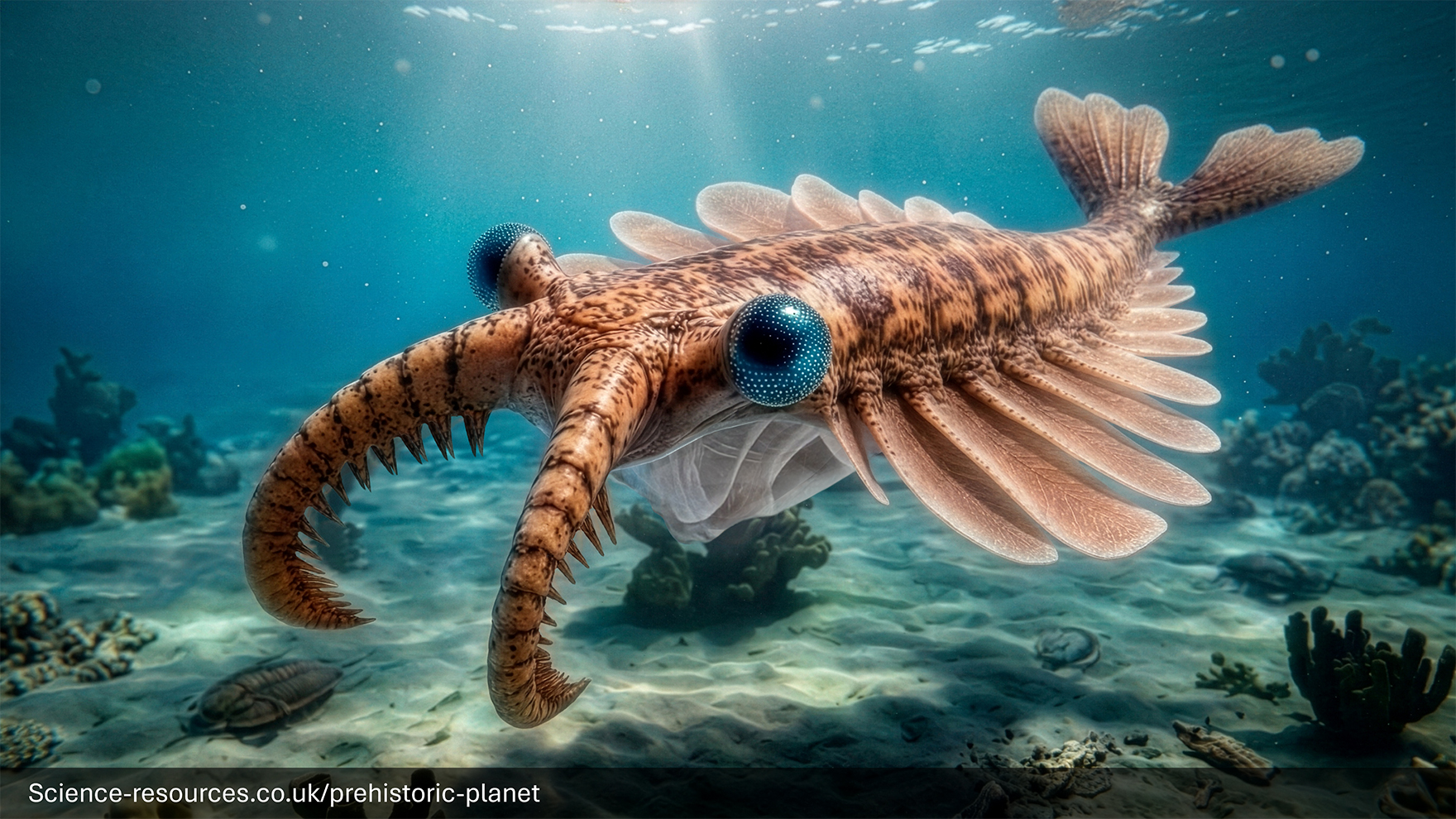 Anomalocaris
What is Anomalocaris?
Anomalocaris was a huge, ancient marine predator that lived hundreds of millions of years ago. It belonged to a strange and fascinating group of early sea animals known as radiodonts. Anomalocaris was one of the most fearsome hunters of its time, roaming the ancient seas long before the dinosaurs appeared.
How big was Anomalocaris?
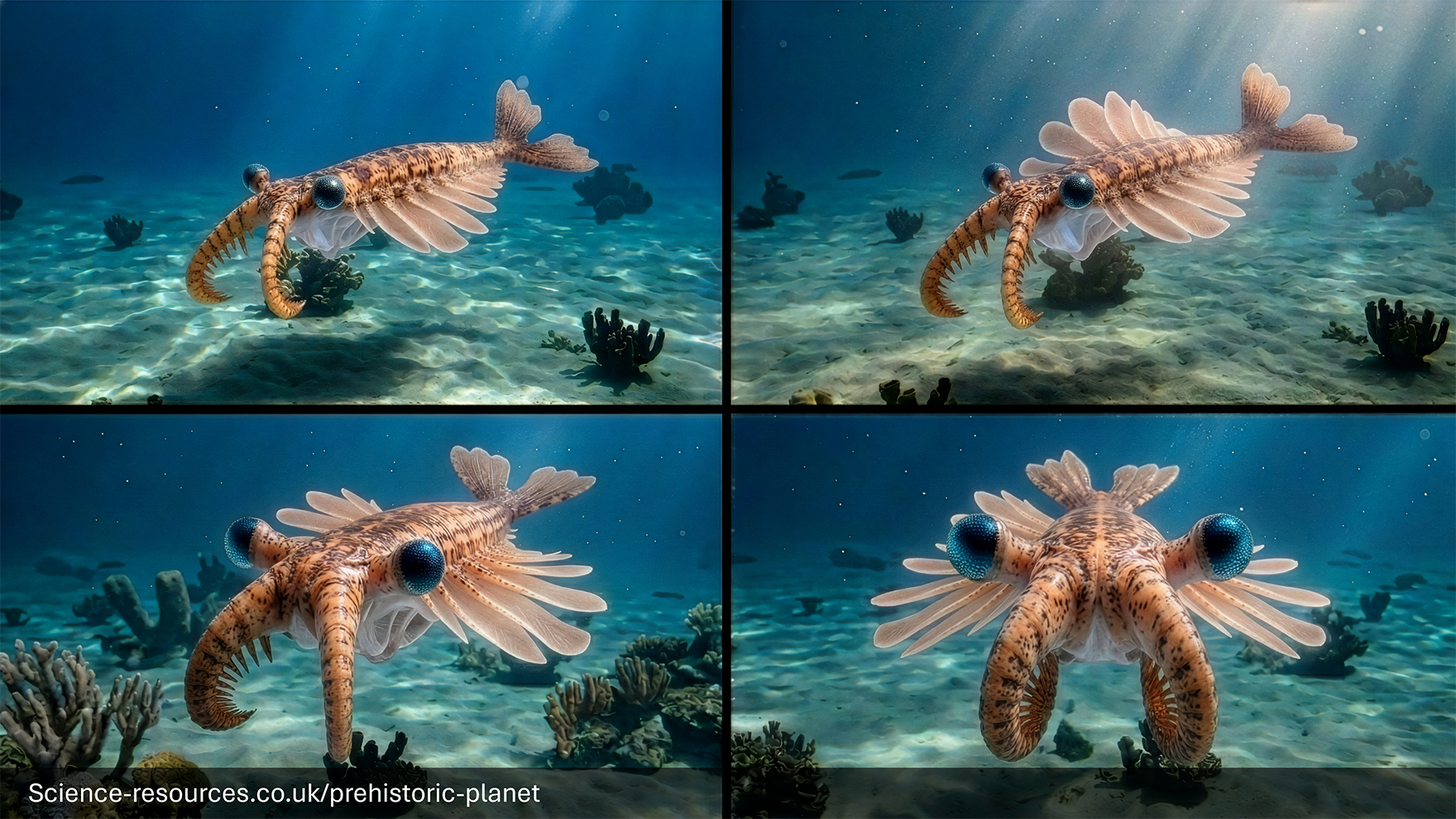
Unlike modern shrimp that use little legs to swim, Anomalocaris had a series of flexible lobes (flaps) running down the sides of its body. It moved these flaps in a wavelike pattern, similar to how a stingray or a cuttlefish swims today.
How did Anomalocaris move?
Anomalocaris could grow up to 1 metre (about 3 feet) in length! For its time, this made it a true giant among sea creatures.
What did Anomalocaris eat?
Anomalocaris was a carnivore that hunted smaller marine animals like trilobites and other soft-bodied creatures. It used its spiky, flexible front appendages to grab prey and bring it to its round, toothed mouth.
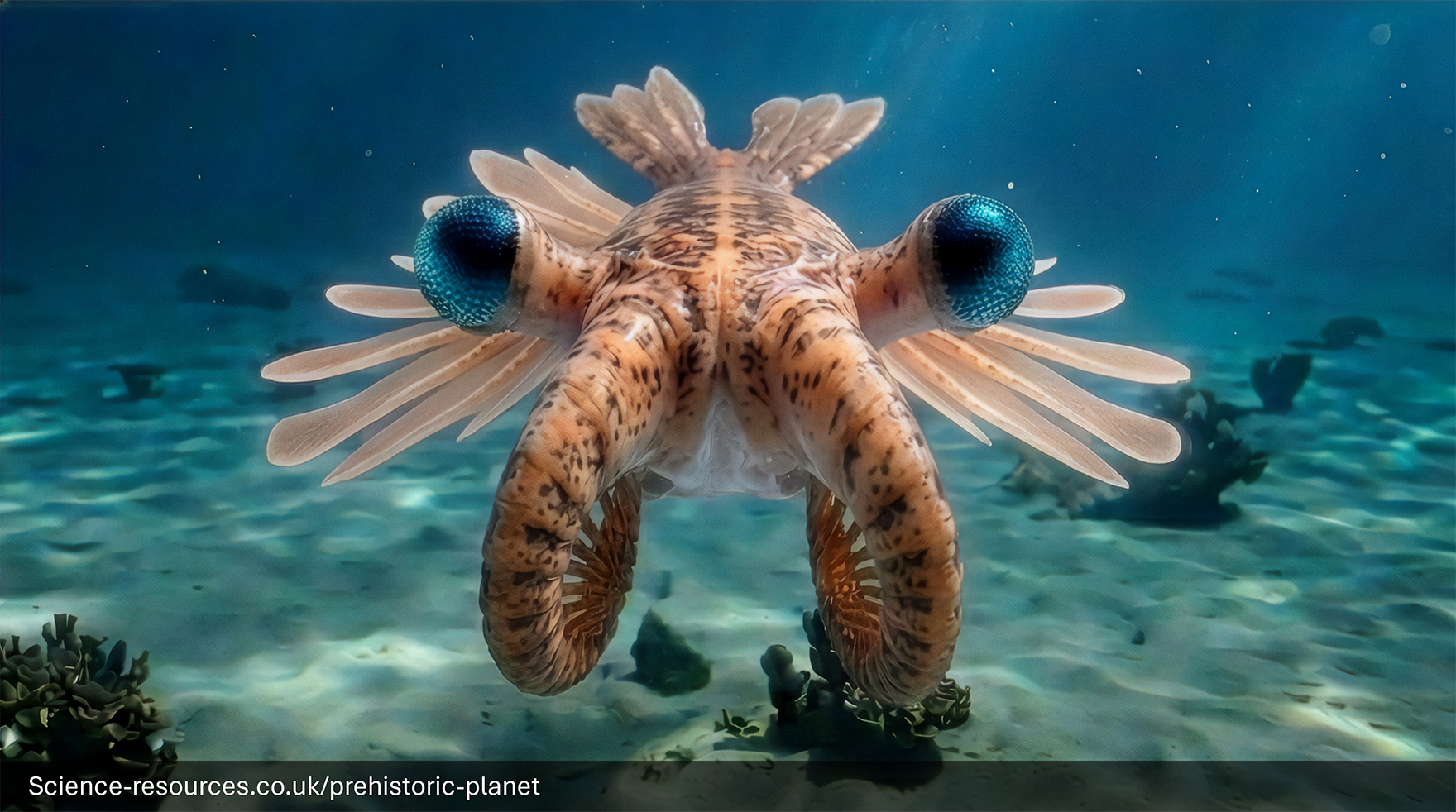 Anomalocaris used its spiky, flexible front appendages to grab prey
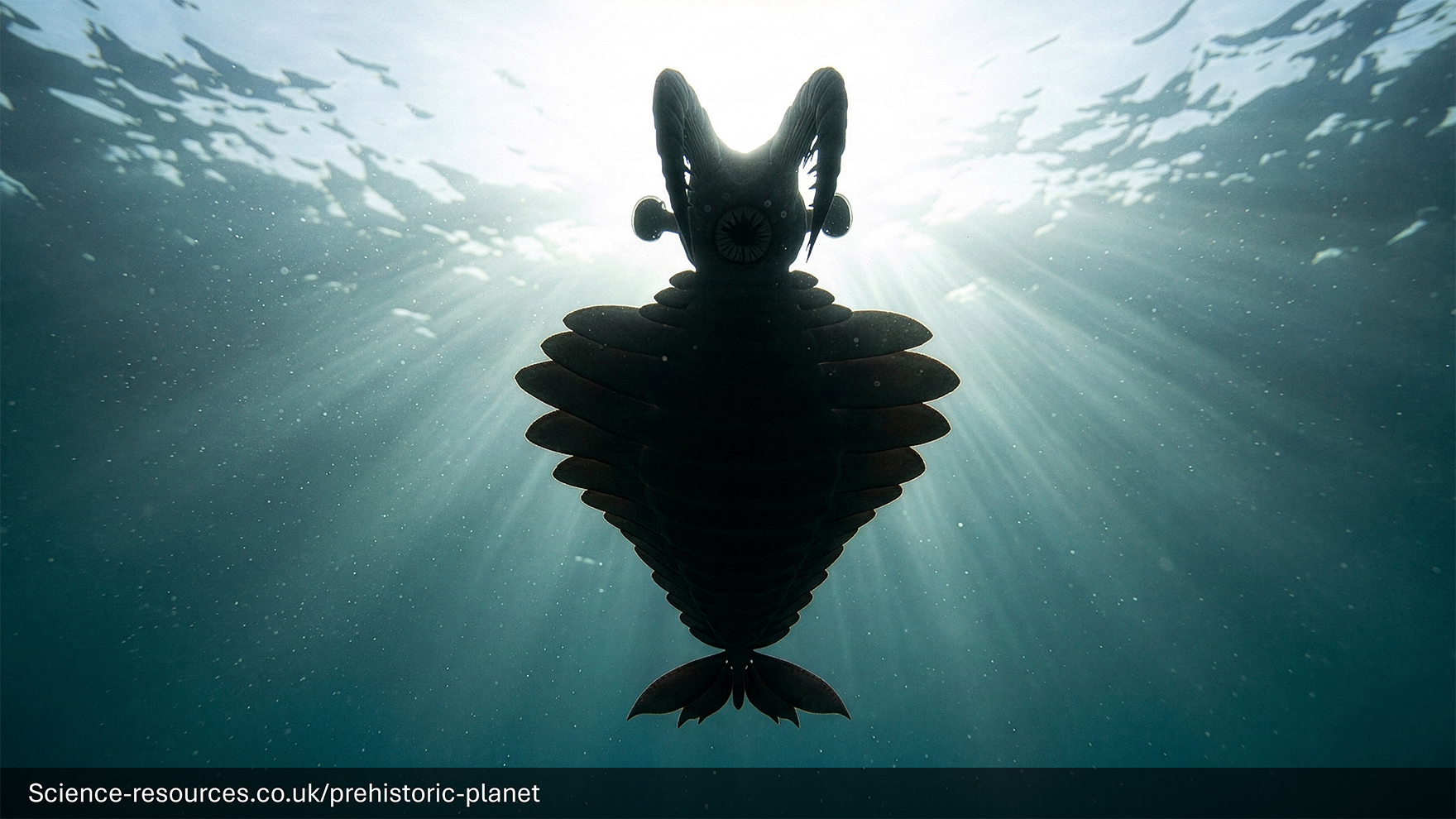 Silhouette of Anomalocaris as it circles looking fro prey.
Anomalocaris appearance
Anomalocaris had a soft, segmented body with side flaps for swimming, a pair of large eyes on stalks, and two long, spiny arms at the front. Its mouth looked like a ring of pineapple slices and could crush or tear apart prey. It was one of the fastest and most agile swimmers in the ancient seas.
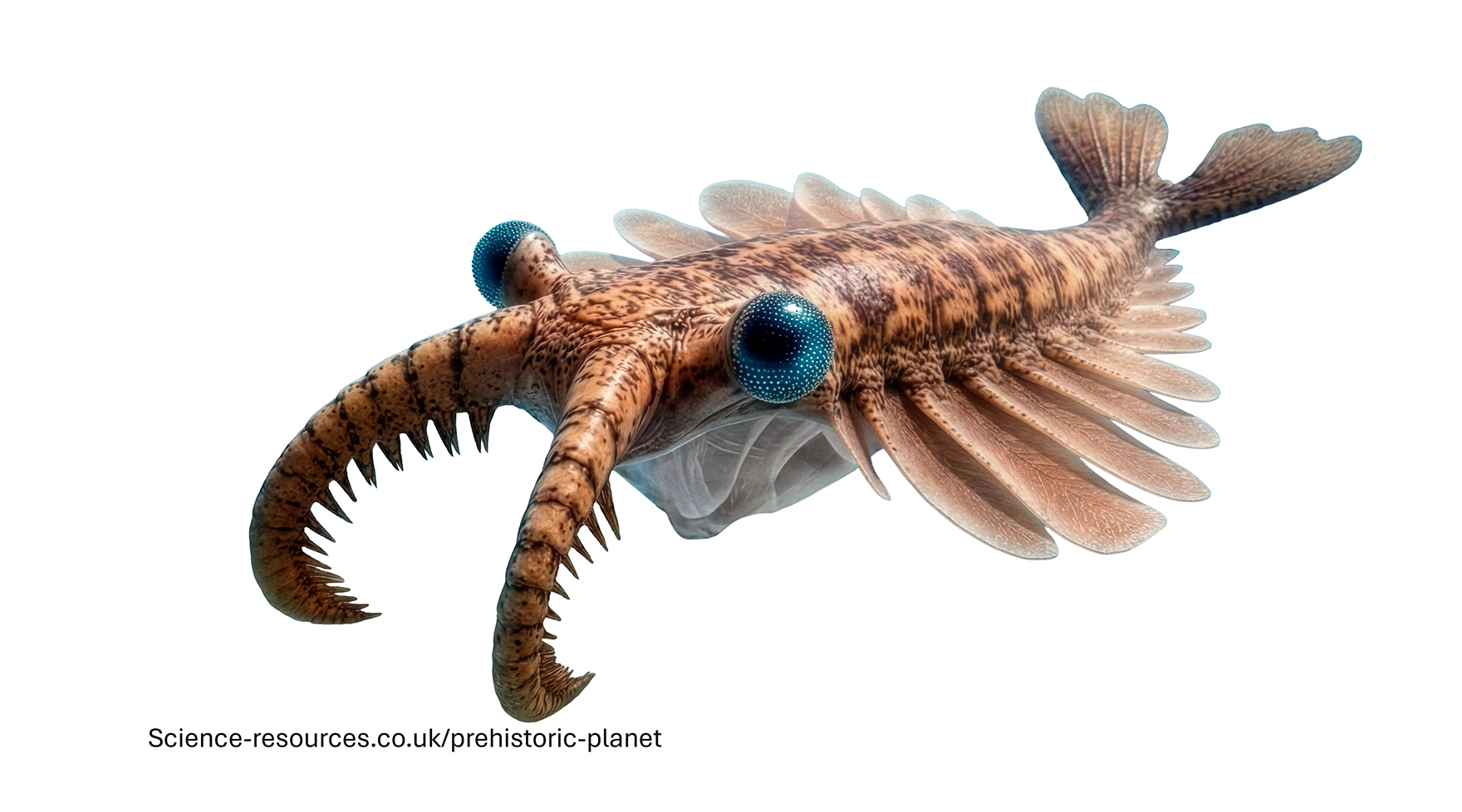 Anomalocaris appearance
Where did Anomalocaris live?
Anomalocaris fossils have been found in places like Canada, China, and Australia—areas that were once covered by shallow seas. It liked to live in warm, coastal waters, just like many other prehistoric sea creatures.
Interesting facts
- Its name means "odd shrimp" in Greek!
- Anomalocaris was once mistaken for three different animals until scientists realised all the fossil parts belonged to the same creature.
- It lived about 500 million years ago—before any fish or land animals existed.
- Anomalocaris is completely extinct, and only fossils remain to tell its story.
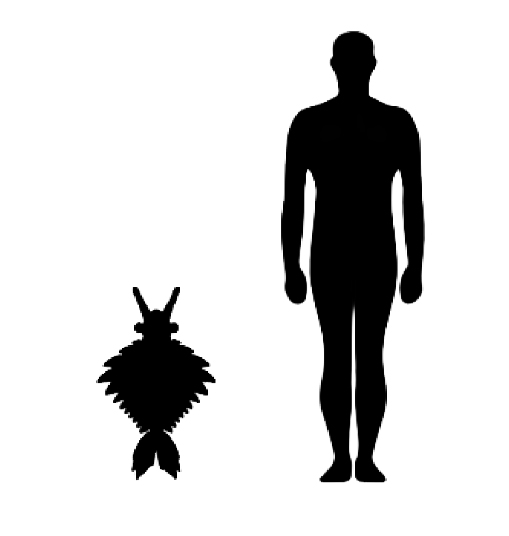
Anomalocaris Facts
Pronounced: Ah-nom-ah-LOW-kar-iss
Name Means: "Odd Shrimp"
Length: Up to 1 metre (3 feet)
Diet: Carnivore (meat-eater)
Time: Cambrian Period (about 520–510 million years ago)
Fossils Found: Mainly Canada, China, and Australia
Which family of animals did Anomalocaris belong to?
Anomalocaris belonged to the family Anomalocarididae, a group of early marine animals called radiodonts. These creatures are distant relatives of modern arthropods like insects, spiders, and crabs.
What other animals lived at the same time as Anomalocaris?
Anomalocaris shared its world with trilobites, early worms, sponges, and other bizarre Cambrian creatures. The Cambrian seas were full of strange and wonderful life forms.
Anomalocaris FAQ
Q1: What is Anomalocaris?
A1: Anomalocaris is an extinct giant sea predator that lived more than 500 million years ago. It was the top hunter of its ancient ocean.
Q2: What did Anomalocaris look like?
A2: Anomalocaris had a soft, segmented body, side flaps for swimming, large stalked eyes, spiky front arms, and a round, toothed mouth.
Q3: How big was Anomalocaris?
A3: It could reach lengths of up to 1 metre (3 feet).
Q4: What did Anomalocaris eat?
A4: Anomalocaris hunted trilobites and other small sea creatures.
Q5: Where did Anomalocaris live?
A5: It lived in warm, shallow Cambrian seas, mainly in what is now Canada, China, and Australia.
Q6: When did Anomalocaris go extinct?
A6: Anomalocaris went extinct about 510 million years ago, at the end of the Cambrian Period.
Q7: How strong was Anomalocaris’s bite?
A7: Its round, spiky mouth could grip and tear soft prey, but probably wasn’t powerful enough to crush hard shells.
Q8: How is Anomalocaris related to modern animals?
A8: Anomalocaris is a distant relative of today’s arthropods, such as insects and crabs.
Q9: Who discovered Anomalocaris?
A9: Fossil parts of Anomalocaris were first found in the late 19th century; it took many years for scientists to piece them together as one animal.
Q10: Are there any complete fossils of Anomalocaris?
A10: Several nearly complete fossils have been discovered, showing its full body shape and remarkable features.
You may also be intrested in:
- Extinct Animals: A-Z
- Dinosaurs: A-Z
Tags: How big was Anomalocaris, Anomalocaris, where did Anomalocaris live, how long was Anomalocaris, what does Anomalocaris mean, Anomalocaris facts
Up next: Arthropleura
© 2012 science-resources.co.uk. All rights reserved | Design by W3layouts
Before Dinosaurs: Anomalocaris
Anomalocaris, one of the largest predators of the Cambrian seas.
Anomalocaris (The 'Odd Shrimp')
Anomalocaris
What is Anomalocaris?
Anomalocaris was a huge, ancient marine predator that lived hundreds of millions of years ago. It belonged to a strange and fascinating group of early sea animals known as radiodonts. Anomalocaris was one of the most fearsome hunters of its time, roaming the ancient seas long before the dinosaurs appeared.
How big was Anomalocaris?
Unlike modern shrimp that use little legs to swim, Anomalocaris had a series of flexible lobes (flaps) running down the sides of its body. It moved these flaps in a wavelike pattern, similar to how a stingray or a cuttlefish swims today.
How did Anomalocaris move?
Anomalocaris could grow up to 1 metre (about 3 feet) in length! For its time, this made it a true giant among sea creatures.
What did Anomalocaris eat?
Anomalocaris was a carnivore that hunted smaller marine animals like trilobites and other soft-bodied creatures. It used its spiky, flexible front appendages to grab prey and bring it to its round, toothed mouth.
Anomalocaris used its spiky, flexible front appendages to grab prey
Silhouette of Anomalocaris as it circles looking fro prey.
Anomalocaris appearance
Anomalocaris had a soft, segmented body with side flaps for swimming, a pair of large eyes on stalks, and two long, spiny arms at the front. Its mouth looked like a ring of pineapple slices and could crush or tear apart prey. It was one of the fastest and most agile swimmers in the ancient seas.
Anomalocaris appearance
Where did Anomalocaris live?
Anomalocaris fossils have been found in places like Canada, China, and Australia—areas that were once covered by shallow seas. It liked to live in warm, coastal waters, just like many other prehistoric sea creatures.
Interesting facts
- Its name means "odd shrimp" in Greek!
- Anomalocaris was once mistaken for three different animals until scientists realised all the fossil parts belonged to the same creature.
- It lived about 500 million years ago—before any fish or land animals existed.
- Anomalocaris is completely extinct, and only fossils remain to tell its story.
Anomalocaris Facts
Pronounced: Ah-nom-ah-LOW-kar-iss
Name Means: "Odd Shrimp"
Length: Up to 1 metre (3 feet)
Diet: Carnivore (meat-eater)
Time: Cambrian Period (about 520–510 million years ago)
Fossils Found: Mainly Canada, China, and Australia
Which family of animals did Anomalocaris belong to?
Anomalocaris belonged to the family Anomalocarididae, a group of early marine animals called radiodonts. These creatures are distant relatives of modern arthropods like insects, spiders, and crabs.
What other animals lived at the same time as Anomalocaris?
Anomalocaris shared its world with trilobites, early worms, sponges, and other bizarre Cambrian creatures. The Cambrian seas were full of strange and wonderful life forms.
Anomalocaris FAQ
Q1: What is Anomalocaris?
A1: Anomalocaris is an extinct giant sea predator that lived more than 500 million years ago. It was the top hunter of its ancient ocean.
Q2: What did Anomalocaris look like?
A2: Anomalocaris had a soft, segmented body, side flaps for swimming, large stalked eyes, spiky front arms, and a round, toothed mouth.
Q3: How big was Anomalocaris?
A3: It could reach lengths of up to 1 metre (3 feet).
Q4: What did Anomalocaris eat?
A4: Anomalocaris hunted trilobites and other small sea creatures.
Q5: Where did Anomalocaris live?
A5: It lived in warm, shallow Cambrian seas, mainly in what is now Canada, China, and Australia.
Q6: When did Anomalocaris go extinct?
A6: Anomalocaris went extinct about 510 million years ago, at the end of the Cambrian Period.
Q7: How strong was Anomalocaris’s bite?
A7: Its round, spiky mouth could grip and tear soft prey, but probably wasn’t powerful enough to crush hard shells.
Q8: How is Anomalocaris related to modern animals?
A8: Anomalocaris is a distant relative of today’s arthropods, such as insects and crabs.
Q9: Who discovered Anomalocaris?
A9: Fossil parts of Anomalocaris were first found in the late 19th century; it took many years for scientists to piece them together as one animal.
Q10: Are there any complete fossils of Anomalocaris?
A10: Several nearly complete fossils have been discovered, showing its full body shape and remarkable features.
Tags: How big was Anomalocaris, Anomalocaris, where did Anomalocaris live, how long was Anomalocaris, what does Anomalocaris mean, Anomalocaris facts
Up next: Arthropleura
© 2012 science-resources.co.uk. All rights reserved | Design by W3layouts