Last updated: 24th January 2026
Before Dinosaurs: Carboniferous Period
Life During the Carboniferous Period
The Carboniferous period (around 359–299 million years ago) was a time when Earth looked dramatically different from today. Warm, humid conditions covered much of the planet, creating vast swampy forests filled with giant plants. These forests were so huge and long‑lasting that the dead plant material eventually formed many of the coal deposits we use today, which is where the name Carboniferous comes from.
Life on land became far more advanced during this period. Insects grew to incredible sizes thanks to high oxygen levels in the atmosphere. Some, like Meganeura, a dragonfly‑like insect, had wingspans wider than a seagull’s. Millipedes and other creepy‑crawlies also reached giant proportions.
The Carboniferous is also famous for the rise of the first reptiles. These early reptiles could lay eggs on land, giving them an advantage over amphibians, which still needed water to reproduce. This new adaptation opened the door for reptiles to explore drier habitats and eventually evolve into many different groups.
In the oceans, sharks became more common, and strange fish such as crinoid‑covered reefs and armoured sharks thrived. The seas teemed with marine life just as the land was becoming increasingly rich with plants and animals.
The Carboniferous period was a key chapter in Earth’s history. It saw the development of lush forests, giant insects and the first reptiles, all of which helped shape the future of life on our planet.
Carboniferous Period (359–299 Ma)
Key features:
Giant arthropods; extensive swamp forests; major evolution of amphibians and early amniotes.
- Arthropleura: Largest known land invertebrate.
- Meganeura: Giant dragonfly like insect.
- Pulmonoscorpius: Large terrestrial scorpion.
- Edaphosaurus: Early herbivorous synapsid, appearing late in the period.
- Cotylorhynchus: Earliest forms appear in latest Carboniferous.
- Stethacanthus: Survives into early Carboniferous.
- Diplocaulus: Amphibian with distinctive boomerang skull.
- Coelacanth: Continues to thrive.
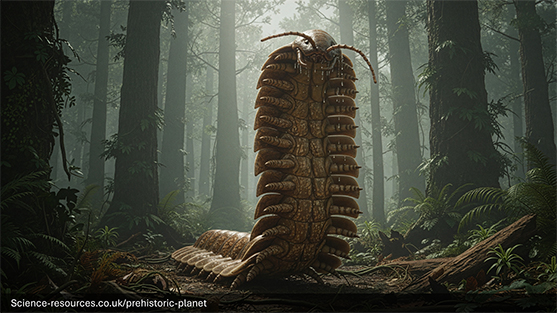
Arthropleura was a gigantic millipede‑like arthropod that lived in Carboniferous forests. Reaching lengths of over two metres, it was one of the largest land invertebrates ever, likely feeding on decaying plant matter in lush, swampy habitats.
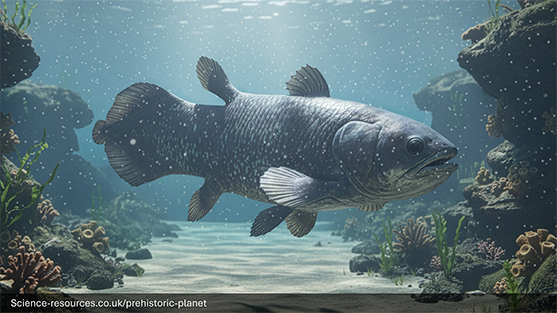
Coelacanths are ancient lobe‑finned fish that first appeared hundreds of millions of years ago. Thought extinct until the 20th century, they possess limb‑like fins and a distinctive tail, offering insights into early vertebrate evolution.
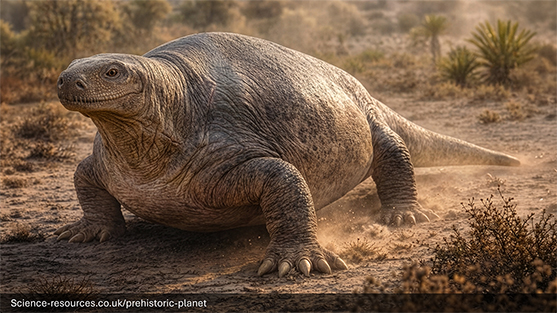
Cotylorhynchus was a massive, barrel‑bodied synapsid from the Permian period. Despite its huge size, it had a tiny head and likely fed on low‑growing plants, making it a slow‑moving but abundant herbivore.
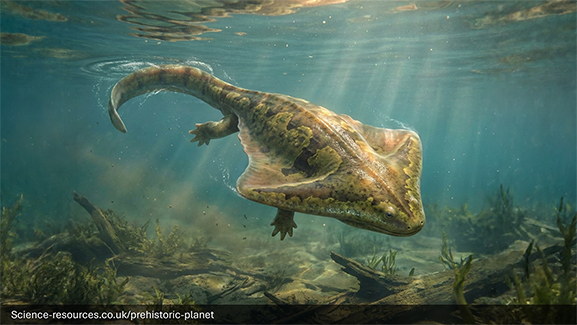
Diplocaulus was a boomerang-headed amphibian that lived long before dinosaurs, known for its wide, horn-like skull and streamlined body. It inhabited freshwater rivers and swamps of the Permian, where its unusual head shape may have helped with swimming and defense from predators.
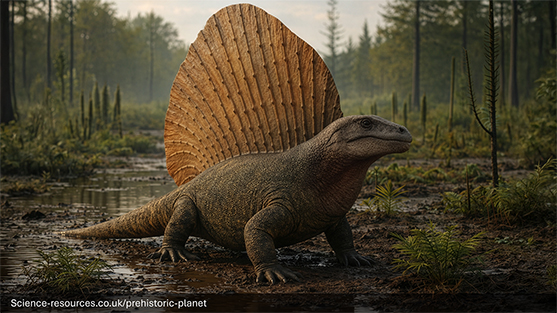
Edaphosaurus was an early herbivorous synapsid recognised by its tall, cross‑barred sail. Living during the Permian, it browsed on tough vegetation and was one of the first large, specialised plant‑eaters on land.
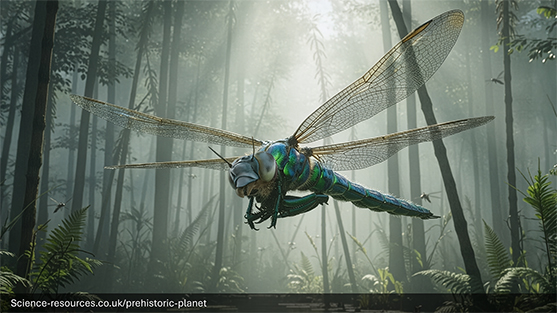
Meganeura was a giant Carboniferous dragonfly‑relative with a wingspan approaching 70 centimetres. It soared over swampy forests, preying on insects and small vertebrates in oxygen‑rich prehistoric air.
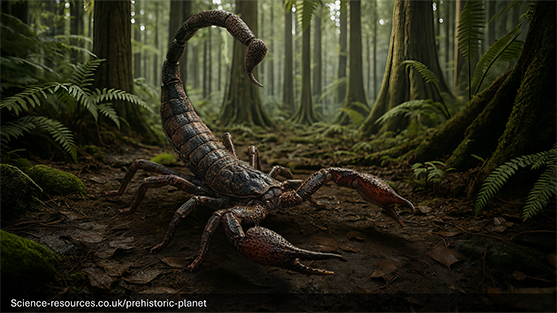
Pulmonoscorpius was a large, ancient scorpion that lived in the Carboniferous. Its size suggests a terrestrial lifestyle, likely hunting insects and small amphibians in the dense, humid forests of the time.
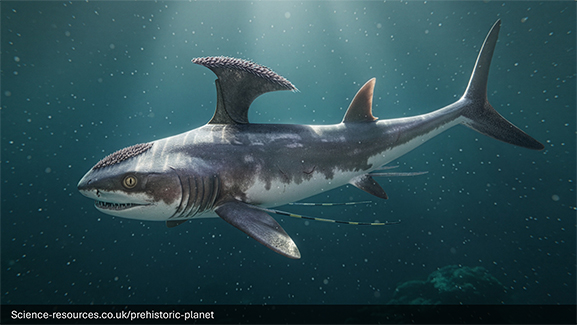
Stethacanthus was an early shark that lived long before dinosaurs, known for its distinctive anvil-shaped dorsal fin covered in tooth-like denticles. It swam through Devonian and Carboniferous seas, where this unusual fin may have played a role in display or defense.
You may also be intrested in:
- Extinct Animals: A-Z
- Dinosaurs: A-Z
Tags: Carboniferous Period, coal forests, giant insects, early amphibians, prehistoric plants, Palaeozoic Era
© 2012 science-resources.co.uk. All rights reserved | Design by W3layouts
Before Dinosaurs: Carboniferous Period
Life During the Carboniferous Period
The Carboniferous period (around 359–299 million years ago) was a time when Earth looked dramatically different from today. Warm, humid conditions covered much of the planet, creating vast swampy forests filled with giant plants. These forests were so huge and long‑lasting that the dead plant material eventually formed many of the coal deposits we use today, which is where the name Carboniferous comes from.
Life on land became far more advanced during this period. Insects grew to incredible sizes thanks to high oxygen levels in the atmosphere. Some, like Meganeura, a dragonfly‑like insect, had wingspans wider than a seagull’s. Millipedes and other creepy‑crawlies also reached giant proportions.
The Carboniferous is also famous for the rise of the first reptiles. These early reptiles could lay eggs on land, giving them an advantage over amphibians, which still needed water to reproduce. This new adaptation opened the door for reptiles to explore drier habitats and eventually evolve into many different groups.
In the oceans, sharks became more common, and strange fish such as crinoid‑covered reefs and armoured sharks thrived. The seas teemed with marine life just as the land was becoming increasingly rich with plants and animals.
The Carboniferous period was a key chapter in Earth’s history. It saw the development of lush forests, giant insects and the first reptiles, all of which helped shape the future of life on our planet.
Carboniferous Period (359–299 Ma)
Key features:
Giant arthropods; extensive swamp forests; major evolution of amphibians and early amniotes.
- Arthropleura: Largest known land invertebrate.
- Meganeura: Giant dragonfly like insect.
- Pulmonoscorpius: Large terrestrial scorpion.
- Edaphosaurus: Early herbivorous synapsid, appearing late in the period.
- Cotylorhynchus: Earliest forms appear in latest Carboniferous.
- Stethacanthus: Survives into early Carboniferous.
- Diplocaulus: Amphibian with distinctive boomerang skull.
- Coelacanth: Continues to thrive.
Arthropleura was a gigantic millipede‑like arthropod that lived in Carboniferous forests. Reaching lengths of over two metres, it was one of the largest land invertebrates ever, likely feeding on decaying plant matter in lush, swampy habitats.
Coelacanths are ancient lobe‑finned fish that first appeared hundreds of millions of years ago. Thought extinct until the 20th century, they possess limb‑like fins and a distinctive tail, offering insights into early vertebrate evolution.
Cotylorhynchus was a massive, barrel‑bodied synapsid from the Permian period. Despite its huge size, it had a tiny head and likely fed on low‑growing plants, making it a slow‑moving but abundant herbivore.
Diplocaulus was a boomerang-headed amphibian that lived long before dinosaurs, known for its wide, horn-like skull and streamlined body. It inhabited freshwater rivers and swamps of the Permian, where its unusual head shape may have helped with swimming and defense from predators.
Edaphosaurus was an early herbivorous synapsid recognised by its tall, cross‑barred sail. Living during the Permian, it browsed on tough vegetation and was one of the first large, specialised plant‑eaters on land.
Meganeura was a giant Carboniferous dragonfly‑relative with a wingspan approaching 70 centimetres. It soared over swampy forests, preying on insects and small vertebrates in oxygen‑rich prehistoric air.
Pulmonoscorpius was a large, ancient scorpion that lived in the Carboniferous. Its size suggests a terrestrial lifestyle, likely hunting insects and small amphibians in the dense, humid forests of the time.
Stethacanthus was an early shark that lived long before dinosaurs, known for its distinctive anvil-shaped dorsal fin covered in tooth-like denticles. It swam through Devonian and Carboniferous seas, where this unusual fin may have played a role in display or defense.
Tags: Carboniferous Period, coal forests, giant insects, early amphibians, prehistoric plants, Palaeozoic Era
© 2012 science-resources.co.uk. All rights reserved | Design by W3layouts