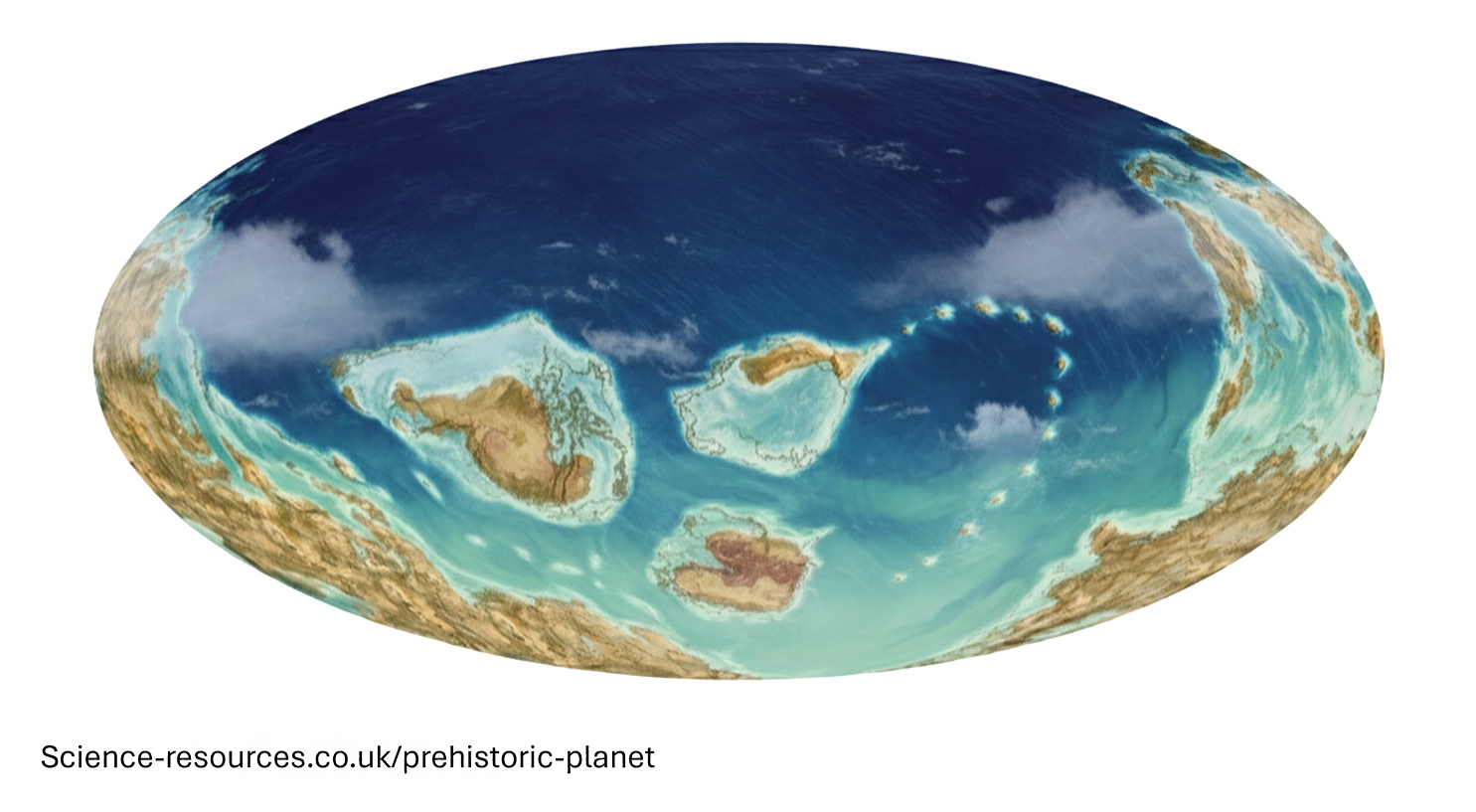
A map of Earth as it appeared 500 million years ago, during the Cambrian Period.
Imagine a world with no trees, no animals on land, and no plants covering the ground. Over 500 million years ago, during the Cambrian period, Earth looked completely different from today. Almost all life lived in the oceans, and these seas were bursting with strange and fascinating creatures.
The Cambrian period is famous for a huge burst of evolution known as the Cambrian Explosion. During this time, life became far more complex. Many of the major animal groups we recognise today, such as arthropods (the group that includes insects, spiders and crabs), first appeared in these ancient oceans.
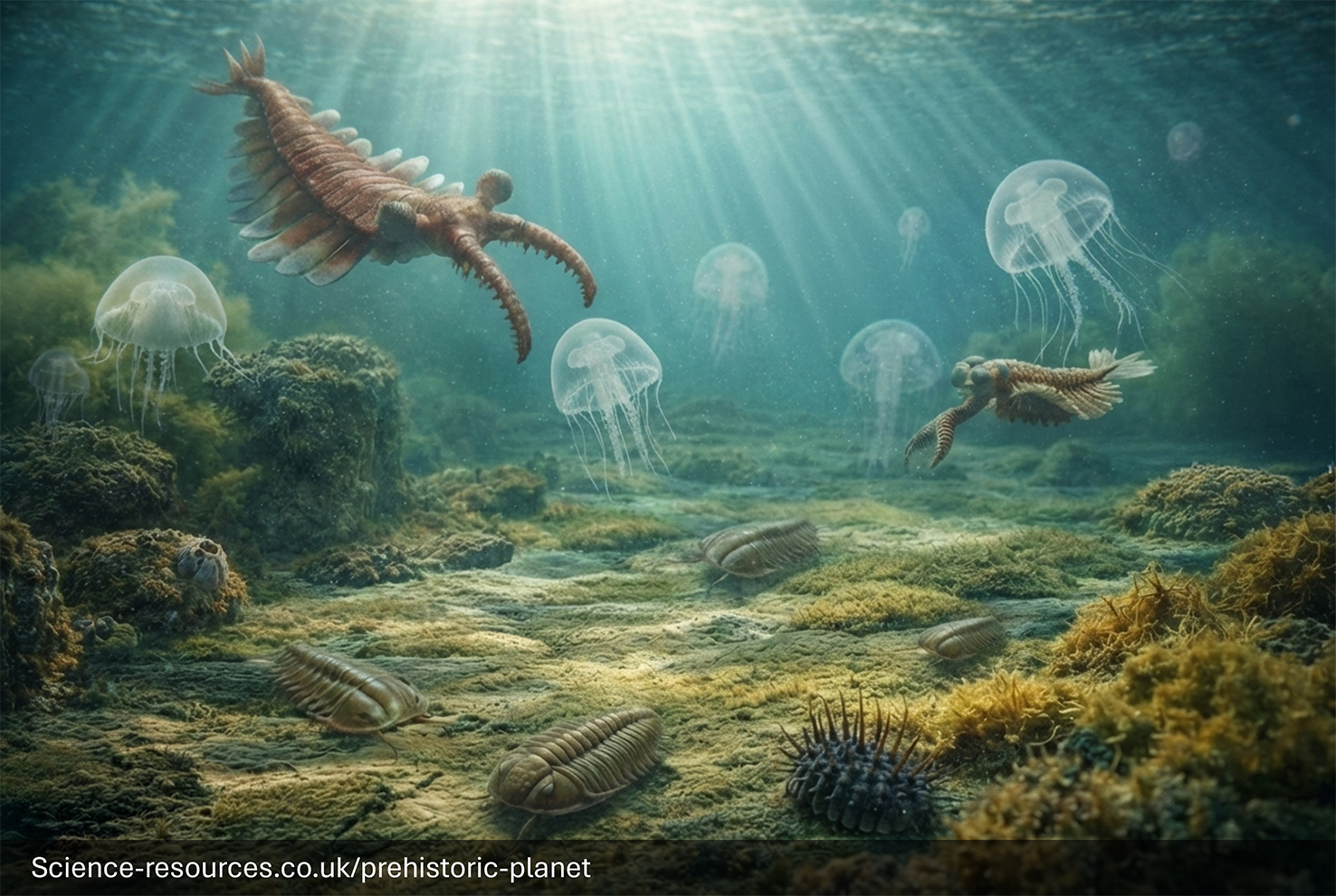
If you could dive into a Cambrian sea, you’d see an alien landscape full of unusual animals:
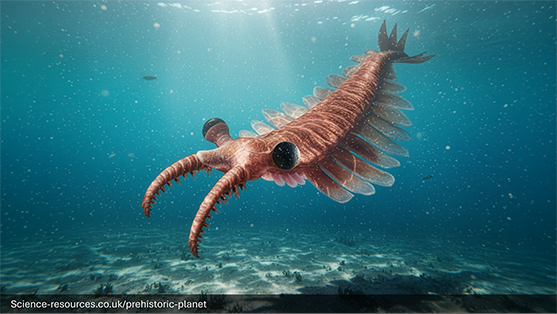
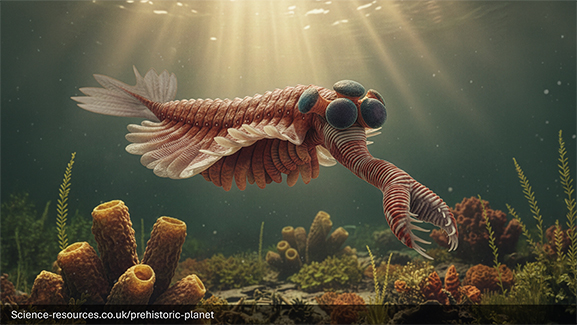
Anomalocaris, a top predator with grasping mouthparts.
Opabinia, a creature with five eyes and a long, flexible proboscis.
Although the Cambrian world might seem strange, it laid the foundations for all complex life that followed, including us.
Exploring this period helps scientists understand how life evolved and why the oceans played such an important role in shaping Earth’s early ecosystems.
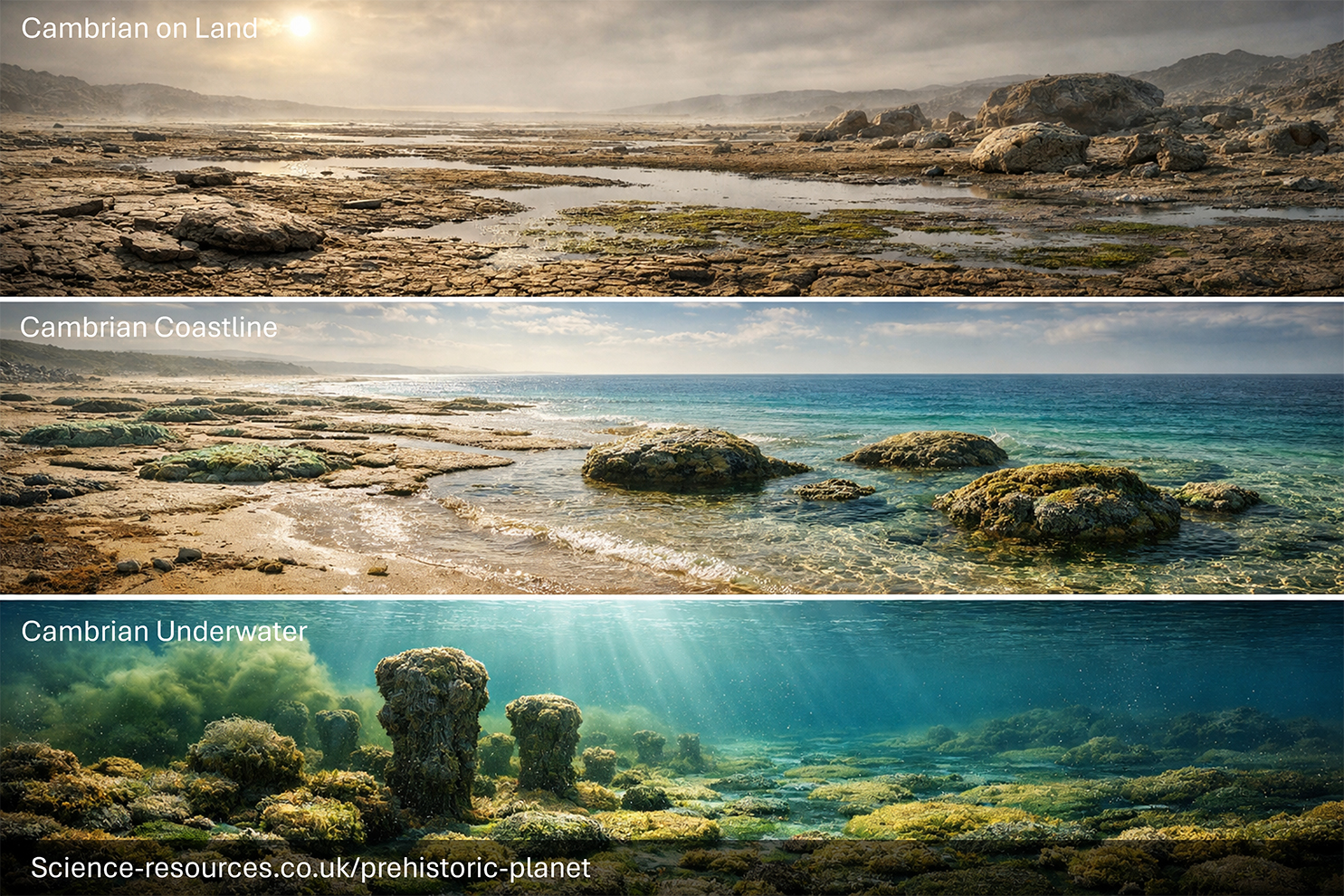
Journey back 500 million years to the Cambrian Period. While the land was a silent desert of rock, the oceans were teeming with the first complex life forms.
Show/Hide Full Transcript
Welcome to a journey back in time over 500 million years ago to the Cambrian period, famously known as Earth's explosion of life. Imagine a planet radically different from today. This was the Cambrian world. 500 million years ago, the land was a silent empty desert of rock and dust. Almost all life was concentrated in the oceans. The Cambrian period is famous for the Cambrian explosion, a massive burst of evolution where life became far more complex and diversified. If you could dive into a Cambrian sea, you would witness an alien landscape teaming with unusual creatures. Trilobites, diverse hard-shelled arthropods, were one of the most widespread animals scuttling along the seafloor. Meet Hallucigenia, a small wormlike animal known for its spiny back and soft tentacle-like legs crawling along the ocean floor. Haplophrentis was an ancient hyolith, a distant relative of modern molluscs, part of the strange life of the Cambrian. The Cambrian seas weren't just home to crawlers. They also hosted formidable apex predators. Anomalocaris was one of the largest predators, swimming with undulating lobes and seizing prey with its grasping appendages. And Opabinia, a soft bodied predator, stood out with its five eyes and a long flexible proboscis used to grab food from the seafloor. The Cambrian period's impact echoes through time, laying the groundwork for all life that followed. The explosion of life in the Cambrian laid the foundations for all complex life that followed, including the evolution of humans. Exploring this period helps us understand how life evolved and why the oceans played such a crucial role in shaping Earth's early ecosystems.
Cambrian Period Life (541–485 Ma)
Cambrian Environments: Land, Coastline and Underwater
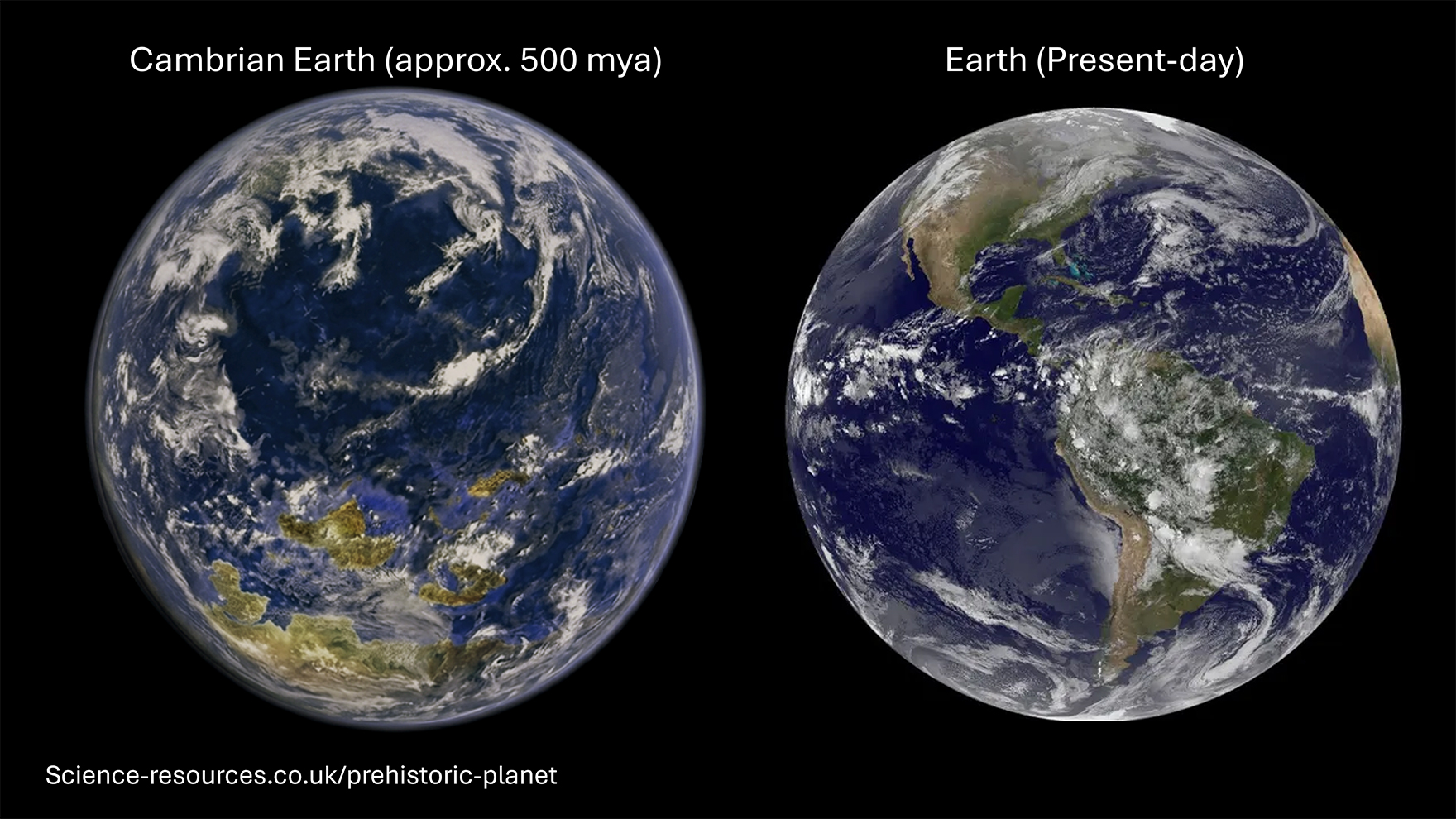
Comparison of Cambrian Earth and Present‑day Earth
Key features:
Rapid diversification of marine life; first animals with hard parts.
Anomalocaris was one of the largest predators of the Cambrian seas, swimming with undulating lobes and using its grasping appendages to seize prey. Its compound eyes and circular, pineapple‑ring mouth made it a formidable hunter in early marine ecosystems.
Cambropachycope was a truly bizarre and ancient animal that lived hundreds of millions of years ago. It belonged to a mysterious group of early arthropods, making it a distant relative of today’s insects and crustaceans.
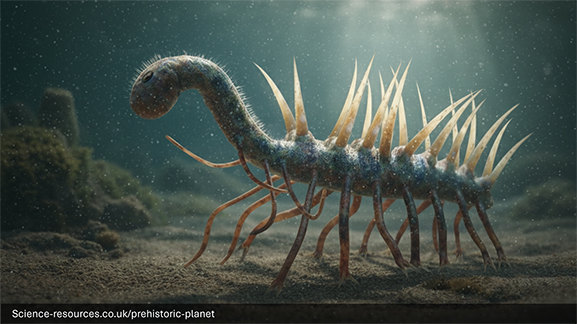
Hallucigenia was a small, worm-like animal that lived long before dinosaurs, known for its spiny back and soft, tentacle-like legs. It crawled along the seafloor during the Cambrian, feeding on tiny organisms and becoming famous for its strange body.
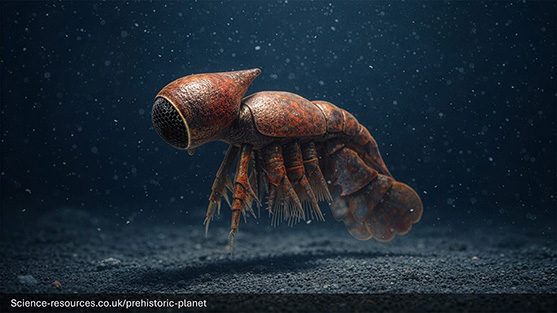
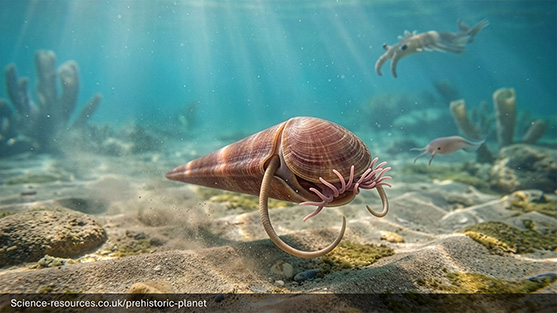
Haplophrentis was a strange and ancient animal that lived hundreds of millions of years ago. It belonged to a group called hyoliths, which are distant relatives of modern molluscs.
Opabinia was a strange, soft-bodied animal that lived long before dinosaurs, known for its five eyes and long, flexible snout with a claw-like tip. It swam through Cambrian seas, using its unusual proboscis to grab food from the seafloor.
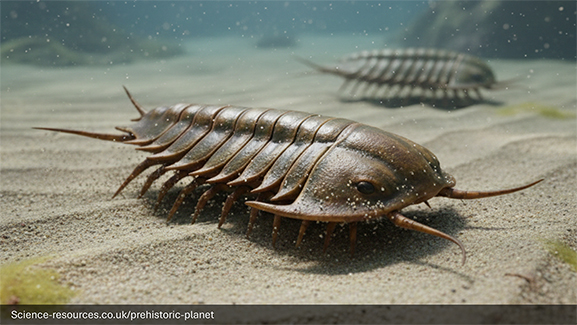
Trilobite was a hard-shelled arthropod that lived long before dinosaurs, known for its segmented body and compound eyes. It crawled along the seafloor of ancient oceans, feeding on detritus and small prey, and became one of the most diverse and widespread animals of the Paleozoic.