Last updated: 24th January 2026
Before Dinosaurs: A-Z
A-Z of Life Before Dinosaurs
a | c | d | e | h | i | j | m | o | p | s | t |
Most people think Earth’s history started with the T-Rex, but by the time the first dinosaur showed up, the planet was already 3.8 billion years old. Before the "Terrible Lizards" took over, Earth was a playground for some of the weirdest, most metal creatures to ever exist. Think of the pre-dinosaur eras as the "Beta Test" for life on Earth. Nature was experimenting with wild designs, some worked, and some failed spectacularly in a series of global catastrophes.
Discover:
- The ocean horrors: Meet Anomalocaris, a giant shrimp-like predator with circular teeth, and Dunkleosteus, an armored fish with a bite force that would crush a modern car.
- The age of giants: Before birds took flight, dragonfly-like insects the size of hawks ruled the skies, and 8-foot-long millipedes crawled through oxygen-rich jungles.
- The great survivors: Meet our actual ancestors, the Synapsids. They weren't dinosaurs; they were the "mammal-like reptiles" that survived the Great Dying (the biggest mass extinction in history) to eventually lead to us.
Click on any of the animals below to dive deeper into their history, characteristics, and eventual disappearance from our planet.
Quick links
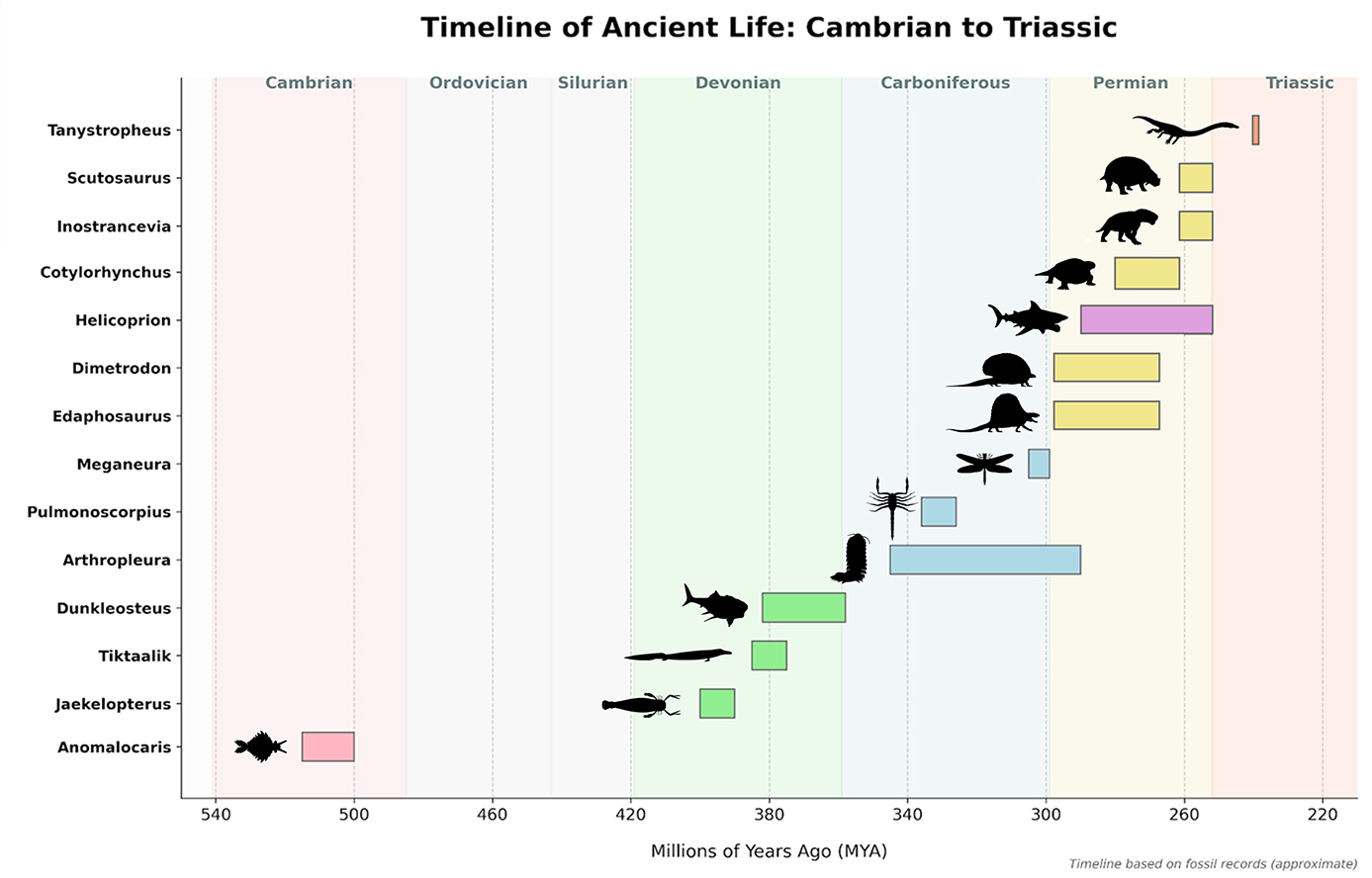 Timeline of prehistoric life before Dinosaurs (Cambrian to Triassic)
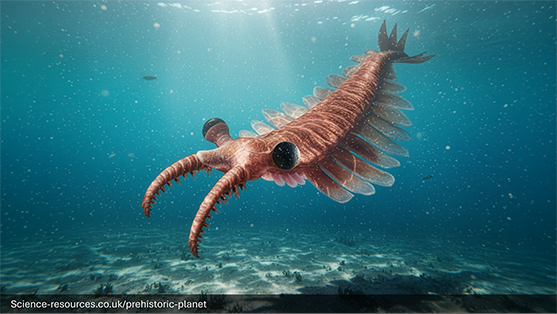
Anomalocaris was one of the largest predators of the Cambrian seas, swimming with undulating lobes and using its grasping appendages to seize prey. Its compound eyes and circular, pineapple‑ring mouth made it a formidable hunter in early marine ecosystems.
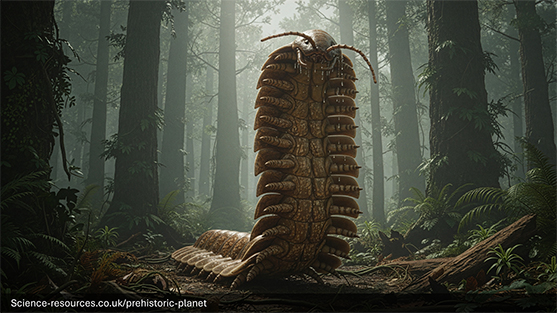
Arthropleura was a gigantic millipede‑like arthropod that lived in Carboniferous forests. Reaching lengths of over two metres, it was one of the largest land invertebrates ever, likely feeding on decaying plant matter in lush, swampy habitats.
c
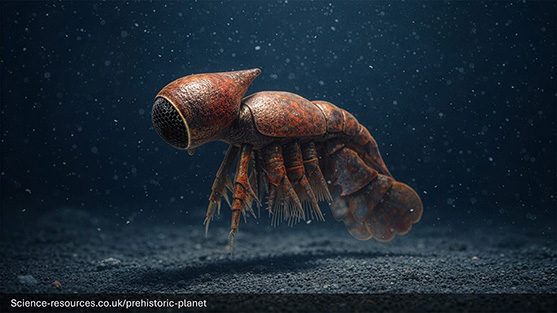
Cambropachycope was a truly bizarre and ancient animal that lived hundreds of millions of years ago. It belonged to a mysterious group of early arthropods, making it a distant relative of today’s insects and crustaceans.
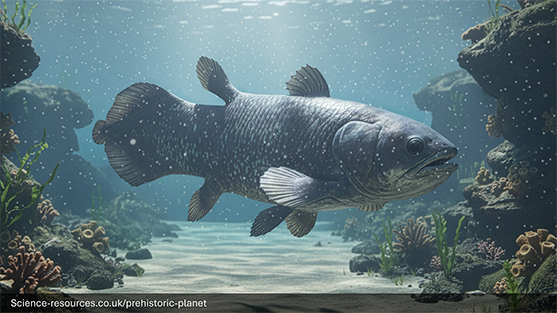
Coelacanths are ancient lobe‑finned fish that first appeared hundreds of millions of years ago. Thought extinct until the 20th century, they possess limb‑like fins and a distinctive tail, offering insights into early vertebrate evolution.
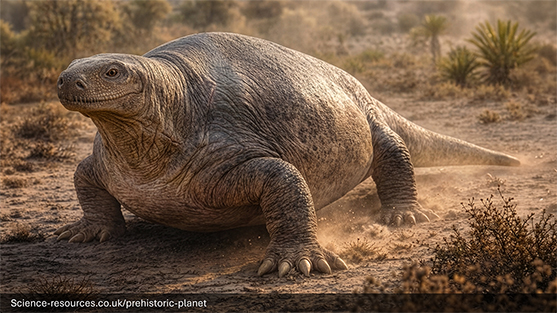
Cotylorhynchus was a massive, barrel‑bodied synapsid from the Permian period. Despite its huge size, it had a tiny head and likely fed on low‑growing plants, making it a slow‑moving but abundant herbivore.
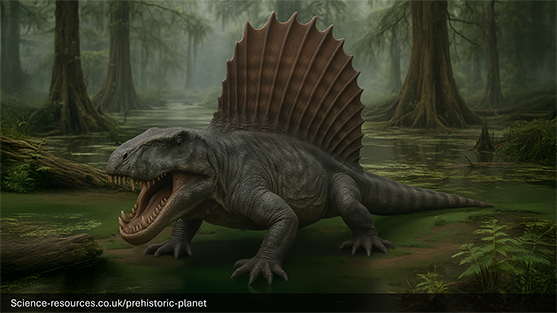
Dimetrodon was a sail‑backed synapsid that lived long before dinosaurs, known for its large, serrated teeth and prominent dorsal sail. It was a top predator of the Early Permian, hunting amphibians and early reptiles.
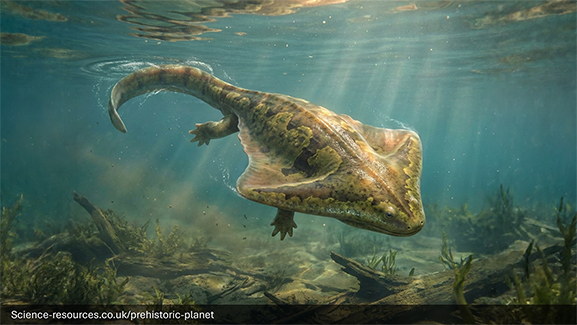
Diplocaulus was a boomerang-headed amphibian that lived long before dinosaurs, known for its wide, horn-like skull and streamlined body. It inhabited freshwater rivers and swamps of the Permian, where its unusual head shape may have helped with swimming and defense from predators.
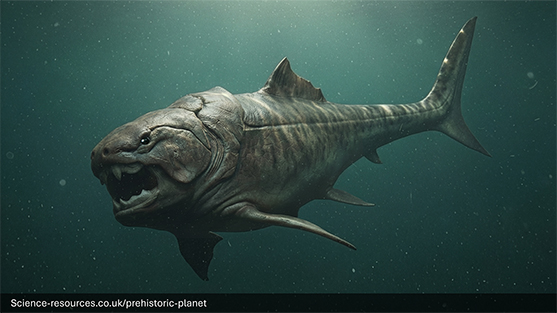
Dunkleosteus was a gigantic armoured fish of the Late Devonian, armed with powerful jaw plates capable of slicing prey with incredible force. As one of the largest placoderms, it dominated ancient seas as a fearsome apex predator.
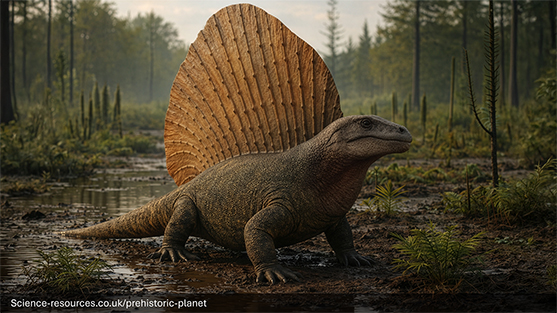
Edaphosaurus was an early herbivorous synapsid recognised by its tall, cross‑barred sail. Living during the Permian, it browsed on tough vegetation and was one of the first large, specialised plant‑eaters on land.
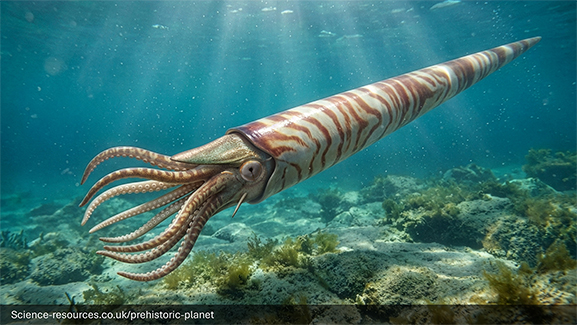
Endoceras was a giant Ordovician cephalopod with a long, straight shell that made it one of the top predators of its time. Using jet propulsion and sharp beak-like jaws, it hunted trilobites and other ancient sea creatures in the deep oceans.
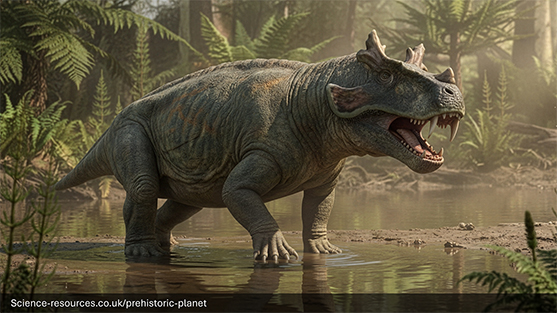
Estemmenosuchus was a bulky Permian synapsid with elaborate horn‑like skull projections. Likely a herbivore or omnivore, it roamed the ancient Russian floodplains and stood out due to its unique and ornate headgear.
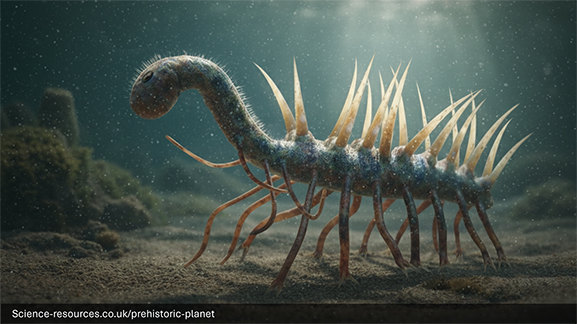
Hallucigenia was a small, worm-like animal that lived long before dinosaurs, known for its spiny back and soft, tentacle-like legs. It crawled along the seafloor during the Cambrian, feeding on tiny organisms and becoming famous for its strange body.
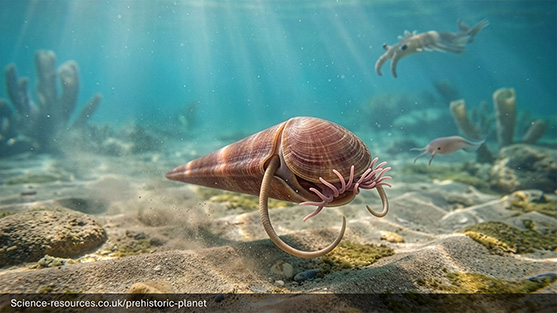
Haplophrentis was a strange and ancient animal that lived hundreds of millions of years ago. It belonged to a group called hyoliths, which are distant relatives of modern molluscs.
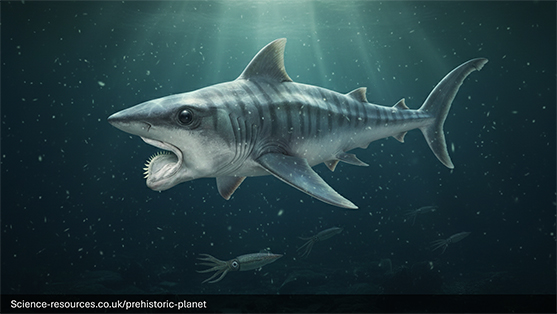
Helicoprion was a shark‑like fish famous for its bizarre spiral of teeth, known as a ‘tooth whorl’. Living in Permian oceans, it probably used this curled blade to slice soft‑bodied prey such as squid‑like creatures.
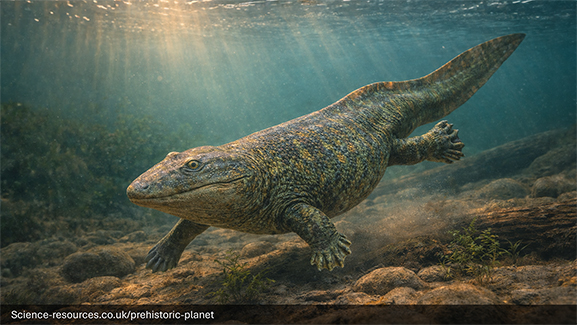
Ichthyostega was an early, four-limbed vertebrate that lived long before dinosaurs, known for its sturdy limbs and fish-like tail. It inhabited shallow swamps and waterways of the Late Devonian, where it helped mark the transition from aquatic life to life on land.
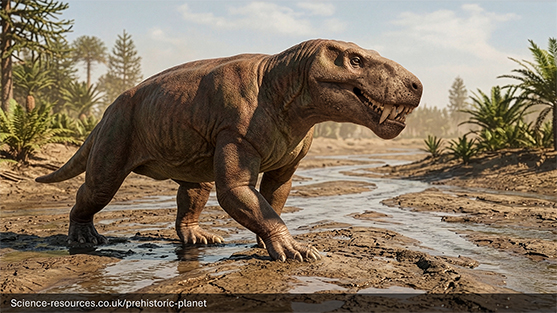
Inostrancevia was a massive gorgonopsid predator from the Late Permian, equipped with long sabre‑like canines and a muscular body. It was one of the last dominant predators before the end‑Permian extinction.
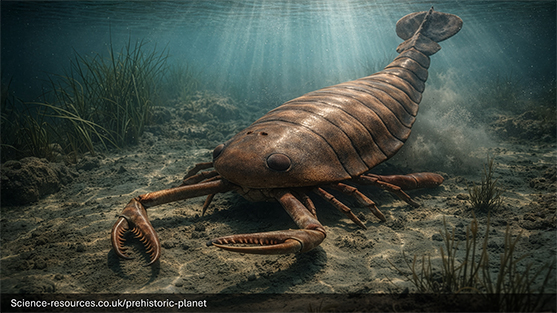
Jaekelopterus was a gigantic sea scorpion, one of the largest arthropods ever, reaching lengths over two metres. With spined claws and a sleek body, it hunted in brackish waters during the Devonian period.
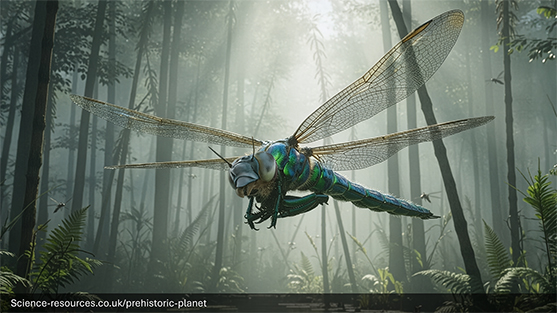
Meganeura was a giant Carboniferous dragonfly‑relative with a wingspan approaching 70 centimetres. It soared over swampy forests, preying on insects and small vertebrates in oxygen‑rich prehistoric air.

Mesosaurus was a small prehistoric reptile that lived about 280 million years ago, long before dinosaurs, during the early Permian period.
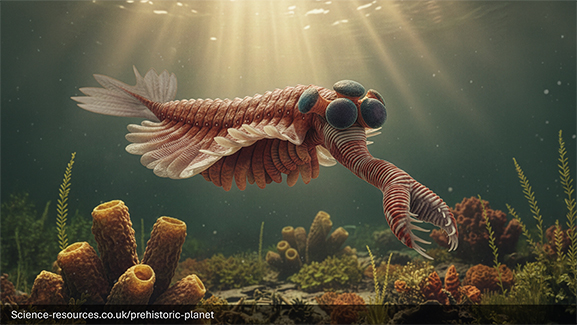
Opabinia was a strange, soft-bodied animal that lived long before dinosaurs, known for its five eyes and long, flexible snout with a claw-like tip. It swam through Cambrian seas, using its unusual proboscis to grab food from the seafloor.
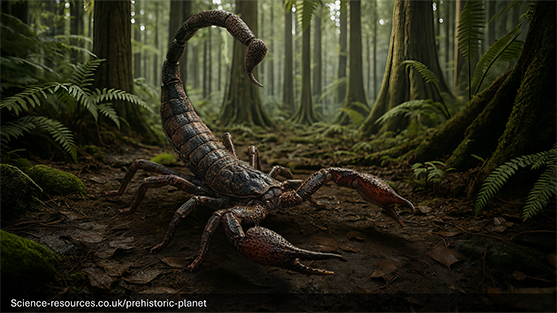
Pulmonoscorpius was a large, ancient scorpion that lived in the Carboniferous. Its size suggests a terrestrial lifestyle, likely hunting insects and small amphibians in the dense, humid forests of the time.
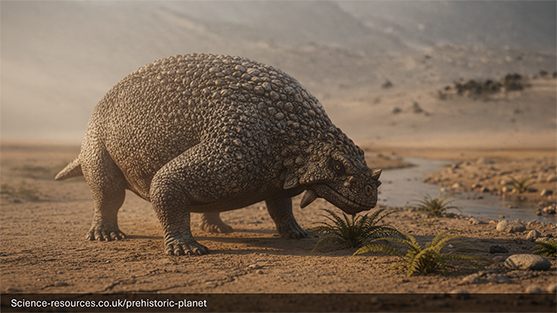
Scutosaurus was a heavily built, armour‑plated pareiasaur from the Late Permian. Its bony plates and robust body protected it from predators as it grazed on tough, dry vegetation.
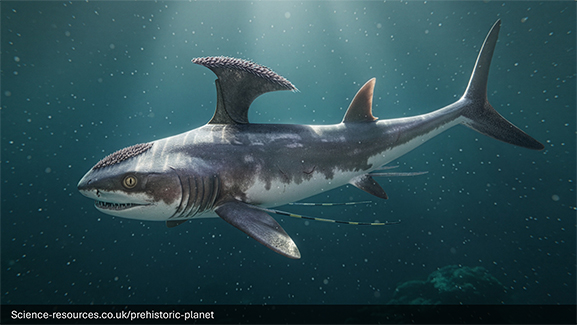
Stethacanthus was an early shark that lived long before dinosaurs, known for its distinctive anvil-shaped dorsal fin covered in tooth-like denticles. It swam through Devonian and Carboniferous seas, where this unusual fin may have played a role in display or defense.
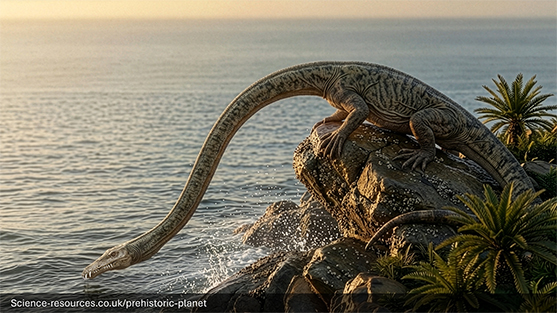
Tanystropheus was a Triassic reptile known for its impossibly long neck, longer than its body and tail combined. It likely used this extended reach to catch fish and squid from the shoreline while keeping its body on land.
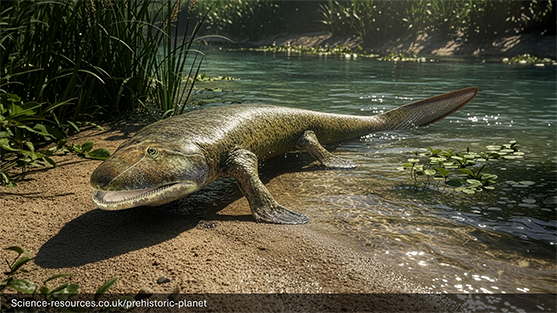
Tiktaalik was a remarkable Devonian fish‑tetrapod transitional creature, sporting both fins and early limb‑like bones. Its flat skull, mobile neck, and robust front fins allowed it to prop itself up in shallow water or even haul onto muddy riverbanks. This blend of aquatic and terrestrial features marks Tiktaalik as a pivotal step in the evolutionary shift from water to land.
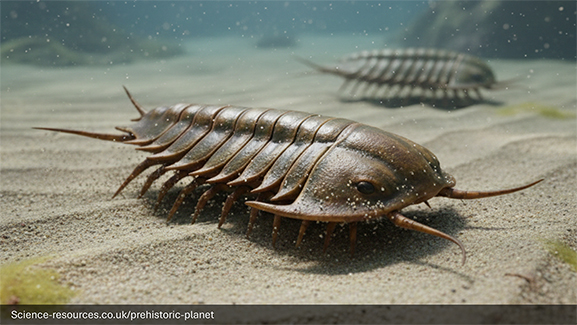
Trilobites were hard-shelled arthropods that lived long before dinosaurs, known for their segmented body and compound eyes. They crawled along the seafloor of ancient oceans, feeding on detritus and small prey, and became one of the most diverse and widespread animals of the Paleozoic.
You may also be intrested in:
- Extinct Animals: A-Z
- Dinosaurs: A-Z
Tags: Anomalocaris, Arthropleura, Cambropachycope, Coelacanth, Cotylorhynchus, Dimetrodon, Diplocaulus, Dunkleosteus, Edaphosaurus, Endoceras, Estemmenosuchus, Hallucigenia, Haplophrentis, Helicoprion, Ichthyostega, Inostrancevia, Jaekelopterus, Meganeura, Opabinia, Pulmonoscorpius, Scutosaurus, Stethacanthus, Tanystropheus, Tiktaalik, Trilobite
© 2012 science-resources.co.uk. All rights reserved | Design by W3layouts
Before Dinosaurs: A-Z
A-Z of Life Before Dinosaurs
a | c | d | e | h | i | j | m | o | p | s | t |
Most people think Earth’s history started with the T-Rex, but by the time the first dinosaur showed up, the planet was already 3.8 billion years old. Before the "Terrible Lizards" took over, Earth was a playground for some of the weirdest, most metal creatures to ever exist. Think of the pre-dinosaur eras as the "Beta Test" for life on Earth. Nature was experimenting with wild designs, some worked, and some failed spectacularly in a series of global catastrophes.
Discover:
- The ocean horrors: Meet Anomalocaris, a giant shrimp-like predator with circular teeth, and Dunkleosteus, an armored fish with a bite force that would crush a modern car.
- The age of giants: Before birds took flight, dragonfly-like insects the size of hawks ruled the skies, and 8-foot-long millipedes crawled through oxygen-rich jungles.
- The great survivors: Meet our actual ancestors, the Synapsids. They weren't dinosaurs; they were the "mammal-like reptiles" that survived the Great Dying (the biggest mass extinction in history) to eventually lead to us.
Click on any of the animals below to dive deeper into their history, characteristics, and eventual disappearance from our planet.
Quick links
Timeline of prehistoric life before Dinosaurs (Cambrian to Triassic)
Anomalocaris was one of the largest predators of the Cambrian seas, swimming with undulating lobes and using its grasping appendages to seize prey. Its compound eyes and circular, pineapple‑ring mouth made it a formidable hunter in early marine ecosystems.
Arthropleura was a gigantic millipede‑like arthropod that lived in Carboniferous forests. Reaching lengths of over two metres, it was one of the largest land invertebrates ever, likely feeding on decaying plant matter in lush, swampy habitats.
c
Cambropachycope was a truly bizarre and ancient animal that lived hundreds of millions of years ago. It belonged to a mysterious group of early arthropods, making it a distant relative of today’s insects and crustaceans.
Coelacanths are ancient lobe‑finned fish that first appeared hundreds of millions of years ago. Thought extinct until the 20th century, they possess limb‑like fins and a distinctive tail, offering insights into early vertebrate evolution.
Cotylorhynchus was a massive, barrel‑bodied synapsid from the Permian period. Despite its huge size, it had a tiny head and likely fed on low‑growing plants, making it a slow‑moving but abundant herbivore.
Dimetrodon was a sail‑backed synapsid that lived long before dinosaurs, known for its large, serrated teeth and prominent dorsal sail. It was a top predator of the Early Permian, hunting amphibians and early reptiles.
Diplocaulus was a boomerang-headed amphibian that lived long before dinosaurs, known for its wide, horn-like skull and streamlined body. It inhabited freshwater rivers and swamps of the Permian, where its unusual head shape may have helped with swimming and defense from predators.
Dunkleosteus was a gigantic armoured fish of the Late Devonian, armed with powerful jaw plates capable of slicing prey with incredible force. As one of the largest placoderms, it dominated ancient seas as a fearsome apex predator.
Edaphosaurus was an early herbivorous synapsid recognised by its tall, cross‑barred sail. Living during the Permian, it browsed on tough vegetation and was one of the first large, specialised plant‑eaters on land.
Endoceras was a giant Ordovician cephalopod with a long, straight shell that made it one of the top predators of its time. Using jet propulsion and sharp beak-like jaws, it hunted trilobites and other ancient sea creatures in the deep oceans.
Estemmenosuchus was a bulky Permian synapsid with elaborate horn‑like skull projections. Likely a herbivore or omnivore, it roamed the ancient Russian floodplains and stood out due to its unique and ornate headgear.
Hallucigenia was a small, worm-like animal that lived long before dinosaurs, known for its spiny back and soft, tentacle-like legs. It crawled along the seafloor during the Cambrian, feeding on tiny organisms and becoming famous for its strange body.
Haplophrentis was a strange and ancient animal that lived hundreds of millions of years ago. It belonged to a group called hyoliths, which are distant relatives of modern molluscs.
Helicoprion was a shark‑like fish famous for its bizarre spiral of teeth, known as a ‘tooth whorl’. Living in Permian oceans, it probably used this curled blade to slice soft‑bodied prey such as squid‑like creatures.
Ichthyostega was an early, four-limbed vertebrate that lived long before dinosaurs, known for its sturdy limbs and fish-like tail. It inhabited shallow swamps and waterways of the Late Devonian, where it helped mark the transition from aquatic life to life on land.
Inostrancevia was a massive gorgonopsid predator from the Late Permian, equipped with long sabre‑like canines and a muscular body. It was one of the last dominant predators before the end‑Permian extinction.
Jaekelopterus was a gigantic sea scorpion, one of the largest arthropods ever, reaching lengths over two metres. With spined claws and a sleek body, it hunted in brackish waters during the Devonian period.
Meganeura was a giant Carboniferous dragonfly‑relative with a wingspan approaching 70 centimetres. It soared over swampy forests, preying on insects and small vertebrates in oxygen‑rich prehistoric air.
Mesosaurus was a small prehistoric reptile that lived about 280 million years ago, long before dinosaurs, during the early Permian period.
Opabinia was a strange, soft-bodied animal that lived long before dinosaurs, known for its five eyes and long, flexible snout with a claw-like tip. It swam through Cambrian seas, using its unusual proboscis to grab food from the seafloor.
Pulmonoscorpius was a large, ancient scorpion that lived in the Carboniferous. Its size suggests a terrestrial lifestyle, likely hunting insects and small amphibians in the dense, humid forests of the time.
Scutosaurus was a heavily built, armour‑plated pareiasaur from the Late Permian. Its bony plates and robust body protected it from predators as it grazed on tough, dry vegetation.
Stethacanthus was an early shark that lived long before dinosaurs, known for its distinctive anvil-shaped dorsal fin covered in tooth-like denticles. It swam through Devonian and Carboniferous seas, where this unusual fin may have played a role in display or defense.
Tanystropheus was a Triassic reptile known for its impossibly long neck, longer than its body and tail combined. It likely used this extended reach to catch fish and squid from the shoreline while keeping its body on land.
Tiktaalik was a remarkable Devonian fish‑tetrapod transitional creature, sporting both fins and early limb‑like bones. Its flat skull, mobile neck, and robust front fins allowed it to prop itself up in shallow water or even haul onto muddy riverbanks. This blend of aquatic and terrestrial features marks Tiktaalik as a pivotal step in the evolutionary shift from water to land.
Trilobites were hard-shelled arthropods that lived long before dinosaurs, known for their segmented body and compound eyes. They crawled along the seafloor of ancient oceans, feeding on detritus and small prey, and became one of the most diverse and widespread animals of the Paleozoic.
You may also be intrested in:
- Extinct Animals: A-Z
- Dinosaurs: A-Z
Tags: Anomalocaris, Arthropleura, Cambropachycope, Coelacanth, Cotylorhynchus, Dimetrodon, Diplocaulus, Dunkleosteus, Edaphosaurus, Endoceras, Estemmenosuchus, Hallucigenia, Haplophrentis, Helicoprion, Ichthyostega, Inostrancevia, Jaekelopterus, Meganeura, Opabinia, Pulmonoscorpius, Scutosaurus, Stethacanthus, Tanystropheus, Tiktaalik, Trilobite
© 2012 science-resources.co.uk. All rights reserved | Design by W3layouts