Generative AI Notification: Some elements of this image have been created or enhanced using AI technology. To find out how we create all our prehistoric animals, click here.
Last updated: 24th January 2026
Before Dinosaurs: Ichthyostega
Ichthyostega, an early, four-limbed vertebrate that lived long before dinosaurs, known for its sturdy limbs and fish-like tail.
Ichthyostega (Fish Roof)
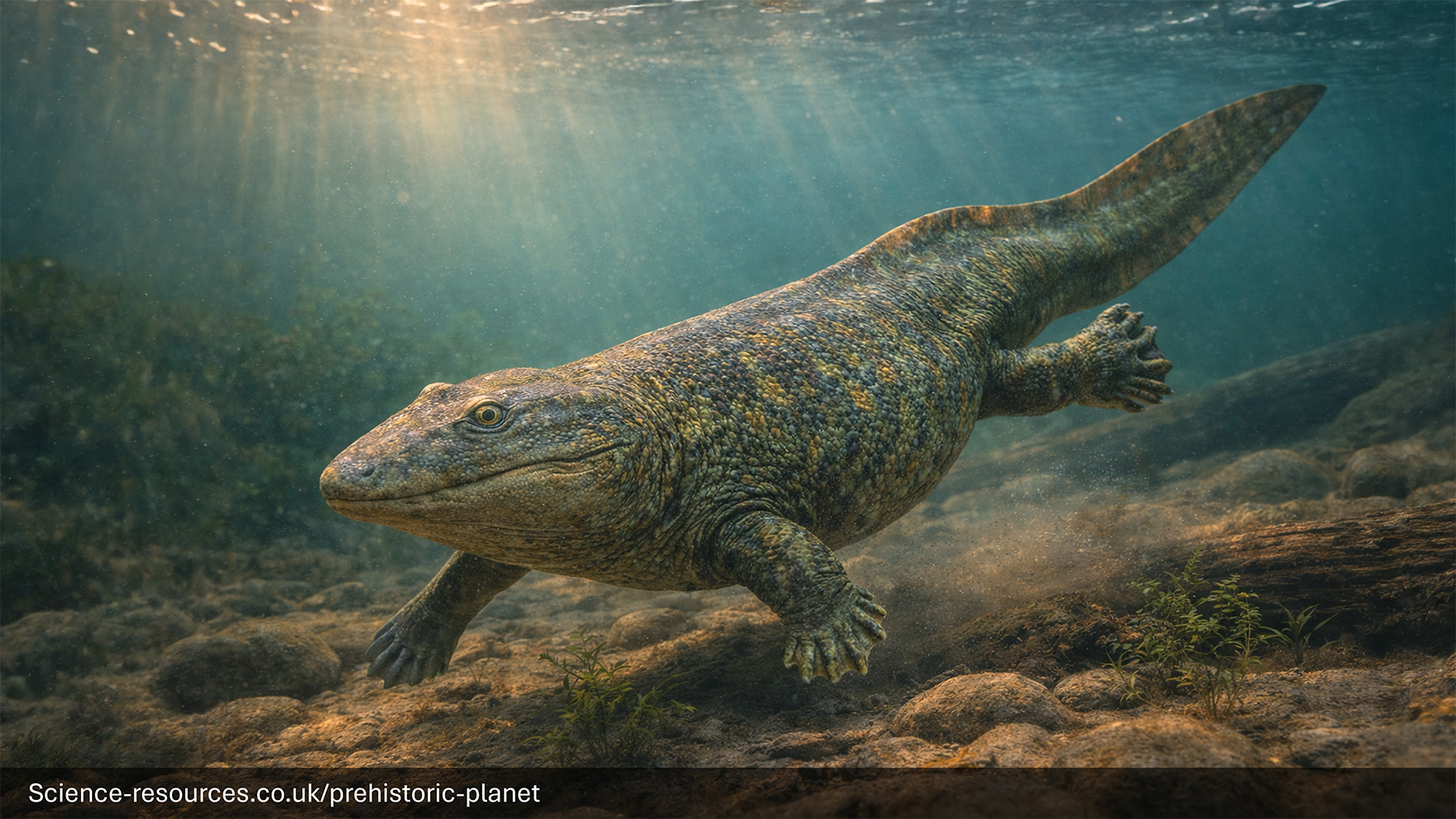 Ichthyostega swimming
What is Ichthyostega?
Ichthyostega was one of the very first creatures to walk on land! This remarkable animal lived hundreds of millions of years ago and is famous for being an early amphibian, showing scientists how animals first made the leap from water to land. Ichthyostega had both fish-like and amphibian-like features, making it a true pioneer of its time.
How big was Ichthyostega?
Ichthyostega could grow up to about 1.5 metres (roughly 5 feet) long. It had a strong, sturdy body and a broad, flat head, perfect for exploring both water and land.
What did Ichthyostega eat?
This ancient amphibian was a carnivore. It likely hunted smaller fish and invertebrates in the water and may have eaten insects or small animals on land. Its strong jaws and sharp teeth helped it catch its prey.
Ichthyostega appearance
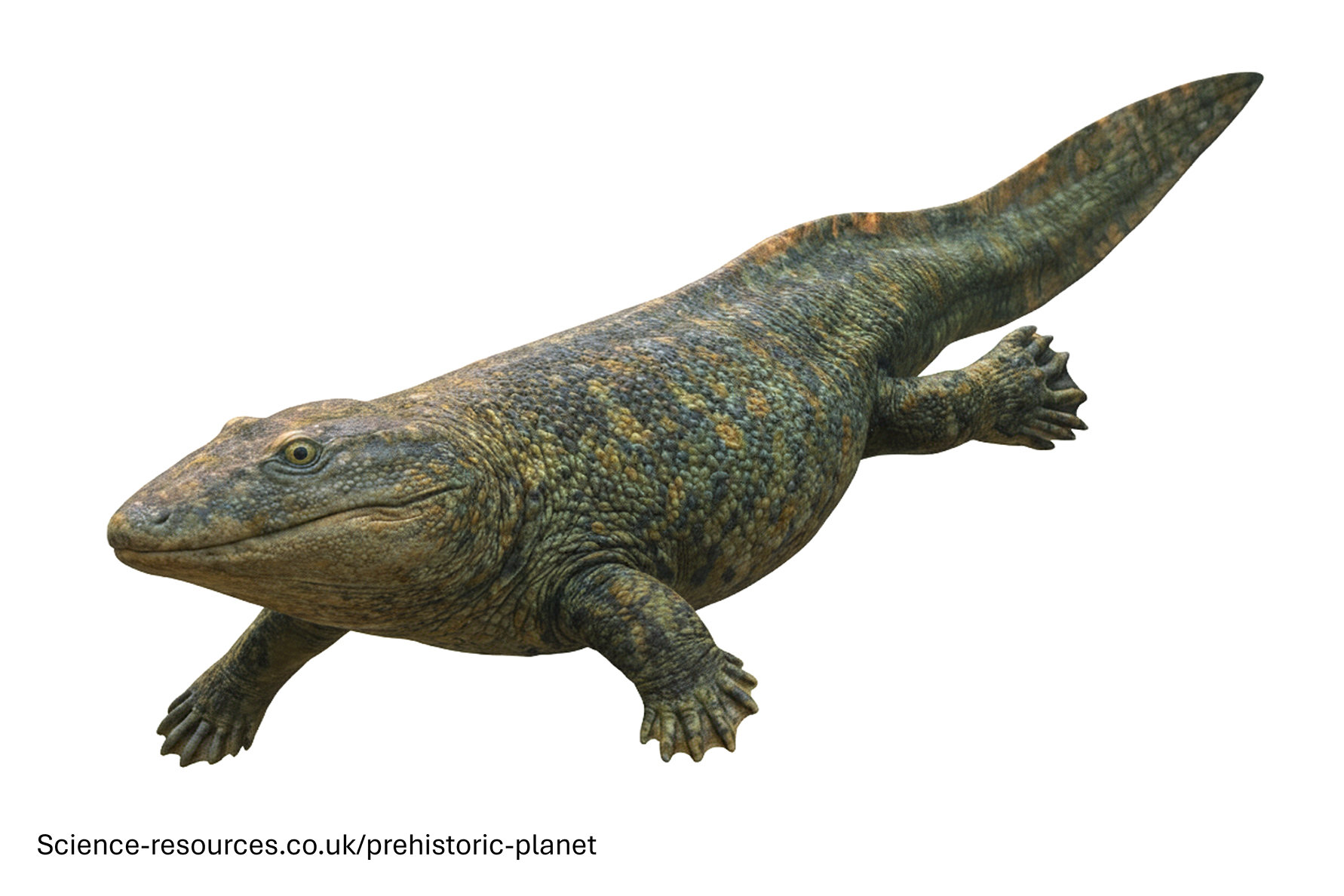
Ichthyostega looked a bit like a giant salamander crossed with a fish. It had a long tail with fin rays, sturdy legs, and a body built for swimming as well as crawling on muddy land. Its limbs were stronger than those of most fish, but it wasn’t as agile on land as modern amphibians.
Where did Ichthyostega live?
Ichthyostega lived in what are now parts of Greenland during the Late Devonian Period, about 370 million years ago. Back then, these areas were covered in swamps and shallow waters, perfect for an animal learning to live both in water and on land.
Could Ichthyostega walk on land?
Ichthyostega could walk on land, but not in the way modern amphibians do. Its limbs were strong enough to support its body out of water, allowing it to crawl or drag itself across muddy surfaces. However, it probably moved with a sprawling gait, using its front legs to pull itself forward while its back legs provided extra support. Scientists believe Ichthyostega spent much of its time near water’s edge, venturing onto land to escape predators or find food.
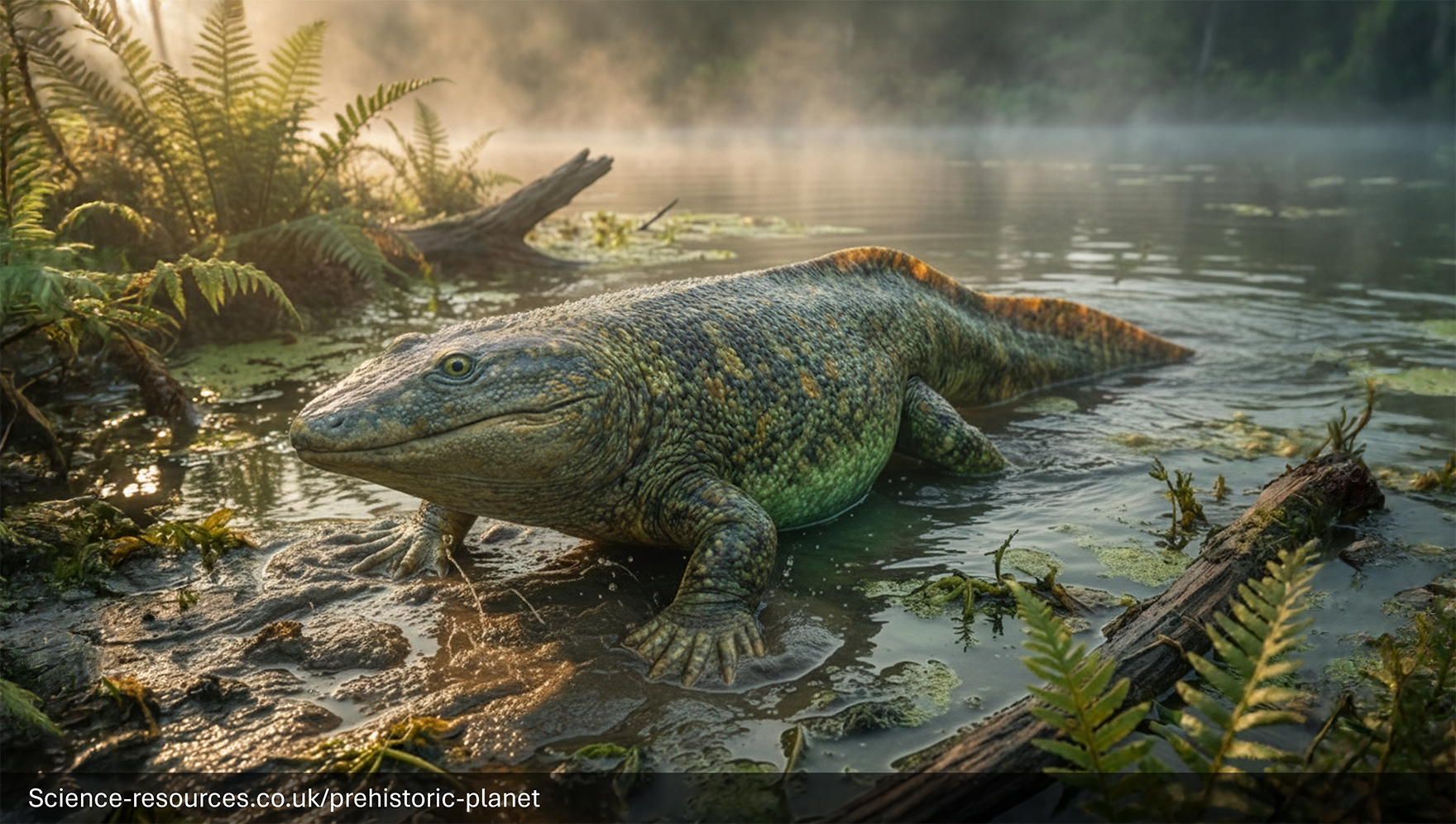 Scientists believe Ichthyostega spent much of its time near water’s edge, venturing onto land to escape predators or find food.
Interesting facts
- The name “Ichthyostega” means “fish roof” in Greek, referring to its fish-like back bones.
- Ichthyostega was one of the first animals with real legs, not just fins.
- It lived long before the dinosaurs, over 100 million years earlier!
- Ichthyostega is extinct. Scientists only know about it from fossils.
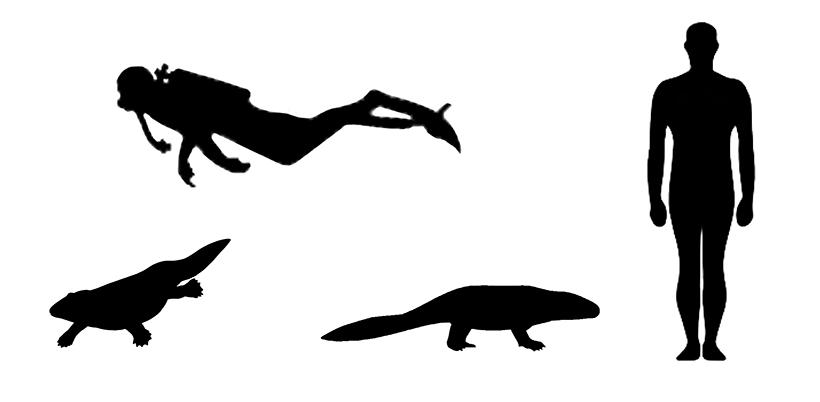
Ichthyostega Facts
Pronounced: ick-thee-oh-STEH-gah
Name Means: "Fish Roof"
Length: Up to 1.5 metres (5 feet)
Diet: Carnivore (meat-eater)
Time: Late Devonian Period (about 370 million years ago)
Fossils Found: Greenland
Which family of animals did Ichthyostega belong to?
Ichthyostega belonged to a group of early tetrapods known as “Ichthyostegidae.” Tetrapods are animals with four limbs, and Ichthyostega was one of the first of these to venture onto land. The Ichthyostegidae family included other ancient creatures that shared similar features, bridging the gap between fish and the very first land-dwelling vertebrates.
Why is Ichthyostega Important?
Ichthyostega shows us how life on Earth made one of its biggest leaps, from living in water to exploring the land. It’s a key piece of the puzzle in the story of evolution, helping us understand where amphibians (and ultimately, land animals) came from.
Ichthyostega FAQ
Q1: What is a Ichthyostega?
A1: Ichthyostega was an early amphibian that lived about 370 million years ago. It’s famous for being one of the first animals to walk on land.
Q2: What did Ichthyostega look like?
A2: It looked like a mix between a fish and a salamander, with a long tail, webbed feet, and sturdy legs.
Q3: How big was Ichthyostega?
A3: It could grow up to 1.5 metres (5 feet) long.
Q4: What did Ichthyostega eat?
A4: It hunted small fish and other animals in the water and possibly insects on land.
Q5: Where did Ichthyostega live?
A5: It lived in swampy, watery environments in what is now Greenland.
Q6: When did Ichthyostega go extinct?
A6: It went extinct about 360 million years ago, as newer amphibians evolved.
Q7: How is Ichthyostega related to modern animals?
A7: Ichthyostega is a distant ancestor of modern amphibians like frogs and salamanders.
Q8: Who discovered Ichthyostega?
A8: Ichthyostega fossils were first discovered in Greenland in the 1930s.
Q9: Are there any complete skeletons of Ichthyostega?
A9: Several nearly complete fossils have been found, helping scientists learn about its body and way of life.
You may also be intrested in:
- Extinct Animals: A-Z
- Dinosaurs: A-Z
Tags: How big was Ichthyostega, Ichthyostega, where did Ichthyostega live, how long was Ichthyostega, what does Ichthyostega mean, Ichthyostega facts
Previous: Helicoprion
Up next: Inostrancevia
© 2012 science-resources.co.uk. All rights reserved | Design by W3layouts
Before Dinosaurs: Ichthyostega
Ichthyostega, an early, four-limbed vertebrate that lived long before dinosaurs, known for its sturdy limbs and fish-like tail.
Ichthyostega (Fish Roof)
Ichthyostega swimming
What is Ichthyostega?
Ichthyostega was one of the very first creatures to walk on land! This remarkable animal lived hundreds of millions of years ago and is famous for being an early amphibian, showing scientists how animals first made the leap from water to land. Ichthyostega had both fish-like and amphibian-like features, making it a true pioneer of its time.
How big was Ichthyostega?
Ichthyostega could grow up to about 1.5 metres (roughly 5 feet) long. It had a strong, sturdy body and a broad, flat head, perfect for exploring both water and land.
What did Ichthyostega eat?
This ancient amphibian was a carnivore. It likely hunted smaller fish and invertebrates in the water and may have eaten insects or small animals on land. Its strong jaws and sharp teeth helped it catch its prey.
Ichthyostega appearance
Ichthyostega looked a bit like a giant salamander crossed with a fish. It had a long tail with fin rays, sturdy legs, and a body built for swimming as well as crawling on muddy land. Its limbs were stronger than those of most fish, but it wasn’t as agile on land as modern amphibians.
Where did Ichthyostega live?
Ichthyostega lived in what are now parts of Greenland during the Late Devonian Period, about 370 million years ago. Back then, these areas were covered in swamps and shallow waters, perfect for an animal learning to live both in water and on land.
Could Ichthyostega walk on land?
Ichthyostega could walk on land, but not in the way modern amphibians do. Its limbs were strong enough to support its body out of water, allowing it to crawl or drag itself across muddy surfaces. However, it probably moved with a sprawling gait, using its front legs to pull itself forward while its back legs provided extra support. Scientists believe Ichthyostega spent much of its time near water’s edge, venturing onto land to escape predators or find food.
Scientists believe Ichthyostega spent much of its time near water’s edge, venturing onto land to escape predators or find food.
Interesting facts
- The name “Ichthyostega” means “fish roof” in Greek, referring to its fish-like back bones.
- Ichthyostega was one of the first animals with real legs, not just fins.
- It lived long before the dinosaurs, over 100 million years earlier!
- Ichthyostega is extinct. Scientists only know about it from fossils.
Ichthyostega Facts
Pronounced: ick-thee-oh-STEH-gah
Name Means: "Fish Roof"
Length: Up to 1.5 metres (5 feet)
Diet: Carnivore (meat-eater)
Time: Late Devonian Period (about 370 million years ago)
Fossils Found: Greenland
Which family of animals did Ichthyostega belong to?
Ichthyostega belonged to a group of early tetrapods known as “Ichthyostegidae.” Tetrapods are animals with four limbs, and Ichthyostega was one of the first of these to venture onto land. The Ichthyostegidae family included other ancient creatures that shared similar features, bridging the gap between fish and the very first land-dwelling vertebrates.
Why is Ichthyostega Important?
Ichthyostega shows us how life on Earth made one of its biggest leaps, from living in water to exploring the land. It’s a key piece of the puzzle in the story of evolution, helping us understand where amphibians (and ultimately, land animals) came from.
Ichthyostega FAQ
Q1: What is a Ichthyostega?
A1: Ichthyostega was an early amphibian that lived about 370 million years ago. It’s famous for being one of the first animals to walk on land.
Q2: What did Ichthyostega look like?
A2: It looked like a mix between a fish and a salamander, with a long tail, webbed feet, and sturdy legs.
Q3: How big was Ichthyostega?
A3: It could grow up to 1.5 metres (5 feet) long.
Q4: What did Ichthyostega eat?
A4: It hunted small fish and other animals in the water and possibly insects on land.
Q5: Where did Ichthyostega live?
A5: It lived in swampy, watery environments in what is now Greenland.
Q6: When did Ichthyostega go extinct?
A6: It went extinct about 360 million years ago, as newer amphibians evolved.
Q7: How is Ichthyostega related to modern animals?
A7: Ichthyostega is a distant ancestor of modern amphibians like frogs and salamanders.
Q8: Who discovered Ichthyostega?
A8: Ichthyostega fossils were first discovered in Greenland in the 1930s.
Q9: Are there any complete skeletons of Ichthyostega?
A9: Several nearly complete fossils have been found, helping scientists learn about its body and way of life.
Tags: How big was Ichthyostega, Ichthyostega, where did Ichthyostega live, how long was Ichthyostega, what does Ichthyostega mean, Ichthyostega facts
Previous: Helicoprion
Up next: Inostrancevia
© 2012 science-resources.co.uk. All rights reserved | Design by W3layouts