Generative AI Notification: Some elements of this image have been created or enhanced using AI technology. To find out how we create all our prehistoric animals, click here.
Last updated: 24th January 2026
Before Dinosaurs: Edaphosaurus
Edaphosaurus, a prehistoric reptile that lived during the Early Permian period, around 295 to 272 million years ago.
Edaphosaurus (Pavement Lizard)
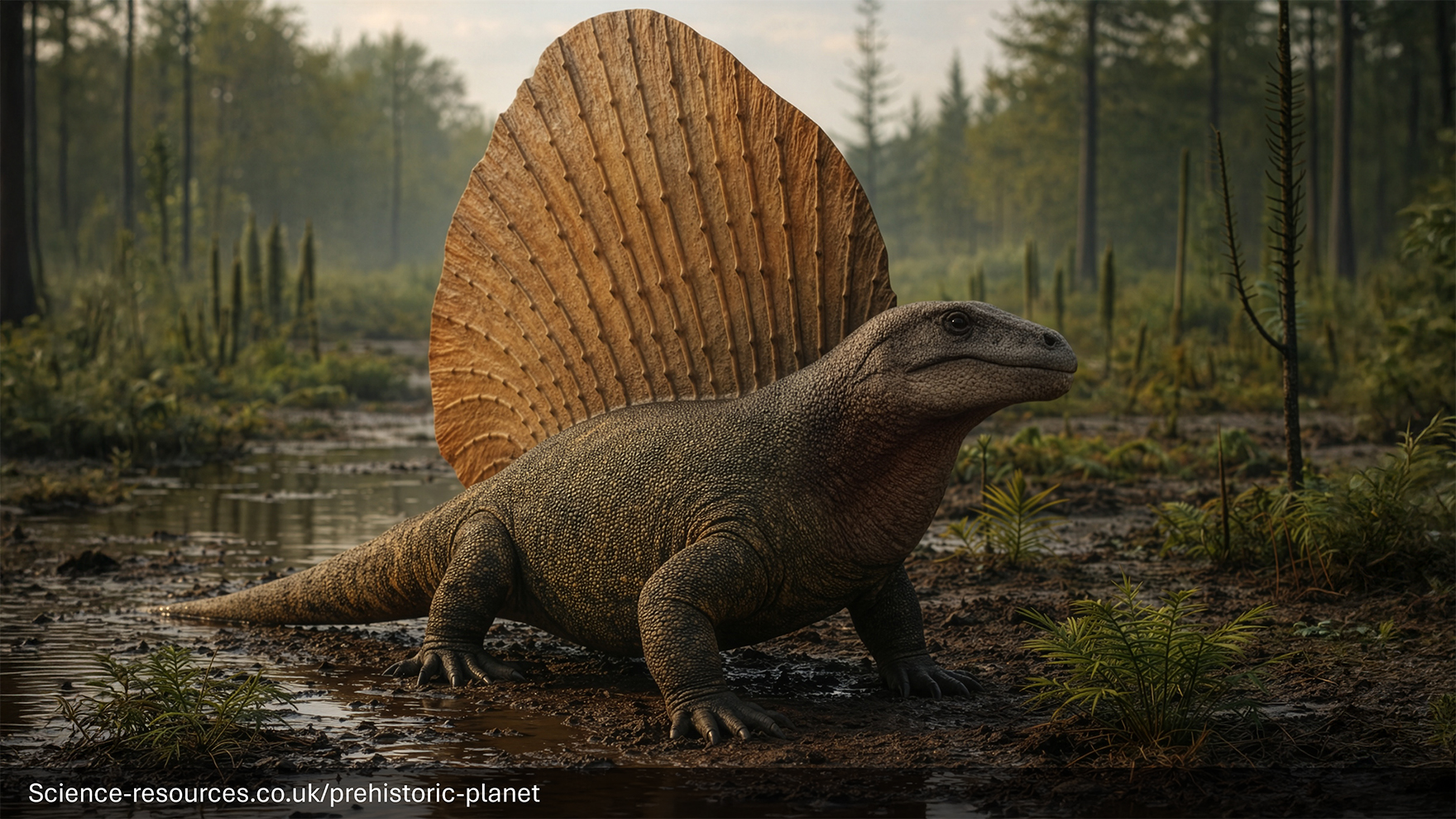 Edaphosaurus
What is Edaphosaurus?
Edaphosaurus was a strange, ancient land animal that lived long before dinosaurs ruled the Earth. Like Cotylorhynchus and Dimetrodon, it belonged to the group called synapsids, which are distant relatives of mammals. Edaphosaurus is most famous for the large, sail-like structure on its back, making it stand out from other prehistoric creatures.
How big was Edaphosaurus?
Edaphosaurus could grow up to 3–4 metres (about 10–13 feet) long—about the length of a small car! It had a low, bulky body, a small head, and a distinctive tall sail made of spines along its back. This made Edaphosaurus look very different from most modern animals.
What did Edaphosaurus eat?
During its time, Edaphosaurus had to watch out for large predatory synapsids, especially Dimetrodon, which is often pictured with a similar sail. Dimetrodon was not a dinosaur, but a fierce carnivore that lived in the same habitats as Edaphosaurus and likely hunted it for food. Despite its size and sail, Edaphosaurus relied mostly on its sturdy build and awareness to avoid predators.
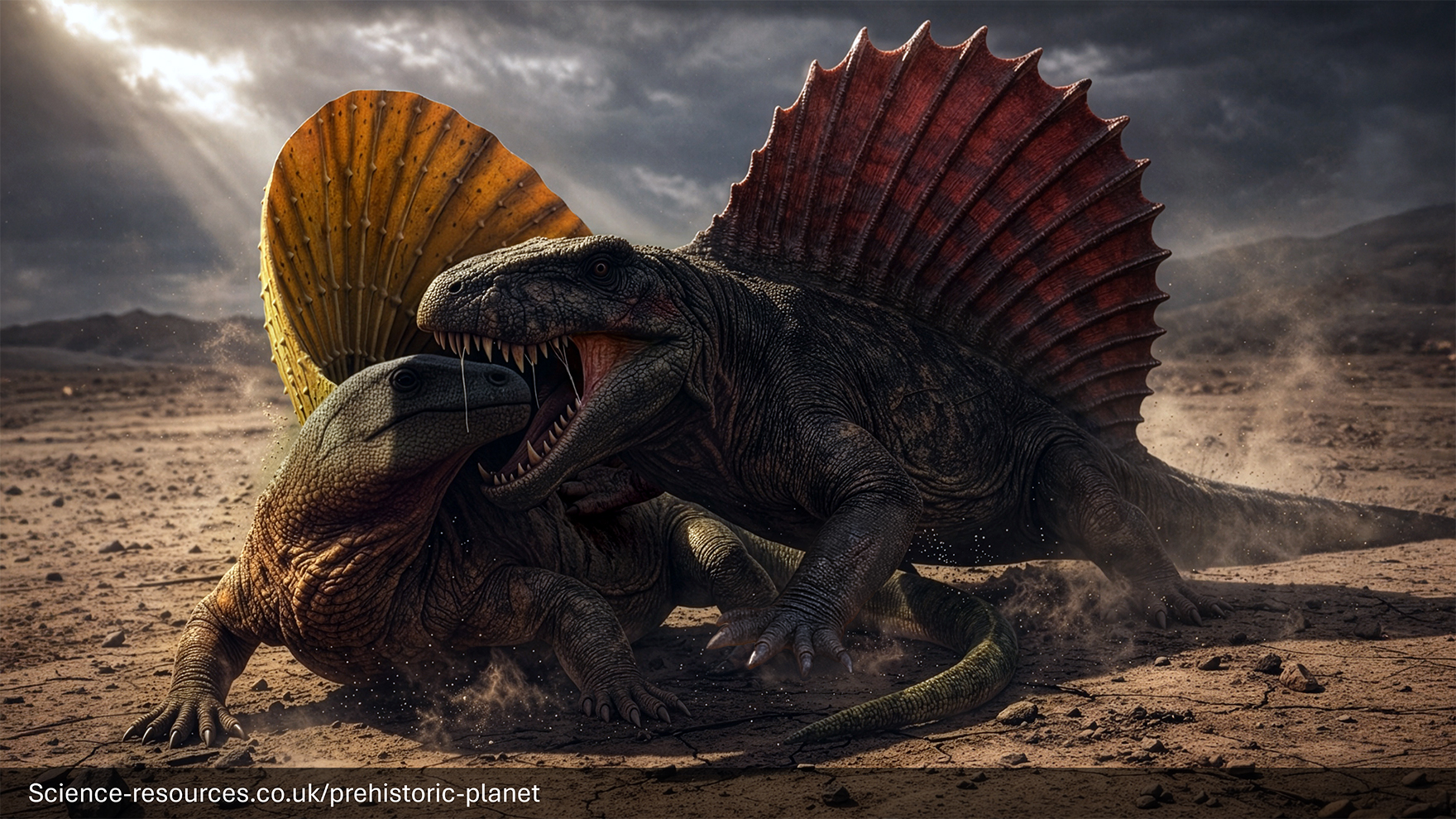 Dimetrodon vs. Edaphosaurus
Edaphosaurus appearance
Edaphosaurus had a sturdy, low-slung body, short legs, and a small head. The most unusual feature was its large sail, made of elongated bones sticking up from its spine and covered in skin. Its skin was probably thick and rough, helping it cope with ancient environments. Unlike some modern animals, Edaphosaurus walked with its legs sticking out to the side, giving it a sprawling posture.
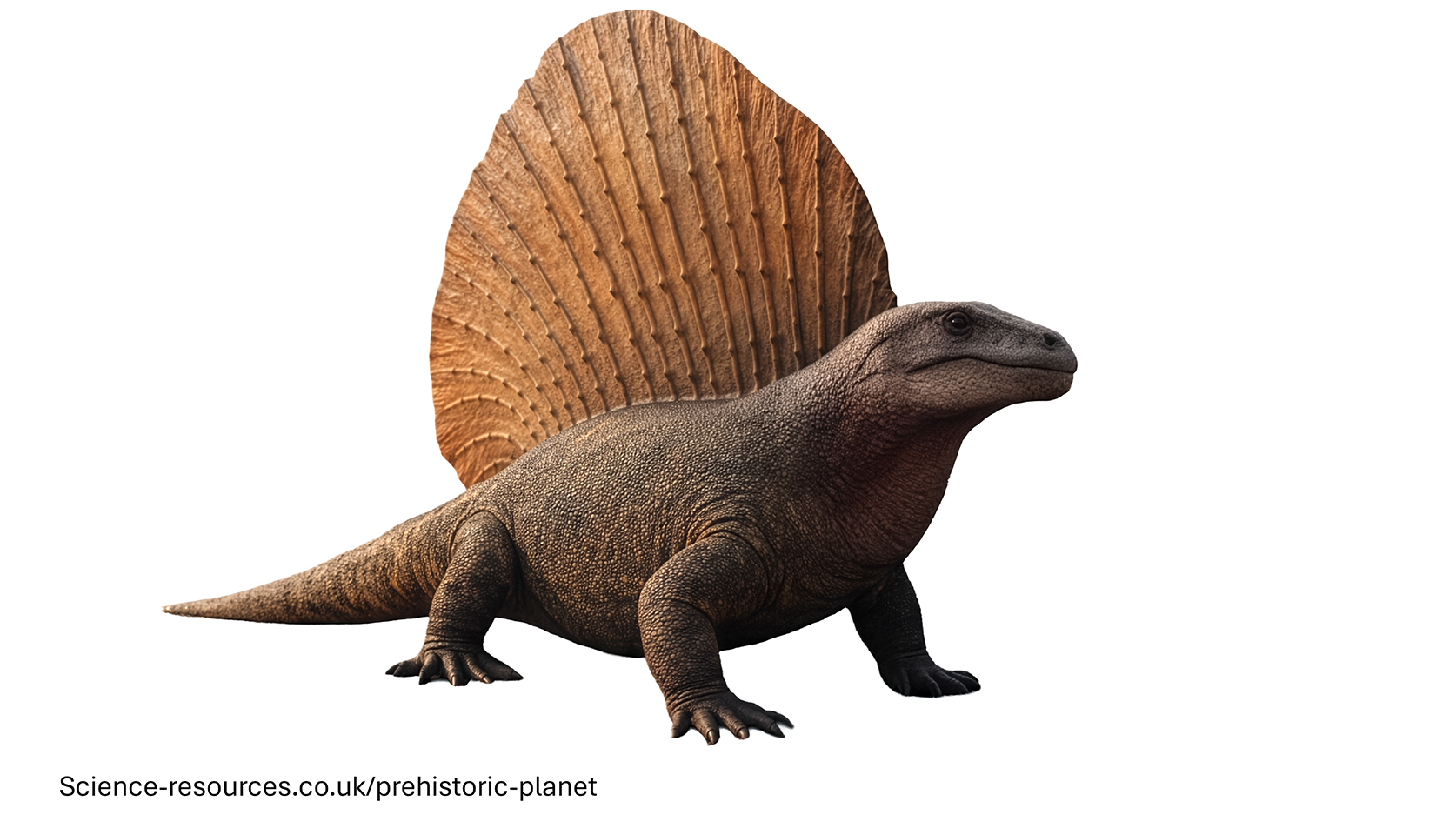
Where did Edaphosaurus live?
Fossils of Edaphosaurus have been found in what is now North America and Europe, especially in places that used to be swampy or close to rivers. It lived on land, preferring warm, lush areas with plenty of plants to feed on.
Interesting facts
- Its name means "pavement lizard" in Greek!
- Edaphosaurus was one of the first animals to have a sail on its back.
- It lived over 300 million years ago—well before the first dinosaurs appeared.
- Edaphosaurus is completely extinct, and we only know about it from fossils.
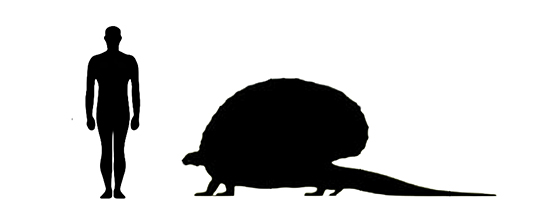
Edaphosaurus Facts
Pronounced: Ee-DAF-oh-SAW-rus
Name Means: "Pavement Lizard"
Length: Up to 4 metres (13 feet)
Weight: About 100–200 kilograms (similar to a large sheep!)
Diet: Herbivore (plant-eater)
Time: Late Carboniferous to Early Permian (about 300–280 million years ago)
Habitat: Swamps, lush forests
Fossils Found: Europe, North America
Which family of animals did Edaphosaurus belong to?
Edaphosaurus was part of the family Edaphosauridae, a group of early, plant-eating synapsids. Like Cotylorhynchus and Dimetrodon, Edaphosaurus is a distant relative of modern mammals, so in a way, it is more closely related to you than to any lizard!
What other animals lived at the same time as Edaphosaurus?
Edaphosaurus lived alongside other early synapsids, amphibians, and some of the very first reptiles. It shared its world with animals like Dimetrodon (which also had a sail), as well as giant insects in the lush swampy forests of the Carboniferous and Permian periods.
Edaphosaurus FAQ
Q1: What is a Edaphosaurus?
A1: Edaphosaurus is an extinct, sail-backed synapsid that lived over 300 million years ago. It was one of the first large plant-eating animals on land.
Q2: How big was Edaphosaurus?
A2: It could grow up to 4 metres (13 feet) long.
Q3: What did Edaphosaurus eat?
A3: Edaphosaurus ate plants, making it a herbivore.
Q4: Where have Edaphosaurus fossils been found?
A4: Edaphosaurus lived in warm, swampy regions of what is now North America and Europe.
Q5: When did Edaphosaurus go extinct?
A5: Edaphosaurus went extinct about 280 million years ago, long before dinosaurs appeared.
Q6: What was the sail for?
A6: Scientists aren't completely sure, but it might have helped with body temperature, attracting mates, or scaring off predators.
Q7: How is Edaphosaurus related to modern animals?
A7: Edaphosaurus is a distant relative of all mammals, including humans.
Q8: Who discovered Edaphosaurus?
A8: Edaphosaurus fossils were first described by scientists in the late 19th century.
Q9: Are there any complete skeletons of Edaphosaurus?
A9: Several well-preserved skeletons have been found, helping scientists learn a lot about its body and lifestyle.
Q10: What did Edaphosaurus look like?
A10: Edaphosaurus had a low, chunky body, a small head, short legs, and a big sail on its back.
You may also be intrested in:
- Extinct Animals: A-Z
- Dinosaurs: A-Z
Tags: How big was Edaphosaurus, Edaphosaurus, where did Edaphosaurus live, how long was Edaphosaurus, what does Edaphosaurus mean, Edaphosaurus facts
Previous: Dunkleosteus
Up next: Endoceras
© 2012 science-resources.co.uk. All rights reserved | Design by W3layouts
Before Dinosaurs: Edaphosaurus
Edaphosaurus, a prehistoric reptile that lived during the Early Permian period, around 295 to 272 million years ago.
Edaphosaurus (Pavement Lizard)
Edaphosaurus
What is Edaphosaurus?
Edaphosaurus was a strange, ancient land animal that lived long before dinosaurs ruled the Earth. Like Cotylorhynchus and Dimetrodon, it belonged to the group called synapsids, which are distant relatives of mammals. Edaphosaurus is most famous for the large, sail-like structure on its back, making it stand out from other prehistoric creatures.
How big was Edaphosaurus?
Edaphosaurus could grow up to 3–4 metres (about 10–13 feet) long—about the length of a small car! It had a low, bulky body, a small head, and a distinctive tall sail made of spines along its back. This made Edaphosaurus look very different from most modern animals.
What did Edaphosaurus eat?
During its time, Edaphosaurus had to watch out for large predatory synapsids, especially Dimetrodon, which is often pictured with a similar sail. Dimetrodon was not a dinosaur, but a fierce carnivore that lived in the same habitats as Edaphosaurus and likely hunted it for food. Despite its size and sail, Edaphosaurus relied mostly on its sturdy build and awareness to avoid predators.
Dimetrodon vs. Edaphosaurus
Edaphosaurus appearance
Edaphosaurus had a sturdy, low-slung body, short legs, and a small head. The most unusual feature was its large sail, made of elongated bones sticking up from its spine and covered in skin. Its skin was probably thick and rough, helping it cope with ancient environments. Unlike some modern animals, Edaphosaurus walked with its legs sticking out to the side, giving it a sprawling posture.
Where did Edaphosaurus live?
Fossils of Edaphosaurus have been found in what is now North America and Europe, especially in places that used to be swampy or close to rivers. It lived on land, preferring warm, lush areas with plenty of plants to feed on.
Interesting facts
- Its name means "pavement lizard" in Greek!
- Edaphosaurus was one of the first animals to have a sail on its back.
- It lived over 300 million years ago—well before the first dinosaurs appeared.
- Edaphosaurus is completely extinct, and we only know about it from fossils.
Edaphosaurus Facts
Pronounced: Ee-DAF-oh-SAW-rus
Name Means: "Pavement Lizard"
Length: Up to 4 metres (13 feet)
Weight: About 100–200 kilograms (similar to a large sheep!)
Diet: Herbivore (plant-eater)
Time: Late Carboniferous to Early Permian (about 300–280 million years ago)
Habitat: Swamps, lush forests
Fossils Found: Europe, North America
Which family of animals did Edaphosaurus belong to?
Edaphosaurus was part of the family Edaphosauridae, a group of early, plant-eating synapsids. Like Cotylorhynchus and Dimetrodon, Edaphosaurus is a distant relative of modern mammals, so in a way, it is more closely related to you than to any lizard!
What other animals lived at the same time as Edaphosaurus?
Edaphosaurus lived alongside other early synapsids, amphibians, and some of the very first reptiles. It shared its world with animals like Dimetrodon (which also had a sail), as well as giant insects in the lush swampy forests of the Carboniferous and Permian periods.
Edaphosaurus FAQ
Q1: What is a Edaphosaurus?
A1: Edaphosaurus is an extinct, sail-backed synapsid that lived over 300 million years ago. It was one of the first large plant-eating animals on land.
Q2: How big was Edaphosaurus?
A2: It could grow up to 4 metres (13 feet) long.
Q3: What did Edaphosaurus eat?
A3: Edaphosaurus ate plants, making it a herbivore.
Q4: Where have Edaphosaurus fossils been found?
A4: Edaphosaurus lived in warm, swampy regions of what is now North America and Europe.
Q5: When did Edaphosaurus go extinct?
A5: Edaphosaurus went extinct about 280 million years ago, long before dinosaurs appeared.
Q6: What was the sail for?
A6: Scientists aren't completely sure, but it might have helped with body temperature, attracting mates, or scaring off predators.
Q7: How is Edaphosaurus related to modern animals?
A7: Edaphosaurus is a distant relative of all mammals, including humans.
Q8: Who discovered Edaphosaurus?
A8: Edaphosaurus fossils were first described by scientists in the late 19th century.
Q9: Are there any complete skeletons of Edaphosaurus?
A9: Several well-preserved skeletons have been found, helping scientists learn a lot about its body and lifestyle.
Q10: What did Edaphosaurus look like?
A10: Edaphosaurus had a low, chunky body, a small head, short legs, and a big sail on its back.
Tags: How big was Edaphosaurus, Edaphosaurus, where did Edaphosaurus live, how long was Edaphosaurus, what does Edaphosaurus mean, Edaphosaurus facts
Previous: Dunkleosteus
Up next: Endoceras
© 2012 science-resources.co.uk. All rights reserved | Design by W3layouts