Last updated: 24th January 2026
Before Dinosaurs: Marine Life
Ancient Marine Life – Predators, Pioneers and the Strangest Creatures of the Seas
Long before dinosaurs appeared, the planet was ruled by a very different group of animals: the arthropods. This huge group includes insects, spiders, crabs and millipedes today, but in the distant past, arthropods grew to enormous sizes and filled almost every habitat on Earth.
From giant millipede relatives to terrifying sea scorpions, ancient arthropods were some of the most successful and diverse animals of the early world. They were the first to conquer land, the first to take to the skies and some of the top predators of their time.
Why Ancient Marine Life Matters
These species show how early animals adapted to different roles in the oceans, from top predators to explorers of shallow water. Creatures like Tiktaalik took the first steps toward life on land, while others like Dunkleosteus and Helicoprion show how fierce prehistoric seas could be. Studying ancient marine life helps us understand the origins of modern fish, sharks, invertebrates, and even the distant ancestors of land animals, including us.
Meet the Ancient Marine Life
Here are some of the most remarkable marine life from the prehistoric world:
Helicoprion: The Shark With a Buzz‑Saw Jaw
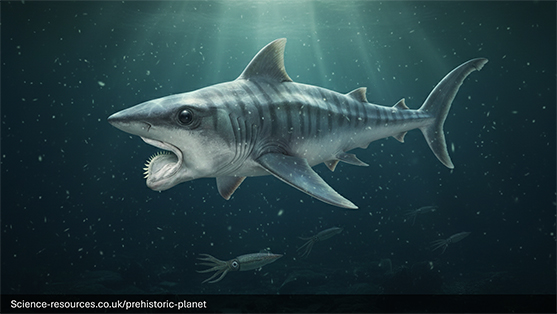
Helicoprion is one of the strangest sharks ever discovered. Instead of normal teeth, it had a spiral “tooth whorl” that looked like a circular saw blade tucked inside its lower jaw. Scientists think this bizarre structure helped it slice through soft prey like squid. Helicoprion lived about 270 million years ago and shows how creative evolution can be in the open sea.
Stethacanthus: The Shark With a “Anvil” on Its Back
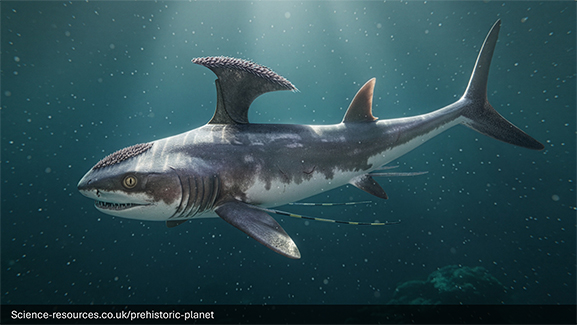
Stethacanthus was a small, early shark with a truly unusual feature: a flat, anvil‑shaped patch on its back covered in tiny spines. Scientists believe it may have been used for display, intimidation or mating rituals. Its odd appearance makes it one of the most distinctive sharks of the Devonian and early Carboniferous oceans.
Dunkleosteus: The Armoured Super‑Predator
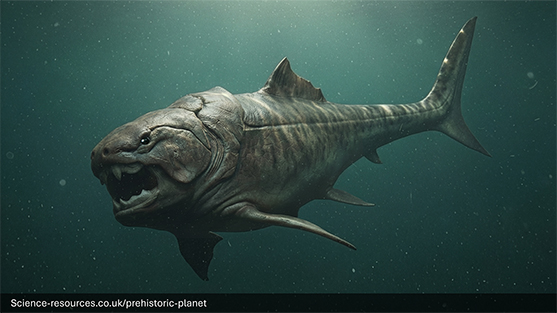
Dunkleosteus was one of the most powerful predators of the Devonian seas. Instead of teeth, it had enormous bony plates that worked like razor‑sharp shears. It could crush armour and tear through prey with incredible force. At up to 8–10 metres long, Dunkleosteus was the top predator of its time — fast, heavily armoured and unstoppable.
Anomalocaris: The Apex Predator of the Cambrian
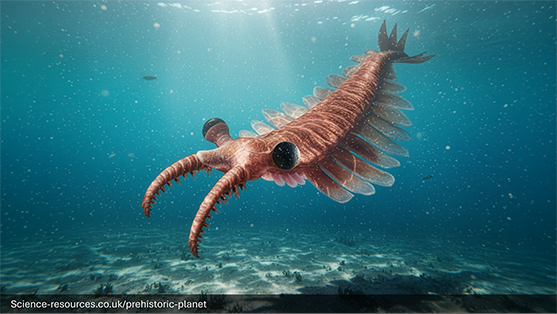
Living over 500 million years ago, Anomalocaris was one of the earliest large predators. It had grasping claws, a circular toothed mouth and large compound eyes. Swimming with flapping side lobes, it hunted trilobites and other early sea creatures. In the Cambrian oceans, Anomalocaris was the terrifying ruler of the food chain.
Cambropachycope: The Strange-Eyed Prehistoric Creature
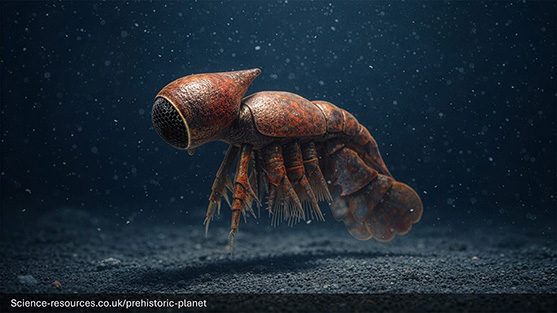
Cambropachycope was a truly bizarre and ancient animal that lived hundreds of millions of years ago. It belonged to a mysterious group of early arthropods, making it a distant relative of today’s insects and crustaceans.
Coelacanth: The “Living Fossil” Fish
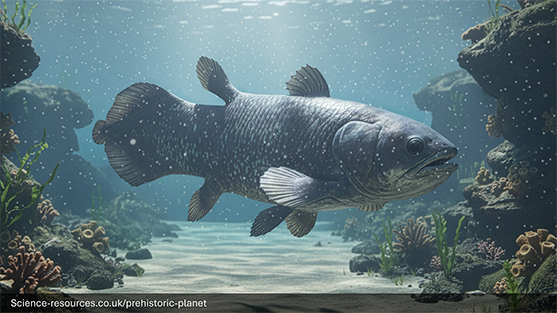
Coelacanths first appeared over 400 million years ago and were thought to be extinct until one was rediscovered alive in 1938. They have lobed fins, which may resemble the early structures that helped fish evolve into land animals. These ancient fish give scientists a window into what life was like in prehistoric oceans and how some species remain remarkably unchanged.
Tiktaalik: The Fish on the Edge of Land
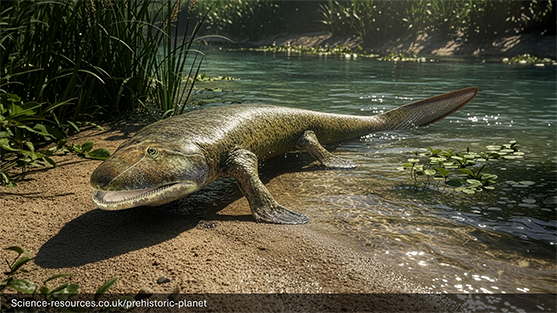
Tiktaalik was a remarkable creature from the Devonian period, with features of both fish and early land animals. It had fins with wrist-like bones, allowing it to push itself up in shallow water or muddy riverbanks. Tiktaalik represents a key stage in evolution, a fish that was beginning to explore life on land, long before amphibians appeared.
Hallucigenia: The Spiky, Dream-Like Creature
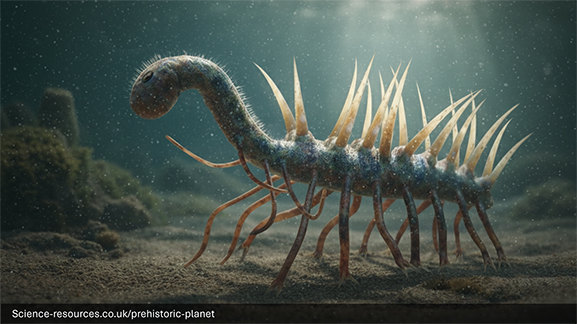
Hallucigenia lived in the Cambrian oceans and looked like something out of science fiction. It had long spines on its back for defence, tiny legs underneath and a simple head with a circular mouth. Its strange appearance confused scientists for years, early reconstructions even had it upside‑down! Hallucigenia reminds us how experimental early evolution was beneath the waves.
Haplophrentis : The Mysterious Prehistoric Mollusc
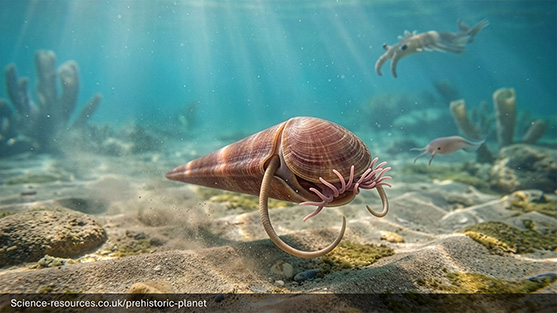
Haplophrentis was a strange and ancient animal that lived hundreds of millions of years ago. It belonged to a group called hyoliths, which are distant relatives of modern molluscs.
You may also be intrested in:
- Extinct Animals: A-Z
- Dinosaurs: A-Z
Tags: prehistoric marine life, ancient sea creatures, Helicoprion, Dunkleosteus, Anomalocaris, Tiktaalik, Hallucigenia, before dinosaurs, Palaeozoic oceans.
© 2012 science-resources.co.uk. All rights reserved | Design by W3layouts
Before Dinosaurs: Marine Life
Ancient Marine Life – Predators, Pioneers and the Strangest Creatures of the Seas
Long before dinosaurs appeared, the planet was ruled by a very different group of animals: the arthropods. This huge group includes insects, spiders, crabs and millipedes today, but in the distant past, arthropods grew to enormous sizes and filled almost every habitat on Earth.
From giant millipede relatives to terrifying sea scorpions, ancient arthropods were some of the most successful and diverse animals of the early world. They were the first to conquer land, the first to take to the skies and some of the top predators of their time.
Why Ancient Marine Life Matters
These species show how early animals adapted to different roles in the oceans, from top predators to explorers of shallow water. Creatures like Tiktaalik took the first steps toward life on land, while others like Dunkleosteus and Helicoprion show how fierce prehistoric seas could be. Studying ancient marine life helps us understand the origins of modern fish, sharks, invertebrates, and even the distant ancestors of land animals, including us.
Meet the Ancient Marine Life
Here are some of the most remarkable marine life from the prehistoric world:
Helicoprion: The Shark With a Buzz‑Saw Jaw
Helicoprion is one of the strangest sharks ever discovered. Instead of normal teeth, it had a spiral “tooth whorl” that looked like a circular saw blade tucked inside its lower jaw. Scientists think this bizarre structure helped it slice through soft prey like squid. Helicoprion lived about 270 million years ago and shows how creative evolution can be in the open sea.
Stethacanthus: The Shark With a “Anvil” on Its Back
Stethacanthus was a small, early shark with a truly unusual feature: a flat, anvil‑shaped patch on its back covered in tiny spines. Scientists believe it may have been used for display, intimidation or mating rituals. Its odd appearance makes it one of the most distinctive sharks of the Devonian and early Carboniferous oceans.
Dunkleosteus: The Armoured Super‑Predator
Dunkleosteus was one of the most powerful predators of the Devonian seas. Instead of teeth, it had enormous bony plates that worked like razor‑sharp shears. It could crush armour and tear through prey with incredible force. At up to 8–10 metres long, Dunkleosteus was the top predator of its time — fast, heavily armoured and unstoppable.
Anomalocaris: The Apex Predator of the Cambrian
Living over 500 million years ago, Anomalocaris was one of the earliest large predators. It had grasping claws, a circular toothed mouth and large compound eyes. Swimming with flapping side lobes, it hunted trilobites and other early sea creatures. In the Cambrian oceans, Anomalocaris was the terrifying ruler of the food chain.
Cambropachycope: The Strange-Eyed Prehistoric Creature
Cambropachycope was a truly bizarre and ancient animal that lived hundreds of millions of years ago. It belonged to a mysterious group of early arthropods, making it a distant relative of today’s insects and crustaceans.
Coelacanth: The “Living Fossil” Fish
Coelacanths first appeared over 400 million years ago and were thought to be extinct until one was rediscovered alive in 1938. They have lobed fins, which may resemble the early structures that helped fish evolve into land animals. These ancient fish give scientists a window into what life was like in prehistoric oceans and how some species remain remarkably unchanged.
Tiktaalik: The Fish on the Edge of Land
Tiktaalik was a remarkable creature from the Devonian period, with features of both fish and early land animals. It had fins with wrist-like bones, allowing it to push itself up in shallow water or muddy riverbanks. Tiktaalik represents a key stage in evolution, a fish that was beginning to explore life on land, long before amphibians appeared.
Hallucigenia: The Spiky, Dream-Like Creature
Hallucigenia lived in the Cambrian oceans and looked like something out of science fiction. It had long spines on its back for defence, tiny legs underneath and a simple head with a circular mouth. Its strange appearance confused scientists for years, early reconstructions even had it upside‑down! Hallucigenia reminds us how experimental early evolution was beneath the waves.
Haplophrentis : The Mysterious Prehistoric Mollusc
Haplophrentis was a strange and ancient animal that lived hundreds of millions of years ago. It belonged to a group called hyoliths, which are distant relatives of modern molluscs.
Tags: prehistoric marine life, ancient sea creatures, Helicoprion, Dunkleosteus, Anomalocaris, Tiktaalik, Hallucigenia, before dinosaurs, Palaeozoic oceans.
© 2012 science-resources.co.uk. All rights reserved | Design by W3layouts