Last updated: 24th January 2026
Before Dinosaurs: Arthropods
Arthropods – Earth’s First Crawlers, Swimmers and Fliers
Long before dinosaurs appeared, the planet was ruled by a very different group of animals: the arthropods. This huge group includes insects, spiders, crabs and millipedes today, but in the distant past, arthropods grew to enormous sizes and filled almost every habitat on Earth.
From giant millipede relatives to terrifying sea scorpions, ancient arthropods were some of the most successful and diverse animals of the early world. They were the first to conquer land, the first to take to the skies and some of the top predators of their time.
Why Ancient Arthropods Matter
These incredible animals were pioneers. They were among the first organisms to walk on land, the first to fly and some of the earliest large predators. Ancient arthropods helped shape ecosystems long before dinosaurs evolved, and many of their features, like jointed legs and exoskeletons, are still seen in modern insects and crustaceans today.
Quick links
Meet the Arthropods
Here are some of the most remarkable arthropods from the prehistoric world:
Arthropleura: The Giant Millipede Relative
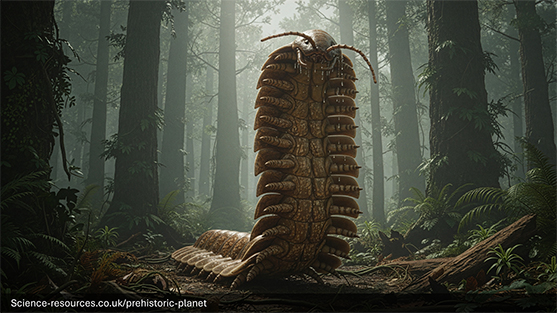
Arthropleura is one of the largest arthropods ever to live, reaching lengths of over two metres. It crawled through the dense forests of the Carboniferous period, feeding on dead plants and rotting wood. Despite its enormous size, it was probably harmless, but its huge, armour‑plated body would have made it an unforgettable sight on the forest floor.
Cambropachycope: The Strange-Eyed Prehistoric Creature
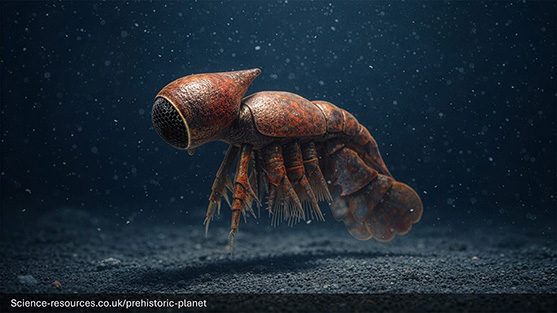
Cambropachycope was a truly bizarre and ancient animal that lived hundreds of millions of years ago. It belonged to a mysterious group of early arthropods, making it a distant relative of today’s insects and crustaceans.
Meganeura: The Enormous Dragonfly-Like Insect
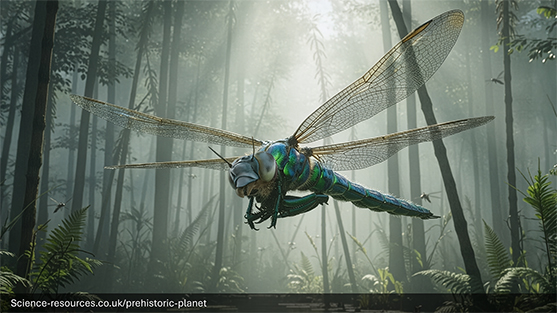
Meganeura was a giant flying insect with a wingspan of up to 70 cm, roughly the size of a modern seagull. It hunted other insects in the humid Carboniferous skies. Its great size was possible because the atmosphere at the time contained much more oxygen than today, helping insects grow far larger than modern species.
Jaekelopterus: The Sea Scorpion Super-Predator
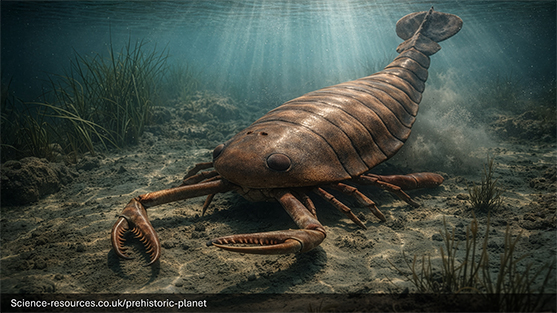
Jaekelopterus was a eurypterid, or “sea scorpion”, and one of the largest arthropod predators ever discovered. Some individuals were nearly 2.5 metres long. With huge, spiny claws and a powerful swimming tail, Jaekelopterus ruled the ancient seas and rivers long before sharks rose to dominance.
Pulmonoscorpius: One of the First Giant Land Scorpions
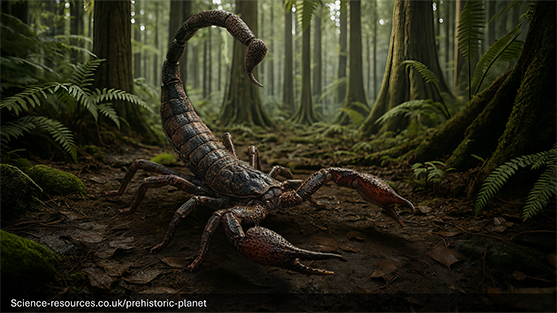
Pulmonoscorpius lived during the Devonian period and may have grown up to 70 cm long. It was an early land-dwelling scorpion that likely hunted small animals on the forest floor. Its name means “lung scorpion”, hinting at its adaptations for breathing air, part of the early arthropod journey onto land.
Opabinia: The Five-Eyed Oddity
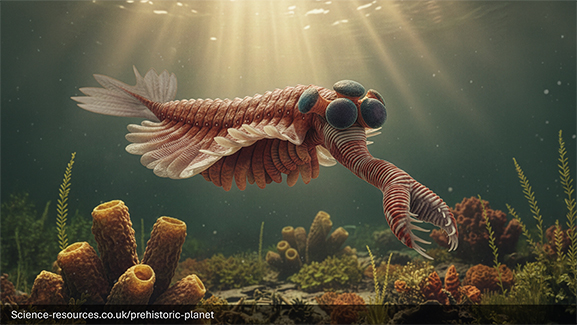
Opabinia lived in the Cambrian seas and is one of the strangest animals ever discovered. It had five eyes, a soft, segmented body and a long, flexible proboscis ending in a pincer. It used this to grab small prey from the sea floor. Opabinia shows just how experimental evolution was during the Cambrian period.
Trilobites: The Classic Ancient Arthropods
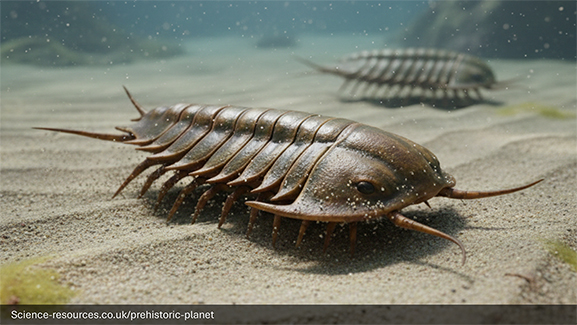
Trilobites were one of the most successful groups of early arthropods. They lived in the oceans for over 250 million years, evolving into thousands of species of all shapes and sizes. Their hard, segmented exoskeletons fossilised well, making them some of the most recognisable fossils today. They crawled across seabeds, burrowed in sediment and even swam through the water.
You may also be intrested in:
- Extinct Animals: A-Z
- Dinosaurs: A-Z
Tags: Arthropods, prehistoric arthropods, Arthropleura, Meganeura, trilobites, eurypterids, invertebrates, before dinosaurs, Palaeozoic Era.
© 2012 science-resources.co.uk. All rights reserved | Design by W3layouts
Before Dinosaurs: Arthropods
Arthropods – Earth’s First Crawlers, Swimmers and Fliers
Long before dinosaurs appeared, the planet was ruled by a very different group of animals: the arthropods. This huge group includes insects, spiders, crabs and millipedes today, but in the distant past, arthropods grew to enormous sizes and filled almost every habitat on Earth.
From giant millipede relatives to terrifying sea scorpions, ancient arthropods were some of the most successful and diverse animals of the early world. They were the first to conquer land, the first to take to the skies and some of the top predators of their time.
Why Ancient Arthropods Matter
These incredible animals were pioneers. They were among the first organisms to walk on land, the first to fly and some of the earliest large predators. Ancient arthropods helped shape ecosystems long before dinosaurs evolved, and many of their features, like jointed legs and exoskeletons, are still seen in modern insects and crustaceans today.
Quick links
Meet the Arthropods
Here are some of the most remarkable arthropods from the prehistoric world:
Arthropleura: The Giant Millipede Relative
Arthropleura is one of the largest arthropods ever to live, reaching lengths of over two metres. It crawled through the dense forests of the Carboniferous period, feeding on dead plants and rotting wood. Despite its enormous size, it was probably harmless, but its huge, armour‑plated body would have made it an unforgettable sight on the forest floor.
Cambropachycope: The Strange-Eyed Prehistoric Creature
Cambropachycope was a truly bizarre and ancient animal that lived hundreds of millions of years ago. It belonged to a mysterious group of early arthropods, making it a distant relative of today’s insects and crustaceans.
Meganeura: The Enormous Dragonfly-Like Insect
Meganeura was a giant flying insect with a wingspan of up to 70 cm, roughly the size of a modern seagull. It hunted other insects in the humid Carboniferous skies. Its great size was possible because the atmosphere at the time contained much more oxygen than today, helping insects grow far larger than modern species.
Jaekelopterus: The Sea Scorpion Super-Predator
Jaekelopterus was a eurypterid, or “sea scorpion”, and one of the largest arthropod predators ever discovered. Some individuals were nearly 2.5 metres long. With huge, spiny claws and a powerful swimming tail, Jaekelopterus ruled the ancient seas and rivers long before sharks rose to dominance.
Pulmonoscorpius: One of the First Giant Land Scorpions
Pulmonoscorpius lived during the Devonian period and may have grown up to 70 cm long. It was an early land-dwelling scorpion that likely hunted small animals on the forest floor. Its name means “lung scorpion”, hinting at its adaptations for breathing air, part of the early arthropod journey onto land.
Opabinia: The Five-Eyed Oddity
Opabinia lived in the Cambrian seas and is one of the strangest animals ever discovered. It had five eyes, a soft, segmented body and a long, flexible proboscis ending in a pincer. It used this to grab small prey from the sea floor. Opabinia shows just how experimental evolution was during the Cambrian period.
Trilobites: The Classic Ancient Arthropods
Trilobites were one of the most successful groups of early arthropods. They lived in the oceans for over 250 million years, evolving into thousands of species of all shapes and sizes. Their hard, segmented exoskeletons fossilised well, making them some of the most recognisable fossils today. They crawled across seabeds, burrowed in sediment and even swam through the water.
Tags: Arthropods, prehistoric arthropods, Arthropleura, Meganeura, trilobites, eurypterids, invertebrates, before dinosaurs, Palaeozoic Era.
© 2012 science-resources.co.uk. All rights reserved | Design by W3layouts