Generative AI Notification: Some elements of this image have been created or enhanced using AI technology. To find out how we create all our prehistoric animals, click here.
Last updated: 24th January 2026
Before Dinosaurs: Helicoprion
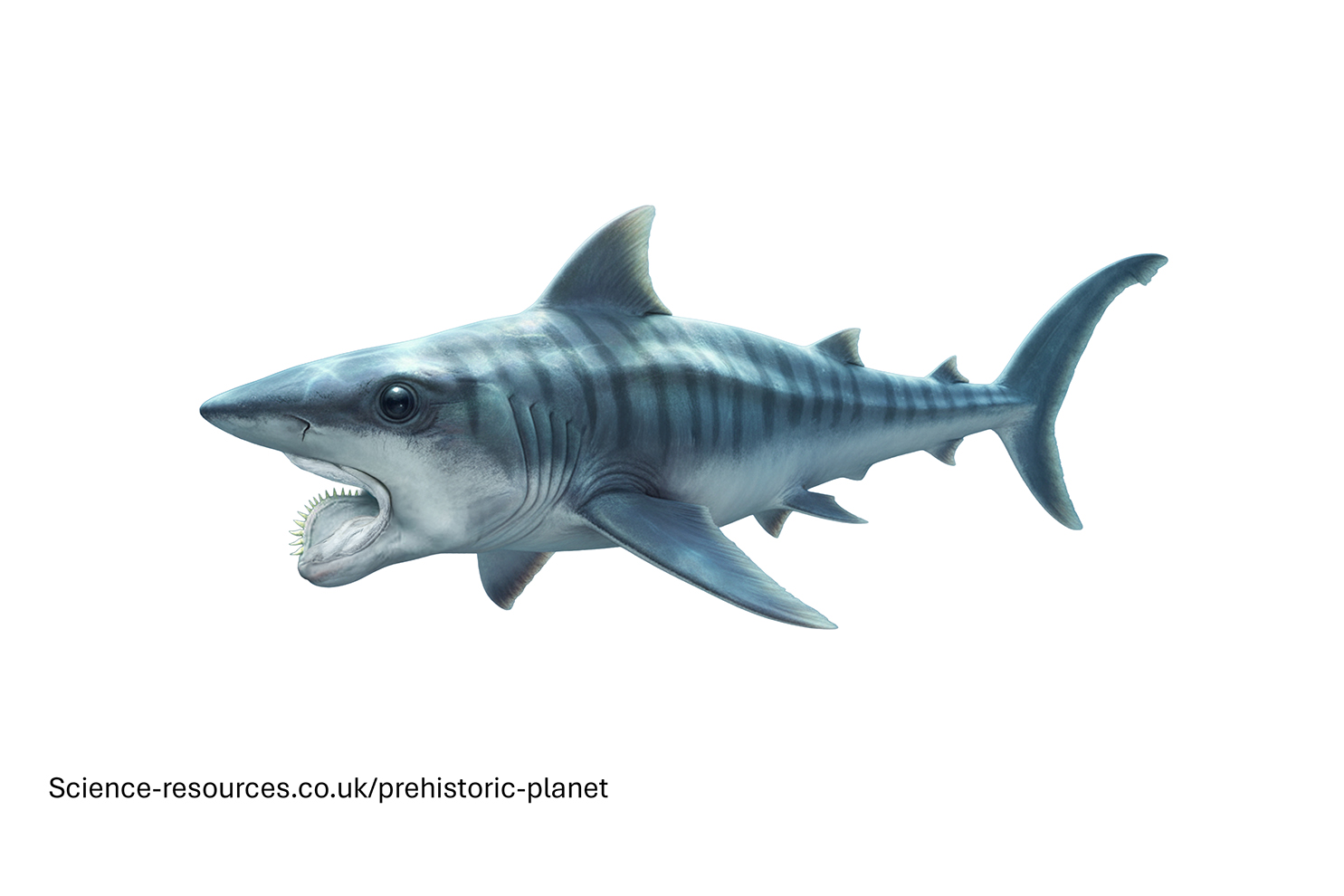
Helicoprion, a shark‑like fish famous for its bizarre spiral of teeth, known as a ‘tooth whorl’.
Helicoprion (The Buzzsaw Shark)
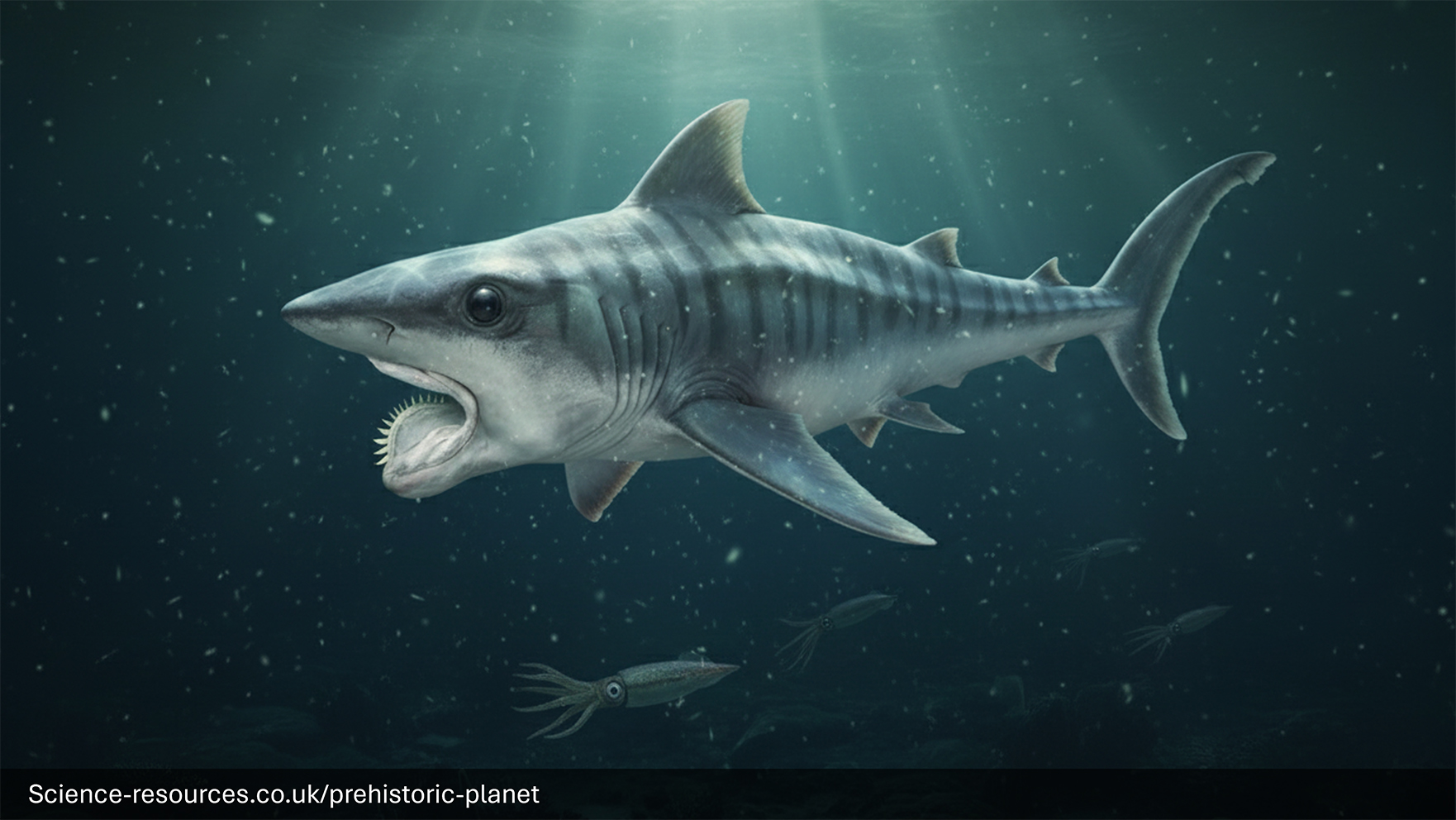 Helicoprion
What is Helicoprion?
Helicoprion was a strange and fascinating species of prehistoric shark-like fish that swam in the ancient seas over 250 million years ago. It is famous for its unique spiral jaw filled with teeth, making it one of the most unusual predators of its time.
How big was Helicoprion?
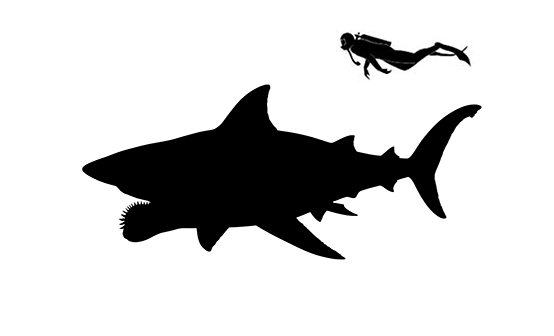
Helicoprion could grow up to 4–8 metres (13–26 feet) long—about the length of a large family car. Scientists believe it weighed several hundred kilograms, but exact estimates are difficult due to its unusual skeleton.
What did Helicoprion eat?
Helicoprion was a carnivore, preying mostly on soft-bodied marine animals like squid, fish, and possibly ammonites. Its spiral of sharp teeth worked like a circular saw, slicing through its prey with ease.
Helicoprion appearance
Helicoprion looked different from any shark alive today. It had a long, streamlined body, a cartilaginous skeleton, and a bizarre lower jaw shaped like a buzzsaw, packed with dozens of sharp teeth arranged in a tight spiral (called a “tooth whorl”).
Where did Helicoprion live?
Helicoprion lived from approximately 290 to 250 million years ago. Fossils of Helicoprion teeth have been discovered in Russia, the United States (Idaho, Utah, Nevada), Australia, and China. It lived in warm, shallow seas during the Permian period.
Interesting facts
- Its tooth whorl could be over 50 centimetres (20 inches) across—bigger than a bicycle wheel!
- Helicoprion means “spiral saw” in Greek.
- For over a century, scientists weren’t sure where the tooth spiral fit on its body.
- We now know it was in the lower jaw.
- Helicoprion is not a true shark but was closely related. It belonged to a group called eugeneodonts.
- Unlike Megalodon, Helicoprion’s skeleton was made of cartilage, so only the teeth are usually found as fossils.
Helicoprion Facts
Pronounced: heh-LEE-co-PRY-on
Name Means: "Spiral Saw"
Length: Up to 8 metres (26 feet)
Diet: Carnivore (Fish, Squid, Marine reptiles)
Time: Permian period (about 290 to 250 million years ago)
Habitat: Open Seas
Fossils Found: Worldwide (especially Russia, USA, Australia, China)
Which family of animals did Helicoprion belong to?
Helicoprion belonged to the family Helicoprionidae, which is part of the extinct order Eugeneodontida, a group of ancient cartilaginous fish related to modern chimaeras, not true sharks.
Helicoprion FAQ
Q1: What is Helicoprion?
Helicoprion is an extinct species of ancient fish with a spiral jaw, which lived long before the dinosaurs.
Q2: What did Helicoprion look like?
A2: Helicoprion had a long body and a unique spiral of teeth in its lower jaw, like a circular saw.
Q3: How big was Helicoprion?
A3: It could reach up to 8 metres (26 feet) in length.
Q4: What did Helicoprion eat?
A4: Helicoprion ate squid, fish, and other soft-bodied sea creatures.
Q5: Where did Helicoprion live?
A5: It lived in warm, shallow seas around what is now Russia, the USA, Australia, and China.
Q6: When did Helicoprion go extinct?
A6: Helicoprion went extinct around 250 million years ago, possibly due to the Permian mass extinction.
Q7: How strong was Helicoprion’s bite?
A7: Scientists think its spiral jaw could slice through tough shells and flesh, making it a top predator in its environment.
Q8: How is Helicoprion related to modern animals?
A8: Helicoprion is related to modern chimaeras (ghost sharks), but it is not a direct ancestor of today’s sharks.
Q9: Who discovered Helicoprion?
A9: The first fossil spiral teeth were found in the late 19th century in Russia, and the species was first described by scientists in 1899.
Q10: Are there any complete skeletons of Helicoprion?
A10: No, only the tooth whorls and some jaw cartilage have been found, because the rest of the skeleton was made of cartilage, which does not fossilise well.
You may also be intrested in:
- Extinct Animals: A-Z
- Dinosaurs: A-Z
Tags: How big was Helicoprion, Helicoprion, where did Helicoprion live, how long was Helicoprion, what does Helicoprion mean, Helicoprion facts
Previous: Hallucigenia
Up next: Ichthyostega
© 2012 science-resources.co.uk. All rights reserved | Design by W3layouts
Before Dinosaurs: Helicoprion
Helicoprion, a shark‑like fish famous for its bizarre spiral of teeth, known as a ‘tooth whorl’.
Helicoprion (The Buzzsaw Shark)
Helicoprion
What is Helicoprion?
Helicoprion was a strange and fascinating species of prehistoric shark-like fish that swam in the ancient seas over 250 million years ago. It is famous for its unique spiral jaw filled with teeth, making it one of the most unusual predators of its time.
How big was Helicoprion?
Helicoprion could grow up to 4–8 metres (13–26 feet) long—about the length of a large family car. Scientists believe it weighed several hundred kilograms, but exact estimates are difficult due to its unusual skeleton.
What did Helicoprion eat?
Helicoprion was a carnivore, preying mostly on soft-bodied marine animals like squid, fish, and possibly ammonites. Its spiral of sharp teeth worked like a circular saw, slicing through its prey with ease.
Helicoprion appearance
Helicoprion looked different from any shark alive today. It had a long, streamlined body, a cartilaginous skeleton, and a bizarre lower jaw shaped like a buzzsaw, packed with dozens of sharp teeth arranged in a tight spiral (called a “tooth whorl”).
Where did Helicoprion live?
Helicoprion lived from approximately 290 to 250 million years ago. Fossils of Helicoprion teeth have been discovered in Russia, the United States (Idaho, Utah, Nevada), Australia, and China. It lived in warm, shallow seas during the Permian period.
Interesting facts
- Its tooth whorl could be over 50 centimetres (20 inches) across—bigger than a bicycle wheel!
- Helicoprion means “spiral saw” in Greek.
- For over a century, scientists weren’t sure where the tooth spiral fit on its body.
- We now know it was in the lower jaw.
- Helicoprion is not a true shark but was closely related. It belonged to a group called eugeneodonts.
- Unlike Megalodon, Helicoprion’s skeleton was made of cartilage, so only the teeth are usually found as fossils.
Helicoprion Facts
Pronounced: heh-LEE-co-PRY-on
Name Means: "Spiral Saw"
Length: Up to 8 metres (26 feet)
Diet: Carnivore (Fish, Squid, Marine reptiles)
Time: Permian period (about 290 to 250 million years ago)
Habitat: Open Seas
Fossils Found: Worldwide (especially Russia, USA, Australia, China)
Which family of animals did Helicoprion belong to?
Helicoprion belonged to the family Helicoprionidae, which is part of the extinct order Eugeneodontida, a group of ancient cartilaginous fish related to modern chimaeras, not true sharks.
Helicoprion FAQ
Q1: What is Helicoprion?
Helicoprion is an extinct species of ancient fish with a spiral jaw, which lived long before the dinosaurs.
Q2: What did Helicoprion look like?
A2: Helicoprion had a long body and a unique spiral of teeth in its lower jaw, like a circular saw.
Q3: How big was Helicoprion?
A3: It could reach up to 8 metres (26 feet) in length.
Q4: What did Helicoprion eat?
A4: Helicoprion ate squid, fish, and other soft-bodied sea creatures.
Q5: Where did Helicoprion live?
A5: It lived in warm, shallow seas around what is now Russia, the USA, Australia, and China.
Q6: When did Helicoprion go extinct?
A6: Helicoprion went extinct around 250 million years ago, possibly due to the Permian mass extinction.
Q7: How strong was Helicoprion’s bite?
A7: Scientists think its spiral jaw could slice through tough shells and flesh, making it a top predator in its environment.
Q8: How is Helicoprion related to modern animals?
A8: Helicoprion is related to modern chimaeras (ghost sharks), but it is not a direct ancestor of today’s sharks.
Q9: Who discovered Helicoprion?
A9: The first fossil spiral teeth were found in the late 19th century in Russia, and the species was first described by scientists in 1899.
Q10: Are there any complete skeletons of Helicoprion?
A10: No, only the tooth whorls and some jaw cartilage have been found, because the rest of the skeleton was made of cartilage, which does not fossilise well.
Tags: How big was Helicoprion, Helicoprion, where did Helicoprion live, how long was Helicoprion, what does Helicoprion mean, Helicoprion facts
Previous: Hallucigenia
Up next: Ichthyostega
© 2012 science-resources.co.uk. All rights reserved | Design by W3layouts