Generative AI Notification: Some elements of this image have been created or enhanced using AI technology. To find out how we create all our prehistoric animals, click here.
Last updated: 24th January 2026
Before Dinosaurs: Tiktaalik
Tiktaalik, a remarkable Devonian fish‑tetrapod transitional creature, sporting both fins and early limb‑like bones.
Tiktaalik (The Transitional Fishapod)
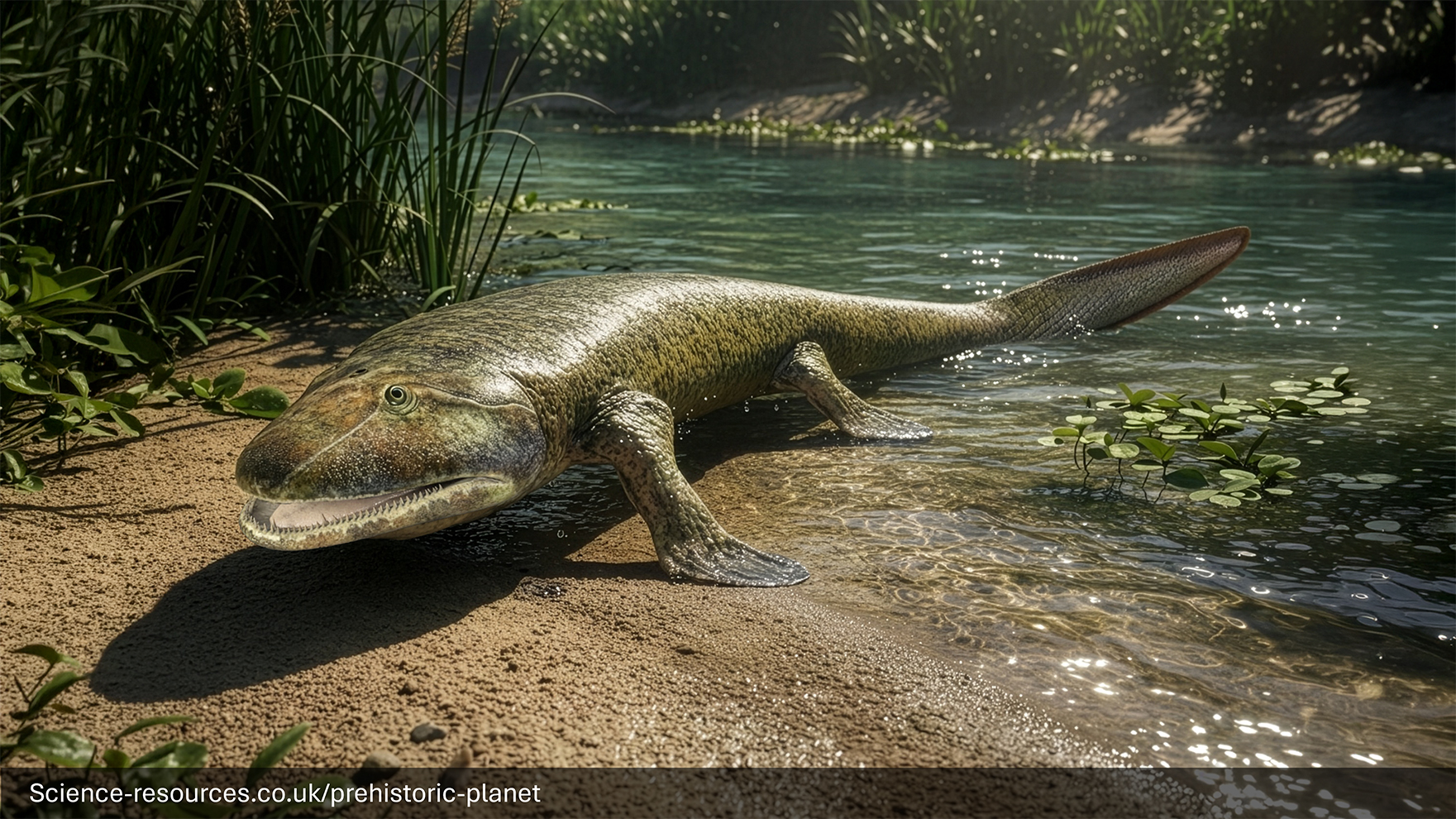 Scientists believe Tiktaalik spent much of its time near water’s edge, venturing onto land to escape predators or find food.
What is Tiktaalik?
Tiktaalik is one of the most famous “fishapods”, creatures that bridge the gap between fish and the very first animals to walk on land! This amazing animal lived over 375 million years ago and is celebrated for showing scientists how fins evolved into limbs. Tiktaalik had features of both fish and early tetrapods, making it a true evolutionary trailblazer.
How big was Tiktaalik?
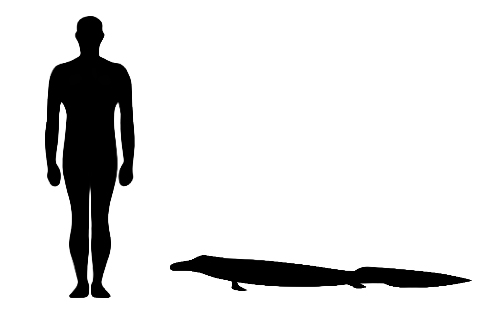
Tiktaalik could grow up to about 2.5 metres (over 8 feet) long. Its body was strong and streamlined, and it had a broad, flat head, ideal for living in shallow water and peeking above the surface.
What did Tiktaalik eat?
Tiktaalik was a carnivore. It likely hunted smaller fish, crustaceans, and possibly even insects or other small animals in the water. Its wide mouth and sharp teeth helped it snap up prey quickly.
Tiktaalik appearance
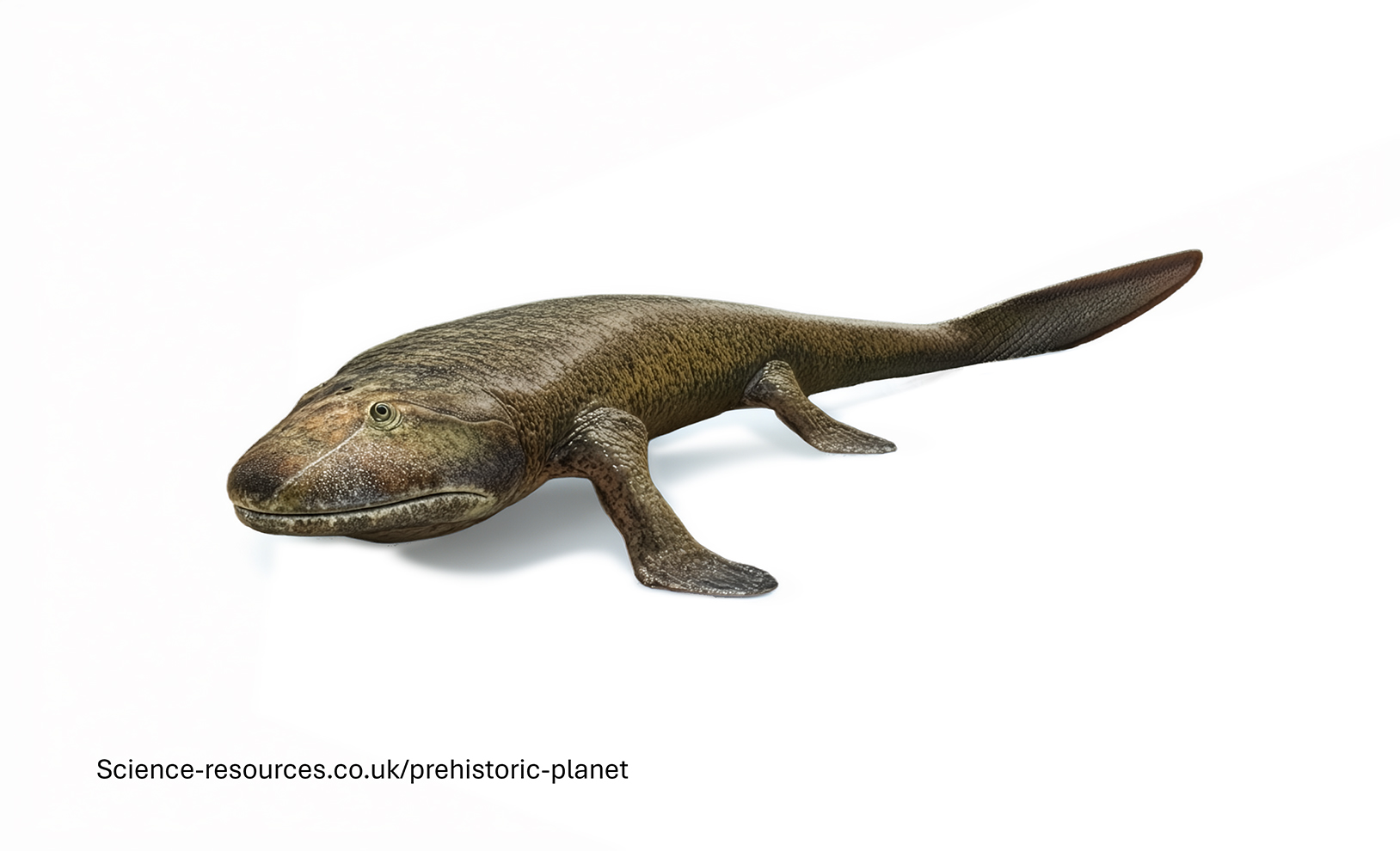
Tiktaalik looked like a cross between a giant fish and a crocodile. It had scales, fins with bones inside (like the beginnings of arms), a flat head with eyes on top, and a neck, a feature not seen in most fish. Its strong, lobed fins could support its body, letting it prop itself up in shallow water or even on mudflats.
Where did Tiktaalik live?
Tiktaalik lived in what is now Arctic Canada during the Late Devonian Period, about 375 million years ago. Back then, these places were covered in warm, swampy floodplains and shallow streams, perfect for a fishapod learning to explore land.
Could Tiktaalik Walk on Land?
Tiktaalik could not walk on land like modern amphibians, but it could push itself up and move in shallow water or muddy banks. Its fins had bones similar to the upper arm, forearm, and even a primitive wrist, so it could do a sort of “push-up” or crawl. Scientists believe Tiktaalik spent most of its time in or near water, only venturing onto land occasionally.
Interesting facts
- The name “Tiktaalik” comes from the Inuktitut language and means “large freshwater fish.”
- Tiktaalik had both gills and lungs, helping it survive in low-oxygen water and possibly breathe air.
- It lived long before the dinosaurs—over 130 million years earlier!
- Tiktaalik is extinct. Scientists only know about it from fossils.
Tiktaalik Facts
Pronounced: tik-TAH-lick
Name Means: "Large Freshwater Fish"
Length: Up to 2.5 metres (8 feet)
Diet: Carnivore (meat-eater)
Time: Late Devonian Period (about 375 million years ago)
Fossils Found: Arctic Canada
Which family of animals did Tiktaalik belong to?
Tiktaalik belonged to a group called “lobe-finned fish,” which also includes the ancestors of all tetrapods (four-limbed animals). Its family, Tiktaalikidae, is famous for showing the steps between fish and the earliest land vertebrates.
Why is Tiktaalik Important?
Tiktaalik helps us understand one of the greatest transitions in history, the move from life in water to life on land. It’s a vital link in the story of evolution, showing how fins became limbs and how animals began exploring new worlds.
Tiktaalik FAQ
Q1: What is a Tiktaalik?
A1: Tiktaalik was an ancient fish-like animal that lived about 375 million years ago. It’s famous for being a transitional form between fish and land animals.
Q2: What did Tiktaalik look like?
A2: It looked like a blend between a fish and a crocodile, with fins that had bones like arms and a flat head with eyes on top.
Q3: How big was Tiktaalik?
A3: It could grow up to 2.5 metres (8 feet) long.
Q4: What did Tiktaalik eat?
A4: It hunted small fish and animals in the water.
Q5: Where did Tiktaalik live?
A5: It lived in warm, swampy waters in what is now the Canadian Arctic.
Q6: When did Tiktaalik go extinct?
A6: It went extinct over 360 million years ago, as later tetrapods evolved.
Q7: How is Tiktaalik related to modern animals?
A7: Tiktaalik is a distant ancestor of amphibians, reptiles, birds, and mammals—including us!
Q8: Who discovered Tiktaalik?
A8: Tiktaalik fossils were first discovered in 2004 by a team of scientists in Nunavut, Canada.
Q9: Are there any complete skeletons of Tiktaalik?
A9: Several well-preserved fossils have been found, allowing scientists to study its bones and learn about its lifestyle.
You may also be intrested in:
- Extinct Animals: A-Z
- Dinosaurs: A-Z
Tags: How big was Tiktaalik, Tiktaalik, where did Tiktaalik live, how long was Tiktaalik, what does Tiktaalik mean, Tiktaalik facts
Previous: Tanystropheus
Up next: Trilobite
© 2012 science-resources.co.uk. All rights reserved | Design by W3layouts
Before Dinosaurs: Tiktaalik
Tiktaalik, a remarkable Devonian fish‑tetrapod transitional creature, sporting both fins and early limb‑like bones.
Tiktaalik (The Transitional Fishapod)
Scientists believe Tiktaalik spent much of its time near water’s edge, venturing onto land to escape predators or find food.
What is Tiktaalik?
Tiktaalik is one of the most famous “fishapods”, creatures that bridge the gap between fish and the very first animals to walk on land! This amazing animal lived over 375 million years ago and is celebrated for showing scientists how fins evolved into limbs. Tiktaalik had features of both fish and early tetrapods, making it a true evolutionary trailblazer.
How big was Tiktaalik?
Tiktaalik could grow up to about 2.5 metres (over 8 feet) long. Its body was strong and streamlined, and it had a broad, flat head, ideal for living in shallow water and peeking above the surface.
What did Tiktaalik eat?
Tiktaalik was a carnivore. It likely hunted smaller fish, crustaceans, and possibly even insects or other small animals in the water. Its wide mouth and sharp teeth helped it snap up prey quickly.
Tiktaalik appearance
Tiktaalik looked like a cross between a giant fish and a crocodile. It had scales, fins with bones inside (like the beginnings of arms), a flat head with eyes on top, and a neck, a feature not seen in most fish. Its strong, lobed fins could support its body, letting it prop itself up in shallow water or even on mudflats.
Where did Tiktaalik live?
Tiktaalik lived in what is now Arctic Canada during the Late Devonian Period, about 375 million years ago. Back then, these places were covered in warm, swampy floodplains and shallow streams, perfect for a fishapod learning to explore land.
Could Tiktaalik Walk on Land?
Tiktaalik could not walk on land like modern amphibians, but it could push itself up and move in shallow water or muddy banks. Its fins had bones similar to the upper arm, forearm, and even a primitive wrist, so it could do a sort of “push-up” or crawl. Scientists believe Tiktaalik spent most of its time in or near water, only venturing onto land occasionally.
Interesting facts
- The name “Tiktaalik” comes from the Inuktitut language and means “large freshwater fish.”
- Tiktaalik had both gills and lungs, helping it survive in low-oxygen water and possibly breathe air.
- It lived long before the dinosaurs—over 130 million years earlier!
- Tiktaalik is extinct. Scientists only know about it from fossils.
Tiktaalik Facts
Pronounced: tik-TAH-lick
Name Means: "Large Freshwater Fish"
Length: Up to 2.5 metres (8 feet)
Diet: Carnivore (meat-eater)
Time: Late Devonian Period (about 375 million years ago)
Fossils Found: Arctic Canada
Which family of animals did Tiktaalik belong to?
Tiktaalik belonged to a group called “lobe-finned fish,” which also includes the ancestors of all tetrapods (four-limbed animals). Its family, Tiktaalikidae, is famous for showing the steps between fish and the earliest land vertebrates.
Why is Tiktaalik Important?
Tiktaalik helps us understand one of the greatest transitions in history, the move from life in water to life on land. It’s a vital link in the story of evolution, showing how fins became limbs and how animals began exploring new worlds.
Tiktaalik FAQ
Q1: What is a Tiktaalik?
A1: Tiktaalik was an ancient fish-like animal that lived about 375 million years ago. It’s famous for being a transitional form between fish and land animals.
Q2: What did Tiktaalik look like?
A2: It looked like a blend between a fish and a crocodile, with fins that had bones like arms and a flat head with eyes on top.
Q3: How big was Tiktaalik?
A3: It could grow up to 2.5 metres (8 feet) long.
Q4: What did Tiktaalik eat?
A4: It hunted small fish and animals in the water.
Q5: Where did Tiktaalik live?
A5: It lived in warm, swampy waters in what is now the Canadian Arctic.
Q6: When did Tiktaalik go extinct?
A6: It went extinct over 360 million years ago, as later tetrapods evolved.
Q7: How is Tiktaalik related to modern animals?
A7: Tiktaalik is a distant ancestor of amphibians, reptiles, birds, and mammals—including us!
Q8: Who discovered Tiktaalik?
A8: Tiktaalik fossils were first discovered in 2004 by a team of scientists in Nunavut, Canada.
Q9: Are there any complete skeletons of Tiktaalik?
A9: Several well-preserved fossils have been found, allowing scientists to study its bones and learn about its lifestyle.
Tags: How big was Tiktaalik, Tiktaalik, where did Tiktaalik live, how long was Tiktaalik, what does Tiktaalik mean, Tiktaalik facts
Previous: Tanystropheus
Up next: Trilobite
© 2012 science-resources.co.uk. All rights reserved | Design by W3layouts