Generative AI Notification: Some elements of this image have been created or enhanced using AI technology. To find out how we create all our prehistoric animals, click here.
Last updated: 24th January 2026
Before Dinosaurs: Coelacanth
Coelacanth, an are ancient lobe‑finned fish that first appeared hundreds of millions of years ago.
Coelacanth (The Ancient Living Fossil)
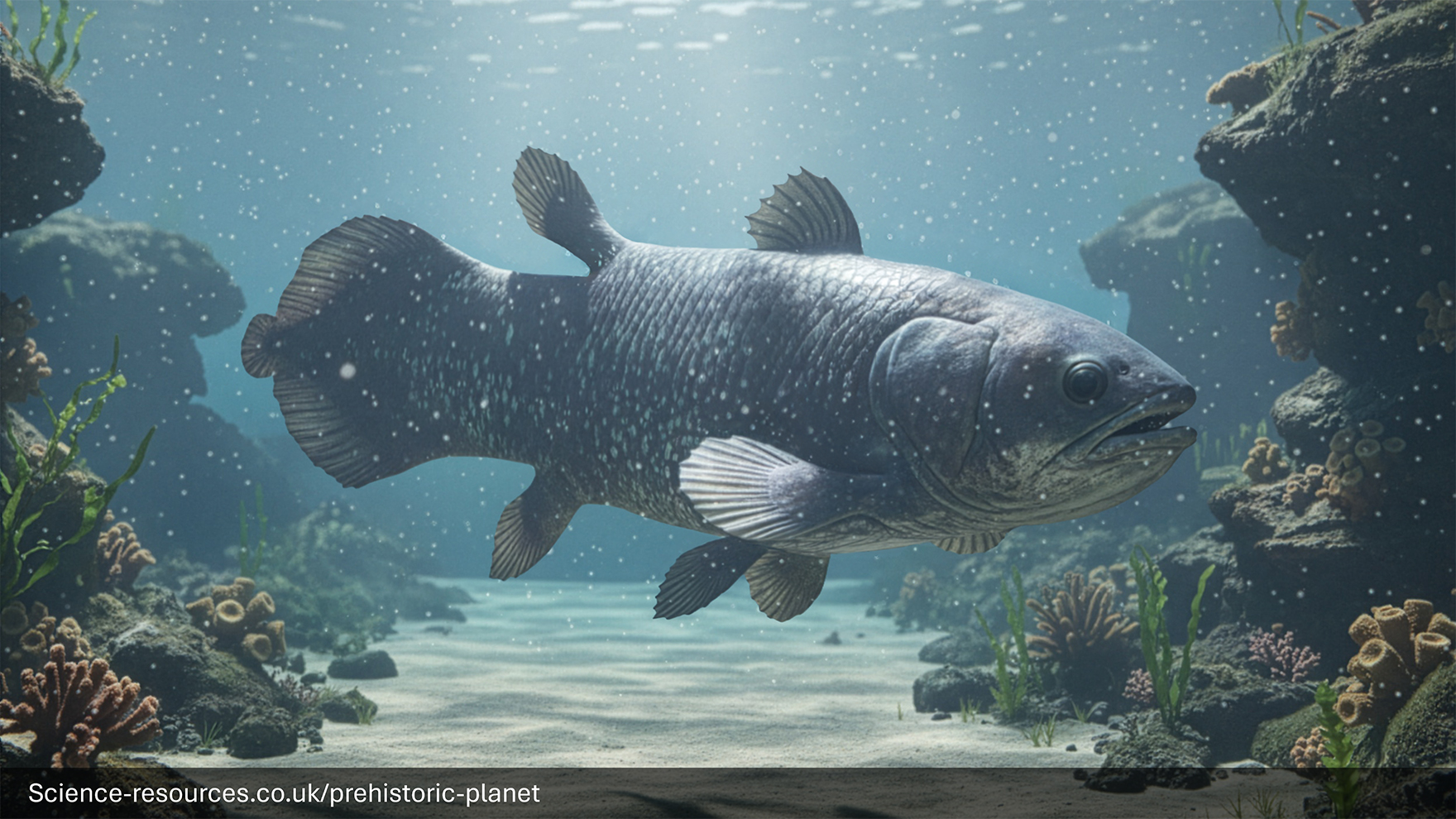 Coelacanth
What is a Coelacanth?
Coelacanth is a fascinating ancient fish that was once thought to be extinct. It belongs to a group called lobe-finned fishes, which are distant relatives of all land vertebrates—including humans! Coelacanths are sometimes called “living fossils” because they’ve changed very little over hundreds of millions of years.
How big was Coelacanth?
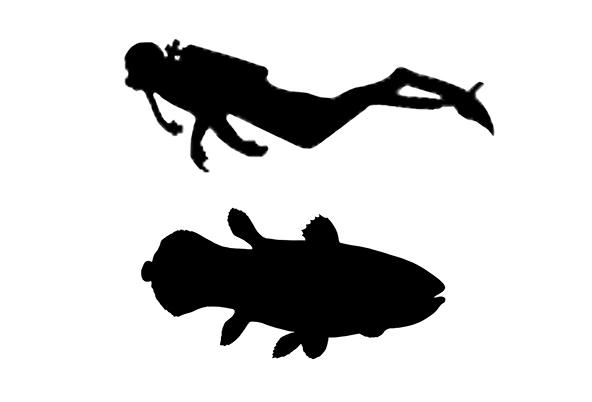
Coelacanths can grow up to 2 metres (6.5 feet) long, about the size of a tall adult! They have thick, scaly bodies and distinctive lobed fins that look a bit like paddles, helping them move through the water in a unique, slow-motion way.
What did Coelacanth eat?
Coelacanths are carnivores, feeding on smaller fish, squid, and other sea animals. They hunt at night, using their powerful jaws and sharp teeth to catch prey near the ocean floor.
Coelacanth appearance
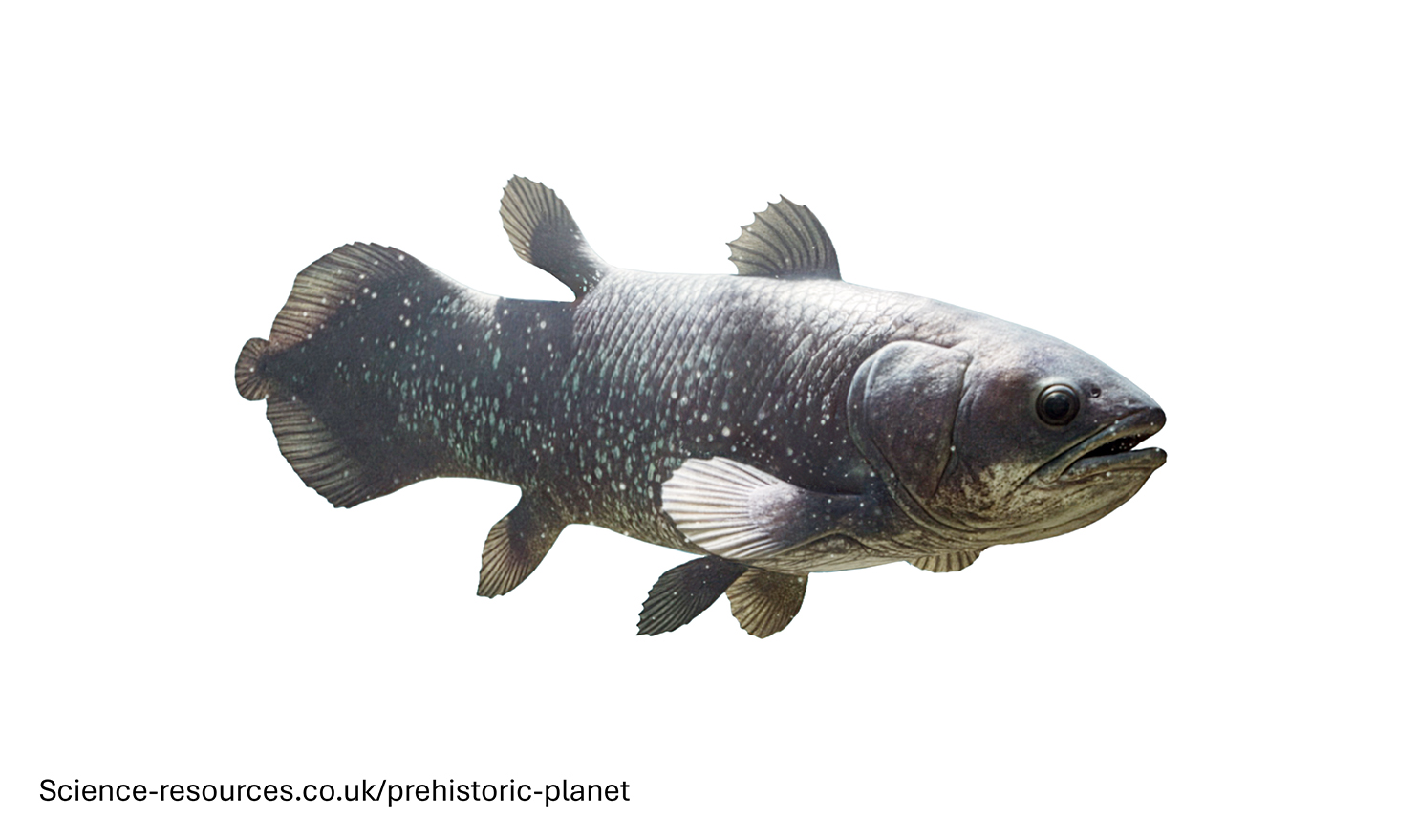
Coelacanths have a chunky, blue-grey body covered with thick scales. Their most remarkable feature is their paired lobed fins, which move in an alternating pattern like legs. They also have a unique tail with three lobes, unlike most other fish.
Where did Coelacanth live?
Modern coelacanths are found off the coasts of eastern Africa and Indonesia, living in deep, dark waters far below the surface. They prefer caves and rocky ledges, hiding away from predators and sunlight.
Interesting facts
- Coelacanths were thought to have gone extinct 66 million years ago, until one was discovered alive in 1938!
- The name "Coelacanth" means "hollow spine" in Greek, referring to their unique backbone.
- Coelacanths can live up to 60 years or more.
- They give birth to live young (no eggs!).
- Coelacanths are extremely rare, with only a few hundred known to exist.
Coelacanth Facts
Pronounced: SEE-la-kanth
Name Means: "Hollow Spine"
Length: Up to 2 metres (6.5 feet)
Weight: Up to 90 kg (200 lbs)
Diet: Carnivore (meat-eater)
Time: First appeared around 400 million years ago; still alive today!
Fossils Found: Worldwide, especially Africa, Madagascar, and Indonesia
Which family of animals did Coelacanth belong to?
Coelacanths belong to the family Latimeriidae, a group of ancient lobe-finned fishes. They are distant relatives of all amphibians, reptiles, birds, and mammals.
What other animals lived at the same time as Coelacanth?
Early coelacanths swam alongside giant sea scorpions, trilobites, and the first sharks during the Devonian Period. Today, they share the ocean with modern fish, sharks, and deep-sea creatures.
Coelacanth FAQ
Q1: What is Coelacanth?
A1: Coelacanth is an ancient lobe-finned fish that was believed to be extinct but is still alive today. It’s known as a “living fossil.”
Q2: What does Coelacanth look like?
A2: It has a thick, scaly body, lobed fins, and a three-lobed tail. Its blue-grey colour helps it blend into the deep ocean.
Q3: How big is Coelacanth?
A3: Coelacanths can reach up to 2 metres (6.5 feet) in length.
Q4: What does Coelacanth eat?
A4: It hunts smaller fish and squid near the ocean floor at night.
Q5: Where does Coelacanth live?
A5: Coelacanths live in deep, rocky caves off the coasts of Africa and Indonesia.
Q6: When was Coelacanth rediscovered?
A6: A live coelacanth was found off South Africa in 1938, surprising scientists who thought they were extinct.
Q7: How does Coelacanth swim?
A7: It moves its lobed fins like legs, in an alternating pattern, giving it a strange, slow-motion “walking” swim.
Q8: How is Coelacanth related to modern animals?
A8: Coelacanths are distant relatives of all land vertebrates, thanks to their lobed fins.
Q9: Who discovered the living Coelacanth?
A9: The first living coelacanth was identified by Marjorie Courtenay-Latimer, a South African museum curator, in 1938.
Q10: Are Coelacanths endangered?
A10: Yes, coelacanths are very rare and are considered endangered due to their small population and limited habitat. ilise.
You may also be intrested in:
- Extinct Animals: A-Z
- Dinosaurs: A-Z
Tags: How big was Cotylorhynchus, Cotylorhynchus, where did Cotylorhynchus live, how long was Cotylorhynchus, what does Coelacanth mean, Coelacanth facts
Previous: Cambropachycope
Up next: Cotylorhynchus
© 2012 science-resources.co.uk. All rights reserved | Design by W3layouts
Before Dinosaurs: Coelacanth
Coelacanth, an are ancient lobe‑finned fish that first appeared hundreds of millions of years ago.
Coelacanth (The Ancient Living Fossil)
Coelacanth
What is a Coelacanth?
Coelacanth is a fascinating ancient fish that was once thought to be extinct. It belongs to a group called lobe-finned fishes, which are distant relatives of all land vertebrates—including humans! Coelacanths are sometimes called “living fossils” because they’ve changed very little over hundreds of millions of years.
How big was Coelacanth?
Coelacanths can grow up to 2 metres (6.5 feet) long, about the size of a tall adult! They have thick, scaly bodies and distinctive lobed fins that look a bit like paddles, helping them move through the water in a unique, slow-motion way.
What did Coelacanth eat?
Coelacanths are carnivores, feeding on smaller fish, squid, and other sea animals. They hunt at night, using their powerful jaws and sharp teeth to catch prey near the ocean floor.
Coelacanth appearance
Coelacanths have a chunky, blue-grey body covered with thick scales. Their most remarkable feature is their paired lobed fins, which move in an alternating pattern like legs. They also have a unique tail with three lobes, unlike most other fish.
Where did Coelacanth live?
Modern coelacanths are found off the coasts of eastern Africa and Indonesia, living in deep, dark waters far below the surface. They prefer caves and rocky ledges, hiding away from predators and sunlight.
Interesting facts
- Coelacanths were thought to have gone extinct 66 million years ago, until one was discovered alive in 1938!
- The name "Coelacanth" means "hollow spine" in Greek, referring to their unique backbone.
- Coelacanths can live up to 60 years or more.
- They give birth to live young (no eggs!).
- Coelacanths are extremely rare, with only a few hundred known to exist.
Coelacanth Facts
Pronounced: SEE-la-kanth
Name Means: "Hollow Spine"
Length: Up to 2 metres (6.5 feet)
Weight: Up to 90 kg (200 lbs)
Diet: Carnivore (meat-eater)
Time: First appeared around 400 million years ago; still alive today!
Fossils Found: Worldwide, especially Africa, Madagascar, and Indonesia
Which family of animals did Coelacanth belong to?
Coelacanths belong to the family Latimeriidae, a group of ancient lobe-finned fishes. They are distant relatives of all amphibians, reptiles, birds, and mammals.
What other animals lived at the same time as Coelacanth?
Early coelacanths swam alongside giant sea scorpions, trilobites, and the first sharks during the Devonian Period. Today, they share the ocean with modern fish, sharks, and deep-sea creatures.
Coelacanth FAQ
Q1: What is Coelacanth?
A1: Coelacanth is an ancient lobe-finned fish that was believed to be extinct but is still alive today. It’s known as a “living fossil.”
Q2: What does Coelacanth look like?
A2: It has a thick, scaly body, lobed fins, and a three-lobed tail. Its blue-grey colour helps it blend into the deep ocean.
Q3: How big is Coelacanth?
A3: Coelacanths can reach up to 2 metres (6.5 feet) in length.
Q4: What does Coelacanth eat?
A4: It hunts smaller fish and squid near the ocean floor at night.
Q5: Where does Coelacanth live?
A5: Coelacanths live in deep, rocky caves off the coasts of Africa and Indonesia.
Q6: When was Coelacanth rediscovered?
A6: A live coelacanth was found off South Africa in 1938, surprising scientists who thought they were extinct.
Q7: How does Coelacanth swim?
A7: It moves its lobed fins like legs, in an alternating pattern, giving it a strange, slow-motion “walking” swim.
Q8: How is Coelacanth related to modern animals?
A8: Coelacanths are distant relatives of all land vertebrates, thanks to their lobed fins.
Q9: Who discovered the living Coelacanth?
A9: The first living coelacanth was identified by Marjorie Courtenay-Latimer, a South African museum curator, in 1938.
Q10: Are Coelacanths endangered?
A10: Yes, coelacanths are very rare and are considered endangered due to their small population and limited habitat. ilise.
Tags: How big was Cotylorhynchus, Cotylorhynchus, where did Cotylorhynchus live, how long was Cotylorhynchus, what does Coelacanth mean, Coelacanth facts
Previous: Cambropachycope
Up next: Cotylorhynchus
© 2012 science-resources.co.uk. All rights reserved | Design by W3layouts