Last updated: 24th January 2026
Before Dinosaurs: Permian Period
Life During the Permian Period
The Permian period (around 299–252 million years ago) was a time of dramatic change on Earth. At the start of the period, life was thriving, and Earth’s landmasses were gradually coming together to form a single giant supercontinent called Pangaea. This huge landmass created a wide range of environments, from dry deserts to coastal wetlands.
On land, new and varied animals evolved. Reptiles became more diverse and successful, and a group of animals called synapsids, which are distant relatives of mammals, began to dominate. One well‑known synapsid is Dimetrodon, recognisable by the large sail on its back, although it lived long before the first dinosaurs. Later in the Permian, more advanced synapsids such as therapsids appeared, showing features that would eventually lead to early mammals.
Insects continued to flourish, and plants like conifers and seed ferns became more widespread, helping shape Earth’s first large-scale forests adapted to drier climates.
The oceans were equally full of life. Coral reefs rebuilt themselves after earlier extinctions, and groups like ammonites, brachiopods and early sharks were common. But as the Permian progressed, the climate became harsher, with huge swings in temperature and changes in sea level.
The period ended with the largest mass extinction in Earth’s history, known as the Permian–Triassic extinction event. Around 90–95% of marine species and many land species disappeared. Although this was a devastating time, it paved the way for new groups of animals, including the dinosaurs, to evolve in the following Triassic period.
The Permian period reminds us that life on Earth can change dramatically, and that major environmental shifts can reshape the planet’s ecosystems.
Permian Period (299–252 Ma)
Key features:
Diversification of early synapsids; ends in the largest extinction in Earth’s history.
- Dimetrodon: Non mammalian synapsid predator.
- Edaphosaurus: Continues into Early Permian.
- Cotylorhynchus: Common in Early–Middle Permian.
- Diplocaulus: Survives into Permian.
- Estemmenosuchus: Notable “crowned” therapsid.
- Inostrancevia: Giant gorgonopsid predator.
- Scutosaurus: Large armoured pareiasaur.
- Helicoprion: Continues through Permian seas.
- Coelacanth: Survives the Permian extinction.
- Trilobites: Final extinction at the end Permian mass extinction.
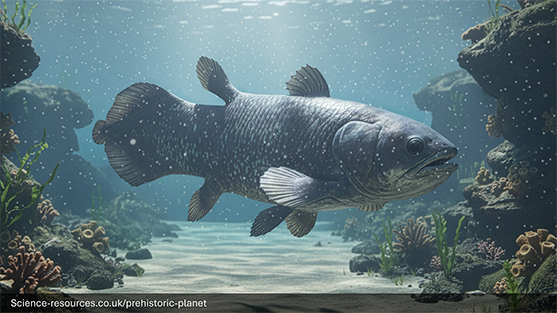
Coelacanths are ancient lobe‑finned fish that first appeared hundreds of millions of years ago. Thought extinct until the 20th century, they possess limb‑like fins and a distinctive tail, offering insights into early vertebrate evolution.
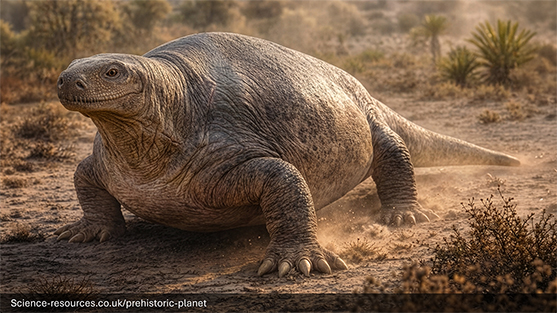
Cotylorhynchus was a massive, barrel‑bodied synapsid from the Permian period. Despite its huge size, it had a tiny head and likely fed on low‑growing plants, making it a slow‑moving but abundant herbivore.
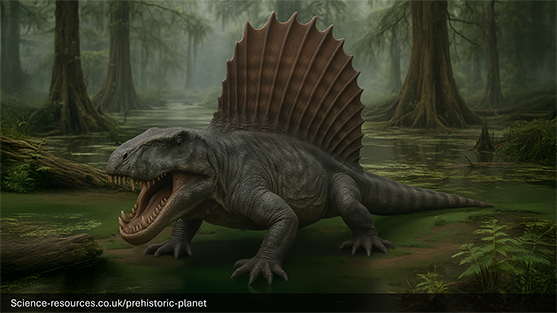
Dimetrodon was a sail‑backed synapsid that lived long before dinosaurs, known for its large, serrated teeth and prominent dorsal sail. It was a top predator of the Early Permian, hunting amphibians and early reptiles.
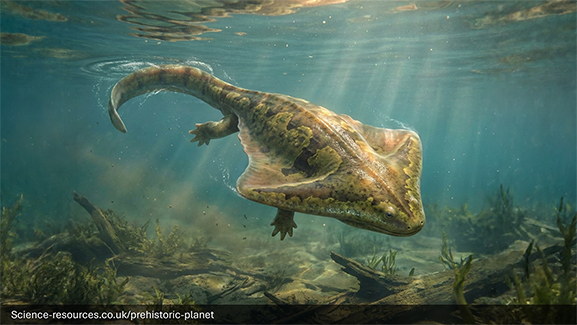
Diplocaulus was a boomerang-headed amphibian that lived long before dinosaurs, known for its wide, horn-like skull and streamlined body. It inhabited freshwater rivers and swamps of the Permian, where its unusual head shape may have helped with swimming and defense from predators.
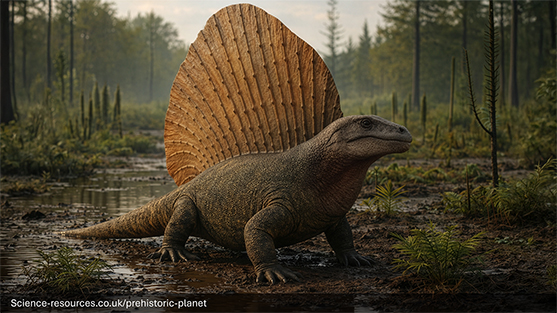
Edaphosaurus was an early herbivorous synapsid recognised by its tall, cross‑barred sail. Living during the Permian, it browsed on tough vegetation and was one of the first large, specialised plant‑eaters on land.
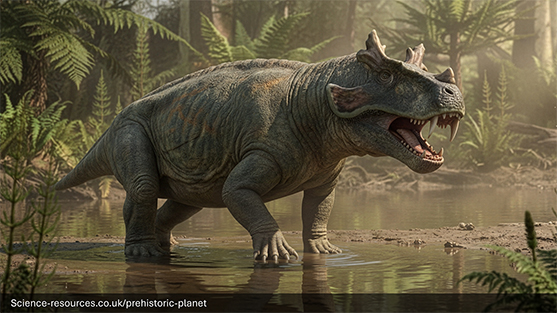
Estemmenosuchus was a bulky Permian synapsid with elaborate horn‑like skull projections. Likely a herbivore or omnivore, it roamed the ancient Russian floodplains and stood out due to its unique and ornate headgear.
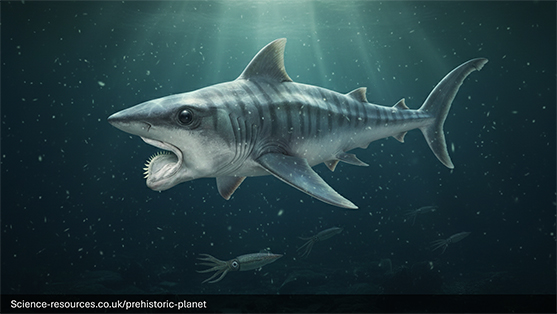
Helicoprion was a shark‑like fish famous for its bizarre spiral of teeth, known as a ‘tooth whorl’. Living in Permian oceans, it probably used this curled blade to slice soft‑bodied prey such as squid‑like creatures.
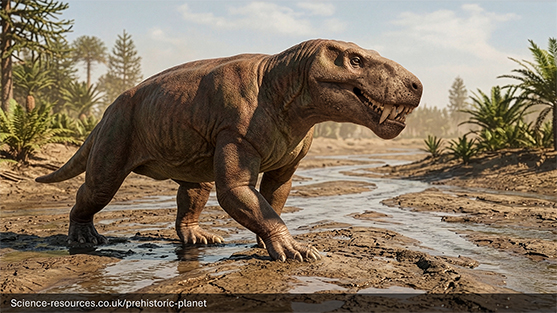
Inostrancevia was a massive gorgonopsid predator from the Late Permian, equipped with long sabre‑like canines and a muscular body. It was one of the last dominant predators before the end‑Permian extinction.

Mesosaurus was a small prehistoric reptile that lived about 280 million years ago, long before dinosaurs, during the early Permian period.
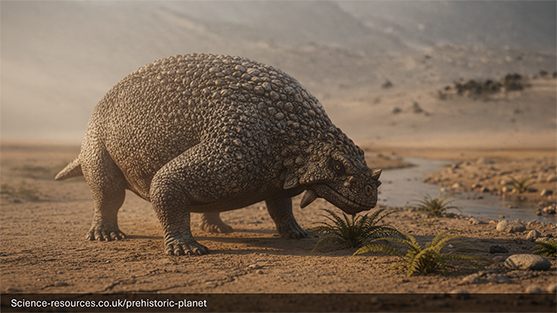
Scutosaurus was a heavily built, armour‑plated pareiasaur from the Late Permian. Its bony plates and robust body protected it from predators as it grazed on tough, dry vegetation.
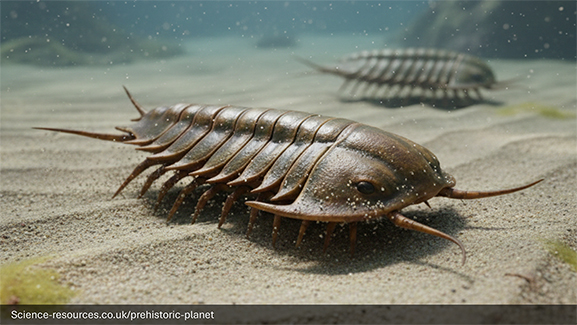
Trilobite was a hard-shelled arthropod that lived long before dinosaurs, known for its segmented body and compound eyes. It crawled along the seafloor of ancient oceans, feeding on detritus and small prey, and became one of the most diverse and widespread animals of the Paleozoic.
You may also be intrested in:
- Extinct Animals: A-Z
- Dinosaurs: A-Z
Tags: Permian Period, synapsids, Dimetrodon, prehistoric reptiles, Pangaea, Palaeozoic Era.
© 2012 science-resources.co.uk. All rights reserved | Design by W3layouts
Before Dinosaurs: Permian Period
Life During the Permian Period
The Permian period (around 299–252 million years ago) was a time of dramatic change on Earth. At the start of the period, life was thriving, and Earth’s landmasses were gradually coming together to form a single giant supercontinent called Pangaea. This huge landmass created a wide range of environments, from dry deserts to coastal wetlands.
On land, new and varied animals evolved. Reptiles became more diverse and successful, and a group of animals called synapsids, which are distant relatives of mammals, began to dominate. One well‑known synapsid is Dimetrodon, recognisable by the large sail on its back, although it lived long before the first dinosaurs. Later in the Permian, more advanced synapsids such as therapsids appeared, showing features that would eventually lead to early mammals.
Insects continued to flourish, and plants like conifers and seed ferns became more widespread, helping shape Earth’s first large-scale forests adapted to drier climates.
The oceans were equally full of life. Coral reefs rebuilt themselves after earlier extinctions, and groups like ammonites, brachiopods and early sharks were common. But as the Permian progressed, the climate became harsher, with huge swings in temperature and changes in sea level.
The period ended with the largest mass extinction in Earth’s history, known as the Permian–Triassic extinction event. Around 90–95% of marine species and many land species disappeared. Although this was a devastating time, it paved the way for new groups of animals, including the dinosaurs, to evolve in the following Triassic period.
The Permian period reminds us that life on Earth can change dramatically, and that major environmental shifts can reshape the planet’s ecosystems.
Permian Period (299–252 Ma)
Key features:
Diversification of early synapsids; ends in the largest extinction in Earth’s history.
- Dimetrodon: Non mammalian synapsid predator.
- Edaphosaurus: Continues into Early Permian.
- Cotylorhynchus: Common in Early–Middle Permian.
- Diplocaulus: Survives into Permian.
- Estemmenosuchus: Notable “crowned” therapsid.
- Inostrancevia: Giant gorgonopsid predator.
- Scutosaurus: Large armoured pareiasaur.
- Helicoprion: Continues through Permian seas.
- Coelacanth: Survives the Permian extinction.
- Trilobites: Final extinction at the end Permian mass extinction.
Coelacanths are ancient lobe‑finned fish that first appeared hundreds of millions of years ago. Thought extinct until the 20th century, they possess limb‑like fins and a distinctive tail, offering insights into early vertebrate evolution.
Cotylorhynchus was a massive, barrel‑bodied synapsid from the Permian period. Despite its huge size, it had a tiny head and likely fed on low‑growing plants, making it a slow‑moving but abundant herbivore.
Dimetrodon was a sail‑backed synapsid that lived long before dinosaurs, known for its large, serrated teeth and prominent dorsal sail. It was a top predator of the Early Permian, hunting amphibians and early reptiles.
Diplocaulus was a boomerang-headed amphibian that lived long before dinosaurs, known for its wide, horn-like skull and streamlined body. It inhabited freshwater rivers and swamps of the Permian, where its unusual head shape may have helped with swimming and defense from predators.
Edaphosaurus was an early herbivorous synapsid recognised by its tall, cross‑barred sail. Living during the Permian, it browsed on tough vegetation and was one of the first large, specialised plant‑eaters on land.
Estemmenosuchus was a bulky Permian synapsid with elaborate horn‑like skull projections. Likely a herbivore or omnivore, it roamed the ancient Russian floodplains and stood out due to its unique and ornate headgear.
Helicoprion was a shark‑like fish famous for its bizarre spiral of teeth, known as a ‘tooth whorl’. Living in Permian oceans, it probably used this curled blade to slice soft‑bodied prey such as squid‑like creatures.
Inostrancevia was a massive gorgonopsid predator from the Late Permian, equipped with long sabre‑like canines and a muscular body. It was one of the last dominant predators before the end‑Permian extinction.
Mesosaurus was a small prehistoric reptile that lived about 280 million years ago, long before dinosaurs, during the early Permian period.
Scutosaurus was a heavily built, armour‑plated pareiasaur from the Late Permian. Its bony plates and robust body protected it from predators as it grazed on tough, dry vegetation.
Trilobite was a hard-shelled arthropod that lived long before dinosaurs, known for its segmented body and compound eyes. It crawled along the seafloor of ancient oceans, feeding on detritus and small prey, and became one of the most diverse and widespread animals of the Paleozoic.
Tags: Permian Period, synapsids, Dimetrodon, prehistoric reptiles, Pangaea, Palaeozoic Era.
© 2012 science-resources.co.uk. All rights reserved | Design by W3layouts