Generative AI Notification: Some elements of this image have been created or enhanced using AI technology. To find out how we create all our prehistoric animals, click here.
Last updated: 24th January 2026
Before Dinosaurs: Trilobites
Trilobites, hard-shelled arthropods that lived long before dinosaurs, known for their segmented body and compound eyes.
Trilobite (Three Lobes)
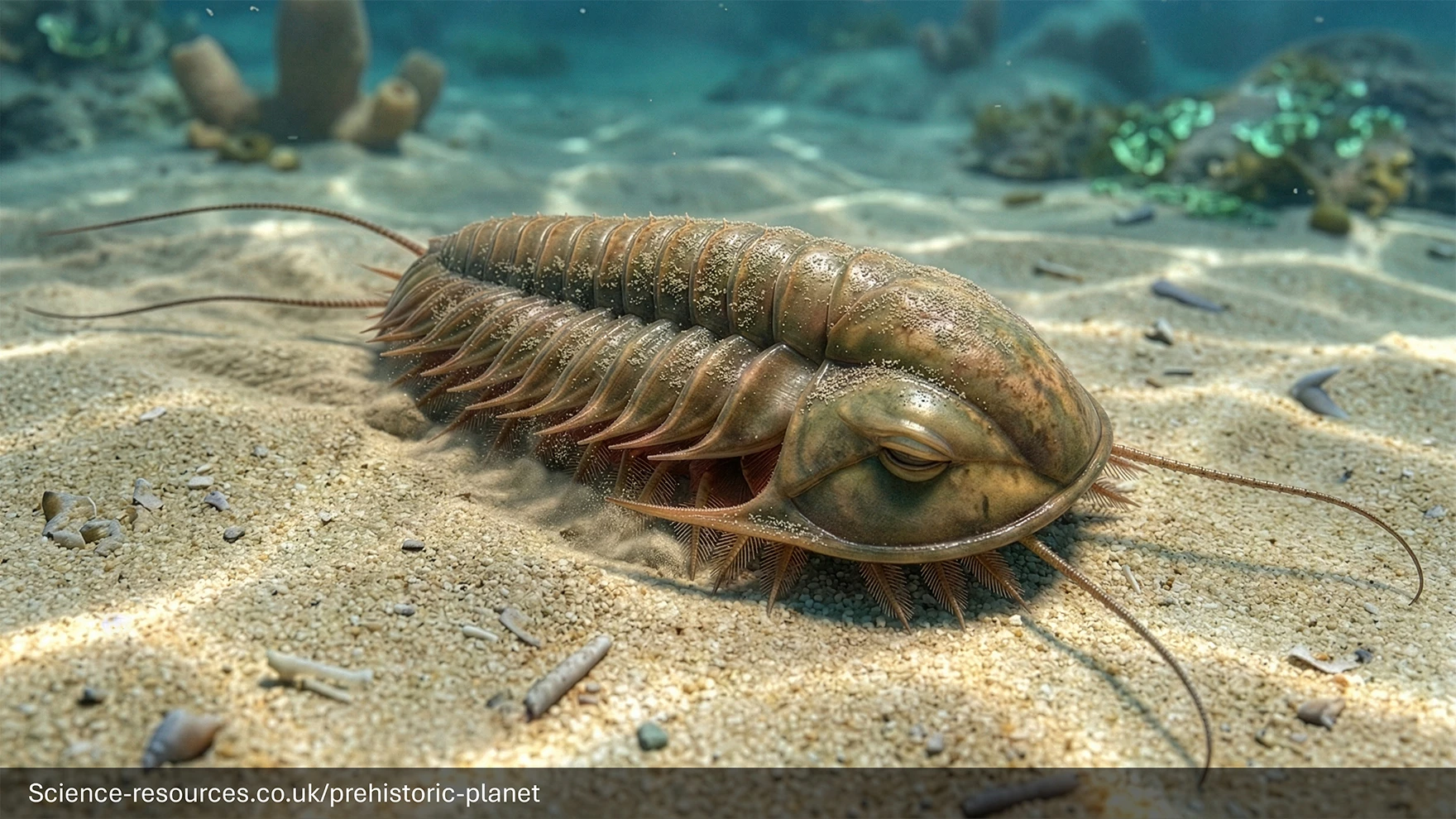 Olenoides, a genus of trilobite from the Cambrian period
Trilobites: The ancient armored tanks of the ocean
Before dinosaurs ever walked the Earth, the oceans were ruled by a group of ultimate survivors: the Trilobites. These fascinating creatures lived for nearly 300 million years, making them one of the most successful animal groups in history.
What exactly is a Trilobite?
Trilobites were marine arthropods. If you’ve ever seen a crab, a spider, or a woodlouse (pill bug), you’re looking at their distant modern relatives². Trilobites were among the first animals on Earth to develop complex eyes and hard outer shells.
The "Three Lobes" Meaning
The name "trilobite" comes from their body structure. Their hard shells were divided into three main sections: a head, a body, and a tail.
How big were Trilobites?
Trilobites weren't just one-size-fits-all. They were as diverse as modern-day mammals! The Scale: Most were about 2–7 cm long³, but some were as tiny as a fingernail (1 cm), while giants like Isotelus could grow up to 70 cm (over 2 feet)⁴.
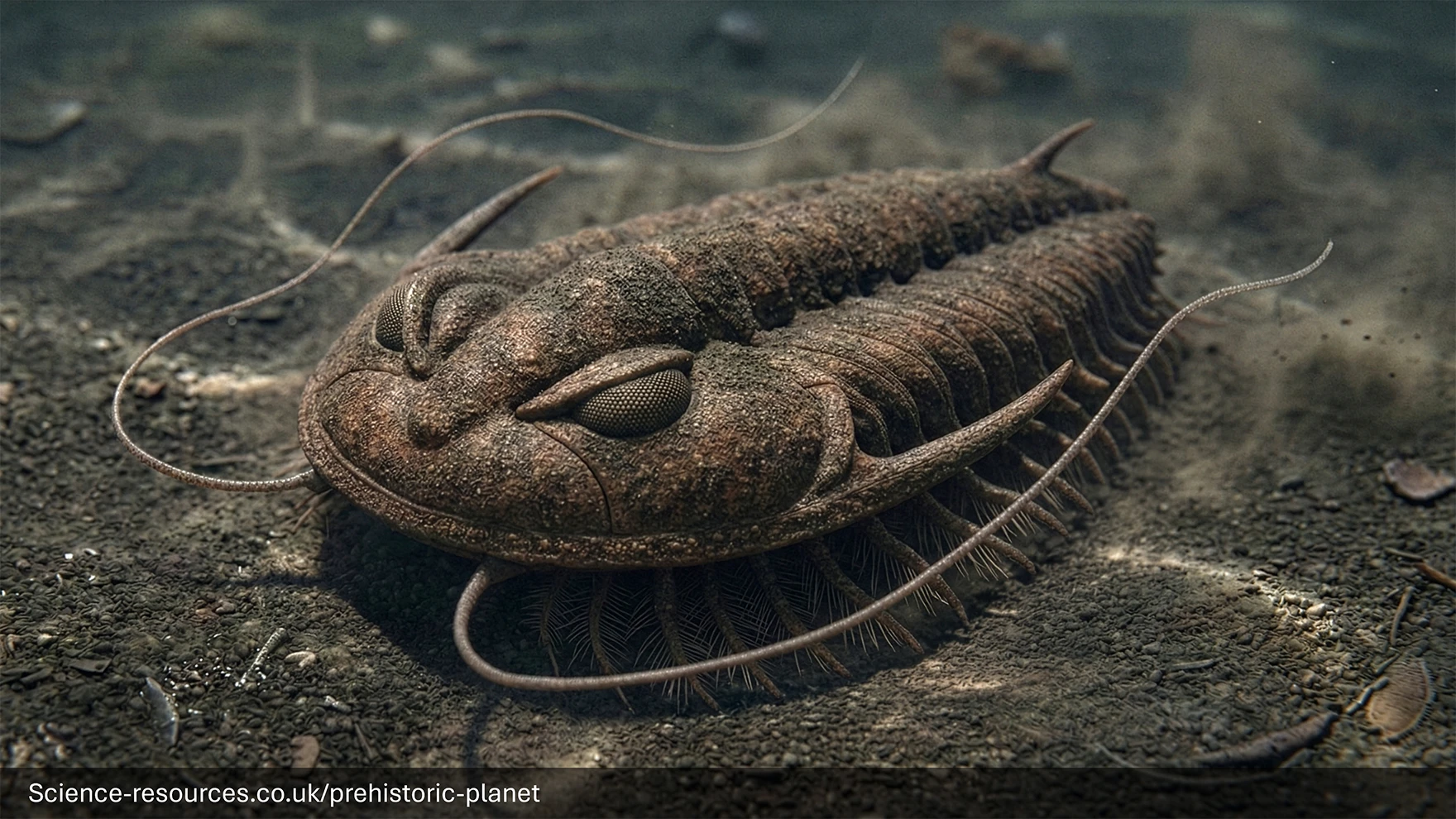 Redlichia, a genus of trilobite from the Cambrian, could grow upto 35 cm in length.
What did Trilobites eat?
Trilobites had a varied diet. Some were scavengers, munching on dead plants and animals on the sea floor. Others were predators, hunting tiny worms and other small sea creatures. Some trilobites may have filtered food from the water, a bit like modern shrimp⁵.
Trilobite appearance
Trilobites had hard, segmented shells that protected their bodies. Their shells were divided into three main parts (hence the name 'tri-lobite'): a head, a body, and a tail⁶. Many had large, compound eyes, some of the most advanced eyes of their time. Some trilobites could even roll up into a ball to defend themselves!
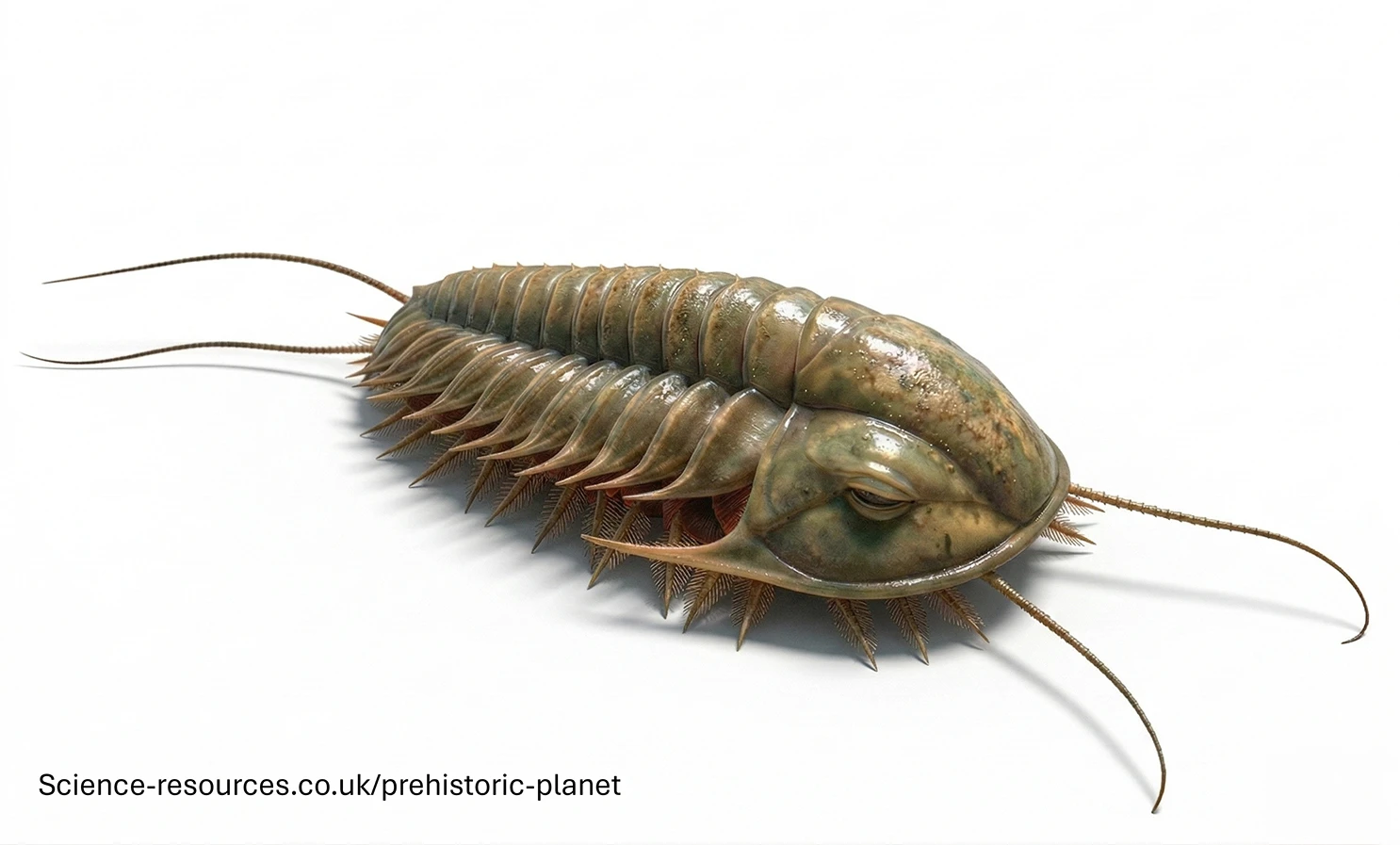 A detailed digital reconstruction of a trilobite shown on a plain white background.
Where did Trilobites live?
Trilobites lived in oceans all over the world. Their fossils have been found on every continent, including Europe, North America, Asia, and Australia. They preferred shallow, warm seas but could be found at many ocean depths.
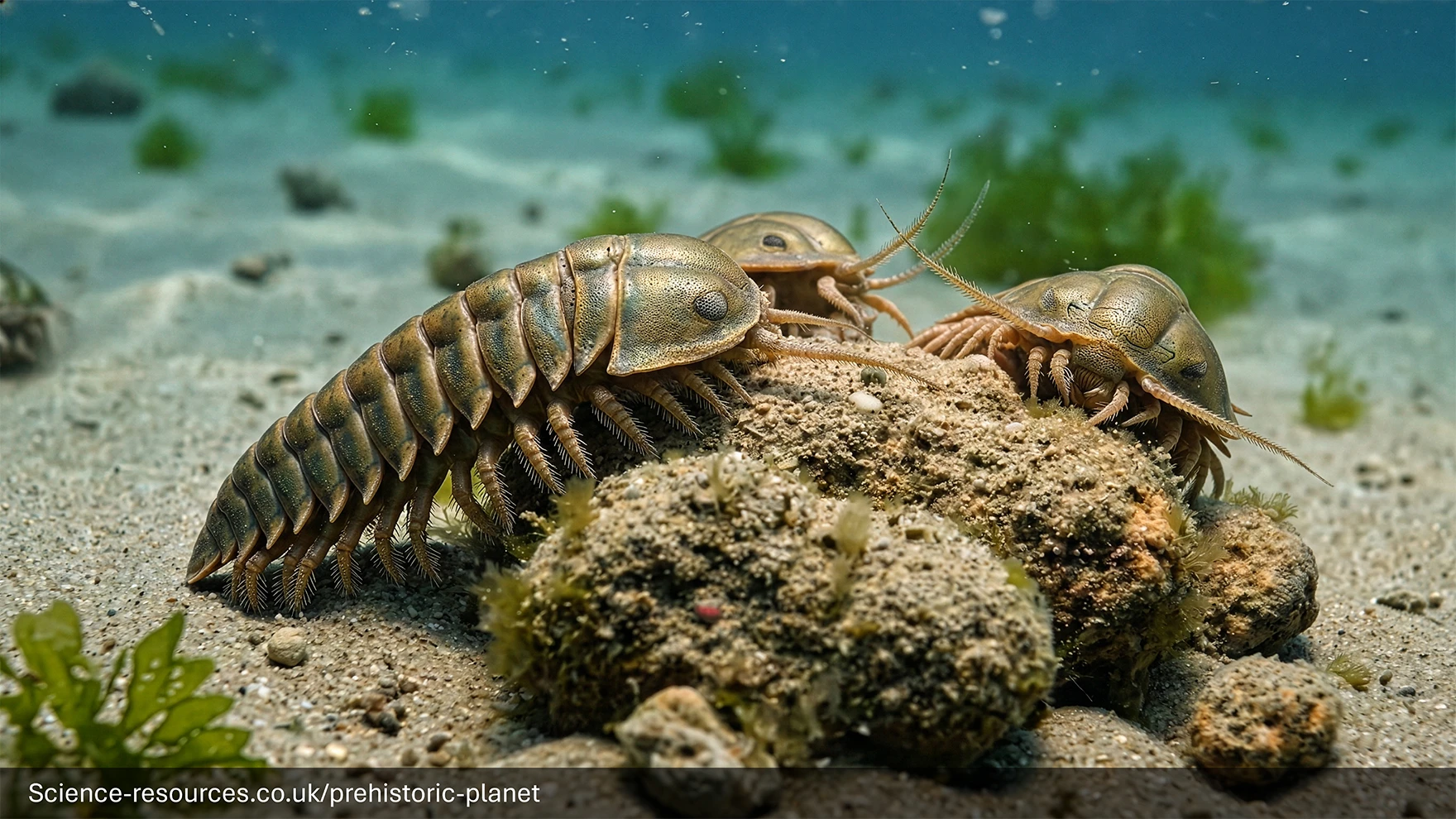 Safety in numbers - A family of trilobites congregate around a rock.
Interesting facts
- The name 'trilobite' means 'three lobes', referring to the three sections of their body.
- Trilobites first appeared over 520 million years ago—long before dinosaurs existed!
- There are more than 20,000 known species of trilobites. Some trilobites had spines and horns for protection.
- Trilobites are completely extinct, but their fossils are common and often beautifully preserved.
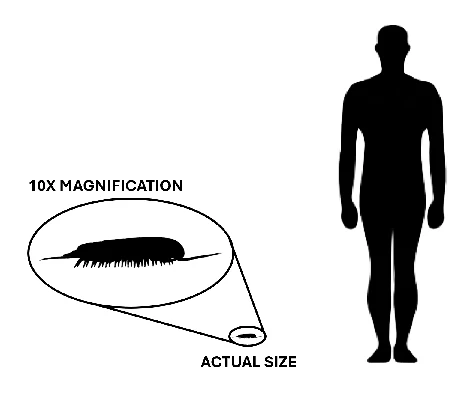
A small trilobite shown at 10× magnification next to an adult human.
Trilobite Facts
Pronounced: TRY-loh-bite
Name Means: "Three Lobes"
Length: 1 cm – 70 cm (most are 2–7 cm)
Diet: Scavenger, predator, or filter-feeder
Status: Extinct (disappeared during the Great Permian Extinction)
Time: Cambrian to Permian Period (about 521–252 million years ago)
Fossils Found: Worldwide
Which family of animals did Trilobite belong to?
Trilobites were part of the class Trilobita, which is a group of extinct marine arthropods. They are distantly related to modern arthropods like insects, spiders, and crabs.
How many species of Trilobite existed?
Trilobites were the ultimate survivors, hanging around for nearly 300 million years. Because they were so successful and evolved into so many different species, their numbers are pretty staggering. Current paleontological estimates suggest there were roughly 20,000 species of trilobites.
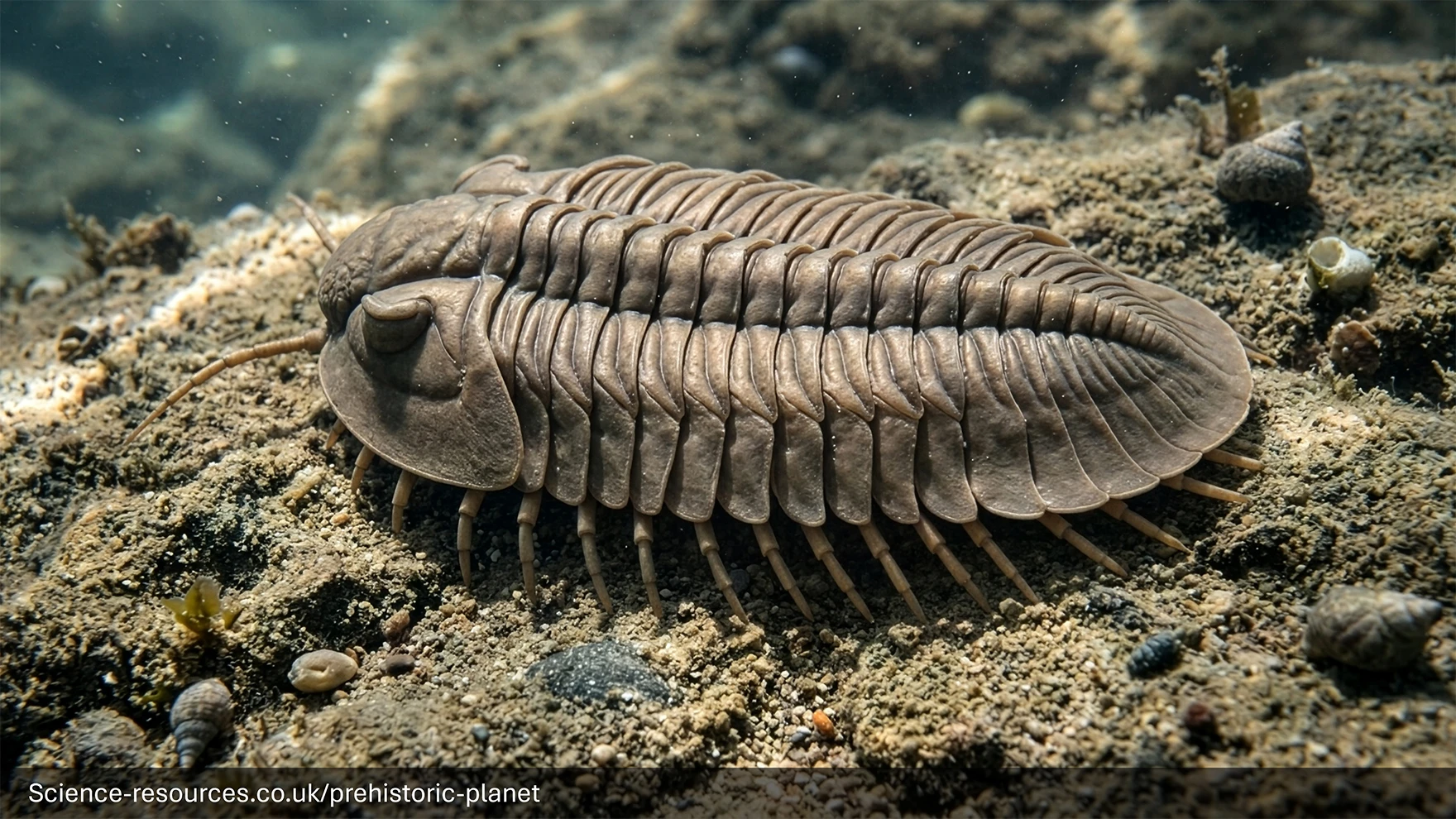 Ogygopsis, just one of the many genus of trilobite that lived during the Cambrian period.
How did Trilobites defend themselves?
Living in ancient oceans was dangerous, especially with giant predators like Anomalocaris lurking. Trilobites were masters of adaptation:
- The "Pill Bug" Roll: Some could roll into a tight ball, using their hard exoskeleton as an unbreakable shield.
- Periscope Eyes: Certain species developed eyes on long stalks, allowing them to hide under the sand while watching for predators.
- Master Camouflage: By staying flat and using mottled patterns, they blended perfectly into the seafloor to avoid casting shadows.
- Expert diggers: Some used their many legs to shovel sediment over their backs until they were completely submerged and invisible.
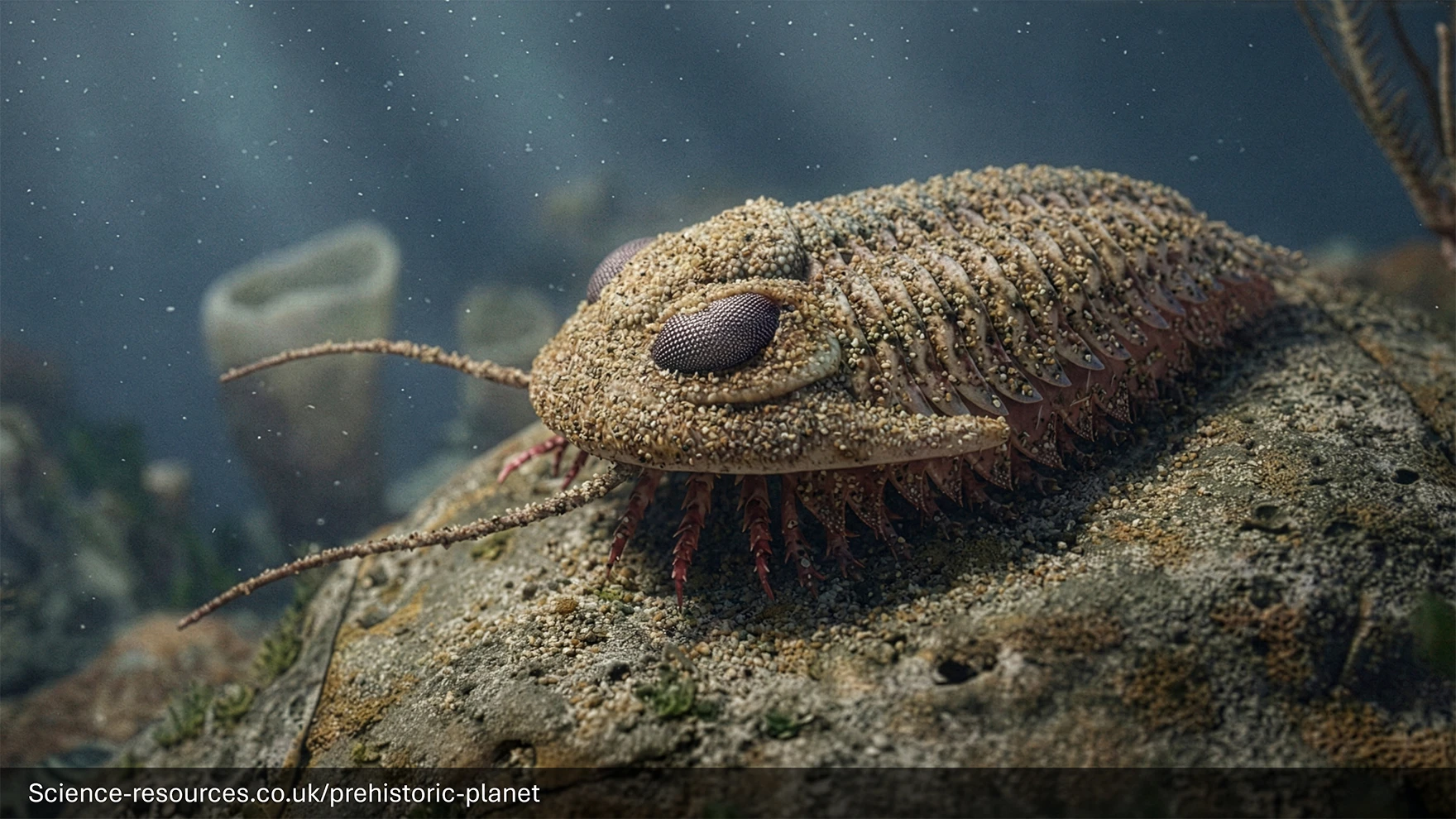 Survival of the fittest: Trilobites were the masters of camouflage, often using their many legs to shovel sediment over their backs until they were completely invisible.
Why do we know so much about Trilobites?
Scientists know more about trilobites than almost any other prehistoric creature. Here is why they are a "Gold Standard" for paleontologists:
- Fossil Superstars: Their hard calcite shells fossilized incredibly well. Trilobites are "index fossils," helping scientists date the age of the rocks they are found in.
- Global Travelers: Their fossils have been found on every continent, from the mountains of North America to the deserts of Australia.
- Ultimate Success: There are more than 20,000 known species, showing how they evolved to survive in almost every ocean environment.
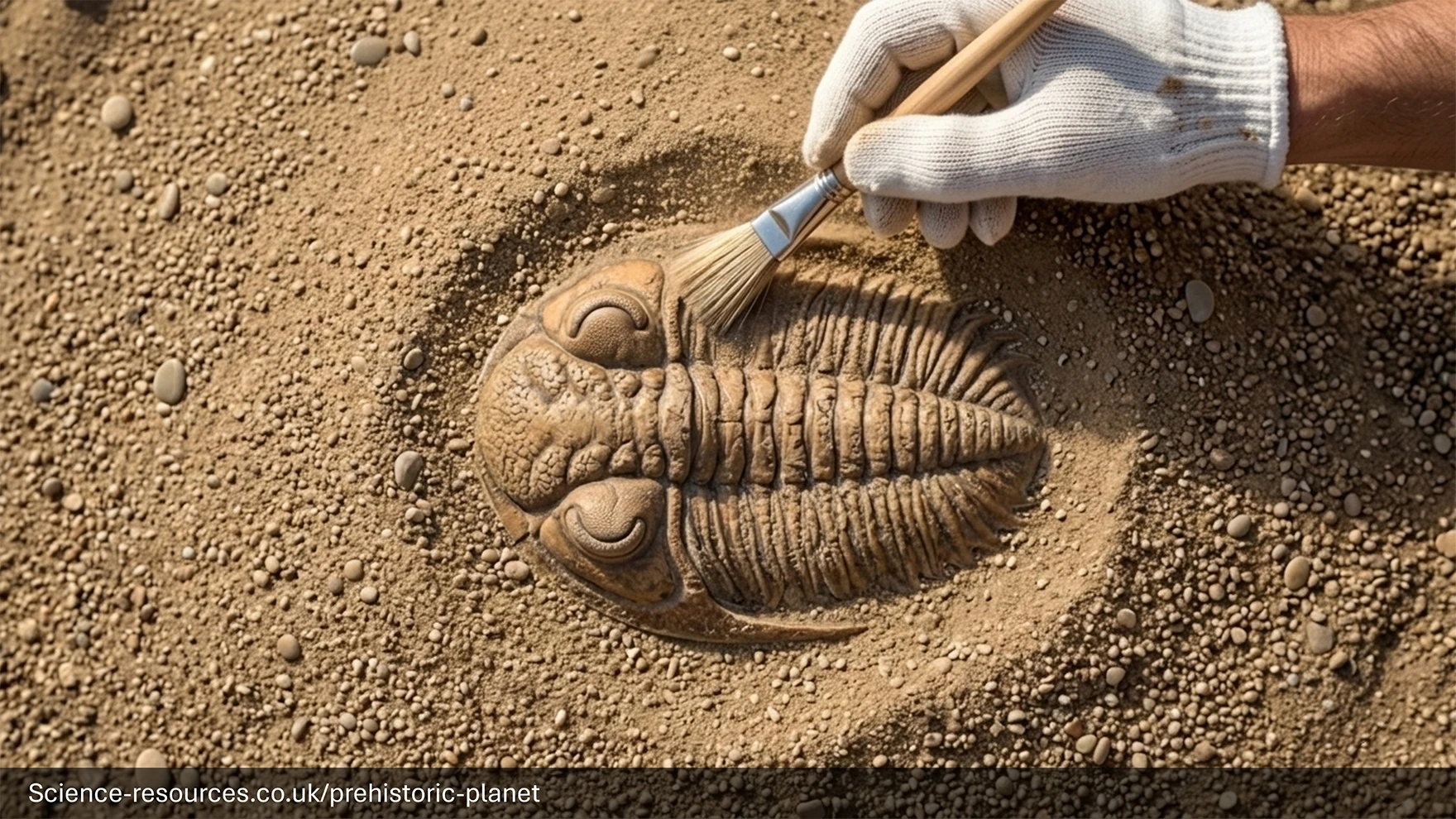 A fossil of a trilobite is being brushed clean in sandy soil.
What other animals lived at the same time as Trilobites?
Trilobites shared their seas with other early creatures like brachiopods, sea scorpions (eurypterids), ancient fish, and nautiloids such as Endoceras.
Trilobite FAQ
Q1: What were Trilobites?
A1: Trilobites were extinct marine arthropods that lived for over 270 million years, dominating ancient oceans.
Q2: What did trilobites look like?
A2: They had hard, segmented shells, lots of legs, and often large, compound eyes. Some could roll up like an armadillo.
Q3: How big were trilobites?
A3: Most were 2 to 7 centimetres long, but some grew much larger (up to 70 centimetres)!
Q4: What did trilobites eat?
A4: Trilobites ate a variety of things, from tiny sea creatures to dead plants and animals.
Q5: Where did trilobites live?
A5: Trilobites lived in oceans all over the world, especially in shallow, warm waters.
Q6: When did trilobites go extinct?
A6: Trilobites went extinct about 252 million years ago, during the largest mass extinction in Earth's history.
Q7: How did they Trilobites see?
A7: They had compound eyes made of calcite (the same stuff in limestone). Trilobites had some of the most advanced eyes in the ancient world.
Q8: Are trilobites related to anything alive today?
A8: Yes, they are distantly related to modern arthropods like insects, spiders, and crabs.
Q9: Did trilobites live at the same time as T-Rex?
A9: No! Trilobites went extinct about 252 million years ago—nearly 10 million years before the first dinosaurs even appeared.
Q10: Can I find a trilobite fossil?
A10: es! Because they were so common, they are some of the most frequently found fossils by amateur collectors worldwide.
References
-
Natural History Museum – Trilobites as marine arthropods
https://www.uky.edu/KGSpdf
[4](https://www.uky.edu/KGS/fossils/trilob_fact_sheet.pdf)
-
Britannica – Dietary diversity and ecology
https://oumnh.ox.ac.uk/learn-what-were-trilobites
[2](https://oumnh.ox.ac.uk/learn-what-were-trilobites)
-
British Geological Survey – Rolling into a ball as defence
https://www.bgs.ac.uk/discovering-geology/fossils-and-geological-time/trilobites/
-geology/fossils-and-geological-time/trilobites/)
-
Natural History Museum Schools Resource – Global distribution
https://www.nhm.ac.uk/schools/teaching-resources/big-ideas-in-science-evolution/trilobite-fossils-resources-and-class-activities.html
chools/teaching-resources/big-ideas-in-science-evolution/trilobite-fossils-resources-and-class-activities.html)
-
Natural History Museum – Meaning of ‘trilobite’
https://www.nhm.ac.uk/discover/how-trilobites-conquered-prehistoric-oceans.html
[1](https://www.nhm.ac.uk/discover/how-trilobites-conquered-prehistoric-oceans.html)
-
Britannica – Timeline (521 Ma appearance to Permian extinction)
https://www.britannica.com/animal/trilobite
[5](https://www.britannica.com/animal/trilobite)
You may also be intrested in:
- Extinct Animals: A-Z
- Dinosaurs: A-Z
Tags: How big was Trilobite, Trilobite, where did Trilobite live, how long was Trilobite, what does Trilobite mean, Trilobite facts
Previous: Tiktaalik
© 2012 science-resources.co.uk. All rights reserved | Design by W3layouts
Before Dinosaurs: Trilobites
Trilobites, hard-shelled arthropods that lived long before dinosaurs, known for their segmented body and compound eyes.
Trilobite (Three Lobes)
Olenoides, a genus of trilobite from the Cambrian period
Trilobites: The ancient armored tanks of the ocean
Before dinosaurs ever walked the Earth, the oceans were ruled by a group of ultimate survivors: the Trilobites. These fascinating creatures lived for nearly 300 million years, making them one of the most successful animal groups in history.
What exactly is a Trilobite?
Trilobites were marine arthropods. If you’ve ever seen a crab, a spider, or a woodlouse (pill bug), you’re looking at their distant modern relatives². Trilobites were among the first animals on Earth to develop complex eyes and hard outer shells.
The "Three Lobes" Meaning
The name "trilobite" comes from their body structure. Their hard shells were divided into three main sections: a head, a body, and a tail.
How big were Trilobites?
Trilobites weren't just one-size-fits-all. They were as diverse as modern-day mammals! The Scale: Most were about 2–7 cm long³, but some were as tiny as a fingernail (1 cm), while giants like Isotelus could grow up to 70 cm (over 2 feet)⁴.
Redlichia, a genus of trilobite from the Cambrian, could grow upto 35 cm in length.
What did Trilobites eat?
Trilobites had a varied diet. Some were scavengers, munching on dead plants and animals on the sea floor. Others were predators, hunting tiny worms and other small sea creatures. Some trilobites may have filtered food from the water, a bit like modern shrimp⁵.
Trilobite appearance
Trilobites had hard, segmented shells that protected their bodies. Their shells were divided into three main parts (hence the name 'tri-lobite'): a head, a body, and a tail⁶. Many had large, compound eyes, some of the most advanced eyes of their time. Some trilobites could even roll up into a ball to defend themselves!
A detailed digital reconstruction of a trilobite shown on a plain white background.
Where did Trilobites live?
Trilobites lived in oceans all over the world. Their fossils have been found on every continent, including Europe, North America, Asia, and Australia. They preferred shallow, warm seas but could be found at many ocean depths.
Safety in numbers - A family of trilobites congregate around a rock.
Interesting facts
- The name 'trilobite' means 'three lobes', referring to the three sections of their body.
- Trilobites first appeared over 520 million years ago—long before dinosaurs existed!
- There are more than 20,000 known species of trilobites. Some trilobites had spines and horns for protection.
- Trilobites are completely extinct, but their fossils are common and often beautifully preserved.
A small trilobite shown at 10× magnification next to an adult human.
Trilobite Facts
Pronounced: TRY-loh-bite
Name Means: "Three Lobes"
Length: 1 cm – 70 cm (most are 2–7 cm)
Diet: Scavenger, predator, or filter-feeder
Status: Extinct (disappeared during the Great Permian Extinction)
Time: Cambrian to Permian Period (about 521–252 million years ago)
Fossils Found: Worldwide
Which family of animals did Trilobite belong to?
Trilobites were part of the class Trilobita, which is a group of extinct marine arthropods. They are distantly related to modern arthropods like insects, spiders, and crabs.
How many species of Trilobite existed?
Trilobites were the ultimate survivors, hanging around for nearly 300 million years. Because they were so successful and evolved into so many different species, their numbers are pretty staggering. Current paleontological estimates suggest there were roughly 20,000 species of trilobites.
Ogygopsis, just one of the many genus of trilobite that lived during the Cambrian period.
How did Trilobites defend themselves?
Living in ancient oceans was dangerous, especially with giant predators like Anomalocaris lurking. Trilobites were masters of adaptation:
- The "Pill Bug" Roll: Some could roll into a tight ball, using their hard exoskeleton as an unbreakable shield.
- Periscope Eyes: Certain species developed eyes on long stalks, allowing them to hide under the sand while watching for predators.
- Master Camouflage: By staying flat and using mottled patterns, they blended perfectly into the seafloor to avoid casting shadows.
- Expert diggers: Some used their many legs to shovel sediment over their backs until they were completely submerged and invisible.
Survival of the fittest: Trilobites were the masters of camouflage, often using their many legs to shovel sediment over their backs until they were completely invisible.
Why do we know so much about Trilobites?
Scientists know more about trilobites than almost any other prehistoric creature. Here is why they are a "Gold Standard" for paleontologists:
- Fossil Superstars: Their hard calcite shells fossilized incredibly well. Trilobites are "index fossils," helping scientists date the age of the rocks they are found in.
- Global Travelers: Their fossils have been found on every continent, from the mountains of North America to the deserts of Australia.
- Ultimate Success: There are more than 20,000 known species, showing how they evolved to survive in almost every ocean environment.
A fossil of a trilobite is being brushed clean in sandy soil.
What other animals lived at the same time as Trilobites?
Trilobites shared their seas with other early creatures like brachiopods, sea scorpions (eurypterids), ancient fish, and nautiloids such as Endoceras.
Trilobite FAQ
Q1: What were Trilobites?
A1: Trilobites were extinct marine arthropods that lived for over 270 million years, dominating ancient oceans.
Q2: What did trilobites look like?
A2: They had hard, segmented shells, lots of legs, and often large, compound eyes. Some could roll up like an armadillo.
Q3: How big were trilobites?
A3: Most were 2 to 7 centimetres long, but some grew much larger (up to 70 centimetres)!
Q4: What did trilobites eat?
A4: Trilobites ate a variety of things, from tiny sea creatures to dead plants and animals.
Q5: Where did trilobites live?
A5: Trilobites lived in oceans all over the world, especially in shallow, warm waters.
Q6: When did trilobites go extinct?
A6: Trilobites went extinct about 252 million years ago, during the largest mass extinction in Earth's history.
Q7: How did they Trilobites see?
A7: They had compound eyes made of calcite (the same stuff in limestone). Trilobites had some of the most advanced eyes in the ancient world.
Q8: Are trilobites related to anything alive today?
A8: Yes, they are distantly related to modern arthropods like insects, spiders, and crabs.
Q9: Did trilobites live at the same time as T-Rex?
A9: No! Trilobites went extinct about 252 million years ago—nearly 10 million years before the first dinosaurs even appeared.
Q10: Can I find a trilobite fossil?
A10: es! Because they were so common, they are some of the most frequently found fossils by amateur collectors worldwide.
References
- Natural History Museum – Trilobites as marine arthropods https://www.uky.edu/KGSpdf [4](https://www.uky.edu/KGS/fossils/trilob_fact_sheet.pdf)
- Britannica – Dietary diversity and ecology https://oumnh.ox.ac.uk/learn-what-were-trilobites [2](https://oumnh.ox.ac.uk/learn-what-were-trilobites)
- British Geological Survey – Rolling into a ball as defence https://www.bgs.ac.uk/discovering-geology/fossils-and-geological-time/trilobites/ -geology/fossils-and-geological-time/trilobites/)
- Natural History Museum Schools Resource – Global distribution https://www.nhm.ac.uk/schools/teaching-resources/big-ideas-in-science-evolution/trilobite-fossils-resources-and-class-activities.html chools/teaching-resources/big-ideas-in-science-evolution/trilobite-fossils-resources-and-class-activities.html)
- Natural History Museum – Meaning of ‘trilobite’ https://www.nhm.ac.uk/discover/how-trilobites-conquered-prehistoric-oceans.html [1](https://www.nhm.ac.uk/discover/how-trilobites-conquered-prehistoric-oceans.html)
- Britannica – Timeline (521 Ma appearance to Permian extinction) https://www.britannica.com/animal/trilobite [5](https://www.britannica.com/animal/trilobite)
Tags: How big was Trilobite, Trilobite, where did Trilobite live, how long was Trilobite, what does Trilobite mean, Trilobite facts
Previous: Tiktaalik
© 2012 science-resources.co.uk. All rights reserved | Design by W3layouts