Last updated: 24th January 2026
Before Dinosaurs: Synapsids
Synapsids – The Great “Mammal-Like Reptiles” Before the Dinosaurs
Before dinosaurs ruled the planet, another group of animals dominated life on land — the synapsids.
These creatures are sometimes nicknamed “mammal-like reptiles”, although they weren’t true reptiles at all. In fact, synapsids are our own ancient relatives, forming the evolutionary branch that eventually led to mammals, including humans.
Synapsids first appeared more than 300 million years ago and came in an amazing range of shapes and sizes. Some were powerful predators with huge teeth, while others were peaceful plant-eaters with sails or horns. They ruled the land long before dinosaurs evolved and played a major role in shaping the ecosystems of the Permian period.
Why Synapsids Matter
These early synapsids were some of the most successful land animals of their time. Although most synapsids went extinct at the end of the Permian, one small group survived, eventually giving rise to mammals. By studying synapsids, we discover the deep origins of features we recognise in mammals today.
Quick links
Meet the Synapsids
Here are some of the most fascinating synapsids from this early era:
Dimetrodon: The Iconic Sail-Backed Hunter
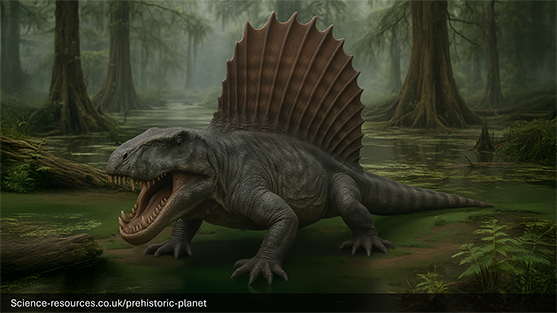
Dimetrodon is one of the best-known synapsids, often mistaken for a dinosaur, but it lived 50 million years before the first dinosaurs. Its most striking feature was the large sail on its back, possibly used for temperature control or display. With a powerful bite and blade-like teeth, Dimetrodon was one of the top predators of its time.
Estemmenosuchus: The Horned Oddball
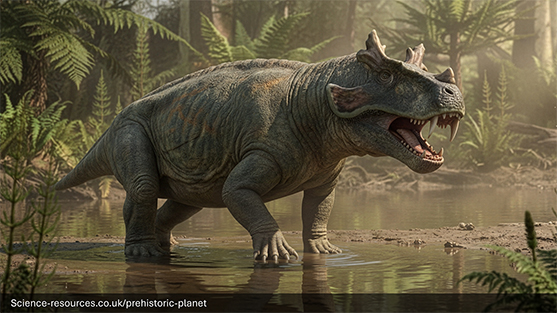
Estemmenosuchus looked like no other animal of the Permian. It had a bulky body, a short snout and a set of strange bony horns and plates on its head. Despite its fearsome appearance, it was likely a plant-eater, using its size to deter predators rather than hunting other animals.
Inostrancevia: The Saber-Toothed Terror of the Permian
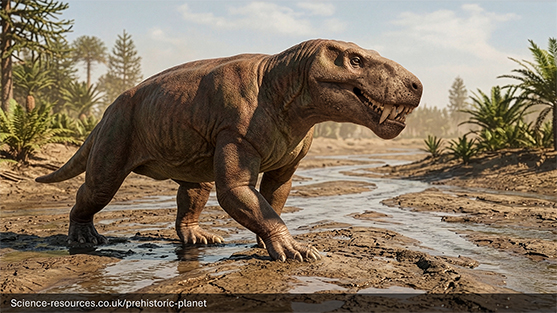
Inostrancevia was a member of the gorgonopsids - fast, muscular predators with long, saber-like canine teeth. It lived near the end of the Permian period and was one of the last major predators before the biggest extinction in Earth’s history. With its huge fangs and agile build, it was the top hunter in its environment.
Cotylorhynchus: The Giant With a Tiny Head
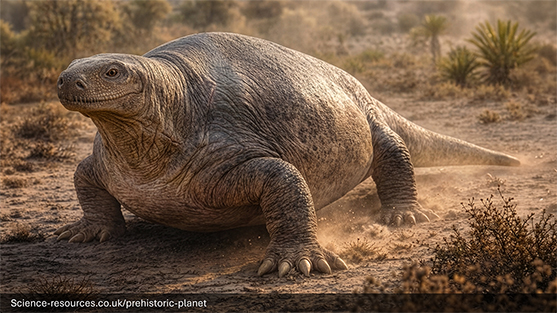
Cotylorhynchus was a massive plant-eating synapsid with a huge, round body and a surprisingly small head. It wandered across swampy landscapes, feeding on low-growing vegetation. Its unusual shape may have helped it store energy or digest tough plant material, making it one of the most distinctive herbivores of the early Permian.
Edaphosaurus: The Peaceful Sail-Backed Grazer
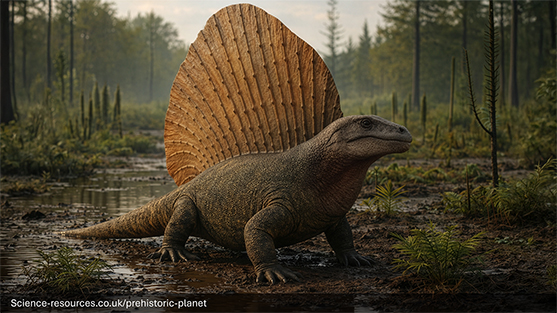
Edaphosaurus also had a sail on its back, but unlike Dimetrodon, it was a gentle plant-eater. It had blunt teeth for grinding vegetation and a sail supported by spines decorated with cross-bars. Scientists think the sail may have helped regulate its body temperature or scare off predators.
You may also be intrested in:
- Extinct Animals: A-Z
- Dinosaurs: A-Z
Tags: Synapsids, Dimetrodon, Estemmenosuchus, Inostrancevia, Cotylorhynchus, Edaphosaurus, prehistoric mammals, Permian animals, before dinosaurs.
© 2012 science-resources.co.uk. All rights reserved | Design by W3layouts
Before Dinosaurs: Synapsids
Synapsids – The Great “Mammal-Like Reptiles” Before the Dinosaurs
Before dinosaurs ruled the planet, another group of animals dominated life on land — the synapsids.
These creatures are sometimes nicknamed “mammal-like reptiles”, although they weren’t true reptiles at all. In fact, synapsids are our own ancient relatives, forming the evolutionary branch that eventually led to mammals, including humans.
Synapsids first appeared more than 300 million years ago and came in an amazing range of shapes and sizes. Some were powerful predators with huge teeth, while others were peaceful plant-eaters with sails or horns. They ruled the land long before dinosaurs evolved and played a major role in shaping the ecosystems of the Permian period.
Why Synapsids Matter
These early synapsids were some of the most successful land animals of their time. Although most synapsids went extinct at the end of the Permian, one small group survived, eventually giving rise to mammals. By studying synapsids, we discover the deep origins of features we recognise in mammals today.
Quick links
Meet the Synapsids
Here are some of the most fascinating synapsids from this early era:
Dimetrodon: The Iconic Sail-Backed Hunter
Dimetrodon is one of the best-known synapsids, often mistaken for a dinosaur, but it lived 50 million years before the first dinosaurs. Its most striking feature was the large sail on its back, possibly used for temperature control or display. With a powerful bite and blade-like teeth, Dimetrodon was one of the top predators of its time.
Estemmenosuchus: The Horned Oddball
Estemmenosuchus looked like no other animal of the Permian. It had a bulky body, a short snout and a set of strange bony horns and plates on its head. Despite its fearsome appearance, it was likely a plant-eater, using its size to deter predators rather than hunting other animals.
Inostrancevia: The Saber-Toothed Terror of the Permian
Inostrancevia was a member of the gorgonopsids - fast, muscular predators with long, saber-like canine teeth. It lived near the end of the Permian period and was one of the last major predators before the biggest extinction in Earth’s history. With its huge fangs and agile build, it was the top hunter in its environment.
Cotylorhynchus: The Giant With a Tiny Head
Cotylorhynchus was a massive plant-eating synapsid with a huge, round body and a surprisingly small head. It wandered across swampy landscapes, feeding on low-growing vegetation. Its unusual shape may have helped it store energy or digest tough plant material, making it one of the most distinctive herbivores of the early Permian.
Edaphosaurus: The Peaceful Sail-Backed Grazer
Edaphosaurus also had a sail on its back, but unlike Dimetrodon, it was a gentle plant-eater. It had blunt teeth for grinding vegetation and a sail supported by spines decorated with cross-bars. Scientists think the sail may have helped regulate its body temperature or scare off predators.
Tags: Synapsids, Dimetrodon, Estemmenosuchus, Inostrancevia, Cotylorhynchus, Edaphosaurus, prehistoric mammals, Permian animals, before dinosaurs.
© 2012 science-resources.co.uk. All rights reserved | Design by W3layouts